

2005-2007 Five Hundred, Freestyle & Montego ABS Module: Fixing the ABS Light Without Going Broke
This guide covers the common failures, replacement costs, and critical compatibility details for the ABS control module in the Ford Five Hundred, Ford Freestyle, and Mercury Montego.
- CRITICAL COMPATIBILITY: The most common module is for Front-Wheel Drive (FWD) models WITHOUT traction control. Verify this before buying.
- DIY-FRIENDLY REPAIR: The electronic module can be replaced without opening brake lines, avoiding a difficult bleeding procedure.
- PROGRAMMING IS REQUIRED: A used module is not plug-and-play. It will need initialization with a professional-grade scan tool.
- USED OEM IS THE BEST VALUE: A used OEM module offers a massive cost saving over a new part, which can exceed $850.
Symptoms of a Failing ABS Control Module
When the ABS module in your Ford Five Hundred, Ford Freestyle, or Mercury Montego begins to fail, you'll notice several distinct warning signs. The most obvious is an illuminated dashboard.
- ABS Warning Light: This is the most common symptom. The amber "ABS" light will turn on and stay on, indicating the system has detected a fault and has been disabled.
- Traction Control Light: On models equipped with it, the traction control system light may also illuminate, as it relies on the same wheel speed sensor data as the ABS.
- Brakes Locking Up: Without a functional ABS, your vehicle's wheels can lock up during hard braking, causing the car to skid. This means the primary safety function of the system is lost.
- Unresponsive or Hard Brake Pedal: In some cases, a failing module can affect the hydraulic pressure, leading to a brake pedal that feels unusually hard to press or unresponsive.
- ABS Pump Runs Constantly: You might hear a humming or buzzing noise from the engine bay, which could be the ABS pump motor running continuously even when you're not braking. This is a sign the module is sending incorrect signals.
- Inaccurate Speedometer: Since the ABS module processes wheel speed data, a failure can sometimes cause the speedometer to behave erratically or stop working altogether.
You may also see specific diagnostic trouble codes (DTCs) when the vehicle is scanned. Common codes include C1175 for a wheel speed sensor circuit failure, and general pump motor faults like C1380. A code like U3000 can appear if a replacement module is not seated correctly on the hydraulic pump.
Historic Recall Warning: These vehicles were subject to NHTSA recall 04V444000 (Ford recall 04S22) because a diode inside the ABS module could short circuit, creating a fire risk even when the vehicle was parked and turned off. The fix was to install a fused wiring harness to protect the circuit. While the recall is old, it highlights a known vulnerability of this part. It is wise to check if your vehicle had this recall performed.
Buying a Used ABS Control Module
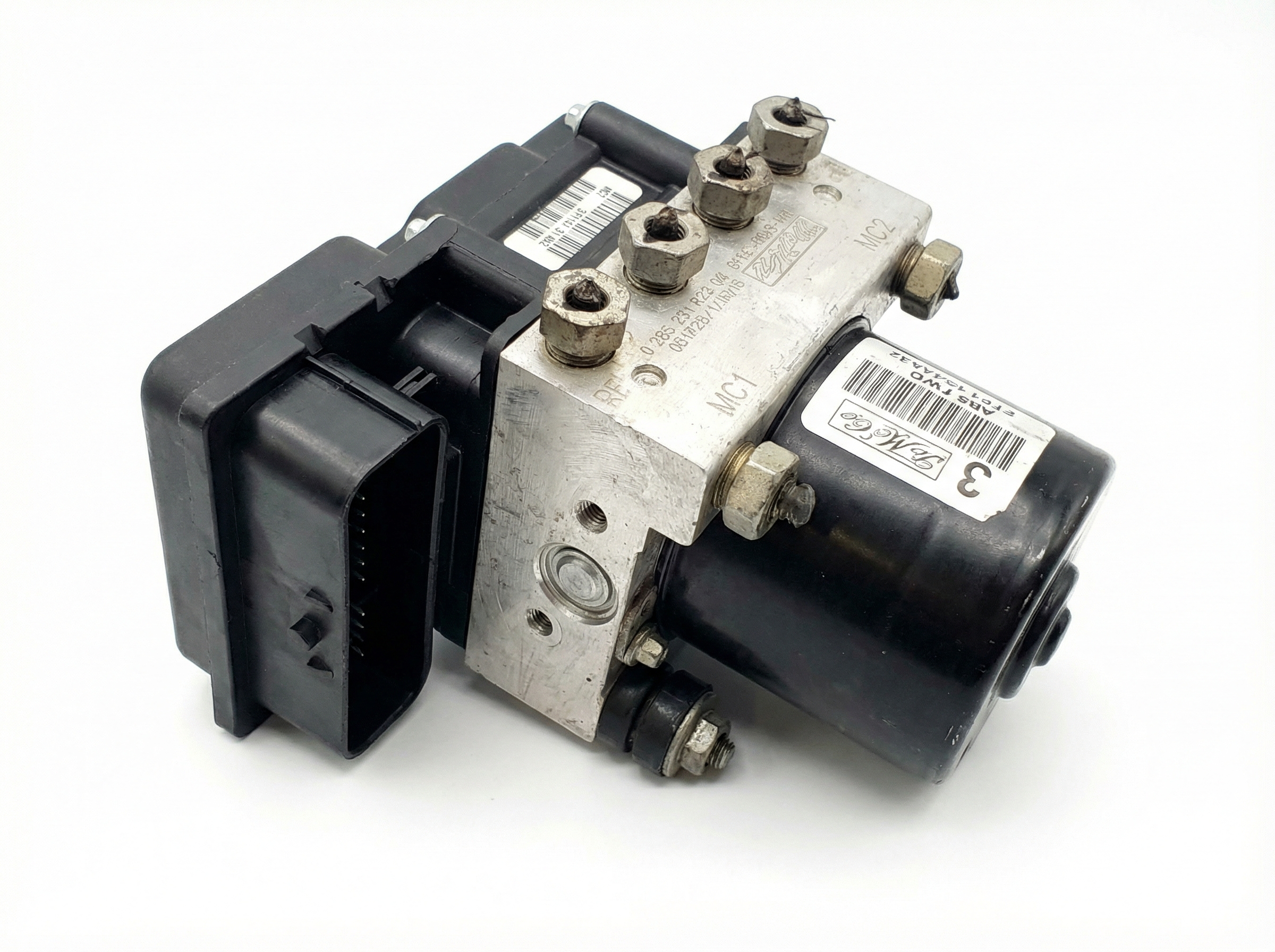
Given that a new OEM ABS module assembly can cost over $850 for the part alone, a used OEM module is a very popular and cost-effective solution. Here’s what you need to know to buy the right part.
The #1 Most Important Compatibility Check
Warning: The ABS module for these vehicles is specific to the drivetrain and options. The most common module, and the one this guide focuses on, is for Front-Wheel Drive (FWD) models that are NOT equipped with traction control. This is a critical distinction. Listings for used parts often specify "FWD, W/O TRACTION CONTROL". If your vehicle is All-Wheel Drive (AWD) or has traction control, you will need a different part number. Always match the OEM part number from your original module to the used one you are buying.
What to Look For:
- Match the Part Number: The most reliable way to ensure compatibility is to match the OEM part number. Known part numbers for the FWD, non-traction control version are 6F93-2C065-AA and 6F9Z-2C065-A. Other variations exist for different options, such as 6F9Z-2C065-C.
- Inspect the Connector: Check the electrical connector pins on the used module for any signs of corrosion, bending, or damage.
- Source from a Reputable Seller: Buy from a salvage yard or online retailer that offers a warranty and a return policy. This protects you in case the part is faulty.
- Why Used OEM is a Good Choice: For electronic modules like this, a used original equipment (OEM) part is often more reliable than a cheap, new aftermarket part. The OEM part was designed specifically for your vehicle's systems, while aftermarket quality can be inconsistent.
Programming and Installation
Replacing the ABS module on a Ford Five Hundred, Freestyle, or Montego is not a simple plug-and-play job, but it is manageable for a DIY mechanic with the right tools.
Can You Replace Just the Module? Yes!
A huge advantage on these vehicles is that the electronic ABS module can be separated from the hydraulic pump assembly (HCU). This means you can replace the module without opening any brake lines, which saves you from having to perform a complex brake bleeding procedure. The process generally involves:
- Disconnecting the battery.
- Unbolting the ABS pump/module assembly bracket to get more room to work.
- Gently moving the hard brake lines to gain access to the module. Be extremely careful not to kink or break them.
- Disconnecting the main electrical harness.
- Removing the Torx screws (typically T-20 or T-25) that hold the electronic module to the hydraulic block.
- Carefully pulling the module away from the block.
- Installation is the reverse of removal.
Pro Tip: After installing the replacement module, you may get a P1000 code. This is normal. It simply means the onboard diagnostic systems haven't completed a full check cycle since the power was disconnected. This code will clear itself after a period of normal driving.
Programming Requirements
While you may not need to take the car to a dealer for a full VIN-specific "flash," the system will likely require initialization. After the new module is installed and codes are cleared, a mechanic with a professional-grade scan tool may need to perform an "ABS service bleed" or "IVD initialization" routine. This procedure cycles the pump and valves to ensure no air is trapped and that the system is functioning correctly. This step is often required even if you don't open the hydraulic lines. An independent shop can typically perform this service for less than a dealership.
Cost of Replacement
The cost to fix a faulty ABS module can vary dramatically depending on the route you take.
| Item | Estimated Cost |
|---|---|
| New OEM Part (Assembly) | $850 - $1,100+ |
| New Aftermarket Part | $250 - $500 |
| Remanufactured Part | $150 - $400 |
| Used OEM Part | $50 - $150 |
| Shop Labor (Replacement & Programming) | $250 - $400 |
Frequently Asked Questions (FAQ)
Can I drive my car with a bad ABS module?
Yes, but with caution. When the ABS module fails, your car reverts to standard, non-ABS braking. The brakes will still work to stop the car, but the wheels can lock up during a panic stop, increasing the risk of skidding and losing steering control. It is a significant safety compromise and should be repaired as soon as possible.
Do I have to bleed the brakes after replacing the ABS module?
Not if you only replace the electronic module. Because the module can be separated from the hydraulic unit without disconnecting brake lines, a full brake bleed is not required. However, it is often recommended to have a scan tool perform an ABS service bleed routine to cycle the pump and ensure correct function.
Why is my ABS light on after replacing a wheel bearing?
The ABS wheel speed sensor is integrated with the wheel hub/bearing assembly on these cars. If the new bearing was installed incorrectly, if the sensor's wire was damaged during installation, or if the new part is defective, it will cause an ABS fault. Always ensure the new wheel bearing is compatible and installed correctly.
Does a used ABS module need to be programmed?
Yes, some level of electronic setup is required. While it may not need a full VIN flash from the dealer, the system needs to be initialized and codes need to be cleared with a capable scan tool. You should not expect it to be a simple plug-and-play swap.
Technical Specifications
OEM Part Numbers: 6F932C065AA 6F9Z2C065A 5F9Z2C219DA 6F9Z2C065C
Compatibility is dependent on vehicle options: Front-Wheel Drive (FWD) vs. All-Wheel Drive (AWD) and with or without Traction Control. Part numbers must be matched.
We Have This Part in Stock

The information in this article is provided for general reference and educational purposes only. Vehicle specifications, procedures, and part compatibility can vary by production date, trim level, and region. Always consult your vehicle's factory service manual and verify part numbers before purchasing or performing repairs. Safety-critical components such as airbags, seat belts, and braking systems should be installed by a qualified professional.
- Ford Five Hundred:
- Ford Freestyle:
- Mercury Montego:
- 🛍️ Shop This Part
- Symptoms of a Failing ABS Control Module
- Buying a Used ABS Control Module
- The #1 Most Important Compatibility Check
- What to Look For:
- Programming and Installation
- Can You Replace Just the Module? Yes!
- Programming Requirements
- Cost of Replacement
- Frequently Asked Questions (FAQ)
- 🎟️ Get 5% Off