

Ford Focus ABS Module (2010-2018): Programming, Failures, and Gen 2 vs. Gen 3 Guide
This guide covers common failure symptoms, mandatory programming steps, and how to choose the right used ABS module for your 2010-2018 Ford Focus.
- Programming is mandatory for any replacement ABS module (new or used) to match your car's VIN and features.
- There is a critical difference between 2010-2011 (Gen 2) and 2012-2018 (Gen 3) modules; they are not interchangeable.
- Driving with a failed module is possible, but it disables ABS, traction control, and stability control, increasing crash risk.
- Before replacing the module, check for simpler faults like bad wheel speed sensors or blown fuses, which can cause similar symptoms.
Key Differences: 2010-2011 (Gen 2) vs. 2012-2018 (Gen 3)
The 2010-2018 Ford Focus spans two distinct vehicle generations, and their ABS modules are not interchangeable. It is critical to identify your vehicle's generation before purchasing a replacement part.
- 2010-2011 Ford Focus (Second Generation): These models have their own specific ABS pump and module assemblies. A common issue on these vehicles is an illuminated ESP (Electronic Stability Program) light caused by an internal brake pressure sensor failure. When buying a used module for these years, it is essential to confirm that it came from a vehicle equipped with traction control, as base model units are not compatible.
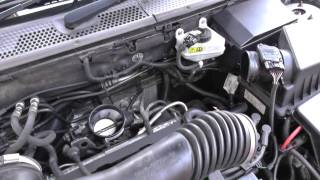
- 2012-2018 Ford Focus (Third Generation): This generation introduced a different platform with a more integrated electronics system. The ABS module is located under the under-hood fuse box and can be difficult to access. 🎬 Watch: Locate your Focus ABS pump and module These modules also have strict programming requirements tied to the vehicle's VIN and specific features.
Warning: The ABS module is generation-specific. A module from a 2010-2011 Focus will not work in a 2012-2018 model, and vice-versa. Always match the part number exactly to the one on your original unit.
Symptoms of a Failing ABS Control Module
When the ABS module in your Focus begins to fail, you will notice clear warning signs, primarily on your dashboard.
- ABS and Traction Control Lights: The most common symptom is the illumination of the ABS, traction control (ESC), and sometimes the parking brake warning lights on the instrument cluster. This indicates the system has detected a fault and disabled itself.
- Unresponsive or Spongy Brake Pedal: In some cases, a failing module can alter the feel of the brake pedal, making it feel hard, spongy, or unresponsive.
- Wheels Locking Up Under Braking: With the ABS disabled, your vehicle's wheels can lock up during hard braking, increasing the risk of skidding and loss of control.
- Speedometer Malfunction: On some vehicles, the ABS module processes wheel speed data for the speedometer. A faulty module can cause the speedometer to read incorrectly or stop working altogether.
- Diagnostic Trouble Codes (DTCs): A scan tool will reveal specific fault codes. Common codes include U0121 (Lost Communication with ABS Module), C1288 (Pressure Transducer Main/Primary Circuit Failure), and various C-codes related to wheel speed sensors (like C0037) or internal module failures.
Known Issues, TSBs, and Recalls
While there are no widespread recalls specifically for the ABS module itself across all years, there are related service bulletins and other recalls to be aware of.
- TSB for 2012-2014 Models (TSB-13-9-19): Ford issued a technical service bulletin for some vehicles that may experience an illuminated ABS warning lamp along with other warnings due to low battery voltage. This highlights the importance of checking the battery and charging system before condemning the ABS module.
- TSB for 2011-2015 Models (TSB 15-0121): Some vehicles may exhibit a loss of power or intermittent no-start accompanied by messages like "Hill Start Assist is Not Available." This TSB points towards issues with the Transmission Control Module (TCM) and may store codes like U0100 or U0101, which indicate a loss of communication. While not an ABS issue, the warning messages can sometimes be confused by drivers.
- Canister Purge Valve Recalls (2012-2018): Multiple recalls (like 18S32) were issued for a faulty canister purge valve that could cause engine stalling. This is unrelated to the braking system, but it's a critical safety repair for this generation of Focus.
Pro Tip: Before replacing the ABS module, always check for simpler causes first. A faulty wheel speed sensor, a blown fuse, 🎬 Watch: How to diagnose and replace a wheel speed sensor or a bad ground wire can all trigger ABS warning lights and are much cheaper to fix. The ABS fuses are located in the under-hood fuse box.
Programming and Calibration: A Mandatory Step
Warning: A replacement ABS control module—whether new, used, or remanufactured—MUST be programmed to your vehicle. It will not function correctly if you simply install it.
This is the most critical part of the replacement process. The module's software must be configured to your car's unique Vehicle Identification Number (VIN) and its specific equipment (like engine size, trim level, etc.). This process is often called a Programmable Module Installation (PMI). An unprogrammed module will leave the warning lights on and the ABS system disabled.
Programming can be performed by:
- Ford Dealerships: They use the proprietary Ford Integrated Diagnostic System (IDS) or Ford J2534 Diagnostic Software (FJDS) to perform the PMI.
- Independent Repair Shops: Many professional shops have scan tools with J2534 pass-through capabilities and software subscriptions that allow them to program Ford modules.
- Advanced DIYers: Software like FORScan (with an extended license) paired with a compatible OBD-II adapter can be used to write the vehicle's "As-Built" data to the replacement module. 🎬 Watch: Step-by-step Ford ABS module programming procedure This requires technical skill and careful execution.
In some cases, the ABS module is also linked to the vehicle's anti-theft system (PATS), making correct programming even more essential to ensure the vehicle will start and run.
Buying a Used ABS Control Module
A used OEM module is an excellent, cost-effective alternative to an expensive new part. Here’s what to look for:
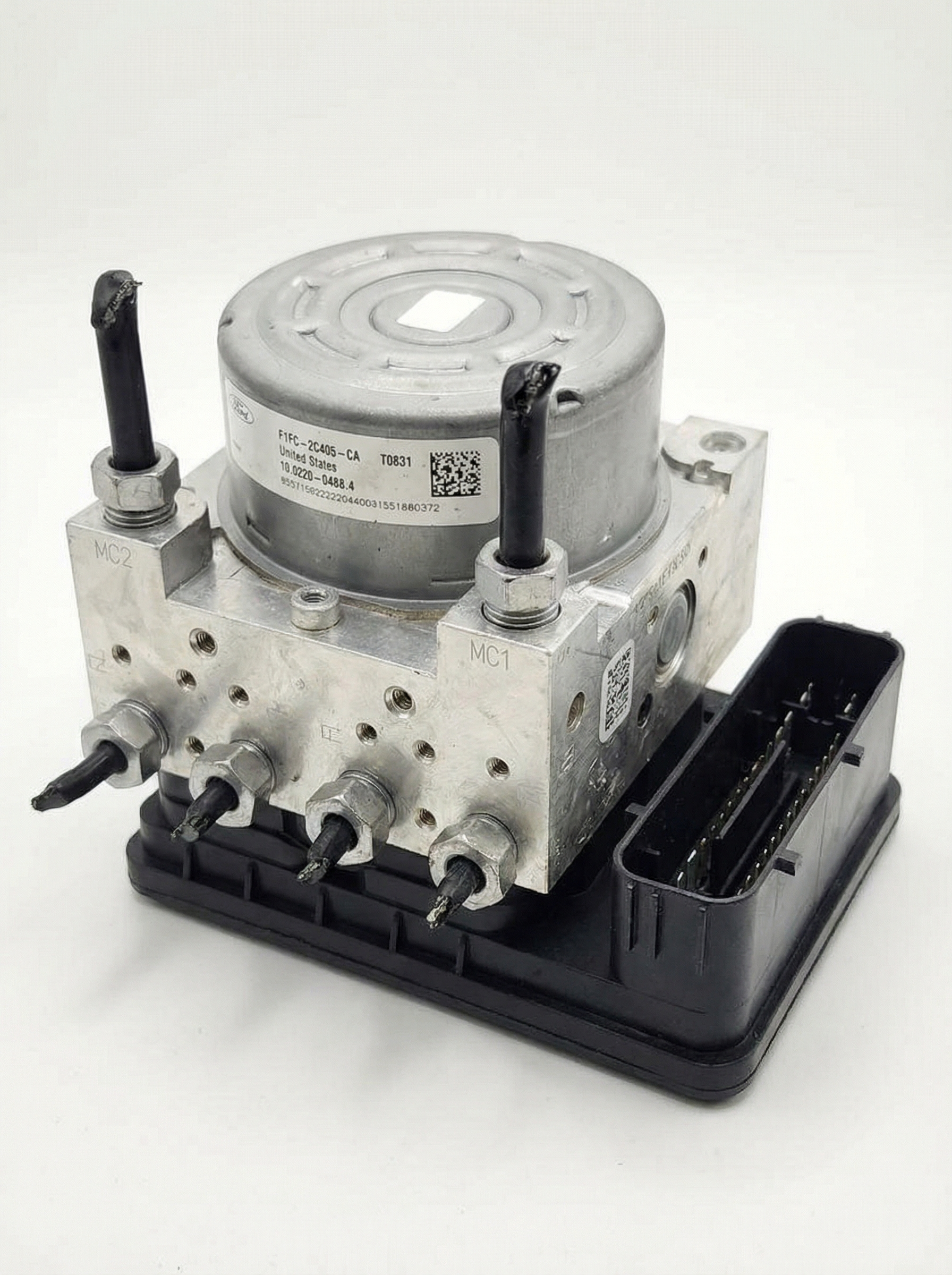
- Match Part Numbers Exactly: This is the most important rule. Compare the OEM part number from your original module to the number on the used part. The provided part numbers in this guide are a starting point, but you must verify with your specific vehicle. Even a single digit difference can mean incompatibility.
- Verify Compatibility: Ensure the donor vehicle had the same key features, especially traction control (for 2010-2011 models) and the same engine type. Modules for gasoline models will not work on diesel or electric variants.
- Inspect for Damage: Check the electrical connector pins for any signs of corrosion, bending, or damage. Inspect the plastic housing for cracks and the aluminum hydraulic block for any signs of brake fluid leaks or physical impact.
- Buy from a Reputable Source: Purchase from a seller that offers a warranty and has a good reputation. This gives you recourse if the part is defective.
Cost Breakdown
Prices can vary significantly based on the source of the part and local labor rates.
| Part or Service | Estimated Cost |
|---|---|
| New OEM Module | $605 - $1,200+ |
| New Aftermarket Module | $350 - $700 |
| Used OEM Module | $75 - $250 |
| Remanufactured / Repair Service | $150 - $400 |
| Shop Labor (Replacement & Bleeding) | $266 - $390 |
| Shop Labor (Programming) | $100 - $250 |
Frequently Asked Questions (FAQ)
Can I drive my Focus with a bad ABS module?
Yes, but with significant risk. Your standard hydraulic brakes will still function, but you will not have anti-lock brakes, traction control, or stability control. This increases the risk of skidding and losing control in an emergency or on slippery roads. It is strongly recommended to have the module repaired as soon as possible.
What's the difference between the ABS module and the ABS pump?
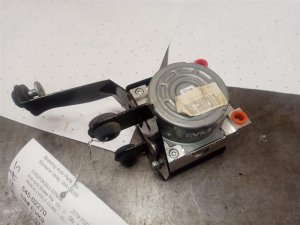
The ABS module is the electronic 'brain' (a black plastic box), while the ABS pump (or hydraulic control unit) is the metal block with brake line connections that it bolts onto. They are often replaced as a single assembly. In some cases, it's possible to replace only the electronic module without opening the hydraulic system, which avoids the need to bleed the brakes.
Do I have to bleed the brakes after replacing the ABS module?
If you replace the entire pump and module assembly, you MUST bleed the entire brake system. This often requires a scan tool to cycle the ABS pump to purge all air from the hydraulic unit. If you are able to separate and replace only the electronic module from the hydraulic pump, you may be able to avoid bleeding the brakes.
Will a used ABS module from another Focus just plug and play?
No. All replacement ABS modules, including used ones, must be professionally programmed to your car's VIN and configuration data. Without programming, the system will not work, and the warning lights will stay on.
Helpful Videos
Technical Specifications
OEM Part Numbers: 9S432C215CB 9S4Z2C215A 9S4Z2C215B 9S4Z2C219A 9S4Z2C219B AS432C219AA AS432C219BA AS432C405BA AS4Z2C219A BV612C405BE BV612C405BF BV612C405BG BV6Z-2C405-C BV6Z-2C405-D BV6Z-2C405-E F1FC2C405AF F1FC2C405AG F1FC2C405AJ F1FC2C405BD F1FC2C405DA F1FZ2C405D F1FZ2C405L
The ABS module is typically mounted directly to the hydraulic control unit (HCU). The electronic module can sometimes be separated from the HCU using Torx T25 screws. The system operates on the vehicle's 12V electrical system and will log fault codes if voltage drops below approximately 10V.
We Have This Part in Stock

The information in this article is provided for general reference and educational purposes only. Vehicle specifications, procedures, and part compatibility can vary by production date, trim level, and region. Always consult your vehicle's factory service manual and verify part numbers before purchasing or performing repairs. Safety-critical components such as airbags, seat belts, and braking systems should be installed by a qualified professional.
- Ford Focus:
- 🎬 Helpful Videos
- 🛍️ Shop This Part
- Key Differences: 2010-2011 (Gen 2) vs. 2012-2018 (Gen 3)
- Symptoms of a Failing ABS Control Module
- Known Issues, TSBs, and Recalls
- Programming and Calibration: A Mandatory Step
- Buying a Used ABS Control Module
- Cost Breakdown
- Frequently Asked Questions (FAQ)
- 🎟️ Get 5% Off