

Ford Ranger & Mazda B-Series ABS Module Guide (1999-2002): Decoding Lights, Failures, and Replacement
Your definitive guide to diagnosing and replacing the 4-wheel ABS pump and module in 1999-2000 Ford Rangers and 1999-2002 Mazda B-Series trucks.
- This module is for 4-wheel ABS systems only; it will not fit trucks with 2-wheel Rear ABS (RABS).
- A faulty module can cause the ABS light, brake light, a non-working speedometer, and wheel lock-up.
- When buying used, you MUST match the part number on your old module exactly.
- Replacement requires opening brake lines and a thorough brake bleed. An electronic 'ABS Service Bleed' with a scan tool is highly recommended.
Vehicles Covered
This guide covers the 4-wheel ABS control module and pump assembly shared by the following trucks. These vehicles were built on the same platform, and the part is identical across these models:
- 1999-2000 Ford Ranger
- 2001-2002 Mazda B2300
- 1999-2001 Mazda B2500
- 1999-2002 Mazda B3000
- 1999-2002 Mazda B4000
Compatibility Warning: This guide and the part numbers listed are ONLY for trucks equipped with 4-wheel ABS (a sensor at each wheel). It will not work on base models with Rear-Wheel Anti-lock (RABS) systems or the rare Ford Ranger EV (electric) model. Always verify your truck has a 4-wheel ABS system before purchasing a part.
Symptoms of a Failing ABS Module
A failing ABS module can cause several distinct and often alarming symptoms. Because the module also plays a role in speedometer readings on some models, the issues aren't always confined to braking. Here are the most common signs of failure:
- ABS Warning Light On: This is the most common symptom. The ABS light on the dashboard will illuminate and stay on, indicating the system has detected a fault and has been disabled.
- Brake Warning Light On: Often, the main red 'BRAKE' warning light will also come on, signaling a more general braking system issue.
- Brakes Locking Up: Without a functional ABS, your truck's wheels can lock up during hard braking, just like an older vehicle without ABS. This increases the risk of skidding and losing steering control, especially on wet or gravel roads.
- Unresponsive or Spongy Brake Pedal: The brake pedal may feel different—either harder to press or mushy and unresponsive. Some owners report the pedal feels strange until the ABS light comes on, after which it feels normal (but with ABS disabled).
- Speedometer Malfunction: On these specific Ranger and Mazda models, the ABS module processes the signal from the rear axle speed sensor, which also feeds the speedometer. A faulty module can cause the speedometer to work erratically or not at all.
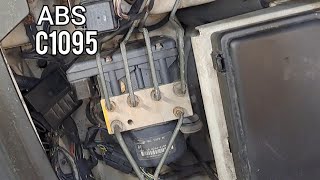
- Associated OBD-II Codes: A proper scan tool that can read ABS codes (not all basic scanners can) will often find specific trouble codes. Common codes include C1095 (Pump motor circuit failure), 01276 (ABS Hydraulic pump motor fault), and various communication (U-prefix) or wheel speed sensor circuit codes.
Known Issues, Recalls, and TSBs
After a thorough review of the National Highway Traffic Safety Administration (NHTSA) database and technical service bulletins, no major recalls or widespread TSBs were found specifically for the ABS control module on the 1999-2002 Ford Ranger and Mazda B-Series platform for the US market. Recalls found for Ford Ranger ABS systems relate to much newer model years (2021-2025) and do not apply to the vehicles covered in this guide. The failures seen in these older trucks are typically due to age-related electronic or mechanical breakdown rather than a specific manufacturing defect that prompted a recall.
Diagnosing the ABS Module
Before condemning the expensive ABS module, it's important to rule out simpler problems that can cause the same warning lights.
- Check Fuses: Always start with the basics. Check your owner's manual for the location of the ABS fuses and relays in the under-hood and in-cabin fuse boxes. A simple blown fuse can disable the system.
- Check Brake Fluid: Ensure the brake fluid level in the master cylinder reservoir is at the 'MAX' line. Low fluid can trigger a brake warning light.
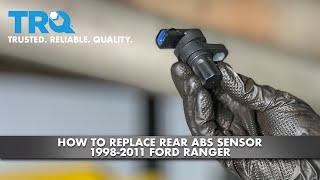
- Inspect Wheel Speed Sensors: The system relies on wheel speed sensors. A common issue is a faulty rear differential speed sensor (VSS), 🎬 Watch: How to replace the rear ABS sensor which can cause both ABS and speedometer problems. Visually inspect the wiring to all sensors for damage, and check the sensors themselves for heavy contamination with metal shavings or dirt.
- Scan for Codes: Use an OBD-II scanner capable of reading ABS (C-prefix) codes. A code like C1095 points directly to the module's pump motor, 🎬 See: Diagnosing and fixing a C1095 pump motor circuit failure while a code for a specific wheel speed sensor points you to that corner of the truck. A 'No Communication' error when trying to talk to the ABS module is a strong sign the module itself has failed.
Programming and Calibration: Is It Required?
This is the most common question for this part, and the answer is nuanced for these specific models.
- The Official Stance: Officially, when replacing an ABS module, Ford's procedure involves a Programmable Module Installation (PMI). This process uses a dealer-level scan tool to copy configuration data (like VIN and tire size) from the old module and write it to the new one. This ensures the module works correctly with the truck's other systems.
- Remanufactured Modules: Some remanufactured modules are sold with the claim that no programming is required. This is often because they are rebuilt to a default state that works for most applications, but it's not guaranteed to be perfect for your specific truck's configuration.
- Used (Recycled OEM) Modules: A used module from another truck will have the VIN and configuration of the donor vehicle. While the truck may run and drive, and the ABS light may go out, there's a risk the ABS could behave unpredictably if the donor truck had different tire sizes or axle ratios.
Pro Tip: For best results when using a used module, it is highly recommended to have it programmed to your vehicle's VIN and tire size. Many independent repair shops with professional scan tools can perform this service for a reasonable fee, often much cheaper than a dealership. While the truck might seem to work without this step, programming ensures the safety system performs as designed.
Buying a Used ABS Control Module: What to Look For
A used OEM module is often a reliable and cost-effective solution. Here’s how to buy a good one:
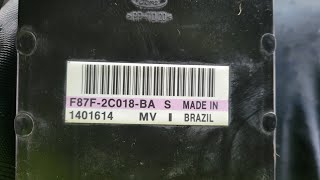
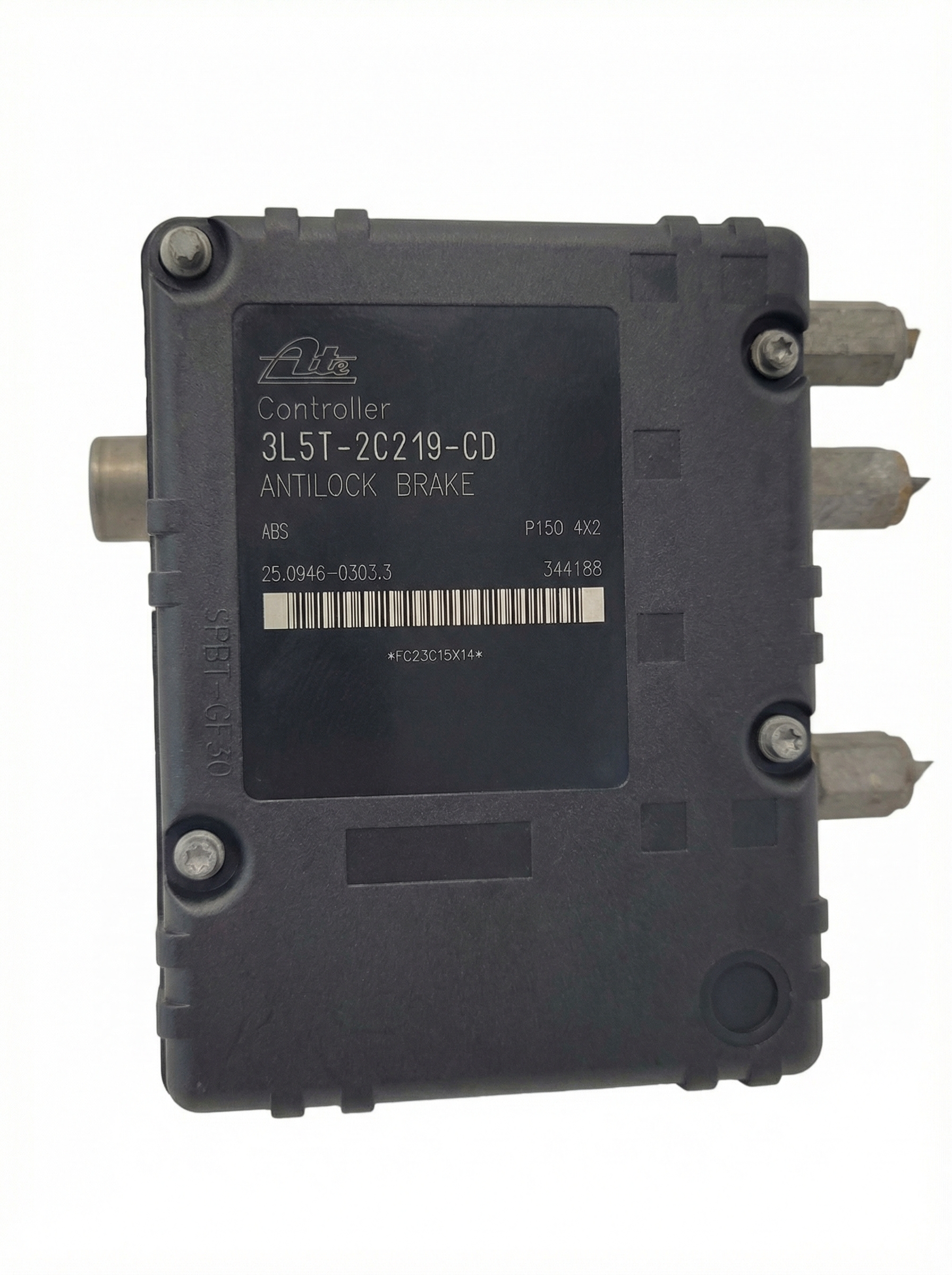
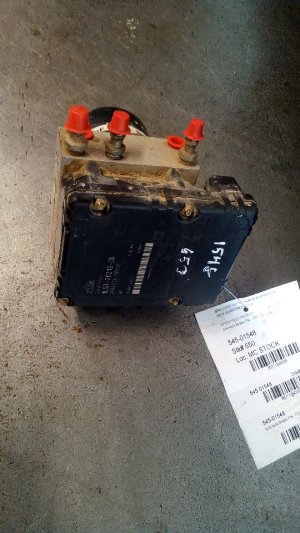
- Match The Part Number EXACTLY: This is the most important rule. Do not buy a module based on looks alone. Ford and Mazda used several different modules that look identical but are not interchangeable. Remove your old module first and get the engineering number printed on the sticker (e.g., XL2T-2C219-AC). Match this number precisely.
- Inspect the Connectors: Look at the large electrical connector pins. They should be straight, clean, and free of any green or white corrosion. Corrosion is a sign of water intrusion, which is a primary cause of failure.
- Check the Pump Body: Inspect the aluminum hydraulic portion for any signs of heavy corrosion, physical damage, or leaking brake fluid around the line fittings.
- Buy From a Reputable Seller: Purchase from a seller that offers a warranty and has good reviews. This gives you recourse if the part is dead on arrival.
- Why Used OEM is a Good Choice: For a part like this, a used original equipment (OEM) module is often preferable to a new, cheap aftermarket part. The OEM part was designed and tested specifically for your truck, ensuring proper fit and function, especially regarding the complex software and hydraulic valving.
Replacement Guide Overview
Replacing the ABS module is a moderately difficult job, mainly because it requires opening the brake system and its location inside the cabin.
Warning: This procedure requires opening sealed hydraulic brake lines. Air will enter the system, and the brakes MUST be thoroughly bled after installation. Failure to do so will result in a spongy or non-functional brake pedal and is extremely dangerous.
- Location: The ABS module is located inside the cab, behind the glove box and to the right of the radio. 🎬 Watch: How to locate and remove the ABS module
- Access: You will need to remove the radio and its surrounding bezel, and also lower the glove box to gain access to the module and its mounting bolts.
- Disconnect Battery: Disconnect the negative battery terminal before working on any electronic components.
- Disconnect Lines and Connectors: Carefully disconnect the electrical connector and the brake lines leading to the module. Be prepared for some brake fluid to drip; use rags to protect the interior.
- Remove and Install: Unbolt the old module and install the new one. Reconnect the brake lines and the electrical connector.
- Bleed the Brakes: This is the most critical step. You must perform a full system brake bleed, starting with the wheel furthest from the master cylinder (typically the rear passenger side) and working your way closer. Ensure the master cylinder reservoir never runs dry. For best results, an 'ABS Service Bleed' or 'Automated Bleed' using a compatible scan tool is recommended to cycle the pump and purge any trapped air from the new module.
Cost Comparison
Prices can vary significantly based on the source of the part. Here are typical cost ranges:
| Part Source | Estimated Cost |
|---|---|
| New OEM (Dealer) | $600 - $800+ (if still available) |
| New Aftermarket | $250 - $400 |
| Remanufactured | $150 - $300 |
| Used OEM (Recycled) | $50 - $150 |
| Shop Labor for Installation | $100 - $250 (plus cost of programming, if needed) |
Frequently Asked Questions (FAQ)
Can I drive my truck with a bad ABS module?
Yes, but with caution. Your normal hydraulic brakes will still work, but you will not have anti-lock functionality. This means your wheels can lock up in a panic stop, increasing stopping distance and the risk of skidding. It is not recommended to drive for long periods or in adverse weather with a known ABS fault.
Do I need a special tool to bleed the brakes after replacing the module?
A standard manual or pressure bleeding kit will work for a basic bleed. However, to ensure all air is purged from the new ABS pump's internal passages, a scan tool that can perform an 'ABS Service Bleed' is highly recommended. This function electronically cycles the pump and valves to push out any trapped air bubbles that a standard bleed might miss.
The ABS light is on, but my brakes feel fine. What's the problem?
This is a common scenario. The ABS system performs a self-test every time you start the truck. If it detects a fault in a sensor, the pump, or the module's electronics, it will turn on the warning light and disable the ABS functions as a precaution. Your regular brakes will continue to work normally, but the safety net of the anti-lock system is gone until the fault is fixed.
Why did my speedometer stop working when the ABS light came on?
On these specific Ford/Mazda trucks, the vehicle speed signal originates from a sensor on the rear axle differential. This signal is sent to the ABS module first, which then relays the information to the speedometer in the instrument cluster. If the ABS module fails internally, it can no longer process or pass along this signal, causing the speedometer to fail.
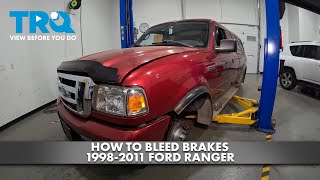
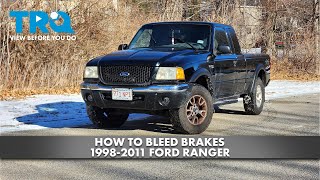
Helpful Videos
Technical Specifications
OEM Part Numbers: XL2T2C219AC XL5Z-2C215-BA XL5Z2B373B XL5Z2C215BA 1F23-43-7B0 1F23437B0 XL2T-2C219-AB
Complete hydraulic pump and electronic control module assembly for 4-wheel ABS systems. Location: In-cabin, behind glove compartment.
We Have This Part in Stock

The information in this article is provided for general reference and educational purposes only. Vehicle specifications, procedures, and part compatibility can vary by production date, trim level, and region. Always consult your vehicle's factory service manual and verify part numbers before purchasing or performing repairs. Safety-critical components such as airbags, seat belts, and braking systems should be installed by a qualified professional.
- Ford Ranger:
- Mazda B4000:
- Mazda B2300:
- Mazda B3000:
- Mazda B2500:
- 🎬 Helpful Videos
- 🛍️ Shop This Part
- Vehicles Covered
- Symptoms of a Failing ABS Module
- Known Issues, Recalls, and TSBs
- Diagnosing the ABS Module
- Programming and Calibration: Is It Required?
- Buying a Used ABS Control Module: What to Look For
- Replacement Guide Overview
- Cost Comparison
- Frequently Asked Questions (FAQ)
- 🎟️ Get 5% Off