

2012-2022 Kia Soul ABS Module: Fire Recalls, Programming, and Replacement Guide
This guide covers the critical fire risk recalls, complex programming requirements, and common failure symptoms for the 2012-2022 Kia Soul ABS control module.
- A critical fire risk recall exists for many 2011-2013 Soul models due to internal brake fluid leaks in the ABS module; owners should park outside until the recall is performed.
- Replacement ABS modules are NOT plug-and-play and require 'Variant Coding' with a professional scan tool to match the module to your car's specific features.
- Part number compatibility is extremely complex. You must match the OEM number exactly and verify features like Idle Stop & Go (ISG) or automatic braking systems.
- Driving with a failed ABS module is possible but disables ABS, traction control, and stability control, significantly increasing the risk of skidding in an emergency.
Symptoms of a Failing ABS Control Module
A failing ABS module will almost always alert you with dashboard warning lights. However, other symptoms can also point to a problem with this critical component.
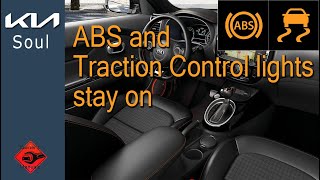
- ABS and Traction Control Warning Lights: The most common sign of a problem is the illumination of the ABS and/or Traction Control/ESC warning lights on your dashboard. These lights indicate that the system has detected a fault and has been disabled.
- Unresponsive or Spongy Brake Pedal: You might notice that the brake pedal feels different, requiring more effort to press or feeling mushy and unresponsive. In some cases, it may feel like you have to pump the brakes to get a response.
- Wheels Locking Up: The primary job of the ABS is to prevent wheel lock-up. If your wheels lock and skid during hard braking, it's a clear sign the ABS module is not functioning. This is a serious safety issue that dramatically increases stopping distances and can lead to a loss of control.
- Speedometer Malfunction: In some vehicles, the ABS module and wheel speed sensors are used to calculate vehicle speed. A faulty module can sometimes cause the speedometer to behave erratically or stop working altogether.
Known Issues, Recalls, and Technical Service Bulletins (TSBs)
Fire Risk Recall Warning: Certain Kia Soul models have been subject to significant safety recalls due to a fire risk associated with the ABS module, also known as the Hydraulic Electronic Control Unit (HECU). The defect involves the potential for brake fluid to leak internally within the HECU, causing an electrical short that can lead to an engine compartment fire, even when the vehicle is parked and turned off. Kia and the National Highway Traffic Safety Administration (NHTSA) have advised owners of affected vehicles to park outside and away from structures until the recall repair is performed.
Key recalls affecting this generation include:
- NHTSA Recall 23V-652: This major recall includes 2011-2013 Kia Soul models. The HECU can experience an electrical short, leading to a fire risk. The remedy involves dealers installing new fuses to prevent the overcurrent condition.
While the most severe recalls target the earlier years of this generation, it's crucial for all owners to check for open recalls. You can verify if your specific vehicle is affected by entering your 17-digit Vehicle Identification Number (VIN) on the NHTSA website.
Technical Service Bulletins (TSBs)
Kia has issued TSBs related to the HECU/ABS module, such as SC197 and SC212, for other models like the Optima and Sorento. These bulletins provide dealers with procedures to test for parasitic electrical draw from the ABS module, which can indicate an internal brake fluid leak. If the current draw exceeds a specific threshold (e.g., >70uA), the HECU must be replaced. While not specific to the Soul, these TSBs highlight the known failure pattern within Kia vehicles of this era.
Programming and Calibration Requirements
Yes, a replacement ABS module on a Kia Soul will almost certainly require programming. This is not a simple plug-and-play part. Modern ABS modules are integrated with other vehicle systems and must be coded to the specific vehicle's VIN and optional features.
This process is often called "Variant Coding." 🎬 See how Kia ABS module programming and variant coding works A professional-grade scan tool is required to perform this procedure. The tool allows a technician to select the specific options your car has (like engine size, automatic start/stop, etc.) and write that information to the new module. Failure to perform variant coding will result in a persistent ABS warning light and fault codes, such as C1702 (coding required).
In addition to programming, other procedures may be necessary after installation:
- Brake Bleeding: The brake system must be properly bled to remove all air. This often requires the scan tool to cycle the ABS pump and valves to ensure all air is purged from the HECU.
- Steering Angle Sensor Calibration: The steering angle sensor, which works with the ESC system, may need to be recalibrated.
Due to these requirements, replacement is typically best left to a professional shop or dealership with the appropriate Kia-specific diagnostic equipment.
Buying a Used ABS Control Module
Purchasing a used ABS module can offer significant savings, but it requires careful attention to detail to ensure you get the right part that can be successfully installed.
- Match Part Numbers Exactly: This is the most critical step. Kia used many different ABS modules for the Soul based on year, engine, and features. The part number on the replacement module MUST match the one on your original unit. Do not rely on visual similarity alone.
- Verify Vehicle Options: The existing buyer warnings highlight the complexity. You must know if your Soul has features like the Idle Stop & Go (ISG) system or the optional automatic braking system, as these determine which module is correct. For example, part number 58920-B2120 is for models without the automatic braking system.
- Inspect Connectors and Housing: When you receive the used part, carefully inspect the electrical connectors for any signs of corrosion, bent pins, or heat damage (melting). Check the aluminum housing for cracks or signs of leaking brake fluid.
- Plan for Programming: Understand that a used module will need to be programmed to your vehicle's VIN. Confirm with your mechanic that they have the capability to program a used Kia ABS module *before* you purchase the part. Some shops may only be willing or able to program brand new units.
- Consider the Source: Purchase from a reputable seller that offers a warranty. This protects you in case the module is faulty, which is a real possibility with used electronics.
Cost Breakdown
The cost to replace a Kia Soul ABS module can vary significantly depending on the part source and labor rates.
| Part Source | Estimated Part Cost |
|---|---|
| New OEM | $1,100 - $2,200 |
| New Aftermarket | $80 - $1,100 |
| Used OEM | $75 - $200 |
| Remanufactured | $200 - $500 |
| Shop Labor | $152 - $223 |
Note: Prices are estimates and can change based on supplier and location. Labor does not include the cost of programming, which may be an additional charge.
Frequently Asked Questions (FAQ)
Can I drive my Kia Soul with a bad ABS module?
Yes, but with significant risks. Your standard hydraulic brakes will still function, but you will not have anti-lock brakes, traction control, or stability control. This means your wheels can lock up during a hard stop, increasing the risk of skidding and losing control, especially on slippery roads. It is strongly recommended to have the module repaired as soon as possible.
Do I have to go to a Kia dealer for programming?
Not necessarily, but it's often the safest bet. A well-equipped independent shop with an advanced, professional-grade scan tool that supports Kia-specific functions can perform the necessary variant coding and calibration. However, a dealership is guaranteed to have the correct tools and software. Always confirm with an independent shop that they can program a Kia ABS module before having them perform the work.
Why are the ABS and Traction Control lights on at the same time?
The Traction Control System (TCS) and Electronic Stability Control (ESC) rely on the same wheel speed sensors and hydraulic control unit as the Anti-lock Braking System (ABS). When the ABS module detects a fault and shuts down the system, it automatically disables TCS and ESC as well, causing all related warning lights to illuminate.
🎬 Watch: Troubleshooting a Kia Soul with ABS and traction lights onMy OBD-II scanner shows no codes, but the ABS light is on. Why?
Standard, inexpensive OBD-II scanners can typically only read codes from the engine control module (ECU), which are primarily related to emissions. They cannot communicate with other modules like the ABS, airbag, or transmission controllers. To read ABS fault codes (which usually start with the letter 'C' for Chassis), you need a more advanced scan tool that can access these other vehicle systems.
Helpful Videos
Technical Specifications
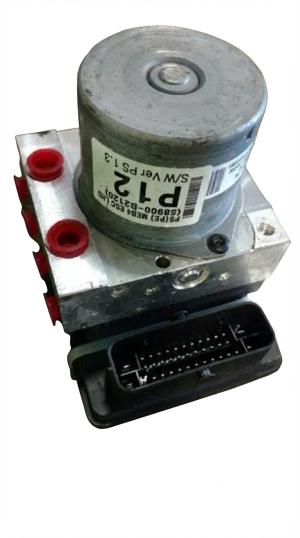
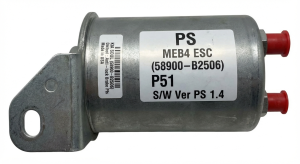
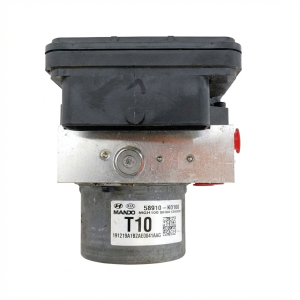
OEM Part Numbers: 58900B2120 589102K200 58910K0100 58910K0200 58920B2120 58920B2506 58920B2720 58920B2010 58920B2190
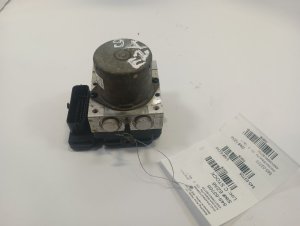
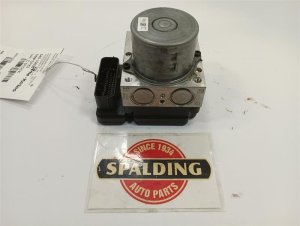
The ABS module, also known as the Hydraulic Electronic Control Unit (HECU), combines the electronic controller with the hydraulic valve body and pump motor.
We Have This Part in Stock

The information in this article is provided for general reference and educational purposes only. Vehicle specifications, procedures, and part compatibility can vary by production date, trim level, and region. Always consult your vehicle's factory service manual and verify part numbers before purchasing or performing repairs. Safety-critical components such as airbags, seat belts, and braking systems should be installed by a qualified professional.
- Kia Soul:
- 🎬 Helpful Videos
- 🛍️ Shop This Part
- Symptoms of a Failing ABS Control Module
- Known Issues, Recalls, and Technical Service Bulletins (TSBs)
- Technical Service Bulletins (TSBs)
- Programming and Calibration Requirements
- Buying a Used ABS Control Module
- Cost Breakdown
- Frequently Asked Questions (FAQ)
- 🎟️ Get 5% Off