

2006-2008 Mitsubishi Eclipse ABS Module: Recall, Failures, and Replacement Guide
This guide covers the critical safety recall for internal corrosion, common failure symptoms, and how to choose the correct used ABS module for your 3.8L V6 Eclipse.
- A critical safety recall (NHTSA 15V337000) exists for internal corrosion; check if your vehicle is eligible for a free repair before buying parts.
- This module (4670A062, MN116368) is ONLY for 3.8L V6 models with automatic transmission and NO Active Stability Control (ASC).
- Replacing with an identical part number from a matching vehicle usually does not require programming.
- Proper brake bleeding after installation requires a scan tool to cycle the ABS pump to remove all trapped air.
Symptoms of a Failing ABS Module
When the ABS module in a 2006-2008 Mitsubishi Eclipse begins to fail, it typically provides several clear warning signs. The most obvious is the illumination of the ABS warning light on your dashboard. Often, the traction control or Active Stability Control (ASC) light will also come on, as these systems rely on the ABS module to function.
- ABS Warning Light On: This is the most common symptom, indicating the system has detected a fault and has been disabled.
- Increased Brake Pedal Travel: A critical symptom noted in a major safety recall is that the brake pedal may travel further to the floor than usual before the brakes engage, reducing braking performance.
- Brakes Locking Up: The primary job of the ABS is to prevent wheels from locking. If your wheels lock up and skid during hard braking, the ABS system is not working.
- Unresponsive or Hard Brake Pedal: In some cases, a failing module can make the brake pedal feel hard to press or, in severe instances, become unresponsive.
- Inconsistent or Unpredictable Braking: The module may behave erratically, causing pulsing or clicking from the brakes even under normal stopping conditions.
Critical Safety Recall: NHTSA 15V337000 (SR-15-004)
Warning: A major safety recall was issued for 2006-2009 Mitsubishi Eclipse models due to internal corrosion within the ABS hydraulic unit. This corrosion can cause valves to seize, leading to a sudden increase in brake pedal travel and reduced braking ability, which significantly increases the risk of a crash.
The recall, known as Mitsubishi campaign number SR-15-004, instructs dealers to inspect, flush, and clean the ABS unit with a high-grade DOT 4 brake fluid. If the unit fails an inspection test, it is to be replaced free of charge. Before purchasing a used part, it is essential to check with a Mitsubishi dealer or use the NHTSA website to see if your vehicle has had this recall service performed. If not, you may be eligible for a free repair, which could solve your problem without needing to buy a part.
Compatibility: The Most Common Buyer Mistake
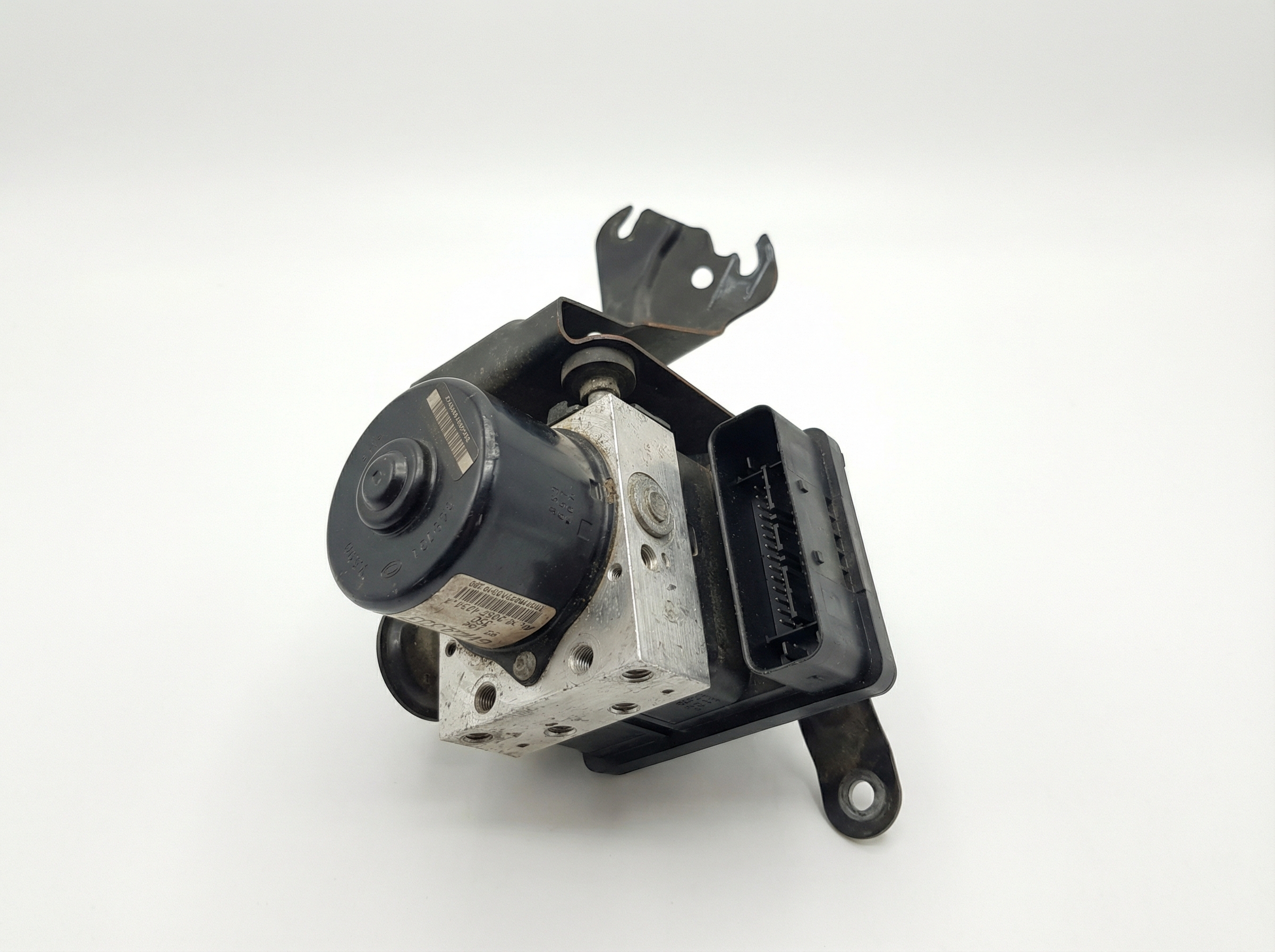
The ABS pump and module assembly for the 2006-2008 Eclipse is highly specific to the vehicle's configuration. The information provided at the start is correct and crucial for buyers.
This specific module, with part numbers 4670A062 and MN116368, fits ONLY:
- Models with the 3.8L V6 engine.
- Models with an automatic transmission.
- Models that do NOT have Active Stability Control (ASC).
Many used parts on the market are for the 4-cylinder (2.4L) models and are not interchangeable. Always verify the part number on your original module before ordering a replacement.
How to Check for Active Stability Control (ASC)
Active Stability Control (ASC) is Mitsubishi's name for its electronic stability program. To determine if your vehicle is equipped with ASC, look for an "ASC OFF" switch on the dashboard, typically located on the lower panel to the left of the steering wheel. If you have this switch, the ABS module discussed here is likely not the correct one for your vehicle. Vehicles without ASC will have a blank plate where the switch would be.
Buying a Used 2006-2008 Eclipse ABS Module
Given that a new OEM module can be very expensive, a used OEM part is a practical option for many owners. Here’s what to look for:
- Verify the Part Number: This is the most critical step. The part number on the replacement module MUST match your original part (e.g., 4670A062 or MN116368). Do not rely on visual similarity alone.
- Check for Corrosion: Inspect the aluminum block for heavy corrosion or oxidation, especially around the brake line ports. The recall was issued for internal corrosion, so external condition can be an indicator of the environment the part came from.
- Inspect Electrical Connectors: Ensure the connector pins are straight, clean, and free of any green or white corrosion. Damaged pins can cause communication errors.
- Source Vehicle Information: If possible, get the VIN of the vehicle the part was removed from. This allows you to check its service history, including whether the ABS recall was performed.
Programming and Installation Notes
Does this module need to be programmed?
Generally, if you are replacing your module with a used one that has the exact same part number from a vehicle with the same engine, transmission, and options (V6, AT, no ASC), programming is not required. These units are often considered "plug-and-play." Some remanufacturers also advertise their repaired units as not requiring any dealer programming. However, if you install a module and experience new issues, such as an inaccurate speedometer, it may indicate a mismatch that requires a dealer or specialist with advanced diagnostic tools to resolve.
Installation and Brake Bleeding
Replacing the ABS module is a moderately difficult job, primarily because it requires opening the hydraulic brake system.
- Disconnect the negative battery terminal.
- Unplug the main electrical connector from the ABS module.
- Using a flare nut wrench to avoid stripping the fittings, carefully disconnect the brake lines from the module. Be prepared for brake fluid to leak out.
- Unbolt the module from its bracket and remove it from the vehicle.
- Installation is the reverse of removal. After installing the new module and reconnecting the lines, the entire brake system must be thoroughly bled.
Warning: Simply bleeding the brakes at the calipers may not be enough to remove all air from the ABS module's internal passages. A proper bleeding procedure often requires a specialized scan tool to cycle the ABS pump and valves to purge trapped air. Failure to do this can result in a spongy or unresponsive brake pedal.
Replacement Cost Breakdown
Prices can vary by location and supplier, but here are typical cost ranges:
| Part Type | Estimated Cost |
|---|---|
| New OEM | $900 - $1100 |
| New Aftermarket | Not commonly available |
| Used OEM | $100 - $250 |
| Remanufactured / Repair Service | $350 - $450 |
| Shop Labor (Installation & Bleeding) | $150 - $300 |
Frequently Asked Questions (FAQ)
What are the common OBD-II codes for a bad ABS module?
While a faulty wheel speed sensor is the most common cause of an ABS light, a bad module can also be the culprit. Codes related to the ABS pump motor circuit (like C0110), internal control module performance (like C0121), or communication errors (U-codes) often point to a failing module. Sometimes, the module will falsely report wheel speed sensor faults even when the sensors are good.
Can I drive with a bad ABS module?
While the vehicle is generally drivable, it is not recommended for safety reasons. When the ABS light is on, the anti-lock braking and stability control features are disabled. Your standard brakes will still function, but the wheels can lock up during a hard stop, increasing the risk of skidding and losing steering control. Given the recall for reduced braking performance, it is highly advisable to get the system inspected immediately.
Why is my new (used) ABS module still showing a fault?
First, ensure all air is properly bled from the system using a scan tool to cycle the pump. Second, double-check that the part number is an exact match for your original unit and vehicle specifications. If the light persists, the used module itself may be faulty, or there could be an underlying issue with wiring or a wheel speed sensor that was the original problem all along.
What is the difference between the ABS module and the ABS pump?
In the 2006-2008 Eclipse, these are two parts of one assembly. The "module" is the electronic computer part, while the "pump" or "hydraulic unit" is the mechanical part with valves and a motor that controls brake fluid pressure. They are sold and replaced together as a single unit.
Technical Specifications
OEM Part Numbers: 4670A062 MN116368
Fits 2006-2008 Mitsubishi Eclipse with 3.8L V6, Automatic Transmission, and without Active Stability Control (ASC).
We Have This Part in Stock

The information in this article is provided for general reference and educational purposes only. Vehicle specifications, procedures, and part compatibility can vary by production date, trim level, and region. Always consult your vehicle's factory service manual and verify part numbers before purchasing or performing repairs. Safety-critical components such as airbags, seat belts, and braking systems should be installed by a qualified professional.
- Mitsubishi Eclipse:
- 🛍️ Shop This Part
- Symptoms of a Failing ABS Module
- Critical Safety Recall: NHTSA 15V337000 (SR-15-004)
- Compatibility: The Most Common Buyer Mistake
- How to Check for Active Stability Control (ASC)
- Buying a Used 2006-2008 Eclipse ABS Module
- Programming and Installation Notes
- Does this module need to be programmed?
- Installation and Brake Bleeding
- Replacement Cost Breakdown
- Frequently Asked Questions (FAQ)
- 🎟️ Get 5% Off