

Tesla Model 3, Y, S & X ABS Module: Decoding Warning Lights & Mandatory Programming (2017-2026)
A cascade of dashboard alerts often points to the ABS module, but a faulty wheel speed sensor or mandatory software calibration could be the real issue.
- A replacement ABS module is NOT plug-and-play; it requires mandatory programming and calibration using Tesla's proprietary "Toolbox" software.
- A faulty wheel speed sensor can cause the exact same cascade of warning lights and should be ruled out via diagnostics before replacing the entire module.
- Failure disables critical safety systems including ABS, traction control, stability control, and automatic emergency braking.
- You must match the OEM part number from your original module exactly, as several different versions exist across these models and years.
Symptoms of a Failing Tesla ABS Module
A problem with the ABS module in a Tesla Model 3, Model Y, Model S, or Model X rarely presents as a single warning light. Instead, owners typically experience a sudden cascade of alerts on the central touchscreen as multiple systems that rely on the ABS module go offline simultaneously.
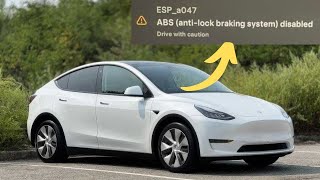
- Multiple Warning Lights: The most common sign is the simultaneous appearance of alerts for "ABS Disabled," "Traction Control Disabled," and "Stability Control Disabled."
- Loss of Driver-Assist Features: You will likely see messages stating that cruise control, automatic emergency braking (AEB), and Autopilot features are unavailable. These systems require data from the ABS module to function.
- Regenerative Braking Disabled: The vehicle will lose its characteristic regenerative braking function. This causes it to coast more freely when you lift off the accelerator and requires more use of the physical brake pedal.
- "Vehicle Hold" Unavailable: The feature that holds the car in place at a stop without you needing to press the brake pedal will be disabled.
- Changes in Brake Pedal Feel: While the primary hydraulic braking system will still work, some drivers report a different or less responsive pedal feel.
Diagnosing the Problem: Module vs. Wheel Speed Sensor
Before condemning the expensive ABS module, it is critical to perform proper diagnosis. A single faulty wheel speed sensor can cause the exact same array of warning lights and symptoms as a failed module. Replacing a sensor is significantly cheaper and easier.
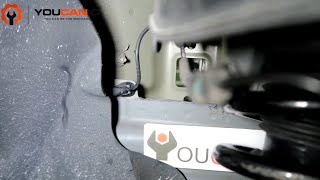
🎬 See how to replace a front ABS sensorPro Tip: You can access your Tesla's diagnostic system to find specific error codes. On your touchscreen, navigate to Controls > Software. Press and hold the large "Model" name (e.g., "Model 3") for about four seconds, then enter the access code "service". In Service Mode, check for active and historical service alerts. Codes pointing to a specific wheel speed sensor (e.g., ESP_a075_ReRWSSSignalNoise, ESP_a044_FrRWSSLostSignal) suggest a sensor issue, while codes like ESP_a001_ecuGenericFault may indicate an internal module failure.
Known Issues, Recalls, and Service Bulletins
For the 2017-2026 Tesla Model 3, Y, S, and X, there are no widespread recalls for hardware failure of the ABS control module itself. However, a few related items have appeared:
- Recall 24V051 (Software Fix): A recall was issued for most 2017-2024 Tesla models because the font size for the Brake, Park, and ABS warning lights on the display was smaller than the federally mandated 3.2mm. This was a compliance issue, not a hardware problem, and was corrected by a free over-the-air (OTA) software update from Tesla.
- "Phantom Braking" Investigation: The National Highway Traffic Safety Administration (NHTSA) has investigated reports of "phantom braking" in Model 3 and Model Y vehicles. This issue is generally considered to be related to the vehicle's Autopilot software and camera-based perception system, not a hardware fault in the ABS control module.
Replacement & Mandatory Programming: Not a DIY Job
Warning: A replacement ABS control module is not a plug-and-play part. Installation requires vehicle-specific programming and calibration by a qualified technician using Tesla's proprietary "Toolbox 3" diagnostic software. Attempting to install a module without programming it will result in the same warning lights and non-functional safety systems.
Physically swapping the ABS module is only half the job. The new or used module must be configured to your car's Vehicle Identification Number (VIN) and calibrated. The official Tesla service procedure includes:
- Firmware Reinstallation: The vehicle's firmware must be re-deployed to the new module.
- ESP Configuration / Stiffness Test: A specific routine must be run using Toolbox 3 to configure the Electronic Stability Program (ESP) and test the system.
- Brake Fluid Bleed: After the hydraulic lines are disconnected and reconnected, a full brake fluid bleed must be performed, which is often initiated via the Toolbox software.
These steps cannot be performed by most DIY mechanics or standard repair shops. The replacement must be done by a Tesla Service Center or a specialized independent shop that has invested in the official Tesla diagnostic tools.
Buying a Used Tesla ABS Control Module: What to Know
With new aftermarket options being virtually nonexistent, a quality used OEM module is often the most practical and cost-effective choice. Here’s what to look for to ensure you get the right part.
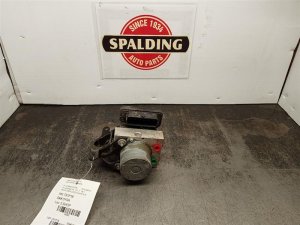
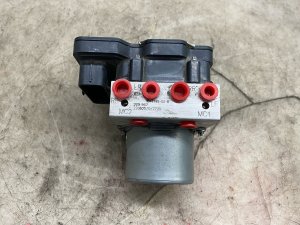
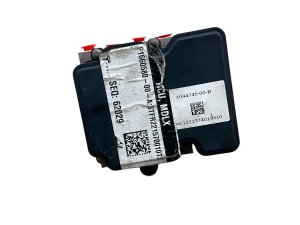
- Match the Part Number Exactly: This is the most critical step. Tesla uses several part numbers that may look similar but have internal hardware or software differences. Do not trust a seller's fitment guide alone. You must physically inspect your vehicle's original module and match the full OEM part number (e.g., 1044745-00-E, 1103541-00-A) to the replacement part.
- Model 3 'Highland' (2024+): The refreshed Model 3, known as 'Highland,' began production in late 2023 and features significant suspension and design changes. It is especially critical for owners of these newer vehicles to verify their original part number before ordering, as it may differ from earlier models.
- RWD vs. AWD: Part numbers may differ between Rear-Wheel Drive and All-Wheel Drive (Dual Motor) configurations. Do not assume they are interchangeable without confirming the number on your original module.
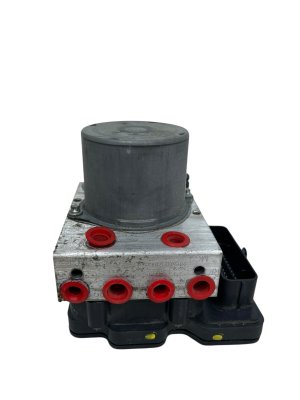
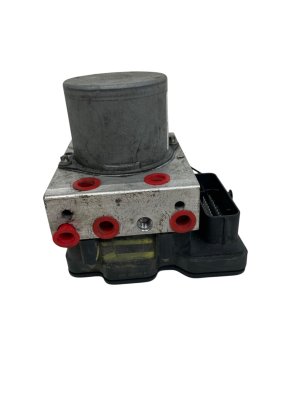
- Physical Inspection: When your used part arrives, inspect the electrical connector pins for any signs of corrosion or damage. Check the housing for cracks or evidence of water intrusion. Ensure all brake line ports are clean and undamaged.
Cost of Replacing a Tesla ABS Control Module
The total cost involves the part itself and the specialized labor for installation and programming. Prices can vary based on your location and the chosen repair facility.
| Item | Estimated Cost | Notes |
|---|---|---|
| New OEM Module | $600 - $1000+ | Often difficult to purchase from Tesla without installation. Price is for the part only. |
| Used OEM Module | $150 - $450 | A common and cost-effective option. Price varies by seller, condition, and part number. |
| Remanufactured Module | $300 - $500 | Less common in the US market but may be available from specialized electronics rebuilders. |
| Shop Labor (Install & Program) | $300 - $600 | Includes physical replacement, brake fluid bleed, and mandatory software calibration using Tesla tools. Labor time is typically 2-3 hours. |
| Total Estimated Cost (Used Part) | $450 - $1050 | Combines the cost of a used OEM part and professional installation/programming. |
Frequently Asked Questions (FAQ)
Why did my dashboard light up with so many warnings at once?
The ABS module provides essential data to many other systems. When it fails, traction control, stability control, regenerative braking, and driver-assist features like Autopilot all lose their required information and shut down as a safety precaution, triggering a cascade of alerts.
Can I still drive my Tesla with a bad ABS module?
Yes, but with significant risk. Your primary hydraulic brakes will still function, but critical safety systems like ABS, traction control, and stability control are disabled. 🎬 Watch: Troubleshooting Tesla ABS disabled warning lights This dramatically increases the risk of losing control or skidding on slippery roads or during an emergency maneuver. Driving should be limited to getting the vehicle to a repair facility.
Can an independent shop replace this, or do I have to go to Tesla?
You do not have to go to a Tesla Service Center, but you cannot use a standard repair shop. The replacement requires a shop that has specifically invested in Tesla's proprietary "Toolbox" diagnostic software for the mandatory programming and calibration. Always confirm with an independent shop that they have this capability before booking the repair.
Is the ABS module the same for Rear-Wheel Drive (RWD) and All-Wheel Drive (AWD) models?
Not necessarily. Part numbers can differ based on drivetrain, model year, and specific features. There is no substitute for verifying the part number on your car's original module. Do not assume RWD and AWD parts are interchangeable without confirming the number.
Helpful Videos
Technical Specifications
OEM Part Numbers: 1038119-00-D 1044745 1044745-00-B 1044745-00-E 1044745-10-B 1103541-00-A 110354100A 1344745-00-A 1659474-00-A 1660580-00-A
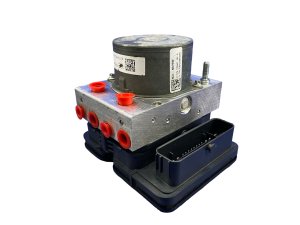
The module integrates the hydraulic control unit (HCU) and the electronic control unit (ECU) into a single assembly. It communicates over the vehicle's CAN bus network. Replacement requires a full brake fluid bleed and software-based calibration.
We Have This Part in Stock

The information in this article is provided for general reference and educational purposes only. Vehicle specifications, procedures, and part compatibility can vary by production date, trim level, and region. Always consult your vehicle's factory service manual and verify part numbers before purchasing or performing repairs. Safety-critical components such as airbags, seat belts, and braking systems should be installed by a qualified professional.
- Tesla 3:
- Tesla Y:
- Tesla S:
- TESLA X:
- 🎬 Helpful Videos
- 🛍️ Shop This Part
- Symptoms of a Failing Tesla ABS Module
- Diagnosing the Problem: Module vs. Wheel Speed Sensor
- Known Issues, Recalls, and Service Bulletins
- Replacement & Mandatory Programming: Not a DIY Job
- Buying a Used Tesla ABS Control Module: What to Know
- Cost of Replacing a Tesla ABS Control Module
- Frequently Asked Questions (FAQ)
- 🎟️ Get 5% Off