

Tesla Model S, X, 3, Y ABS Module Failure: Warning Lights, Diagnosis & Replacement Guide (2016-2025)
This guide decodes the cascade of warning lights from a faulty ABS module and explains the mandatory programming required for replacement on your Tesla Model S, Model X, Model 3, or Model Y.
- A replacement ABS module is NOT plug-and-play; it requires mandatory programming and calibration using Tesla's proprietary "Toolbox" software.
- A faulty wheel speed sensor can cause the exact same cascade of warning lights and should be ruled out via diagnostics before replacing the entire module.
- You must match the OEM part number from your original module exactly, as several different versions exist and they are not interchangeable.
- Due to software requirements, final installation must be completed by a Tesla Service Center or a specialized independent shop with access to Tesla's diagnostic tools.
Symptoms of a Failing Tesla ABS Module
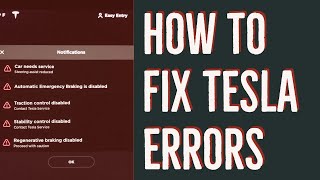
A problem with the ABS module in a Tesla rarely presents as a single, simple warning light. Instead, owners typically experience a sudden cascade of alerts on the central touchscreen as multiple systems that rely on the ABS module's data go offline. It's crucial to distinguish these symptoms from a single faulty wheel speed sensor, which can present identically.
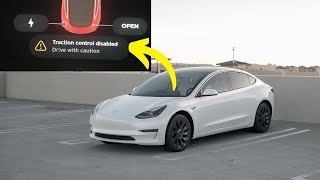
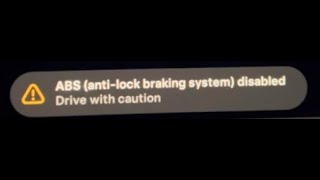
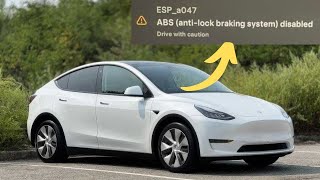
- Multiple Warning Lights: The most common sign is the simultaneous appearance of alerts for "ABS Disabled," "Traction Control Disabled," and "Stability Control Disabled."
- Loss of Driver-Assist Features: Autopilot, Traffic-Aware Cruise Control, and Automatic Emergency Braking will be disabled, often with corresponding error messages.
- Disabled Regenerative Braking: The vehicle will lose its characteristic regenerative braking function. This causes it to coast more freely when you lift off the accelerator and requires more use of the physical brake pedal.
- "Vehicle Hold" Unavailable: The feature that keeps the car stationary at a stop without you needing to press the brake pedal will be disabled.
- Changes in Brake Pedal Feel: While the primary hydraulic braking system will still function, some drivers report a different or "spongy" pedal feel. In some cases, the pedal may feel unusually firm.
- Diagnostic Trouble Codes (DTCs): Using the vehicle's Service Mode, you may find specific fault codes. Codes like ESP_a067 and ESP_a080 have been linked to ABS system failures.
Diagnosing the Fault: Module vs. Sensor
Because a faulty wheel speed sensor can perfectly mimic a bad ABS module, proper diagnosis is the most important step to avoid an expensive misdiagnosis. You can access your Tesla's diagnostic system to find specific error codes.
- Enter Service Mode: On your touchscreen, navigate to Controls > Software. Press and hold the large "Model" name (e.g., "Model 3") for about four seconds, then enter the access code "service".
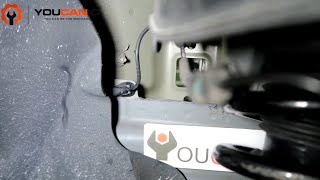
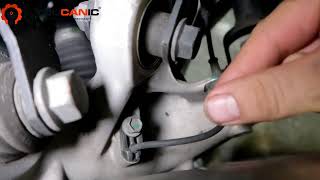
- Check Service Alerts: Within Service Mode, you can view active and historical service alerts. An error code pointing to a specific corner of the car (e.g., "Front Left Wheel Speed Sensor") strongly suggests a sensor issue. 🎬 See this step-by-step guide on replacing a wheel speed sensor A more general code related to the ESP or ABS controller points toward the module itself.
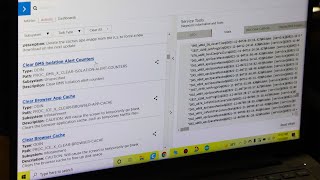
Pro Tip: Before assuming the worst, try a soft reset by holding both scroll wheels on the steering wheel until the screen turns black. If that doesn't work, try a hard reset by powering the car off via the touchscreen (Controls > Safety > Power Off) and waiting at least two minutes before touching the brake pedal to wake it. 🎬 Watch: How to perform a hard reset to clear error messages Sometimes, a software glitch can cause these errors, and a reset may resolve it.
Known Issues, Recalls, and TSBs
As of early 2026, there are no widespread recalls for mechanical or electronic failure of the ABS control module on these Tesla models. However, a recall was issued in February 2024 (NHTSA Campaign Number SB-24-00-003) because the font size for the Brake, Park, and ABS warning lights was too small on the instrument panel. This was corrected with an over-the-air (OTA) software update and does not relate to the physical function of the ABS module.
Buying a Used Tesla ABS Control Module
With new OEM parts sometimes on backorder and new aftermarket options being nonexistent, a quality used OEM module is often the most practical and cost-effective solution. However, this is not a simple purchase. Extreme care must be taken to ensure you get the right part.
- Match the Part Number EXACTLY: This is the most critical step. Tesla uses many different part numbers across these models, and they are not interchangeable. Do not rely on a seller's fitment guide alone. You must physically inspect your vehicle's original module and match the full OEM part number (e.g., 1044745-00-B, 1659474-00-A) to the replacement part.
- AWD vs. RWD: Some modules are specific to All-Wheel Drive (AWD) models and will not work on Rear-Wheel Drive (RWD) vehicles. This should be specified by the part number, but it's a key detail to verify.
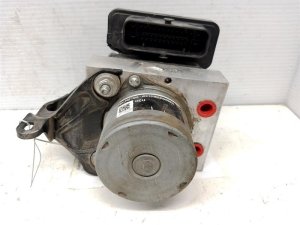
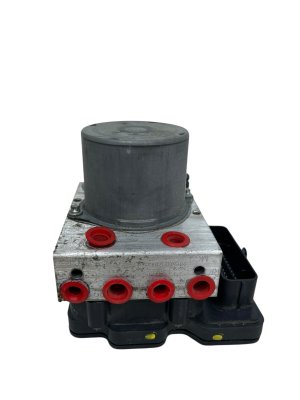
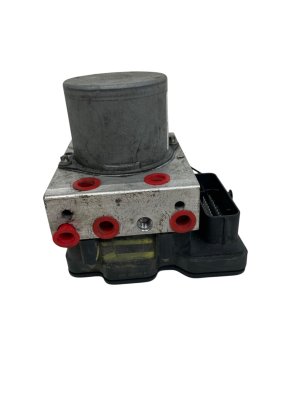
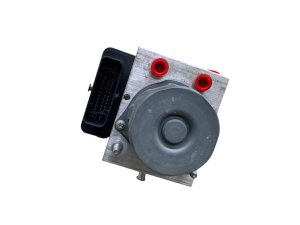
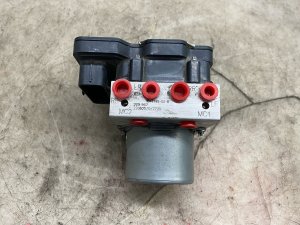
- Inspect for Damage: When buying online, carefully examine photos of the unit. Look for any signs of corrosion on the aluminum valve body, damage to the plastic electrical connectors, or broken mounting points. The module is located in the front of the car and can be susceptible to damage in a collision.
- Source from Reputable Recyclers: Purchase from sellers who test their parts and offer a warranty. A low-mileage donor vehicle is ideal, but the electronic programming is more important than the mileage itself.
Compatibility Warnings:
- Model S/X Refresh (2021+): The refreshed "Palladium" or "Plaid" Model S and Model X use different ABS modules than earlier 2016-2020 models. Part numbers like 1659474-00-A are specific to these newer vehicles.
- Model 3 Refresh (2024+ 'Highland'): The 2024 'Highland' Model 3 is a significant redesign. This guide's fitment for Model 3 ends with the 2023 model year. Parts for the Highland are not interchangeable with earlier Model 3s.
- Part Number 1044745-00-B: This part number is frequently listed for the Model 3 but has also been seen on the Model X. If your vehicle has this part, it is mandatory to confirm the number visually before ordering a replacement.
Replacement, Programming, and Calibration
Warning: A replacement ABS control module—whether new or used—is NOT plug-and-play. It absolutely must be electronically configured to your specific vehicle to function. This is not a DIY-friendly job for the average home mechanic.
The replacement process involves three main stages:
- Physical Installation: The module is typically located in the front trunk ('frunk') area. The procedure involves disconnecting the 12V battery, removing the underhood storage unit, disconnecting the electrical connector and multiple brake hard lines, and unbolting the module from the chassis.
- Brake System Bleeding: Once the new module is installed and the lines are reconnected, the entire brake system must be bled of air. This is not a standard manual bleed; it requires a pressure bleeder and the use of Tesla's diagnostic software to cycle the ABS pump and valves to purge all trapped air.
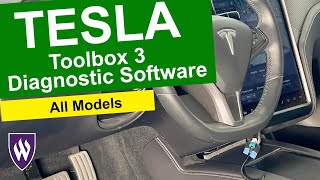
- Software Configuration: This is the most critical step and requires Tesla's proprietary "Toolbox 3" diagnostic software. The procedure includes:
- Firmware Reinstallation: The vehicle's firmware must be re-deployed to the new module.
- ESP Configuration / Stiffness Test: A specific routine is run to configure the Electronic Stability Program (ESP) and perform a brake stiffness test to ensure everything is calibrated correctly.
Due to these software requirements, the final programming and calibration must be performed by a Tesla Service Center or a specialized independent repair shop that has a legitimate subscription to the Toolbox 3 software. 🎬 Watch: An overview of Tesla's Toolbox 3 diagnostic software A general mechanic or locksmith cannot program this module.
Cost Breakdown for ABS Module Replacement
| Item | Estimated Cost | Notes |
|---|---|---|
| New OEM Module | $800 - $1,500+ | Purchased through a Tesla Service Center, often includes installation. |
| Used OEM Module | $250 - $500 | Price varies by model, year, and condition. Part number match is critical. |
| Remanufactured Module | Not Widely Available | This market is not yet well-established for these specific Tesla models. |
| Shop Labor (including programming) | $300 - $600 | Includes physical replacement, software-driven brake bleed, and programming/calibration. Approx. 2.5 hours. |
| Total Estimated Cost (with Used Part) | $550 - $1,100 | Combines the cost of a used module and professional installation/programming. |
Frequently Asked Questions (FAQ)
Can I drive my Tesla with a bad ABS module?
Yes, but it is not recommended. Your car's primary hydraulic brakes will still function, but all advanced safety systems—including Anti-lock Brakes (ABS), Traction Control, and Stability Control—will be disabled. This significantly increases the risk of losing control on slippery roads or during an emergency maneuver. Autopilot and regenerative braking will also be unavailable.
Does a used Tesla ABS module need to be programmed?
Yes, absolutely. Any replacement module, whether it is new or used, must be programmed to your car's specific VIN and calibrated using Tesla's "Toolbox" software. It is not a plug-and-play part. Failure to program the module will result in the same warning lights and disabled systems.
Will replacing the ABS module fix my Autopilot errors?
If the Autopilot errors are a direct result of the ABS module failure, then yes. The Autopilot system relies on data from the wheel speed sensors, which is processed by the ABS module. When the ABS module fails, it takes Autopilot and other driver-assist features offline as a safety precaution. Restoring ABS function by replacing and programming the module should clear these related errors.
Why did my regenerative braking stop working?
Regenerative braking is controlled in part by the ABS module. When the vehicle's computer detects a critical fault in the ABS system, it disables regenerative braking as a safety measure to ensure predictable brake performance. This is one of the most noticeable symptoms of an ABS module failure.
Helpful Videos
Technical Specifications
OEM Part Numbers: 1037797-00-D 1038119-00-D 1044745-00-B 1044745-00-E 1420783-00-D 1420784-00-D 1659474-00-A 1660580-00-A
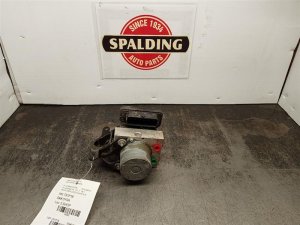
The ABS module is an integrated unit containing an electronic control unit (ECU) and a hydraulic pump/valve body. It connects to the vehicle's CAN bus and four wheel speed sensors. Replacement requires software-driven brake bleeding and VIN-specific programming.
We Have This Part in Stock

The information in this article is provided for general reference and educational purposes only. Vehicle specifications, procedures, and part compatibility can vary by production date, trim level, and region. Always consult your vehicle's factory service manual and verify part numbers before purchasing or performing repairs. Safety-critical components such as airbags, seat belts, and braking systems should be installed by a qualified professional.
- TESLA S:
- Tesla X:
- TESLA 3:
- Tesla Y:
- 🎬 Helpful Videos
- 🛍️ Shop This Part
- Symptoms of a Failing Tesla ABS Module
- Diagnosing the Fault: Module vs. Sensor
- Known Issues, Recalls, and TSBs
- Buying a Used Tesla ABS Control Module
- Replacement, Programming, and Calibration
- Cost Breakdown for ABS Module Replacement
- Frequently Asked Questions (FAQ)
- 🎟️ Get 5% Off