

2021-2025 Ford Mustang Mach-E Accelerator Pedal: Decoding Faults, Recalls, and Replacement
This guide covers common failure symptoms, critical recall information, and how to choose the correct used accelerator pedal assembly for your 2021-2025 Ford Mustang Mach-E.
- Two different pedals exist: a standard black plastic version (LJ9Z-9F836-A) and a metal-trimmed GT version (LJ9Z-9F836-B). They are not interchangeable; verify which one your car has.
- Acceleration problems may not be the pedal itself. Check if your vehicle has had recalls 22V-333 (software) and 23S56 (battery contactors) completed, as they cause similar symptoms.
- The most common sign of a true pedal failure is the P2138 diagnostic trouble code, which usually results in the vehicle entering a reduced-power 'limp mode'.
- Replacement is simple for DIYers, requiring only basic tools and about 20 minutes. No programming is needed.
Known Issues, Recalls, and Technical Service Bulletins (TSBs)
While the accelerator pedal assembly itself has proven reliable, several major recalls related to acceleration behavior can mimic the symptoms of a faulty pedal. It is critical to check if these recalls have been completed on your vehicle by entering your VIN on the NHTSA website.
NHTSA Recall 22V-333: Powertrain Software Fault
A small number of 2021 Mustang Mach-E models were recalled for a software issue in the Powertrain Control Module (PCM). An incorrect software update could cause the vehicle's safety systems to misinterpret data from the motors. This could lead to unintended acceleration, sudden deceleration, or a complete loss of power, increasing the risk of a crash. A warning light on the dashboard may accompany this issue. The fix is a software update performed over-the-air (OTA) or by a Ford dealer, and it does not involve replacing the pedal assembly.
NHTSA Recall 23S56 (Supersedes 22S41): High Voltage Battery Contactor Overheating
On some 2021-2022 Mach-E models, repeated 'wide-open pedal events' (hard acceleration) and DC fast charging could cause the main electrical contactors in the high-voltage battery to overheat. This can lead to the contactors welding shut or failing to close, resulting in a vehicle that won't start or suddenly loses all motive power while driving. While the root cause is in the battery junction box, the symptom is a loss of power directly related to accelerator use. The remedy involves a software update and, for some vehicles, the replacement of the High Voltage Battery Junction Box. Some owners on forums have reported issues with one-pedal driving after this recall is performed, leading to unexpected lurching or failure to slow down.
Pro Tip: Before assuming your accelerator pedal has failed, check for any open recalls on your vehicle. The symptoms of these software and battery issues can be nearly identical to a failing pedal sensor.
Symptoms of a Failing Accelerator Pedal Assembly
When the pedal assembly itself fails, it is typically due to an internal fault in its position sensors. The vehicle's computer detects that the signals from the redundant sensors no longer match and triggers a fault.
- Check Engine Light or Wrench Light: This is often the first indicator. A scan tool will likely reveal Diagnostic Trouble Code (DTC) P2138, which specifically points to a 'Voltage Correlation' error between the pedal's internal sensors.
- Reduced Power or 'Limp Mode': The vehicle may display a 'Powertrain Malfunction' or 'Service Vehicle Soon' message and severely limit motor output. Acceleration will be extremely sluggish, and top speed may be restricted as a safety measure.
- Hesitation or Lag: You may press the pedal and experience a noticeable delay before the vehicle responds. The response might also be jerky or inconsistent.
- No Response: In a complete failure, the accelerator pedal may do nothing at all.
- Physical Pedal Feel: In a rare case reported by an owner, the pedal felt physically 'loose' without resistance, which was followed by deceleration. This was suspected to be caused by the assembly not being properly clipped into its mounting bracket.
Buying a Used 2021-2025 Mach-E Accelerator Pedal: What to Check
A used OEM accelerator pedal is an excellent, cost-effective alternative to an expensive new part, especially since quality aftermarket assemblies are not widely available. However, careful inspection is key.
Standard vs. Metal GT Performance Pedal: A Critical Difference
The most important step is to verify which pedal your Mach-E is equipped with. There are two versions that are not interchangeable.
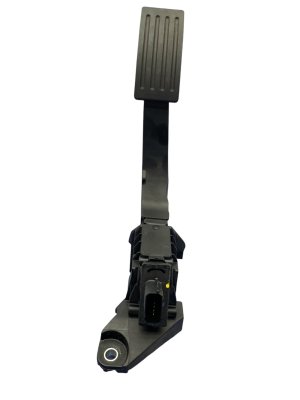
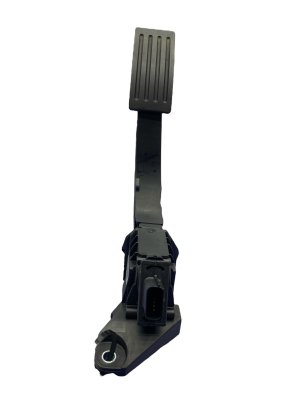
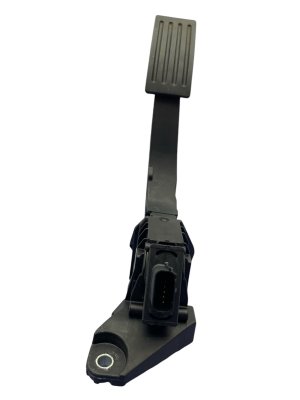
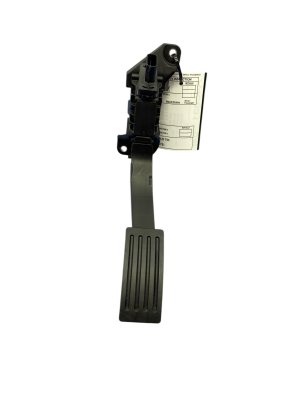
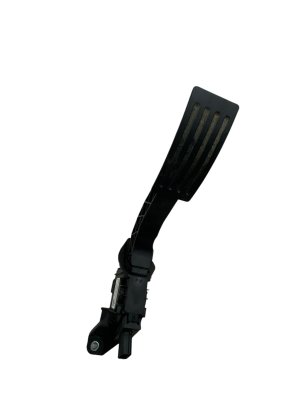
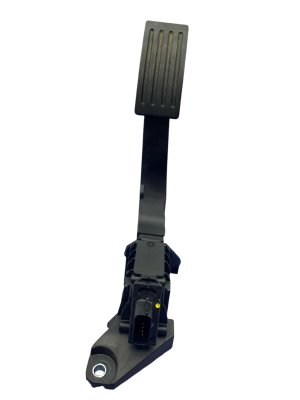
- Standard Pedal: Found on most Mach-E trims, this is a simple black plastic pedal. The correct service part number is typically LJ9Z-9F836-A.
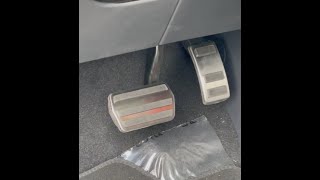
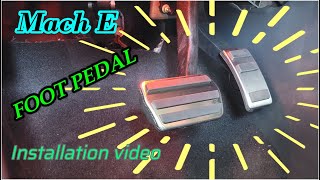
- Metal-Finish Pedal: Found on GT and GT Performance Edition models, this pedal has a brushed aluminum trim piece 🎬 See a comparison of standard and sport pedal covers for a sportier look. The part number is often LJ9Z-9F836-B.
Warning: The standard black accelerator pedal will not match vehicles originally equipped with the optional metal finish pedal. Always confirm your vehicle's original pedal type before ordering.
Physical Inspection
- Check the Part Number: The part number is printed on a sticker on the side of the assembly. Match it to your original part. The engineering number (e.g., LJ9C-9F836-AB) can also be used for matching.
- Inspect the Connector: Look at the electrical connector pins. They should be straight, clean, and free of any corrosion or damage.
- Examine the Housing: Check the plastic housing for any cracks or signs of damage. Ensure the mounting tabs are intact.
- Pedal Action: The pedal should move smoothly and return crisply via its internal spring. Any binding or gritty feeling is a red flag.
Replacement Guide
Replacing the accelerator pedal assembly is a straightforward job suitable for a DIY mechanic with basic tools.
- Disconnect the 12V Battery: While not always strictly necessary for this component, it is a best practice when working on any vehicle electronics.
- Remove Trim (If Necessary): Depending on the vehicle, you may need to remove a small plastic trim panel near the base of the pedal to access the mounting nuts.
- Unbolt the Assembly: The pedal assembly is typically held to the firewall by two or three 10mm nuts. Remove these nuts.
- Disconnect the Electrical Connector: Slide the red locking tab back, then press the release tab and pull the connector away from the pedal assembly.
- Install the New Pedal: Installation is the reverse of removal. Mount the new pedal, tighten the nuts, and securely reconnect the electrical connector, making sure the red lock tab clicks into place.
- Reconnect the Battery: Reconnect the 12V battery if you disconnected it.
Cost Comparison
| Part Type | Estimated Cost |
|---|---|
| New OEM | $90 - $175 |
| New Aftermarket | Not commonly available |
| Used OEM | $50 - $85 |
| Shop Labor | $75 - $150 |
Frequently Asked Questions (FAQ)
Do I need to reprogram the car after replacing the accelerator pedal?
No. The accelerator pedal assembly is a simple sensor and does not require any special programming or calibration after installation. It is a plug-and-play component.
What is the difference between the standard and the GT pedal?
The only difference is cosmetic. The standard pedal is black plastic, while the pedal for GT models has a brushed metal trim piece. They are functionally identical but have different part numbers and are not designed to be interchanged.
🎬 Watch: How to install sport pedals on your Mach-ECan a bad accelerator pedal cause my Mach-E to not 'start'?
Yes. If the Powertrain Control Module (PCM) does not receive a valid signal from the accelerator pedal at startup, it may prevent the vehicle from entering the 'Ready to Drive' state as a safety precaution.
Is it safe to drive with a faulty accelerator pedal?
No. A faulty accelerator pedal can cause unpredictable behavior, including sudden loss of power or incorrect acceleration response. If you suspect your pedal is failing or the vehicle is in limp mode, it is not safe to drive. The vehicle should be serviced immediately.
My car is having acceleration problems, but the pedal seems fine. What else could it be?
Check for open recalls first. The symptoms of the powertrain software recall (22V-333) and the battery contactor recall (23S56) can directly mimic a bad pedal, causing loss of power or unusual acceleration behavior.
Compatible Part Numbers
| Part Number | Description |
|---|---|
| LJ9Z-9F836-A | Standard Black Plastic Pedal Assembly (Service Part) |
| LJ9C-9F836-AB / AA | Standard Black Plastic Pedal Assembly (Engineering Number) |
| LJ9Z-9F836-B | Metal-Finish Pedal Assembly (GT / GT Performance) |
Compatibility Warning: This accelerator pedal is for the all-electric Ford Mustang Mach-E only. It will not fit any gasoline-powered Ford Mustang models.
Helpful Videos
Technical Specifications
OEM Part Numbers: LJ9Z-9F836-A LJ9C-9F836-AB LJ9C-9F836-AA LJ9C9F836 LJ9Z-9F836-B
Drive-by-wire electronic assembly with dual redundant position sensors.
We Have This Part in Stock

The information in this article is provided for general reference and educational purposes only. Vehicle specifications, procedures, and part compatibility can vary by production date, trim level, and region. Always consult your vehicle's factory service manual and verify part numbers before purchasing or performing repairs. Safety-critical components such as airbags, seat belts, and braking systems should be installed by a qualified professional.
- Ford Mustang Mach-E:
- 🎬 Helpful Videos
- 🛍️ Shop This Part
- Known Issues, Recalls, and Technical Service Bulletins (TSBs)
- NHTSA Recall 22V-333: Powertrain Software Fault
- NHTSA Recall 23S56 (Supersedes 22S41): High Voltage Battery Contactor Overheating
- Symptoms of a Failing Accelerator Pedal Assembly
- Buying a Used 2021-2025 Mach-E Accelerator Pedal: What to Check
- Standard vs. Metal GT Performance Pedal: A Critical Difference
- Physical Inspection
- Replacement Guide
- Cost Comparison
- Frequently Asked Questions (FAQ)
- Compatible Part Numbers
- 🎟️ Get 5% Off