

2016-2019 Jaguar XJ Accelerator Pedal: Decoding Part Numbers and Failure Symptoms
Your guide to diagnosing a faulty gas pedal, confirming the correct part number (9X239F832AB), and avoiding common buying mistakes for the Jaguar XJ.
- The most critical step before buying is to physically check your original pedal and verify the part number is 9X239F832AB, as it was used across many model years (2010-2019).
- A failing pedal will almost always trigger a 'Restricted Performance' limp mode and the diagnostic code P2138.
- Replacement is a very simple DIY job that takes less than an hour and requires no special programming.
- A used OEM part is a reliable and cost-effective option, but inspect the electrical connector pins for damage before purchasing.
Fitment Warning: Verifying Part Number 9X239F832AB
Important: While this accelerator pedal assembly is specified for the 2016-2019 Jaguar XJ, the primary OEM part number, 9X239F832AB, was used across the entire X351 generation, which spans from 2010 to 2019. Some sources may list this part for 2010-2015 models, while others specify 2016-2019. Due to potential mid-cycle updates or variations, it is absolutely essential to physically inspect your vehicle's original pedal assembly and confirm the part number stamped on it matches 9X239F832AB before ordering a replacement.
Symptoms of a Failing Accelerator Pedal Assembly
A failing accelerator pedal assembly will cause noticeable and often severe drivability issues. Because the pedal's sensors provide the primary input for engine power, any malfunction can make the vehicle unpredictable or undrivable. Look for the following signs:
- Check Engine Light and Limp Mode: This is the most common symptom. The vehicle's dashboard will illuminate the check engine light and may display a "Restricted Performance" message. The system will enter a fail-safe or "limp home mode," drastically reducing engine power and limiting speed to allow you to pull over safely.
- Poor or No Acceleration: The vehicle may feel extremely sluggish, with a significant delay between pressing the pedal and the engine responding. In some cases, the engine may not respond to pedal input at all.
- Engine Hesitation or Stalling: The car may hesitate or stumble during acceleration as the ECM receives erratic signals from the failing sensors.
- Unstable Idle: While less common, a faulty pedal sensor can send incorrect signals even when your foot is off the pedal, potentially causing an erratic or high idle.
Associated Diagnostic Trouble Codes (DTCs)
A professional scan tool will likely reveal one or more of the following codes if the accelerator pedal assembly is failing:
- P2138 - Throttle/Pedal Position Sensor/Switch 'D'/'E' Voltage Correlation: This is the most definitive code for a failing pedal assembly. It means the two internal sensors are sending conflicting voltage readings to the ECM.
- P2122 - Throttle/Pedal Position Sensor/Switch 'D' Circuit Low Input
- P2127 - Throttle/Pedal Position Sensor/Switch 'E' Circuit Low Input
Buying a Used Accelerator Pedal Assembly: What to Check
Purchasing a used OEM accelerator pedal assembly is a cost-effective solution, as the part is generally reliable and simple to replace. For an electronic component like this, a quality-tested used OEM part is often a safer bet than a cheap, new aftermarket alternative. Here’s what to inspect:
- Confirm the Part Number: As stated above, this is the most critical step. Ensure the used part is stamped with 9X239F832AB or the compatible variant 9X23-9F832-BB. Do not rely on year and model alone.
- Inspect the Electrical Connector: Carefully check the connector pins on the used assembly. They should be straight, clean, and free of any corrosion or green residue. Bent or damaged pins are a major red flag.
- Check Physical Condition: Look for any cracks in the plastic housing or signs of excessive wear on the pedal pad. Ensure the pedal moves smoothly through its range of motion and returns crisply.
- Source from a Reputable Seller: Buy from a recycler that tests their parts and offers a warranty. This gives you recourse if the part is defective.
Known Issues, TSBs, and Recalls
As of late 2025, there are no specific recalls or Technical Service Bulletins (TSBs) from Jaguar or the NHTSA for accelerator pedal assembly failure on the 2016-2019 Jaguar XJ. While other recalls exist for this vehicle range concerning airbags and instrument clusters, the pedal assembly itself has not been the subject of a widespread campaign. However, older TSBs on different Jaguar models have addressed issues with sensor connector materials, highlighting the importance of a clean, secure electrical connection.
A recall (NHTSA 19V-039) was issued for some 2019 XJ models due to a faulty crankshaft pulley bolt, which could lead to engine failure, but this is unrelated to the accelerator pedal assembly.
Cost Comparison
Replacing the accelerator pedal assembly is relatively inexpensive, especially when using a recycled OEM part and performing the labor yourself.
| Part Type | Estimated Cost |
|---|---|
| New OEM | $400 - $600 |
| New Aftermarket | Not commonly available |
| Used OEM | $50 - $125 |
| Shop Labor | $100 - $175 |
Replacement Overview & Difficulty
Replacing the accelerator pedal assembly is a straightforward job suitable for a DIY mechanic with basic tools.
- Difficulty: 1/5 (Very Easy)
- Estimated Time: 0.5 hours
- Tools Needed: Socket set, trim removal tool (optional).
Basic Steps:
- Disconnect the negative terminal of the battery as a safety precaution.
- Remove any lower dashboard trim panels necessary to access the top of the pedal assembly.
- Disconnect the single electrical connector at the top of the assembly.
- Unbolt the assembly from the firewall. It is typically held on by two or three nuts.
- Install the new assembly, reconnect the electrical connector and battery, and test for proper function. No programming or calibration is required.
Frequently Asked Questions (FAQ)
Can I drive my Jaguar XJ with a faulty accelerator pedal?
It is not recommended. If the vehicle is in "Restricted Performance" or limp mode, you may be able to drive a short distance to a safe location at low speed. However, if the pedal is causing unpredictable acceleration or stalling, the vehicle is unsafe to drive and should be towed.
Does a replacement accelerator pedal need to be programmed?
No. The accelerator pedal assembly is a plug-and-play component. The vehicle's ECM will automatically recognize the new sensor signals without any special calibration or programming procedure.
What is the difference between an Accelerator Pedal Position (APP) sensor and a Throttle Position Sensor (TPS)?
The APP sensor is located inside the accelerator pedal assembly in the driver's footwell and reads your foot's input. The Throttle Position Sensor (TPS) is located on the throttle body in the engine bay and measures the actual position of the throttle plate. The P2138 code can sometimes be ambiguous, but in most modern cars, it points to a fault within the 🎬 Watch: Diagnosing pedal sensor error codes on a Jaguar accelerator pedal assembly's redundant sensors.
Why is my pedal vibrating?
A vibrating accelerator pedal is not a symptom of a failing sensor. Some owners have reported a slight vibration around 1200-1300 RPM, which may be a characteristic of the vehicle. If you experience a new or excessive vibration, it is unrelated to the electronic function of the pedal and should be diagnosed as a separate mechanical issue.
Helpful Videos
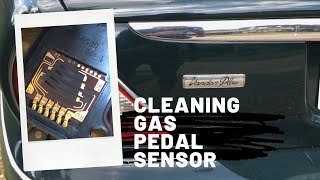
Technical Specifications
OEM Part Numbers: 9X239F832AB 9X23-9F832-BB
Contains two redundant Accelerator Pedal Position (APP) sensors for drive-by-wire control.
We Have This Part in Stock


The information in this article is provided for general reference and educational purposes only. Vehicle specifications, procedures, and part compatibility can vary by production date, trim level, and region. Always consult your vehicle's factory service manual and verify part numbers before purchasing or performing repairs. Safety-critical components such as airbags, seat belts, and braking systems should be installed by a qualified professional.
- Jaguar XJ:
- 🎬 Helpful Videos
- 🛍️ Shop This Part
- Fitment Warning: Verifying Part Number 9X239F832AB
- Symptoms of a Failing Accelerator Pedal Assembly
- Associated Diagnostic Trouble Codes (DTCs)
- Buying a Used Accelerator Pedal Assembly: What to Check
- Known Issues, TSBs, and Recalls
- Cost Comparison
- Replacement Overview & Difficulty
- Frequently Asked Questions (FAQ)
- 🎟️ Get 5% Off