

2023-2025 Toyota Crown, Prius, Grand Highlander & More Accelerator Pedal Guide
Diagnosing and replacing the shared accelerator pedal assembly in the Toyota Crown, Crown Signia, Grand Highlander, Prius, and Prius Prime.
- This accelerator pedal assembly is shared across the 2023-25 Crown, 2025 Crown Signia, 2024-25 Grand Highlander, and 2023-24 Prius/Prius Prime.
- Failure symptoms include hesitation, limp mode, and a check engine light with codes like P2135 or P2138.
- Replacement is simple (two bolts and one connector) and does not require special calibration.
- When buying used, always match the OEM part number (78110-0E050, 78110-47080, or 78110-48130) exactly.
What the Accelerator Pedal Assembly Does on Your Toyota
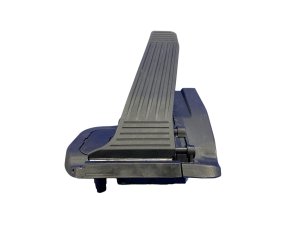
The accelerator pedal in your 2023-2025 Toyota Crown, 2025 Crown Signia, 2024-2025 Grand Highlander, or 2023-2024 Prius/Prius Prime is more than just a simple mechanical lever. It's a sophisticated electronic component known as an Accelerator Pedal Assembly. As part of a 'drive-by-wire' system, it uses electronic sensors to tell the engine's computer how much power you're requesting. When you press the pedal, integrated Accelerator Pedal Position Sensors (APPS) measure the pedal's exact position and how fast you've pressed it. They send this information as a voltage signal to the Engine Control Unit (ECU). The ECU then uses this data to control the throttle, making the car accelerate. This electronic control is crucial for managing engine performance, fuel economy, and modern safety features like stability control.
Symptoms of a Failing Accelerator Pedal Assembly
Because these vehicles are so new, widespread failures are not yet common. However, the symptoms of a failing accelerator pedal assembly are consistent across most drive-by-wire vehicles. A faulty pedal can create dangerous driving situations, so it's important to recognize the signs.
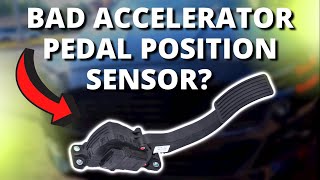
🎬 Watch: Common symptoms of a failing accelerator pedal sensor- Poor or Inconsistent Acceleration: The car may feel sluggish, hesitate, or have a delayed response when you press the gas pedal.
- Engine Stalling or Rough Idle: A faulty sensor can send erratic signals, causing the engine to idle roughly or even stall.
- Vehicle Enters "Limp Mode": The car's computer may detect a critical sensor fault and limit engine power to prevent damage or an unsafe condition. This results in drastically reduced speed and acceleration.
- Check Engine Light: The ECU will store diagnostic trouble codes (DTCs) and illuminate the check engine light. Common codes related to the accelerator pedal position sensor include P2121, P2135, and P2138.
- Problems with Automatic Transmission Shifting: The transmission control module also uses pedal position data to determine when to shift gears. A bad sensor can cause harsh or erratic shifting.
Known Issues, Recalls, and TSBs for Specific Models
As of early 2026, there are no recalls or widespread technical service bulletins (TSBs) specifically for accelerator pedal assembly failure on these models. The vehicles are still relatively new, and such issues may emerge over time. However, some relevant information has been noted:
- 2024-2025 Toyota Grand Highlander: A TSB was issued (T-SB-0017-24) for a "Hesitation Felt While Accelerating 0 - 40 mph With Steady Throttle" on some models. While not explicitly a pedal assembly failure, the symptom is similar and diagnosis would be required to differentiate the cause. The Grand Highlander has also been subject to other unrelated recalls, such as for curtain shield airbags and instrument panel software.
- 2023-2025 Toyota Crown & 2025 Crown Signia: These models were included in a recall for instrument panel software that could fail to display warning lights, but this is unrelated to the accelerator pedal's function.
- 2023-2024 Toyota Prius & Prius Prime: No specific recalls or TSBs related to the accelerator pedal assembly have been identified for this generation.
Pro Tip: The history of Toyota's major accelerator pedal recalls in the late 2000s and early 2010s led to significant design changes. Modern assemblies are built to high standards, but electronic components can still fail. The issues with older models were often mechanical (sticking pedals) or related to floor mat interference, whereas any future issues with these newer models are more likely to be purely electronic sensor failures.
Buying a Used Accelerator Pedal Assembly: What to Look For
Purchasing a used OEM accelerator pedal assembly is a cost-effective solution. Since these are not high-wear mechanical parts, a recycled unit from a low-mileage vehicle is often just as reliable as a new one. Here's what to check:
- Verify the Part Number: This is the most critical step. Match the part number from your original pedal to the used unit. The three known part numbers for this group of vehicles are 78110-0E050, 78110-47080, and 78110-48130. Fitment can vary based on the specific vehicle and trim, so a visual match is not enough.
- Inspect the Electrical Connector: Look closely at the connector pins on the pedal assembly. They should be straight, clean, and free of any corrosion or damage. Bent or corroded pins are a major red flag.
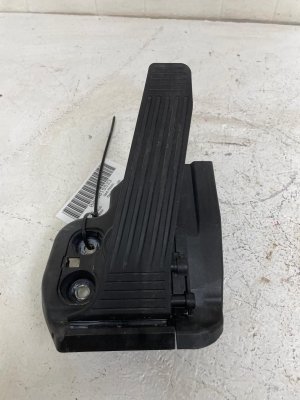
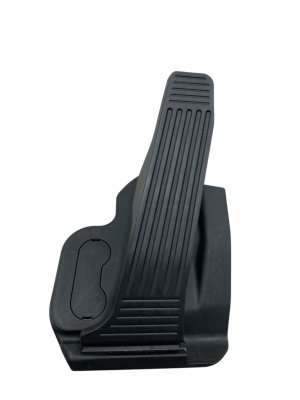
- Check Physical Condition: While simple, ensure the pedal arm isn't bent and the plastic pedal itself isn't cracked or broken. The pedal should move smoothly through its range of motion and return crisply.
- Source from a Reputable Recycler: Buy from a seller that offers a warranty and can provide information about the donor vehicle, such as its mileage. A part from a low-mileage, late-model wreck is an ideal candidate.
Cost of Replacement: New vs. Used
Opting for a used OEM part can offer significant savings over a new part from the dealer without sacrificing quality.
| Part Type | Estimated Cost |
|---|---|
| New OEM (Dealer) | $200 - $325 |
| New Aftermarket | $100 - $200 (Currently limited availability) |
| Used OEM (Recycled) | $75 - $150 |
| Shop Labor Cost | $75 - $150 |
Accelerator Pedal Assembly Replacement Guide
Replacing the accelerator pedal assembly is a straightforward job suitable for most DIY mechanics.
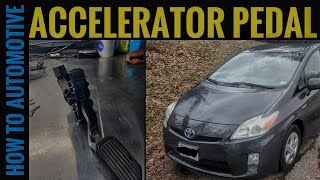
🎬 Watch how quick and easy this Toyota pedal swap can be- Difficulty: 2 out of 5
- Estimated Time: 0.5 - 1 hour
- Tools Needed: Ratchet, extension, 10mm socket (deep socket recommended), possibly a swivel joint.
Step-by-Step Procedure:
- Disconnect the Battery: As a safety precaution, disconnect the negative terminal of your car's 12V battery.
- Locate the Assembly: The pedal is mounted to the firewall in the driver's footwell.
- Remove Mounting Bolts: There are typically two 10mm nuts or bolts holding the assembly in place. The top one can be tricky to reach; a socket with a swivel joint can be very helpful.
- Disconnect the Electrical Connector: Once the bolts are removed, you can pull the pedal down slightly to get better access to the electrical connector at the top. Press the release tab and pull the connector off.
- Install the New Pedal: Installation is the reverse of removal. It's often easier to connect the electrical plug first, then position the assembly and start the mounting bolts by hand to avoid cross-threading. Tighten the bolts securely. 🎬 See this video for a typical Toyota pedal replacement walkthrough
- Reconnect the Battery: Reconnect the negative battery terminal.
Important: After replacement, no special calibration is typically required for these Toyota models. The ECU is designed to self-calibrate by learning the new sensor's zero and full-throttle positions when you first turn the ignition on and operate the pedal. However, it is always a good practice to clear any stored fault codes with an OBD2 scanner after the repair is complete.
Frequently Asked Questions (FAQ)
Do I need to calibrate the new accelerator pedal?
No, a specific calibration procedure with a scan tool is generally not required for these Toyota models. The vehicle's computer will automatically learn the new pedal's sensor values. Simply turn the ignition on (without starting the engine), press the pedal slowly to the floor and release it a couple of times, then start the vehicle.
Are the pedals for the Crown, Prius, and Grand Highlander all the same?
While they share part numbers and are functionally identical, there can be subtle differences. The primary part numbers are 78110-0E050, 78110-47080, and 78110-48130. It is essential to match the part number from your original pedal exactly to ensure perfect compatibility with your vehicle's ECU and mounting points.
Can I drive my car with a faulty accelerator pedal?
It is strongly discouraged. A failing pedal can cause unpredictable acceleration, hesitation, or a complete loss of throttle response, which is extremely dangerous in traffic. If the vehicle enters 'limp mode,' you will have severely limited power, making it unsafe to drive at normal speeds.
Why should I buy a used OEM pedal instead of a new aftermarket one?
Used OEM (Original Equipment Manufacturer) parts are the exact same components the vehicle was built with, ensuring perfect fitment and electronic compatibility. Aftermarket sensors, especially for critical drive-by-wire systems, can sometimes have different voltage ranges or lower quality electronics, potentially causing performance issues or failing prematurely. Given the small price difference, a low-mileage used OEM part is often the more reliable choice.
Helpful Videos

Technical Specifications
OEM Part Numbers: 78110-0E050 78110-47080 78110-48130
Drive-by-wire electronic assembly with integrated Accelerator Pedal Position Sensors (APPS). Operates on a 5V reference signal. Typically contains two or more sensors for redundancy.
We Have This Part in Stock

The information in this article is provided for general reference and educational purposes only. Vehicle specifications, procedures, and part compatibility can vary by production date, trim level, and region. Always consult your vehicle's factory service manual and verify part numbers before purchasing or performing repairs. Safety-critical components such as airbags, seat belts, and braking systems should be installed by a qualified professional.
- Toyota Crown:
- Toyota Crown Signia:
- Toyota Grand Highlander:
- Toyota Prius:
- Toyota Prius Prime:
- 🎬 Helpful Videos
- 🛍️ Shop This Part
- What the Accelerator Pedal Assembly Does on Your Toyota
- Symptoms of a Failing Accelerator Pedal Assembly
- Known Issues, Recalls, and TSBs for Specific Models
- Buying a Used Accelerator Pedal Assembly: What to Look For
- Cost of Replacement: New vs. Used
- Accelerator Pedal Assembly Replacement Guide
- Frequently Asked Questions (FAQ)
- 🎟️ Get 5% Off