

2018-2021 BMW i3 High-Voltage Charge Port Cable: Guide to Charging Failures
This guide covers the critical high-voltage EME charge cable, explaining common failures, diagnostic steps, and what to inspect on a used part.
- This is a high-voltage charge cable, not a generic accessory harness. Failure prevents the car from charging.
- Replacement is NOT a DIY job. The high-voltage system is dangerous and requires a qualified professional.
- When buying used, meticulously inspect the connectors for corrosion or heat damage; this is the most common failure point.
- A related component, the EME module, was subject to a recall (NHTSA 19V-310) that can cause similar symptoms.
Symptoms of a Failing High-Voltage Charge Cable
Failures in the EME charge cable are serious and will prevent the vehicle from charging. Symptoms are typically clear and directly related to the charging process.
1. Complete Failure to Charge
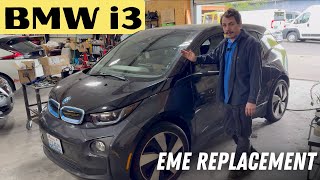
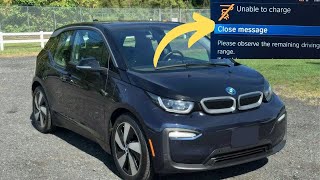
The most common symptom is the vehicle refusing to start a charging session. When you plug in the charging handle (either Level 1, Level 2, or DC Fast Charging), the vehicle will not recognize the connection, or it will immediately fault. 🎬 Watch this walkthrough of a charging socket replacement. The charging status light may stay red or orange, and the vehicle's dashboard will not indicate that charging has begun.
2. Intermittent Charging or Charging Interruptions
A partially damaged cable or corroded connector might allow a charging session to begin, only to have it stop unexpectedly. This can be caused by internal breaks in the wire that separate with slight movements or temperature changes. You might receive notifications from your charging app that the session was interrupted for no apparent reason.
3. "Drivetrain Malfunction" or High-Voltage System Warnings
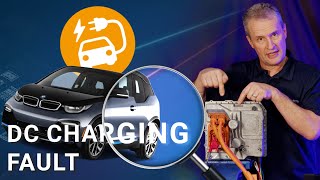
The BMW i3's onboard diagnostic system is highly sensitive to issues in the high-voltage circuit. A fault in the EME charge cable, its connectors, or related sensors can trigger a "Drivetrain Malfunction" warning on the dashboard. While this is a generic warning, if it appears specifically when you attempt to plug in or unplug the charger, 🎬 See a case study on diagnosing DC charging faults. it points strongly toward a problem in the charging hardware.
4. Visible Corrosion or Damage
In some cases, failure is caused by water ingress into the high-voltage connectors. This can lead to visible green or white corrosion on the connector pins at either the charge port end or the EME module end. Physical damage from road debris or improper service can also cause cuts or abrasions in the distinctive orange sheathing, which is an immediate safety hazard.
Warning: The high-voltage system in the BMW i3 operates at lethal voltages. Never attempt to disconnect, repair, or handle any orange-colored cables or components unless you are a trained and qualified technician with the proper safety equipment. De-energizing the system is a required, multi-step process.
Known Issues, Recalls, and Technical Service Bulletins (TSBs)
While there are no specific recalls for the EME charge cable itself, there is a critical recall for a component it directly connects to.
Recall: Electric Motor Electronics (EME) Module
NHTSA Campaign Number: 19V310000 (also listed as 19V-310)
BMW issued a recall for a small number of 2018-2019 i3 vehicles because the Electric Motor Electronics (EME) module could fail. A problem on a circuit board inside the module could cause it to shut down the supply of high-voltage power, leading to a sudden loss of propulsion. The fix is for dealers to replace the entire EME module. While this recall does not involve the cable, a failure of the EME module can present similar symptoms, such as an inability to charge or high-voltage system warnings.
Buying a Used High-Voltage Charge Cable
Given the high cost of a new OEM cable, a used part can be a good value. However, because this is a critical high-voltage component, careful inspection is paramount.
1. Inspect the Connectors
This is the most important check. Look inside both ends of the high-voltage connectors. There should be no signs of green or white powdery corrosion, black marks from electrical arcing, or melted plastic. The pins should be straight and clean. A history of water ingress is a major red flag.
2. Examine the Cable Sheathing
Carefully inspect the entire length of the orange cable. Do not accept a harness with any cuts, deep scrapes, or areas where the insulation feels brittle or cracked. The sheathing is the primary layer of protection, and any breach compromises safety.
3. Check the Locking Tabs
The connectors have locking tabs that ensure a secure, vibration-proof connection. Make sure these tabs are present and not broken. A connector that can't lock into place properly is unsafe and will likely cause faults.
4. Verify the Part Number
Ensure the part number on the used harness matches your original part. The primary part number is 61129398771, which may be cross-referenced with 9398771 or 9398770. Using the wrong cable could lead to fitment issues or incompatibility with the vehicle's systems.
Pro Tip: When purchasing a used high-voltage cable, ask the seller for clear, well-lit photos of the inside of the electrical connectors. This is where the most common and dangerous failures originate.
Cost Comparison
| Part Type | Estimated Cost |
|---|---|
| New OEM | $550 - $650 |
| New Aftermarket | Not Available |
| Used OEM | $100 - $250 |
| Shop Labor | $400 - $600 |
Replacement Information
Replacing the high-voltage EME charge cable is a difficult and dangerous job that should not be attempted by DIY mechanics without specific training in high-voltage EV systems.
- Difficulty: 5 out of 5
- DIY Feasible: No
- Procedure: The process involves professionally de-energizing the entire high-voltage system, which is a safety-critical procedure. Access to the cable requires removing various interior trim panels and potentially under-vehicle trays to route the cable from the charge port to the EME module.
Frequently Asked Questions (FAQ)
Can I drive my i3 with a bad EME charge cable?
Yes, but only until the current battery charge is depleted. A faulty charge cable prevents you from recharging the high-voltage battery. If you have a Range Extender (REx) model, you may be able to continue driving on gasoline, but you will not be able to use the vehicle as an EV.
Can a damaged high-voltage cable be repaired?
No. For safety and reliability, high-voltage cables should never be spliced or repaired. The entire cable assembly must be replaced to ensure proper insulation and connection integrity. Attempting a repair creates a significant risk of fire or electric shock.
Is this the same as the front bumper wiring harness?
No. The front bumper harness powers low-voltage accessories like parking sensors and fog lights. The EME charge cable is a high-voltage component specifically for charging the main battery and is distinguished by its thick, orange-colored sheathing.
Could a bad 12V battery cause charging problems?
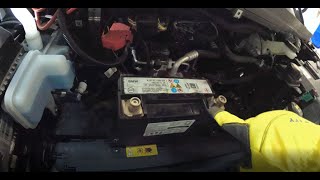
Yes. The BMW i3, like all modern EVs, relies on a conventional 12V battery to power its onboard computers, relays, and contactors that control the high-voltage system. A weak or failing 12V battery can prevent the car's computers from 'waking up' properly to initiate a charging session, even if the high-voltage cable is perfectly fine. Always ensure your 12V battery is in good health before diagnosing high-voltage components.
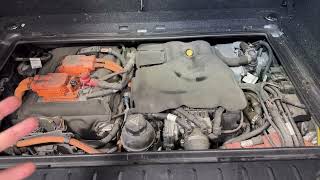
🎬 Watch how a new 12V battery can fix charging errors.Helpful Videos
Technical Specifications
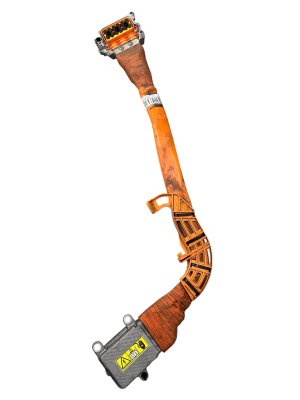
OEM Part Numbers: 61129398771 9398771 9398770
High-voltage cable assembly with orange protective sheathing, connects charge port to Electric Machine Electronics (EME) module.
We Have This Part in Stock

The information in this article is provided for general reference and educational purposes only. Vehicle specifications, procedures, and part compatibility can vary by production date, trim level, and region. Always consult your vehicle's factory service manual and verify part numbers before purchasing or performing repairs. Safety-critical components such as airbags, seat belts, and braking systems should be installed by a qualified professional.
- BMW i3:
- 🎬 Helpful Videos
- 🛍️ Shop This Part
- Symptoms of a Failing High-Voltage Charge Cable
- 1. Complete Failure to Charge
- 2. Intermittent Charging or Charging Interruptions
- 3. "Drivetrain Malfunction" or High-Voltage System Warnings
- 4. Visible Corrosion or Damage
- Known Issues, Recalls, and Technical Service Bulletins (TSBs)
- Recall: Electric Motor Electronics (EME) Module
- Buying a Used High-Voltage Charge Cable
- 1. Inspect the Connectors
- 2. Examine the Cable Sheathing
- 3. Check the Locking Tabs
- 4. Verify the Part Number
- Cost Comparison
- Replacement Information
- Frequently Asked Questions (FAQ)
- 🎟️ Get 5% Off