

2023-2026 Toyota Prius High-Voltage Cable: AWD Corrosion Risk & FWD vs. Prime Differences
This guide covers the critical differences between FWD, AWD, and Prime high-voltage cables and investigates the potential for 'Cablegate' corrosion on 2023-2026 models.
- The #1 purchasing mistake is confusing FWD (821H1-47120) and AWD (821H1-47130) cables, which are not interchangeable.
- AWD models are at risk for 'Cablegate' corrosion at the rear motor connector, an issue that affected previous Prius AWD generations and may not be fully solved on 2023+ models.
- Replacement is a 5/5 difficulty, professional-only job with labor costs often exceeding $2,000 due to the extensive vehicle disassembly required.
- Symptoms of failure include 'Hybrid System Malfunction' warnings, a no-start condition, and sometimes AM radio static on acceleration.
Understanding the 2023-2026 Prius Battery Cables
When discussing a "battery cable" on a modern Prius, it's important to distinguish between two different systems. The first is the conventional 12-volt battery cable, similar to any gas-powered car, which powers the vehicle's computers, lights, and accessories. The second, and the focus of this guide, is the high-voltage (HV) battery cable. You can easily identify HV cables and components by their distinctive bright orange color, a universal warning for technicians to handle them with extreme caution.
Critical Compatibility Warning: Part selection for this component is extremely unforgiving. There are three distinct versions of the 2023-2026 Prius, and their high-voltage cables are NOT interchangeable.
- Standard Hybrid (FHEV) vs. Prius Prime (PHEV): Standard hybrid models and Plug-In Hybrid (PHEV) Prime models use completely different battery packs and cable systems. A cable from a standard Prius will not fit a Prius Prime.
- Front-Wheel Drive (FWD) vs. All-Wheel Drive (AWD): FWD and AWD standard hybrid models use different high-voltage cables. The AWD model has a rear electric motor that requires a long cable running to the back of the vehicle, a component the FWD model does not have. You must match the cable to your vehicle's drivetrain.
Known Issues: The 'Cablegate' Corrosion Risk for AWD Models
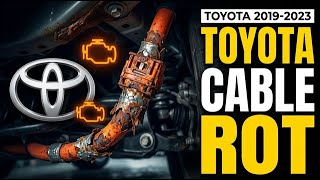
Owners of Toyota AWD hybrid models like the RAV4 Hybrid and Venza may be familiar with "Cablegate," a widespread issue where the main high-voltage cable corrodes at its connection point to the rear electric motor. 🎬 Watch: How Cablegate corrosion triggers a hybrid malfunction This occurs because the connector is exposed to the elements under the vehicle, allowing road salt and moisture to become trapped, leading to severe corrosion that can disable the hybrid system.
Is the 2023-2026 Prius AWD Affected?
This is a critical question for any owner or buyer. A Canadian class-action lawsuit regarding "Cablegate" officially included the 2019-2022 Toyota Prius AWD-e, proving the previous generation was susceptible to this exact failure. While the settlement for that lawsuit specifically excludes 2023 and newer models, it doesn't guarantee the problem has been solved.
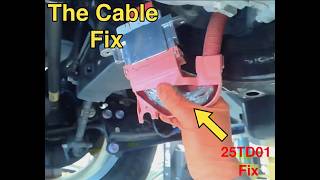
Toyota's fix was to introduce a redesigned cable with an "open" connector shell intended to allow moisture to drain. However, reports from owners of other 2023 Toyota models with this new design show that corrosion can still form rapidly in salt-belt regions, suggesting the new design may not be a complete solution. 🎬 See: Inspection of Toyota's updated high-voltage cable design Therefore, any 2023-2026 Prius AWD that has been operated in winter conditions should be considered at risk for this type of corrosion.
Symptoms of a Failing High-Voltage Cable
A failing HV cable is a critical issue that will not go unnoticed. Symptoms range from subtle electrical quirks to complete system shutdown.
- "Hybrid System Malfunction" Warning: This is the most common and serious symptom. The vehicle's computer has detected a loss of insulation or a fault in the high-voltage circuit and will illuminate a warning on the dashboard.
- Vehicle Will Not Enter "Ready" Mode: The car may power on its 12-volt accessories, but it will refuse to go into "Ready" mode, preventing you from driving. This can happen if the HV system cannot be safely energized.
- Sudden Loss of Power While Driving: A damaged cable can interrupt the flow of power, potentially causing the vehicle to shut down or enter a low-power "limp mode."
- AM Radio Static: An early, often-missed symptom of a corroding cable shield is significant static or interference on the AM radio band, particularly during acceleration. This is caused by electromagnetic interference escaping the damaged cable.
- Visible Corrosion on Connectors: For AWD models, a physical inspection may reveal white or green crusty buildup on the orange cable connector near the rear motor.
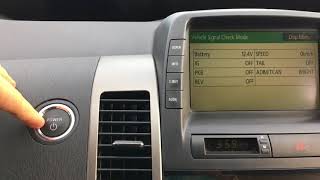
Pro Tip: Before assuming a catastrophic failure of the high-voltage system, always test the 12-volt auxiliary battery. A weak or dead 12-volt battery can prevent the high-voltage relays from closing, mimicking the symptoms of a major hybrid fault and leading to a very expensive misdiagnosis.
🎬 Watch: How to self-test your 12V auxiliary batteryBuying a Used 2023-2026 Prius High-Voltage Cable
Given the high cost of a new OEM cable, a used, recycled part from a low-mileage vehicle is an excellent option. However, careful inspection is key.
Step 1: Verify the Exact Part Number and Application
This is the most important step. You MUST match the part to your vehicle's drivetrain.
| Part Number | Vehicle Fitment | Notes |
|---|---|---|
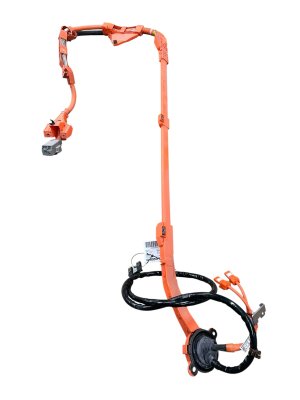
| 821H1-47120 | 2023-2026 Prius FWD (Standard Hybrid) | This is the main HV floor cable for Front-Wheel Drive models only. |
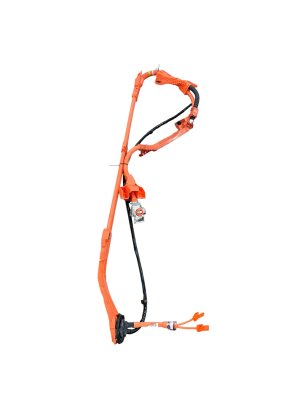
| 821H1-47130 | 2023-2026 Prius AWD (Standard Hybrid) | This is the main HV floor cable for All-Wheel Drive models. It is longer and includes the connection for the rear motor. |
Do not purchase a cable without first confirming it is for the correct drivetrain. An FWD cable cannot be used on an AWD car, and vice-versa.
Step 2: Physical Inspection Checklist
- Inspect the Orange Sheathing: Look over the entire length of the cable for any cuts, deep scrapes, burns, or areas that look melted or brittle. Any breach in the sheathing is cause for rejection.
- Examine All Connectors: Check the plastic connector housings for cracks or damage. Look at the metal pins inside—they should be straight and clean. For AWD cables, pay extremely close attention to the rear motor connector for any signs of white or green corrosion.
- Check Mounting Brackets: Ensure all plastic clips and metal mounting brackets are intact and undamaged. Broken mounts can cause the cable to sag or vibrate, leading to chafing and future failure.
- Confirm No Fire or Heat Damage: Any charring, melting, or heavy discoloration is an immediate red flag that the donor vehicle may have had a serious electrical failure.
Replacement Difficulty & Labor Costs
Warning: EXTREME DANGER. The hybrid high-voltage system can deliver a lethal electric shock. This component should ONLY be replaced by qualified technicians who are trained in high-voltage safety procedures and have the proper equipment to depower the system safely.
- Difficulty: 5 out of 5 (Professional Only)
- DIY Feasible: No
- Estimated Labor Time: 15-20 hours
Replacing the HV floor cable is a massive job. It requires lifting the vehicle, removing numerous underbody panels, and often involves removing interior components like seats and carpeting to access the connections at the battery pack. On older models, dealer quotes have included up to 20 hours of labor for a full harness replacement.
Cost Comparison
The cost to replace a high-voltage cable at a dealership can be staggering, making a used OEM part a very attractive alternative.
| Part/Service | Estimated Cost | Notes |
|---|---|---|
| New OEM Cable | $1,200 - $1,800 | Part cost only. Based on similar HV cables for other Toyota models. |
| Used OEM Cable | $300 - $500 | Significant savings on the part itself. Based on market prices for used cables. |
| Shop Labor | $2,000 - $3,000+ | Based on 15-20 hours at typical shop rates. This is the largest part of the expense. |
| Total Dealer Repair (New) | $3,200 - $4,800+ | A very expensive repair, approaching the costs seen in out-of-warranty "Cablegate" fixes. |
Technical Specifications
OEM Part Numbers
- Wire, HV Floor Under (FWD): 821H1-47120
- Wire, HV Floor Under (AWD): 821H1-47130
- Part Name Code: 821H1
Frequently Asked Questions (FAQ)
Can I drive my Prius with a failing high-voltage cable?
No. A fault in the high-voltage system is a serious safety issue. The vehicle's computer will likely prevent it from entering "Ready" mode. If it does run, you risk a sudden shutdown in traffic or, in a worst-case scenario, an electrical fire. The vehicle should be towed to a qualified repair facility.
Is the 2023+ Prius AWD cable issue the same as the RAV4 Hybrid 'Cablegate'?
It appears to be a very similar issue. The previous generation Prius AWD (2019-2022) was included in a class-action settlement for this exact problem. While the 2023+ models have a redesigned connector, there is evidence from other Toyota models that the new design may still be vulnerable to corrosion in harsh winter climates.
Why is the labor cost so high to replace this cable?
The high-voltage floor cable runs nearly the entire length of the vehicle, from the inverter under the hood to the battery pack under the rear seat. Replacement requires extensive disassembly of the vehicle's underbody shields, interior trim, seats, and carpeting to properly route and secure the new cable.
Do I need to do any programming after replacing the HV cable?
No, the cable itself is not a programmable component. However, the technician will need to use a diagnostic scan tool to clear any fault codes from the hybrid control module after the repair is complete.
Helpful Videos

Technical Specifications
OEM Part Numbers: 821H1-47120 821H1-47130
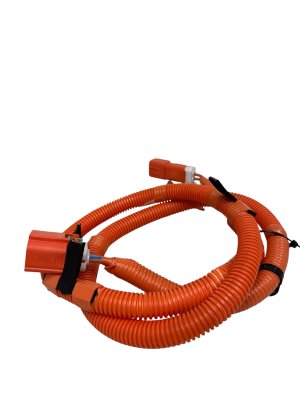
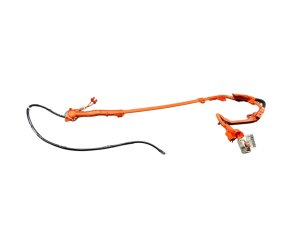
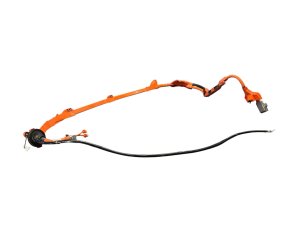
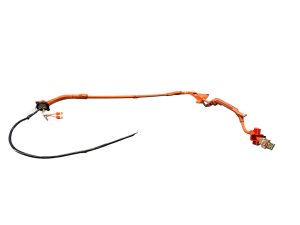
High-voltage DC power cable, orange-colored external sheathing for safety identification. Connects main hybrid battery to inverter/transaxle assembly. Different versions exist for FWD and AWD models.
We Have This Part in Stock

The information in this article is provided for general reference and educational purposes only. Vehicle specifications, procedures, and part compatibility can vary by production date, trim level, and region. Always consult your vehicle's factory service manual and verify part numbers before purchasing or performing repairs. Safety-critical components such as airbags, seat belts, and braking systems should be installed by a qualified professional.
- Toyota Prius:
- 🎬 Helpful Videos
- 🛍️ Shop This Part
- Understanding the 2023-2026 Prius Battery Cables
- Known Issues: The 'Cablegate' Corrosion Risk for AWD Models
- Is the 2023-2026 Prius AWD Affected?
- Symptoms of a Failing High-Voltage Cable
- Buying a Used 2023-2026 Prius High-Voltage Cable
- Step 1: Verify the Exact Part Number and Application
- Step 2: Physical Inspection Checklist
- Replacement Difficulty & Labor Costs
- Cost Comparison
- Technical Specifications
- OEM Part Numbers
- Frequently Asked Questions (FAQ)
- 🎟️ Get 5% Off