

2023-2025 Mazda CX-50 Battery Tray: A Guide to the i-Stop vs. Non-i-Stop Versions
This guide details the critical differences between battery trays for CX-50 models with and without the i-Stop feature, including part numbers, failure symptoms, and inspection tips for used parts.
- The most critical factor is compatibility: Part VA85-56-040 is for models WITH i-Stop, and VA84-56-040 is for models WITHOUT i-Stop.
- A broken battery tray is a critical safety issue. A loose battery can cause a short circuit, loss of power, or a fire.
- When buying a used tray, inspect it carefully for hairline cracks and signs of battery acid damage, and always verify the part number.
- While there are no recalls for the tray, widespread reports of premature battery failure mean you should check your battery for leaks or swelling that could damage the tray.
Variant & Compatibility: The i-Stop Difference is Critical
Warning: The single most important factor when purchasing a battery tray for a 2023-2025 Mazda CX-50 is whether your vehicle is equipped with the 'i-Stop' feature. The trays are different and are not interchangeable.
Mazda's i-Stop is an automatic start-stop system that turns the engine off at a stop to save fuel. Vehicles with this feature use a more robust battery and a different battery tray to accommodate it. Before ordering, you must confirm which version your vehicle has.
- For models WITH i-Stop: The correct OEM part number is VA85-56-040. This part number supersedes the older number VA45-56-040A.
- For models WITHOUT i-Stop: The correct OEM part number is VA84-56-040.
The distinction between Turbo and non-Turbo models does not appear to affect the battery tray itself; the presence of the i-Stop system is the key fitment variable.
Symptoms of a Failing Battery Tray
A battery tray failure is a physical breakdown of the part. You will not get a check engine light, but the symptoms can be noticeable and dangerous if ignored.
- Rattling or Clunking Noises: A common symptom is a heavy rattling or thumping sound coming from the engine bay, especially when driving over bumps or making sharp turns. 🎬 Check this video to diagnose engine bay rattling noises. This is the sound of the unsecured battery moving around in a broken tray.
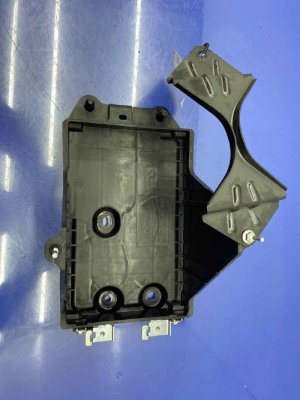
- Visible Cracks or Breaks: The plastic can become brittle over time from heat cycles and vibration. Inspect the tray for cracks, especially around the bolt-down mounting points and at the base where the battery hold-down clamp secures it.
- Loose Battery: Open the hood and try to move the battery by hand. It should be completely solid and unmovable. If you can shift the battery at all, either the hold-down clamp is loose or the tray itself has failed. A loose battery is a serious safety hazard.
- Corrosion or Discoloration: While many CX-50 owners report premature battery failure, a leaking battery can spill sulfuric acid. This acid will eat away at the tray, causing the plastic to become discolored, chalky, and brittle.
Known Issues, TSBs, and Recalls
As of early 2026, there are no specific recalls or Technical Service Bulletins (TSBs) from Mazda or the NHTSA related to the battery tray for the 2023-2025 CX-50. However, it is worth noting that numerous owners on forums like Reddit have reported issues with premature battery death, slow cranking, and batteries that fail to hold a charge. A battery that fails may swell or leak, which can directly cause damage to the battery tray. If you are replacing a damaged tray, it is crucial to also inspect the battery itself for any signs of swelling or leaking and replace it if necessary to prevent damage to the new tray.
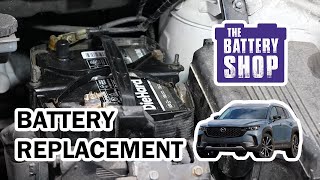
🎬 Watch: Step-by-step guide to installing a new battery.Buying a Used Battery Tray: What to Check
For a structural part like this, a good-condition used OEM tray is an excellent value. It provides the exact fitment and material quality of a new part at a lower cost. Here’s what to inspect before buying:
- Verify the Part Number: This is the most critical step. Ensure the part number stamped on the used tray matches the one you need (VA85-56-040 for i-Stop, VA84-56-040 for non-i-Stop). Do not rely on visual comparison alone.
- Inspect for Hairline Cracks: Carefully check all corners, mounting holes, and the area where the battery hold-down secures. Flex the plastic slightly to reveal any hidden cracks. A tray with any cracks should be rejected.
- Check for Acid Damage: Look for any white, chalky residue, flaking plastic, or discoloration. Battery acid makes the plastic brittle and weak, even if it's not visibly cracked.
- Ensure All Tabs Are Intact: Verify that all mounting tabs and locator pins are present and undamaged. These are essential for securing the tray correctly in the engine bay.
Replacement Overview & Difficulty
Replacing the battery tray is a straightforward job suitable for a DIY mechanic with basic tools. The process involves disconnecting and removing the battery, unbolting the old tray, and installing the new one.
- Difficulty: 2 out of 5
- Estimated Time: 0.5 - 1 hour
- Tools Needed: Ratchet with sockets (typically 10mm and 12mm), extension.
Pro Tip: When disconnecting the battery, always remove the negative terminal first and reconnect it last. This prevents accidental short circuits if your wrench touches a metal part of the car.
| Part Type | Estimated Cost |
|---|---|
| New OEM | $50 - $80 |
| New Aftermarket | Not widely available as of early 2026 |
| Used OEM | $25 - $50 |
| Shop Labor | $75 - $150 |
Frequently Asked Questions (FAQ)
How do I know if my CX-50 has i-Stop?
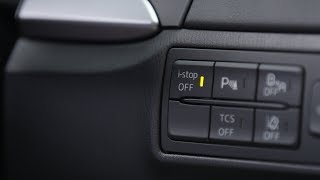
The easiest way is to look for the i-Stop OFF button on the dashboard, typically located to the left of the steering wheel. You can also check your vehicle's original window sticker or manual. When the feature is active, an 'i-stop' indicator light will appear on your instrument cluster 🎬 See how to manage and deactivate the i-stop system. when the engine shuts off at a stop.
Can a broken battery tray cause my car not to start?
Indirectly, yes. If the tray allows the battery to shift, the terminals could disconnect from the cables, resulting in a no-start condition. More dangerously, the positive terminal could contact the hood or another metal component, causing a major short circuit, which could damage sensitive electronics or even start a fire.
Why are there two different battery trays?
The i-Stop system requires a special Enhanced Flooded Battery (EFB) or Absorbent Glass Mat (AGM) battery that is designed for frequent start-stop cycles. These batteries can have slightly different dimensions or hold-down requirements than the standard battery used in non-i-Stop models, necessitating a different tray for a secure fit.
Is it safe to drive with a cracked battery tray?
No. A cracked tray cannot be trusted to hold the heavy battery securely. A sudden stop, sharp turn, or impact could cause the tray to fail completely, letting the battery come loose. This is a critical safety risk and should be repaired immediately.
Helpful Videos
Technical Specifications
OEM Part Numbers: VA85-56-040 (For models with i-Stop) VA45-56-040A (Superseded by VA85-56-040) VA84-56-040 (For models without i-Stop) VA4556041 (Upper bracket/carrier, not the main tray)
Material: Molded, acid-resistant polymer
We Have This Part in Stock

The information in this article is provided for general reference and educational purposes only. Vehicle specifications, procedures, and part compatibility can vary by production date, trim level, and region. Always consult your vehicle's factory service manual and verify part numbers before purchasing or performing repairs. Safety-critical components such as airbags, seat belts, and braking systems should be installed by a qualified professional.
- Mazda CX-50: