

Audi A4, A3, TT & More BCM Failure: A Guide to Water Damage, Coding, and Replacement (2002-2013)
This definitive guide covers the common causes of Body Control Module failure—especially water damage—and the critical programming steps required for replacement in popular Audi models.
- Water damage is the #1 killer of the BCM in A4/S4/Allroad models; it's located under the driver's carpet. Regularly cleaning plenum drains is critical prevention.
- A replacement BCM is NOT plug-and-play. It must be 'coded' with a tool like VCDS to match your car's features, and the key fobs must be re-synced.
- When buying a used module, you MUST match the part number exactly, including the final letter.
- For these specific model years, the BCM is generally not part of the 'Component Protection' system, so an independent shop can do the programming without dealer involvement.
The #1 Cause of Failure: Water Intrusion

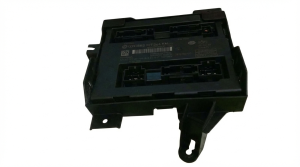
The single most common reason for BCM failure in the 2002-2008 Audi A4, S4, and RS4, as well as the 2004-2005 Allroad Quattro, is water damage. In these models, the module is located in a black plastic box under the driver's side floor carpet. This location is extremely vulnerable to water that leaks into the cabin from two common points:
- Clogged Plenum Drains: The plenum chamber, located under the windshield and housing the battery, has drains to let rainwater escape. When these drains get clogged with leaves and debris, water overflows and can seep into the cabin, pooling directly where the BCM is located.
- Clogged Sunroof Drains: Drain tubes from the sunroof can also become blocked, causing water to back up and leak into the footwells.
For other models like the Audi A3, A6, and TT, the BCM may be in a different, often safer, location. For example, in the Mk1 Audi TT, the module is located behind the seats on the parcel shelf, while in the Mk2 TT, it's in the right side of the luggage compartment. While less prone to plenum drain leaks, water intrusion from other sources like leaking convertible tops or seals can still cause damage. Regardless of the vehicle, any sign of moisture inside the car should be investigated immediately to prevent expensive electronic damage.
Pro Tip: The most important preventative maintenance for an Audi A4, S4, RS4, or Allroad of this era is to regularly clean the plenum drains. This involves removing the plastic cover over the battery and clearing any leaves or debris from the drain holes, especially the one located under the battery tray. 🎬 Watch: How to find and clean your plenum drains Doing this twice a year can prevent catastrophic failure of the BCM.
Symptoms of a Failing Body Control Module

BCM failure leads to a host of strange and frustrating electrical problems. Because the module controls so many different functions, symptoms can be varied and seem unrelated:
- Central Locking and Key Fob Failure: The remote key fob may stop working entirely, or the doors may lock and unlock themselves randomly.
- Power Window and Sunroof Issues: Windows may refuse to go up or down, or may operate intermittently.
- Interior and Exterior Light Malfunctions: Dome lights, puddle lights, or even headlights and taillights may stay on, not work at all, or flicker.
- Alarm System Problems: The car alarm may go off for no reason or fail to arm.
- Parasitic Battery Drain: A faulty BCM can fail to go into "sleep mode," causing a slow drain that kills the battery overnight.
- "No Communication" Fault Codes: A diagnostic scan may show a "01330 - Central Control Module for Central Convenience (J393): No Communications" error, indicating the module is offline.
Diagnosing the BCM

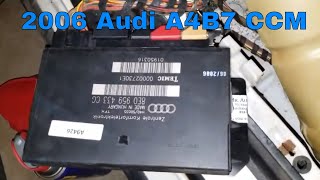
If you suspect a BCM failure, the first step is a physical inspection, especially on A4/S4 models. Pull back the driver's side carpet and check the black box containing the module 🎬 See this walkthrough on locating and replacing the module for any signs of dampness, corrosion, or a tide line from past water intrusion. Opening the module's case may reveal a circuit board with green or white corrosion.
A professional scan tool like VCDS (VAG-COM) can be used to communicate with Address 46 (Central Conv.). If the module communicates, it will report specific fault codes. If it doesn't communicate at all, it points to a power/ground issue or a completely dead module.
Programming and Coding Requirements

Warning: This is not a plug-and-play part. A replacement BCM, whether new or used, must be coded to your vehicle's specific options.
The BCM needs to know what features your car has (e.g., four power windows vs. two, factory alarm vs. none, etc.). This is done through a process called "coding."
- Coding: Using a tool like VCDS, the correct code is entered into the module to match the car's equipment. The best practice is to read and save the "long coding" from the original module before removing it. This code can then be written directly to the replacement unit.
- Key Fob Matching: After the BCM is installed and coded, the remote key fobs must be re-matched to the new module. This is also done through VCDS in the adaptation channels. 🎬 Watch: An overview of Audi coding and adaptation procedures The car will start and drive without this step, but your remote lock/unlock functions will not work.
- Component Protection (CP): For the vehicles in this guide (primarily pre-2009), the Central Convenience Module is generally NOT subject to Component Protection. CP is an anti-theft system found in newer Audis that links modules to the car's VIN and requires online dealer tools to adapt. While some very late model A3s might have elements of this, for the vast majority of these cars, an independent shop or DIYer with VCDS can perform the full installation and coding.
Buying a Used Body Control Module
Given the high cost of a new OEM module, a used BCM is a very popular and cost-effective solution. Here’s what to look for:
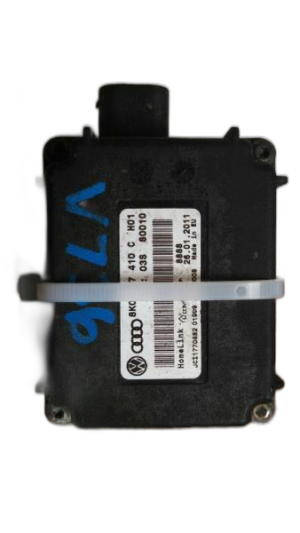
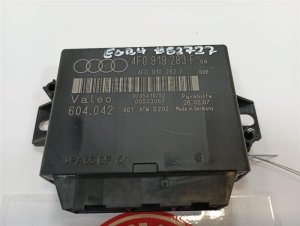
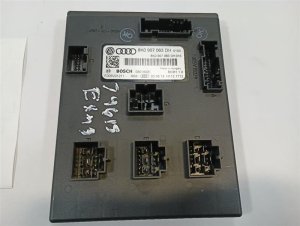
- Match the Part Number EXACTLY: The part number on the replacement module must be an exact match to your original, including the suffix letter (e.g., 8E0 959 433 T). Different letters can indicate different hardware or software versions for different vehicle options. Do not substitute part numbers.
- Inspect for Water Damage: Ask the seller for clear pictures of the module's case and, more importantly, the connector pins. Look for any hint of green or white powdery corrosion. Do not buy a module that shows any signs of ever being wet.
- Source from a Similar Vehicle: While not strictly necessary if you can recode it, getting a module from a car with the same body style (sedan, avant, cabriolet) and options can sometimes make the coding process simpler.
- Buy from a Reputable Recycler: Purchase from a seller that offers a warranty. This protects you if the part is dead on arrival.
Cost of Replacement
Replacing the BCM involves both the part cost and labor for installation and programming.
| Part/Service | Estimated Cost |
|---|---|
| New OEM Module | $500 - $800+ (if available) |
| New Aftermarket Module | $250 - $450 |
| Used OEM Module | $50 - $150 |
| Remanufactured Module | $200 - $350 |
| Shop Labor (Installation) | $150 - $300 (Higher for A4/S4 due to seat/carpet removal) |
| Shop Labor (Coding/Programming) | $100 - $200 |
Frequently Asked Questions (FAQ)
Do I have to go to the dealer to program a replacement BCM?
For the vehicles covered in this guide, no. An independent European auto shop with VCDS or a similar professional tool can code the module and match your key fobs. This is a common job that does not typically require dealer-specific online access for these model years.
Can I repair my water-damaged BCM?
Sometimes. If the damage is minor, you can try opening the case and cleaning the circuit board with electronics cleaner and a soft brush. However, if the corrosion has eaten through the delicate traces on the board, the module is usually not salvageable. A repair is only a long-term solution if you also permanently fix the water leak.
Will the car start with a faulty or unplugged BCM?
Yes. The BCM is not part of the engine's immobilizer system in these vehicles. The immobilizer function is typically located in the instrument cluster. The car will start and run, but you will have no control over windows, locks, interior lights, and other convenience features.
Where is the BCM located on my Audi?
It varies by model. On the 2002-2008 A4/S4/RS4 and 2004-2005 Allroad, it's under the driver's side carpet. On the 2003-2007 TT (8N), it's behind the seats on the rear parcel shelf. On the 2006-2013 A3 (8P), it is located up under the dashboard on the driver's side. Always verify the location for your specific model before beginning work.
Helpful Videos


Technical Specifications
OEM Part Numbers: 8E0959433 8E0959433A 8E0959433B 8E0959433C 8E0959433D 8E0959433E 8E0959433F 8E0959433G 8E0959433H 8E0959433J 8E0959433K 8E0959433L 8E0959433M 8E0959433N 8E0959433P 8E0959433Q 8E0959433R 8E0959433S 8E0959433T 8E0959433AA 8E0959433AB 8E0959433AC 8E0959433AD 8E0959433AE 8E0959433AF 8E0959433AG 8E0959433AH 8E0959433AJ 8E0959433AK 8E0959433AL 8E0959433AM 8E0959433AN 8E0959433AP 8E0959433AQ 8E0959433AR 8E0959433AS 8E0959433AT 8E0959433BA 8E0959433BB 8E0959433BC 8E0959433BD 8P0907279 8P0907279A 8P0907279B 8P0907279C 8P0907279D 8P0907279E 8P0907279F 8P0907279H 8P0907279J 8P0907279K 8P0907279L 8P0907279N 8P0907063 8P0907063A
Commonly referred to as the Central Convenience Module (CCM) or J393. Communicates on CAN bus and LIN bus networks. Controls central locking, power windows, interior lighting, alarm, and key fob functions.
We Have This Part in Stock

The information in this article is provided for general reference and educational purposes only. Vehicle specifications, procedures, and part compatibility can vary by production date, trim level, and region. Always consult your vehicle's factory service manual and verify part numbers before purchasing or performing repairs. Safety-critical components such as airbags, seat belts, and braking systems should be installed by a qualified professional.
- Audi A6:
- Audi A4:
- Audi S4:
- Audi A3:
- Audi TT:
- Audi RS6:
- Audi RS4:
- Audi Allroad Quattro: