

2018-2022 Hyundai Accent: BCM vs. Airbag Module (SRS) Guide
This guide clarifies the critical difference between the Body Control Module and the Airbag Module, addressing common part number confusion and programming requirements.
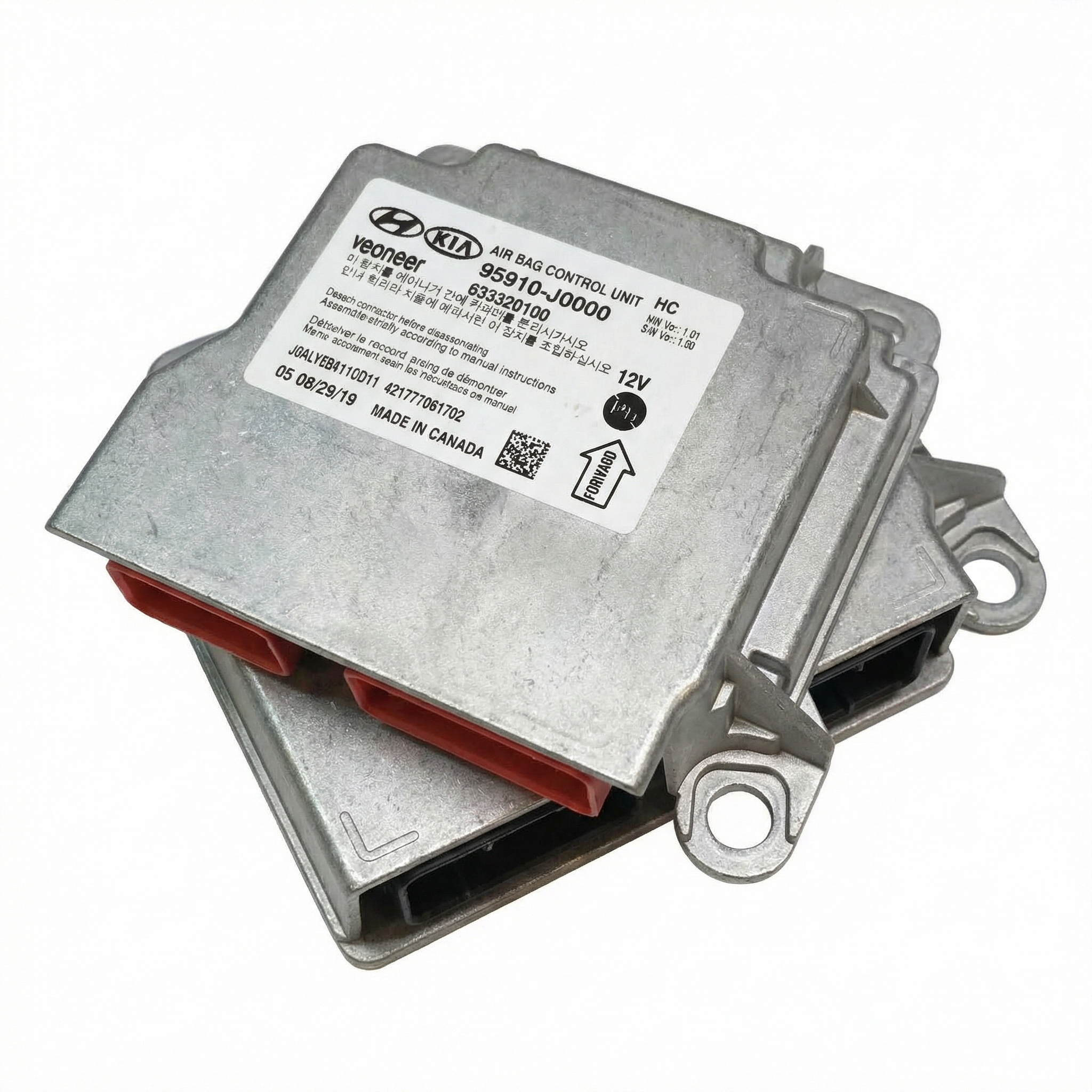
- Part number 95910-J0000 is the Airbag Module, NOT the Body Control Module (BCM). This is the most common point of confusion for buyers.
- Both the BCM and the Airbag Module require professional programming ('variant coding') after installation to function correctly with your vehicle.
- For the BCM, you must match the part number exactly to your car's original module, as it varies by trim and options (e.g., 95400-J0400).
- A BCM software update (Service Campaign 993) exists to add an anti-theft feature; check if your vehicle or a replacement module has had this performed.
Urgent Buyer Warning: Body Control Module vs. Airbag Module Confusion
Warning: There is significant confusion regarding the Body Control Module (BCM) and the Airbag Control Module (also known as the SRS or SDM module) for the 2018-2022 Hyundai Accent. Many online sellers incorrectly label the Airbag Control Module with part number 95910-J0000 as a BCM. This is incorrect. Part number 95910-J0000 is the Airbag Control Module, NOT the Body Control Module. Buying this part to fix issues like faulty lights or windows will not solve the problem. Always verify the part number on your original module before ordering a replacement.
This guide is divided into two sections to help you correctly identify and troubleshoot each part.
Section 1: The Body Control Module (BCM)
The BCM, sometimes called the Integrated Body Control Unit (IBU), is responsible for most of the electronic accessories inside your car's cabin. When it fails, it can cause a wide range of strange and frustrating electrical problems.
Symptoms of a Failing BCM
A bad BCM often creates issues that seem unrelated. Because it controls so many different systems, you may experience one or more of the following:
- Erratic Electronics: Lights (headlights, interior lights) may flicker, stay on, or not turn on at all. Windshield wipers may activate on their own or not work when switched on.
- Power Lock and Window Failure: Doors may not lock or unlock with the key fob or door switches. Power windows may become inoperative.
- Parasitic Battery Drain: A common symptom is a battery that repeatedly dies overnight. This happens when the faulty BCM fails to shut down a system, causing a slow but continuous drain on the battery.
- Security System Issues: The factory alarm may go off randomly, or the car may not recognize the key, potentially causing starting problems.
- Dashboard Warning Lights: The dashboard may light up with multiple, unrelated warning lights, often described as a "Christmas tree" effect.
- Diagnostic Trouble Codes: A scan tool may show a communication error code, most commonly U0140 (Lost Communication With Body Control Module).
Known Issues, TSBs, and Recalls
Service Campaign 993 (Anti-Theft Software Update): Certain 2018-2022 Hyundai Accent models without a factory engine immobilizer were targeted for theft. Hyundai released a service campaign (993) to update the BCM software. This update changes the alarm logic to disable the ignition if the vehicle is locked with the key fob and then broken into. When buying a used BCM, be aware that it may not have this crucial update. A Hyundai dealer can perform the software upgrade.
Replacement and Programming
The BCM is typically located under the driver's side of the dashboard. While physically replacing it is straightforward for a mechanic, it is not a simple plug-and-play part.
Programming Required: A replacement BCM, whether new or used, must be programmed to your vehicle. This process, often called "variant coding," configures the module to match your car's specific features (like automatic headlights or keyless entry) and VIN. Without proper programming, many features will not work correctly. This procedure requires a dealer-level diagnostic tool (like Hyundai GDS) or a high-end professional scan tool. Some specialized locksmiths may also be able to clone the data from your old BCM to the replacement unit.
Buying a Used Body Control Module
A used OEM BCM is a cost-effective option, but careful purchasing is key.
- Match the Part Number Exactly: There are multiple BCM part numbers for this generation of Accent, based on trim level and options. Common part numbers include 95400-J0400, 95400-J0410, 95400-J0490, and 95400-J0530. You MUST match the part number from your original module.
- Inspect for Damage: Check the connectors for any signs of corrosion, bent pins, or heat damage. Avoid any modules with cracks in the casing or evidence of water intrusion.
- Factor in Programming Costs: Remember that the cost of the part is not the final cost. You must budget for professional programming, which can cost $100-$200 or more.
Section 2: The Airbag Control Module (SRS Module) - Part #95910-J0000
This module's only job is to manage the vehicle's Supplemental Restraint System (SRS). It decides when to deploy the airbags and seatbelt pretensioners in a crash.
Symptoms of a Failing Airbag Module
- The most common and often only symptom of a problem is the red airbag warning light staying illuminated on your dashboard.
- After a collision where airbags have deployed, the module will store "crash data" and must be replaced or professionally reset.
Known Issues, TSBs, and Recalls
NHTSA Recall 22V-354 (Seat Belt Pretensioners): Affects 2019-2022 Accents. The seat belt pretensioners, which are controlled by the airbag module, could deploy abnormally during a crash and project metal fragments, posing an injury risk. Dealers will install a cap on the pretensioner assembly to secure it. While this is not a recall on the module itself, it is directly related to the system it controls.
Replacement and Programming
The Airbag Module is located in the center of the vehicle, typically on the floor under the center console. This is a critical safety component, and replacement requires specific procedures.
Warning: Always disconnect the vehicle's battery and wait at least 10-15 minutes before working on any part of the airbag system to prevent accidental deployment.
Like the BCM, a replacement airbag module requires programming (variant coding) to match your vehicle's specific equipment (e.g., the number of airbags). A used module from a vehicle that has NOT been in a crash can be used, but it will still require programming to your car's VIN. A module from a crashed car is not usable until its crash data has been professionally cleared.
Cost Comparison
Prices can vary based on location and supplier. The costs below are estimates to help you budget for your repair.
| Part / Service | Body Control Module (BCM) | Airbag Module (SRS) |
|---|---|---|
| New OEM Price | $240 - $350 | $450 - $460 |
| Used OEM Price | $50 - $125 | $40 - $100 |
| Shop Labor (Replacement) | $100 - $200 | $100 - $200 |
| Shop Labor (Programming) | $100 - $200 | $100 - $200 |
| Total Estimated Cost (Used Part) | $250 - $525 | $240 - $500 |
Frequently Asked Questions (FAQ)
Is part number 95910-J0000 the BCM or the Airbag Module?
Part number 95910-J0000 is the Airbag Control Module (SRS Module) for the 2018-2022 Hyundai Accent, despite being frequently mislabeled by sellers. The Body Control Module has different part numbers, such as 95400-J0400 or 95400-J0410, depending on your car's options.
Does a replacement BCM need to be programmed?
Yes, absolutely. A replacement BCM, whether new or used, must be programmed or "variant coded" to your vehicle's VIN and specific options. If you skip this step, features like your lights, locks, or wipers will not function correctly.
Can I use an Airbag Module from a car that was in an accident?
No, not directly. A module from a vehicle where the airbags have deployed will have permanent "crash data" stored. It cannot be reused until it is sent to a specialist who can clear this data. It is safer and often easier to purchase a used module from a vehicle with no collision history.
Can a locksmith or independent shop program these modules?
It depends on the shop. A Hyundai dealership can always perform the programming. Many advanced independent shops and some automotive locksmiths have the necessary high-end scan tools (like Autel MaxiSYS) or J-2534 pass-thru devices to program Hyundai modules. Always call ahead and confirm they have the capability for your specific vehicle.
Technical Specifications
OEM Part Numbers: 95400-J0400 (BCM) 95400-J0410 (BCM) 95400-J0490 (BCM) 95400-J0530 (BCM) 95910-J0000 (Airbag Module) 95910J0000 (Airbag Module)
Module functionality depends on vehicle options such as automatic headlights and push-button start. Programming is required to configure the module to the specific vehicle.
We Have This Part in Stock

The information in this article is provided for general reference and educational purposes only. Vehicle specifications, procedures, and part compatibility can vary by production date, trim level, and region. Always consult your vehicle's factory service manual and verify part numbers before purchasing or performing repairs. Safety-critical components such as airbags, seat belts, and braking systems should be installed by a qualified professional.
- Hyundai Accent:
- 🛍️ Shop This Part
- Urgent Buyer Warning: Body Control Module vs. Airbag Module Confusion
- Section 1: The Body Control Module (BCM)
- Symptoms of a Failing BCM
- Known Issues, TSBs, and Recalls
- Replacement and Programming
- Buying a Used Body Control Module
- Section 2: The Airbag Control Module (SRS Module) - Part #95910-J0000
- Symptoms of a Failing Airbag Module
- Known Issues, TSBs, and Recalls
- Replacement and Programming
- Cost Comparison
- Frequently Asked Questions (FAQ)
- 🎟️ Get 5% Off