

2010-2012 Genesis & Equus Adaptive Headlight (AFLS) Module Failure: Diagnosis and Replacement
Diagnosing and replacing the swiveling headlight control module, including the critical programming and calibration steps you cannot skip.
- This is the Adaptive Front Lighting System (AFLS) module for the headlights, NOT the main Body Control Module (BCM).
- A replacement module (new or used) absolutely REQUIRES professional programming and calibration to function.
- You must match the OEM part number on your original module exactly, especially for the 2012 Equus.
- For the 2010 Genesis, this part only fits vehicles built on or after 10/24/2009.
Is This a Body Control Module (BCM)?
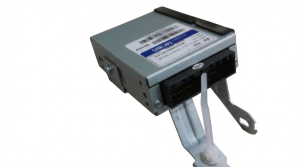
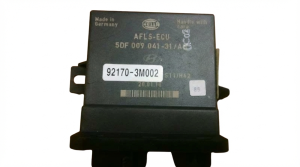
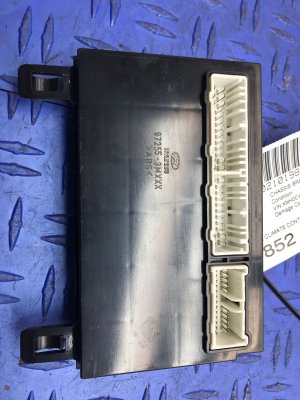
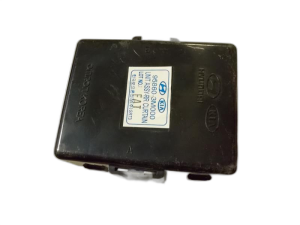
No. While it may be referred to as a control module, this part (OEM numbers 921703M000, 921703M002) is the Adaptive Front Lighting System (AFLS) Module. It specifically controls the swiveling and auto-leveling headlights. It does NOT control other body electronics like power windows, door locks, wipers, or the radio; those functions are handled by the main Body Control Module (BCM), which is a different part entirely.
Symptoms of a Failing AFLS Module
When the AFLS module fails, you will notice issues confined to the operation of your adaptive headlights. The vehicle will remain drivable, but this important safety feature will be disabled.
- AFLS Warning Light: The most common symptom is an 'AFLS' or similar warning light illuminating or flashing on your instrument cluster.
- Headlights Don't Swivel: The headlights will no longer turn left or right as you steer into corners.
- Headlights Stuck in One Position: The lights may become stuck aimed far to one side, or aimed too high or too low, potentially blinding oncoming drivers or failing to illuminate the road properly.
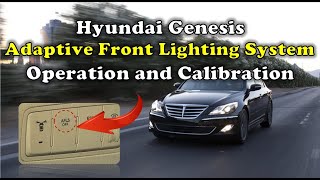
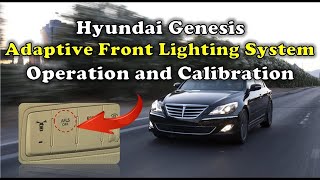
- No "Self-Test" at Startup: 🎬 Watch: See how the adaptive lighting system operates and calibrates. On many vehicles, the adaptive headlights perform a brief "sweep" up-and-down and side-to-side when you first turn them on. A failed module will prevent this initialization sequence.
- Diagnostic Trouble Codes (DTCs): A scan tool may reveal communication codes (like U0140) or specific AFLS-related faults. For example, if the wrong software is loaded, codes like B1638 (Air-Sus. CAN Signal Timeout) or B1953 (Leveling Sensor signal Fault) may appear.
Known Issues and Vehicle-Specific Fitment
Compatibility is critical for this part. Pay close attention to the specific requirements for your vehicle, as using the wrong module will result in failure.
Warning: Always match the OEM part number printed on your original module to the replacement part. Do not rely on vehicle lookup guides alone.
2010-2011 Hyundai Genesis
- 2010 Model Year Split: For the 2010 Hyundai Genesis, this module (part number 921703M000, later replaced by 921703M001) is only correct for vehicles manufactured on or after October 24, 2009. Vehicles built before this date use a different part.
2011-2012 Hyundai Equus
- 2012 Model Year Verification: For the 2012 Hyundai Equus, you must physically inspect your original module and verify the part number is 921703M002. Hyundai used a different module on some vehicles produced that year, and only an exact part number match will work correctly.
Programming and Calibration: A Required Step
A replacement AFLS module is not a plug-and-play part. Whether you purchase a new or used module, it must be professionally programmed to your vehicle for it to function.
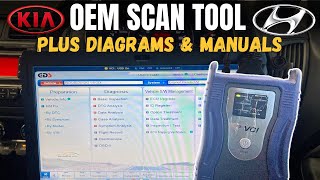
- Parameter Downloading: A technician must use a Hyundai Global Diagnostic System (GDS) or equivalent high-level scan tool to perform 🎬 See how to use the Hyundai OEM scan tool. a "Parameter Download". This step tells the new module critical information about the vehicle's configuration.
- Suspension Type: The most important parameter is the suspension type. The technician must select whether the vehicle has the electronic air suspension (found on the Equus) or the standard steel spring suspension. Loading the wrong parameter will cause the system to fail and set fault codes.
- System Calibration: After the correct parameters are downloaded, vehicles without electronic air suspension may also require a system calibration to set the baseline level for the headlights.
Pro Tip: Before purchasing a used module, contact your local Hyundai dealer or a trusted independent shop that specializes in Hyundai/Kia. Confirm they are willing and able to program a customer-supplied used AFLS module. Some shops may refuse to install or program used electronics.
Buying a Used AFLS Module
Given that a new OEM module can cost over $1,000, a used OEM module is a very popular and cost-effective repair option. Aftermarket versions of this specific module are not commonly available.
- Match the Part Number: This is the most important rule. The part number printed on the replacement module's sticker must be an exact match to your original.
- Inspect the Connectors: Check the pins in the electrical connectors for any signs of corrosion, moisture damage, or bent pins. Do not buy a module with damaged connectors.
- Source from a Reputable Recycler: Purchase from a seller that offers a warranty and guarantees the part is tested and functional.
- Factor in Programming Costs: Remember to include the cost of professional programming (typically $100-$200) when calculating your total repair cost.
Replacement Overview
The AFLS module is located inside the vehicle's cabin, under the dashboard on the driver's side. On the Hyundai Equus, it is found behind the crash pad lower panel, near the steering column. Replacement involves disconnecting the battery, removing the lower dash trim panels to gain access, unbolting the module, and disconnecting its electrical connectors. While the physical swap is straightforward for a DIY mechanic, the vehicle is not fixed until the programming is complete.
Cost Comparison
| Part Type | Estimated Cost |
|---|---|
| New OEM | $1,000 - $1,400 |
| New Aftermarket | Not Available |
| Used OEM | $75 - $200 |
| Shop Labor (Installation) | $150 - $250 |
| Shop Labor (Programming) | $100 - $200 |
Frequently Asked Questions (FAQ)
Does a used AFLS module need to be programmed?
Yes, absolutely. Any replacement AFLS module, whether new or used, must be programmed with the correct vehicle parameters (especially suspension type) using a dealer-level scan tool to function.
Where is the AFLS module located on my 2011 Genesis or 2012 Equus?
It is located inside the car, under the driver's side dashboard, typically attached to a bracket near the steering column and fuse box area.
Can I drive with a bad AFLS module?
Yes, the vehicle is safe to drive from a mechanical standpoint. However, your adaptive headlights will not work, which reduces visibility and safety when driving at night on winding roads. In some cases, the headlights may be stuck aimed improperly, which can be dangerous for other drivers.
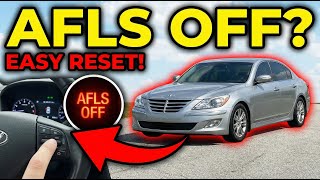
Why is my 'AFLS OFF' light blinking? 🎬 Watch: How to reset the AFLS OFF light on your Genesis.
A blinking AFLS warning light typically indicates that the system has detected a fault. This requires diagnosis with a scan tool to retrieve the specific trouble codes and identify the point of failure, which could be the module, a sensor, or the headlamp actuator itself.
Helpful Videos

Technical Specifications
OEM Part Numbers: 921703M000 921703M001 921703M002
Controls adaptive headlamp swiveling and leveling. Requires programming via Hyundai GDS to match vehicle suspension type (Air or Steel).
We Have This Part in Stock

The information in this article is provided for general reference and educational purposes only. Vehicle specifications, procedures, and part compatibility can vary by production date, trim level, and region. Always consult your vehicle's factory service manual and verify part numbers before purchasing or performing repairs. Safety-critical components such as airbags, seat belts, and braking systems should be installed by a qualified professional.
- Hyundai Genesis:
- Hyundai Equus:
- 🎬 Helpful Videos
- 🛍️ Shop This Part
- Is This a Body Control Module (BCM)?
- Symptoms of a Failing AFLS Module
- Known Issues and Vehicle-Specific Fitment
- 2010-2011 Hyundai Genesis
- 2011-2012 Hyundai Equus
- Programming and Calibration: A Required Step
- Buying a Used AFLS Module
- Replacement Overview
- Cost Comparison
- Frequently Asked Questions (FAQ)
- 🎟️ Get 5% Off