

2018-2023 Hyundai Kona Body Control Module: Solving Electrical Gremlins and Programming Nightmares
This in-depth guide covers the common electrical failures, part number confusion, and mandatory programming requirements for the 2018-2023 Hyundai Kona Body Control Module (BCM).
- A replacement BCM (new or used) is NOT plug-and-play; it absolutely must be programmed to your vehicle by a dealer or a properly equipped shop.
- You must match the OEM part number from your original module exactly. Different trims and options use different, non-interchangeable BCMs.
- The part in the center console (95910-J9100) is the Airbag Module, NOT the Body Control Module. The BCM is under the driver's dash.
- Common symptoms are purely electrical: erratic lights, dead batteries, and non-working accessories. These issues are often misdiagnosed as a bad battery.
BCM vs. Airbag Module: A Critical Distinction

Before diagnosing any issue, it's crucial to understand a common and costly point of confusion. The part located in the center console, often with part number 95910-J9100, is the Airbag Control Module (SRSCM), NOT the Body Control Module. The Airbag Module's only job is to control the vehicle's safety restraint systems. The BCM, which controls lights, locks, and windows, is a completely different part.
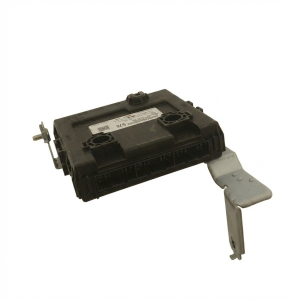
The Body Control Module in the 2018-2023 Hyundai Kona is typically integrated with the interior fuse box, located under the driver's side dashboard to the left of the steering column. You will likely need to remove a lower dash panel to access it and find the correct part number.
Symptoms of a Failing Kona Body Control Module

A failing BCM often creates a host of strange and seemingly unrelated electrical problems. Because the BCM controls so many different systems, its failure isn't always straightforward. The engine may run perfectly fine, while the rest of the car's electronics seem possessed.
- Erratic Electronics: Power windows may not open or close, door locks might not respond, the horn could sound randomly, or the windshield wipers may activate on their own.
- Lighting Problems: Interior dome lights, headlights, or taillights may flicker, stay on continuously, or not turn on at all.
- Parasitic Battery Drain: A classic symptom is a battery that dies overnight or after a few days of sitting. The faulty BCM may fail to let other modules go to 'sleep', causing a continuous power draw. This is often misdiagnosed as a bad battery. 🎬 Watch: How to diagnose a parasitic battery drain on your Hyundai.
- Dashboard Warning Lights: You may see multiple, unrelated warning lights illuminate on the instrument cluster, sometimes all at once like a 'Christmas tree'.
- Starting Issues: In some cases, a bad BCM can prevent the car from starting because it's a key part of the anti-theft and ignition system. It may fail to recognize a valid key.
- Unresponsive Key Fob: If the remote lock/unlock functions stop working, the BCM could be the culprit.
Known Issues, TSBs, and Recalls

For the gas-powered 2018-2023 Hyundai Kona, there are no major recalls specifically targeting the Body Control Module itself. Failures are typically random, one-off events. However, there are numerous complaints regarding electrical issues and parasitic battery drain.
The Kona Electric, on the other hand, has been subject to significant recalls and service campaigns related to its high-voltage battery and Battery Management System (BMS), which have included software updates and full battery pack replacements due to fire risk. While the BMS is different from the BCM, these issues highlight the complexity of the Kona's electrical architecture. TSB 23-01-073H-1 addresses DTCs P1AA6 to P1AAF on Kona Electric models, requiring a BMS software update and, in some cases, battery replacement.
Pro Tip: Before suspecting the BCM, always have your 12-volt battery and charging system professionally tested. A weak or failing battery can cause many of the same bizarre electrical symptoms as a faulty BCM.
Buying a Used Body Control Module: The Ultimate Guide

Buying a used BCM can save you a significant amount of money, but it comes with critical rules you must follow. Failure to do so will result in a part that does not work.
1. Match the Part Number EXACTLY
This is the most important rule. Several different BCMs were used in the Kona depending on trim level, engine, and factory options (e.g., smart key, lighting packages). Part numbers like 95400-J9KM0, 954A0-J9KM0, and 95400-J9GX0 are NOT interchangeable. You must physically access your car's original BCM, find the manufacturer's sticker, and buy a used module with the exact same part number. Do not buy a part based only on the vehicle's year and model.
2. Inspect the Used Module
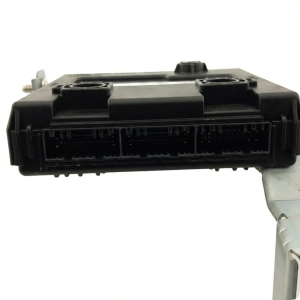
When you receive the used BCM, inspect it for any signs of physical damage, especially around the connector pins. Look for corrosion, bent pins, or burn marks. Do not accept a module that shows signs of water damage.
3. Programming is MANDATORY
A used BCM is NOT a plug-and-play part. It must be professionally programmed (a process sometimes called 'variant coding') to your vehicle's unique Vehicle Identification Number (VIN) and specific set of options. If you skip this step, features will not work correctly, and the car may not even start.
Replacement and Programming
Replacing the BCM involves removing the lower driver-side dash panels to access the module, which is often part of the fuse box assembly. After disconnecting the battery, the electrical connectors can be unplugged and the module unbolted.
Warning: A replacement BCM, whether new or used, absolutely must be programmed to your vehicle. This is not an optional step.
🎬 See this explanation of how Hyundai module programming and coding works.There are two main options for programming:
- Hyundai Dealership: A dealer can always program a new or used module to your vehicle using their proprietary GDS (Global Diagnostic System) software. This is the most reliable, albeit often most expensive, option.
- Independent Shops & Locksmiths: A well-equipped independent auto repair shop or an automotive locksmith may have high-level diagnostic tools (like Autel or Snap-on) that can perform the necessary programming and key registration. However, you must confirm they have the capability for your specific Hyundai model before proceeding.
DIY programming is generally not feasible for the average home mechanic, as it requires expensive, specialized tools and software subscriptions.
Cost to Replace a 2018-2023 Kona BCM
The total cost will vary based on your location and the parts/labor source. Here is a general breakdown:
| Item | Estimated Cost | Notes |
|---|---|---|
| New OEM Part | $330 - $470 | Price from Hyundai dealerships for a new module. |
| Used OEM Part | $50 - $200 | Common price range on sites like eBay. Remember to match the part number exactly. |
| Shop Labor (Replacement) | $115 - $170 | This is for the physical swap of the part, typically 1-1.5 hours of labor. |
| Shop Labor (Programming) | $100 - $200 | This is a separate charge for the programming/coding service. Some shops bundle this with the replacement labor. |
| Diagnostic Fee | $50 - $75 | Initial cost to confirm the BCM is the actual problem. |
| Total Estimated Cost (with Used Part) | $315 - $645 | Includes used part, diagnostics, replacement, and programming. |
| Total Estimated Cost (with New Part) | $595 - $915 | Includes new part, diagnostics, replacement, and programming. |
Frequently Asked Questions (FAQ)
Can I just swap a BCM from another Kona without programming it?
No. The BCM is linked to your car's VIN and specific options. A non-programmed BCM will cause major electrical issues and may prevent the car from starting due to the anti-theft system. Programming is mandatory.
Is the part number 95910-J9100 the Body Control Module?
No, this is a common mistake. Part number 95910-J9100 is the Airbag Control Module (SRSCM). The BCM is a separate part located under the driver's dash with a different part number, such as 95400-J9KM0.
Can a locksmith program a new or used Hyundai BCM?
Some specialized automotive locksmiths can. They must have advanced diagnostic tools capable of 'variant coding' for Hyundai vehicles. You should always call and confirm with the locksmith that they have the specific equipment and experience for your 2018-2023 Kona before purchasing a part.
My battery keeps dying. Is it the BCM?
It could be, as a faulty BCM is a known cause of parasitic battery drain. However, you should always start by having your battery and alternator professionally tested. A simple bad battery is a more common and much cheaper problem to fix.
Helpful Videos
Technical Specifications
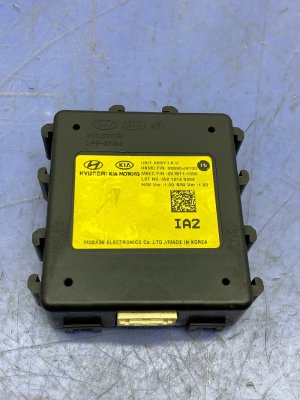
OEM Part Numbers: 95400-J9KM0 954A0-J9KM0 95400-J9GX0 954A0-J9KH0 954C0-J9BK0
Integrated with the interior fuse box (Junction Box). Controls interior/exterior lights, power windows/locks, wipers, horn, and anti-theft immobilizer.
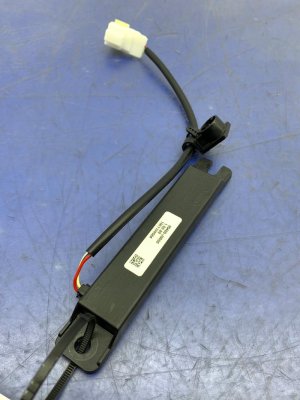
We Have This Part in Stock

The information in this article is provided for general reference and educational purposes only. Vehicle specifications, procedures, and part compatibility can vary by production date, trim level, and region. Always consult your vehicle's factory service manual and verify part numbers before purchasing or performing repairs. Safety-critical components such as airbags, seat belts, and braking systems should be installed by a qualified professional.
- Hyundai Kona:
- 🎬 Helpful Videos
- 🛍️ Shop This Part
- BCM vs. Airbag Module: A Critical Distinction
- Symptoms of a Failing Kona Body Control Module
- Known Issues, TSBs, and Recalls
- Buying a Used Body Control Module: The Ultimate Guide
- 1. Match the Part Number EXACTLY
- 2. Inspect the Used Module
- 3. Programming is MANDATORY
- Replacement and Programming
- Cost to Replace a 2018-2023 Kona BCM
- Frequently Asked Questions (FAQ)
- 🎟️ Get 5% Off