

2013-2014 Jaguar XJ & XJL Airbag Control Module: Faults, Resets, and Replacement
This guide clarifies the critical difference between the Airbag Module and the Body Control Module, and explains why resetting your original module is often a better choice than replacement.
- This part is the Restraints Control Module (RCM) or airbag module, NOT the Body Control Module (BCM).
- After a crash, the module stores permanent crash data and must be reset or replaced; a standard scanner cannot clear it.
- Resetting your original module is the most cost-effective repair, as it usually avoids the need for expensive dealer reprogramming.
- A constant airbag light means your safety system is likely disabled and will not function in an accident.
"Body Control Module" vs. "Airbag Control Module": A Critical Clarification
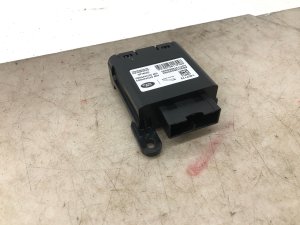
There is significant confusion regarding the electronic modules in the 2013-2014 Jaguar XJ and XJL. While the term "Body Control Module" (BCM) is often used as a general catch-all, the part numbers C2D27505, DW9314D374AB, and DW9314D374AD specifically refer to the Restraints Control Module (RCM). This is the computer that controls the airbags and seatbelts. The actual Body Control Module functions are handled by other components, such as the intelligent fuse boxes. This article focuses exclusively on the Restraints Control Module (RCM).
Symptoms of a Failing Airbag Module
A faulty RCM can present several distinct symptoms. Diagnosing the issue correctly is key to an effective repair.
- Persistent Airbag Warning Light: The most common symptom is the SRS/airbag warning light illuminating and staying on the dashboard. This indicates the system has detected a fault and the airbags may not deploy in a crash.
- No-Start Condition: In some cases, a communication failure with the RCM can prevent the engine from starting. You may see a "Check Pedestrian Protection System" error message on the instrument cluster.
- Stored Fault Codes: A Jaguar-specific diagnostic scanner is required to read SRS codes. Common codes include:
- U0151: Lost Communication With Restraints Control Module.
- Crash Data Stored: After an accident, the module will have "hard codes" that cannot be cleared with a normal scanner.
- Internal Fault Codes: Codes like '24' can indicate an internal RCM failure.
Known Issues, Recalls, and Technical Service Bulletins (TSBs)
Owners of the 2013-2014 Jaguar XJ and XJL should be aware of a specific safety recall.
- Recall J040: Jaguar issued a recall for some 2013 XJ vehicles due to incorrect software on the Restraints Control Module. This could prevent the airbags from operating correctly. The fix involves a dealer updating the RCM software, free of charge.
- Suspension Recall 14V157000: While not related to the RCM, it's important to note that 2013-2014 XJ, XF, and XK models were also recalled for rear suspension toe links that could separate from the sub-frame.
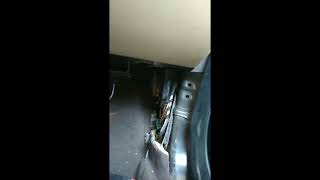
Pro Tip: Before assuming the module is bad, have a technician check the wiring and connectors, especially the connectors under the front seats. 🎬 Watch a technician diagnose common Jaguar airbag light fault codes. These can become loose or corroded and are a common cause for an airbag light.
Buying a Used Airbag Module: The Three Paths to Repair
When your RCM fails or has stored crash data, you have three main options. Choosing the right one can save you significant time and money.
Path 1: Replace with a New OEM Module
This is the most expensive option. A new module from a Jaguar dealer ensures you have the latest hardware, but it comes at a high cost and will require programming by the dealer to match your vehicle's VIN and specific options.
Path 2: Replace with a Used OEM Module
A used RCM from a salvage vehicle is much more affordable. However, it's critical to understand the risks. The used module may have stored crash data from its donor vehicle. More importantly, it will need to be programmed to your car by a dealer or a specialist with Jaguar's diagnostic software (SDD). The cost of programming can sometimes offset the savings on the part.
Path 3 (Recommended): Reset Your Original Module
If your vehicle has been in an accident and the RCM has stored crash data, the best and most cost-effective solution is to have your original module reset. You remove the module from your car and send it to a specialist service. They will erase the crash data, restoring it to its factory state.
The key benefit: Because you are reinstalling the original module, it remains programmed to your car's VIN. In most cases, no additional dealer programming is needed, making the reinstallation plug-and-play.
Warning: Never install a used airbag module without verifying its history. If it came from a vehicle that had a collision, it will contain crash data and will not function correctly in your car until it is reset.
Replacement Procedure Overview
The RCM in the 2013-2014 Jaguar XJ and XJL is located under the center console, toward the rear of the vehicle.
- Disconnect the Battery: Always disconnect the negative battery terminal and wait at least two minutes for the system's power to discharge before working on any SRS components.
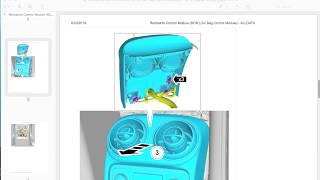
- Access the Module: Access is gained from the back seat. The rear climate control/vent panel on the back of the center console must be carefully pried off.
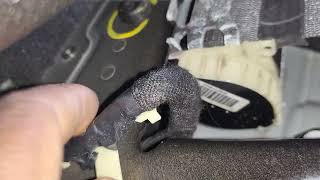
- Remove the Module: Once the panel is removed, you can see the RCM. It is typically held in by three 10mm bolts and has two large electrical connectors. 🎬 Watch this video for a step-by-step removal walkthrough.
Cost Comparison
| Item | Estimated Cost | Notes |
|---|---|---|
| New OEM Module (Part Only) | $1,000 - $1,200 | Requires dealer programming at an additional cost. |
| Used OEM Module (Part Only) | $50 - $150 | Will likely require dealer programming. |
| Reset Service for Original Module | $50 - $150 | Most cost-effective option; usually avoids the need for reprogramming. |
| Shop Labor (Replacement) | $100 - $200 | This is for removal and reinstallation of the module. |
| Shop Labor (Programming) | $150 - $300 | Applies when installing a new or used module. |
Frequently Asked Questions (FAQ)
Can I drive my Jaguar XJ with the airbag light on?
While the vehicle will still drive, it is not safe. An active airbag warning light means the Supplemental Restraint System is disabled, and the airbags may not deploy in an accident, increasing the risk of serious injury.
Does a used airbag module need to be programmed?
Yes, a used module from another vehicle will almost certainly need to be programmed to your car's specific VIN and configuration using dealer-level software. This is why having your original module reset is often the preferred method, as it avoids this extra step and cost.
What's the difference between part numbers DW9314D374AB and DW9314D374AD?
These numbers typically represent different revisions of the same part. The 'AD' version is a later revision than the 'AB' version. While they are often interchangeable, it is always best practice to match the part number exactly or consult with a dealer or specialist to confirm compatibility.
Where is the airbag module located on a 2013-2014 XJ or XJL?
The Restraints Control Module (RCM) is located underneath the rear portion of the center console. It is accessed by removing the rear passenger air conditioning and vent panel.
🎬 See exactly where the module is located under the console.Helpful Videos
Technical Specifications
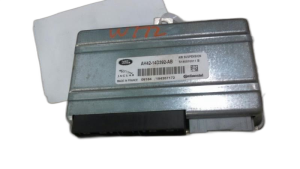
OEM Part Numbers: C2D27505 DW9314D374AB DW9314D374AD
Location: Under the rear of the center console. Access: Via removal of the rear passenger A/C vent panel.
We Have This Part in Stock
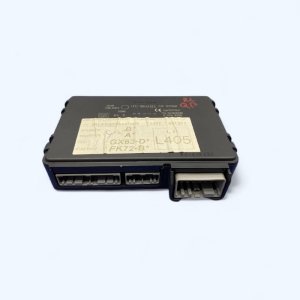
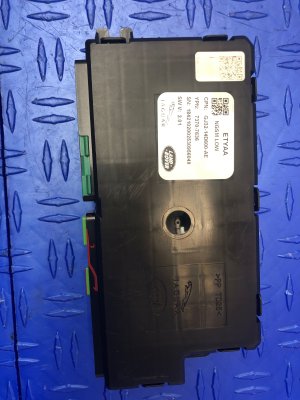

The information in this article is provided for general reference and educational purposes only. Vehicle specifications, procedures, and part compatibility can vary by production date, trim level, and region. Always consult your vehicle's factory service manual and verify part numbers before purchasing or performing repairs. Safety-critical components such as airbags, seat belts, and braking systems should be installed by a qualified professional.
- Jaguar XJ:
- Jaguar XJL:
- 🎬 Helpful Videos
- 🛍️ Shop This Part
- "Body Control Module" vs. "Airbag Control Module": A Critical Clarification
- Symptoms of a Failing Airbag Module
- Known Issues, Recalls, and Technical Service Bulletins (TSBs)
- Buying a Used Airbag Module: The Three Paths to Repair
- Path 1: Replace with a New OEM Module
- Path 2: Replace with a Used OEM Module
- Path 3 (Recommended): Reset Your Original Module
- Replacement Procedure Overview
- Cost Comparison
- Frequently Asked Questions (FAQ)
- 🎟️ Get 5% Off