

1999-2000 Lincoln Town Car: Solving Electrical Gremlins with the LCM and DDM
This guide clarifies that this vehicle doesn't have a single Body Control Module (BCM), but rather a separate Lighting Control Module (LCM) and Driver Door Module (DDM) that cause most electrical issues.
- This vehicle has no 'BCM'. Electrical issues are caused by either the Lighting Control Module (LCM) for lights/horn, or the Driver Door Module (DDM) for locks/windows/keyless entry.
- The Lighting Control Module (LCM) is a very common failure point and requires NO programming to replace, making a used or remanufactured part an excellent choice.
- The Driver Door Module (DDM) also does not require dealer programming, but you must re-sync your key fobs to the new module yourself.
- The most common LCM failure symptom is intermittent or non-working low-beam headlights.
Understanding the Town Car's Distributed Modules
If you're searching for a 'Body Control Module' or 'BCM' for your 1999-2000 Lincoln Town Car, it's important to know that your vehicle doesn't have one. Many common electrical problems, from flickering headlights to non-working power locks, are often misdiagnosed as a BCM failure. In reality, these issues almost always trace back to one of two separate, distinct modules: the Lighting Control Module (LCM) or the Driver Door Module (DDM). This guide will help you identify which module is likely causing your problems and how to replace it.
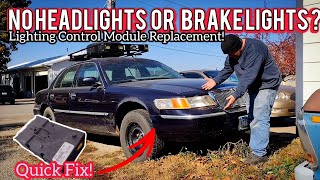
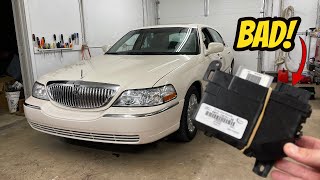
🎬 See how these modules cause strange electrical issues in action.Part 1: The Lighting Control Module (LCM)
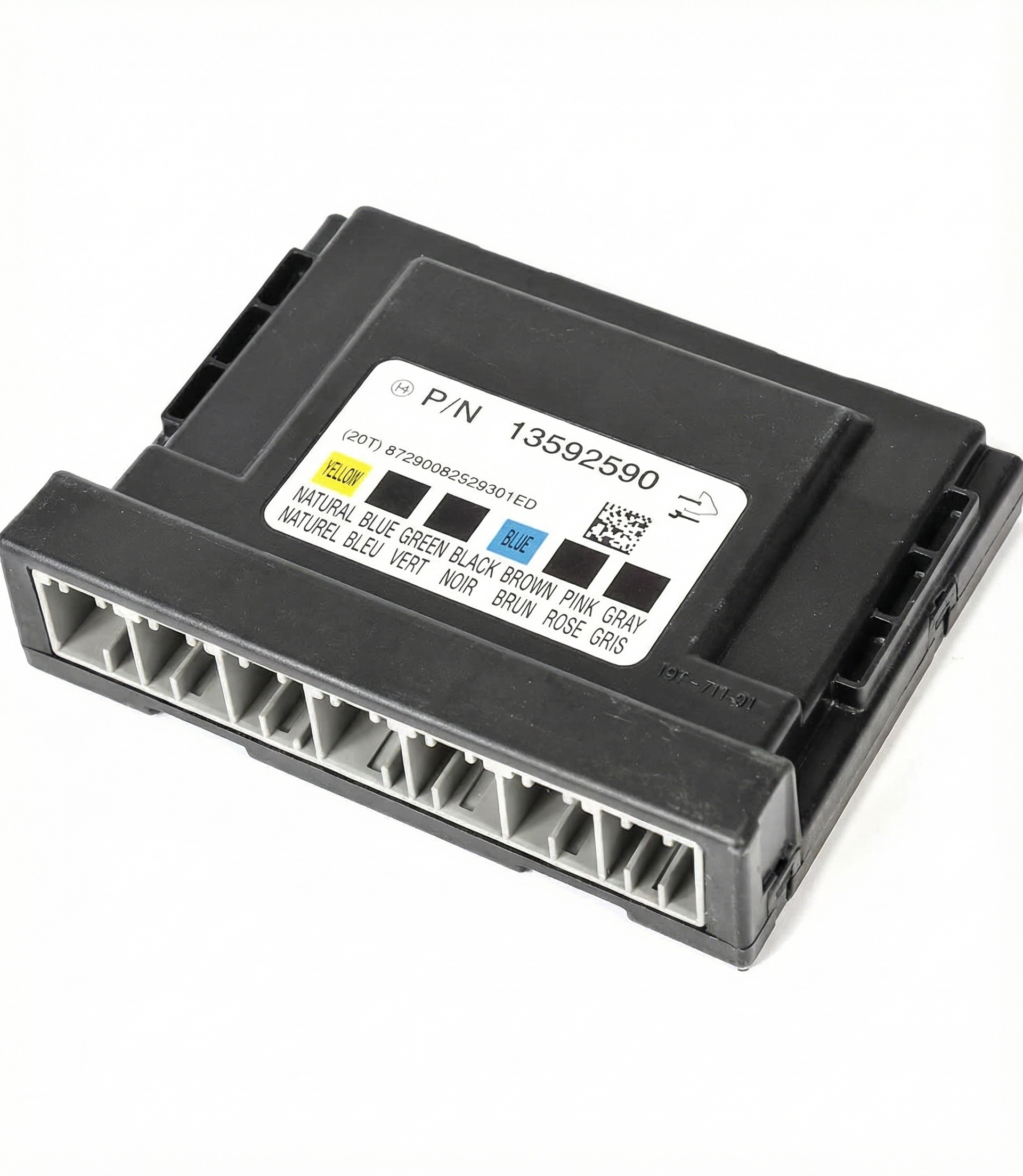
The LCM is one of the most common failure points on Panther platform vehicles, including the Town Car. It is a small black box containing relays that control all lighting functions. Over time, these internal relays wear out or the solder joints crack, leading to a wide range of lighting problems.
Symptoms of a Failing LCM
- Headlight Failure: Low beam headlights work intermittently or not at all, while high beams may still function. This is the most common symptom.
- Turn Signal or Hazard Light Issues: Turn signals may blink rapidly (as if a bulb is out), not work at all, or get stuck on.
- Parking Lights or Taillights Out: The rear marker lights, license plate lights, and front corner lights may all stop working at the same time.
- Interior Lighting Problems: The dome light or dashboard illumination may be inoperable or stay on, draining the battery.
- Horn Inoperable: The LCM also controls the horn, which may stop working when the module fails.
Diagnosing the LCM
Before replacing the LCM, check the simple things first. Inspect all related fuses and the headlight switch itself. However, if you are experiencing multiple, unrelated lighting failures simultaneously, the LCM is the most likely culprit. A simple diagnostic test is to turn the headlights on while the engine is running; if the front corner lights, rear marker lights, and license plate lights are all out together, the LCM is almost certainly at fault.
LCM Location and Replacement
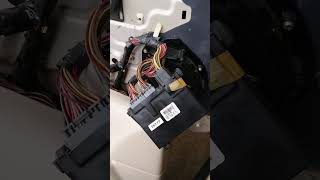
The Lighting Control Module is located under the driver's side of the dashboard, mounted to a metal platform just above the gas pedal. It is held in by two 7mm (or 1/4") hex-head screws and has four electrical connectors. Replacement is straightforward and can be done with basic hand tools.
🎬 Watch this step-by-step guide to replacing your Lighting Control Module.- Disconnect the negative battery terminal.
- Remove the lower dash panel for easier access.
- Locate the LCM above the pedals.
- Unplug the four wiring harnesses. Press the flexible latch in the center of each connector to release it.
- Remove the two screws holding the module in place and slide it out.
- Installation is the reverse of removal.
Pro Tip: No programming is required when replacing the LCM. A replacement unit, whether it is new, used, or remanufactured, is plug-and-play.
Part 2: The Driver Door Module (DDM)
The DDM is the brain for all the convenience features controlled from the driver's door. When it fails, you can experience a host of strange issues related to locks, windows, and security.
Symptoms of a Failing DDM
- Keyless Entry Failure: The key fobs or the door-mounted keypad suddenly stop working.
- Erratic Power Locks: The doors may lock and unlock randomly on their own, either while driving or when parked.
- 'Door Ajar' Warning: The 'Door Ajar' light may stay on in the instrument cluster, even when all doors are securely closed.
- Inoperative Accessories: The power windows, power mirrors, or power seat memory may stop working.
- Parasitic Battery Drain: A faulty DDM can cause a parasitic draw that drains the battery overnight.
DDM Location and Replacement
The Driver Door Module is located inside the driver's door, mounted behind the interior door panel. Replacement requires removing the door panel, which involves removing several screws and carefully releasing the retaining clips.
Important: After installing a replacement DDM, you must reprogram your key fobs to the new module. This is a simple procedure that does not require a dealer: turn the ignition key from OFF to ON eight times within 10 seconds, leaving it ON the eighth time. The door locks will cycle to indicate programming mode is active. Then, press any button on each key fob to program it to the new DDM.
Buying a Used LCM or DDM
Given that new OEM modules are often discontinued and expensive, a quality used or remanufactured OEM part is an excellent value. Here’s what to look for:
- First, Diagnose! Determine whether you need an LCM or a DDM. Don't replace both if only one is bad. Lighting issues point to the LCM; lock and keyless entry issues point to the DDM.
- Verify LCM Compatibility: For the Lighting Control Module, many part numbers are interchangeable. As long as the module is from a 1998-2002 Town Car, it will likely work. The last two letters of the part number are typically not critical.
- Match DDM Part Numbers: For the Driver Door Module, it is more important to match the part number exactly. A module from a car with different options (e.g., without the keypad) may not work correctly in your vehicle. 🎬 Watch a demonstration of testing and matching a replacement DDM.
- Inspect Connectors: When buying a used module, check the pins in the electrical connectors for any signs of corrosion, which can indicate water damage.
- Why Used OEM is Better: For electronic modules like these, a used original Ford part is often more reliable than a new, unbranded aftermarket part. Remanufactured OEM units, where common failure points like relays have been replaced, offer the best of both worlds: OEM fitment with updated durability.
Cost Comparison
Prices can vary, but here are typical cost ranges for the Lighting Control Module (LCM), which is the more commonly replaced of the two modules.
| Part Type | Estimated Cost |
|---|---|
| New OEM (Dealer) | $500 - $750+ (if available) |
| New Aftermarket | $150 - $250 |
| Used OEM (Salvage) | $50 - $125 |
| Remanufactured OEM | $90 - $200 |
| Shop Labor Cost to Install | $100 - $175 |
Frequently Asked Questions (FAQ)
Do I need to program a replacement module for my 1999-2000 Town Car?
The Lighting Control Module (LCM) requires absolutely no programming; it is a direct plug-and-play replacement. The Driver Door Module (DDM) also does not require dealer programming, but you will need to re-sync your existing key fobs to it using a simple key-cycling procedure.
My headlights don't work. Is it the LCM or the headlight switch?
While a faulty headlight switch is possible, it is far more common for the LCM to be the cause, especially if you are also experiencing other unrelated lighting issues (like turn signal or interior light problems). The internal relays of the LCM are a known weak point that fail from age and use.
Can I use an LCM from a Crown Victoria or Grand Marquis?
Yes, in many cases you can. The Town Car, Crown Victoria, and Grand Marquis share the same 'Panther' platform, and many parts, including the LCM, are interchangeable. However, it is always best to match the part number as closely as possible. A Reddit user reported successfully using a 2001 LCM in a 1999 Town Car. Always verify compatibility before purchasing.
Where are the part numbers located?
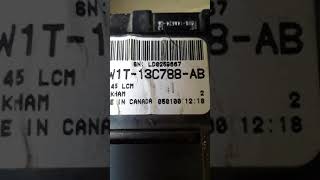
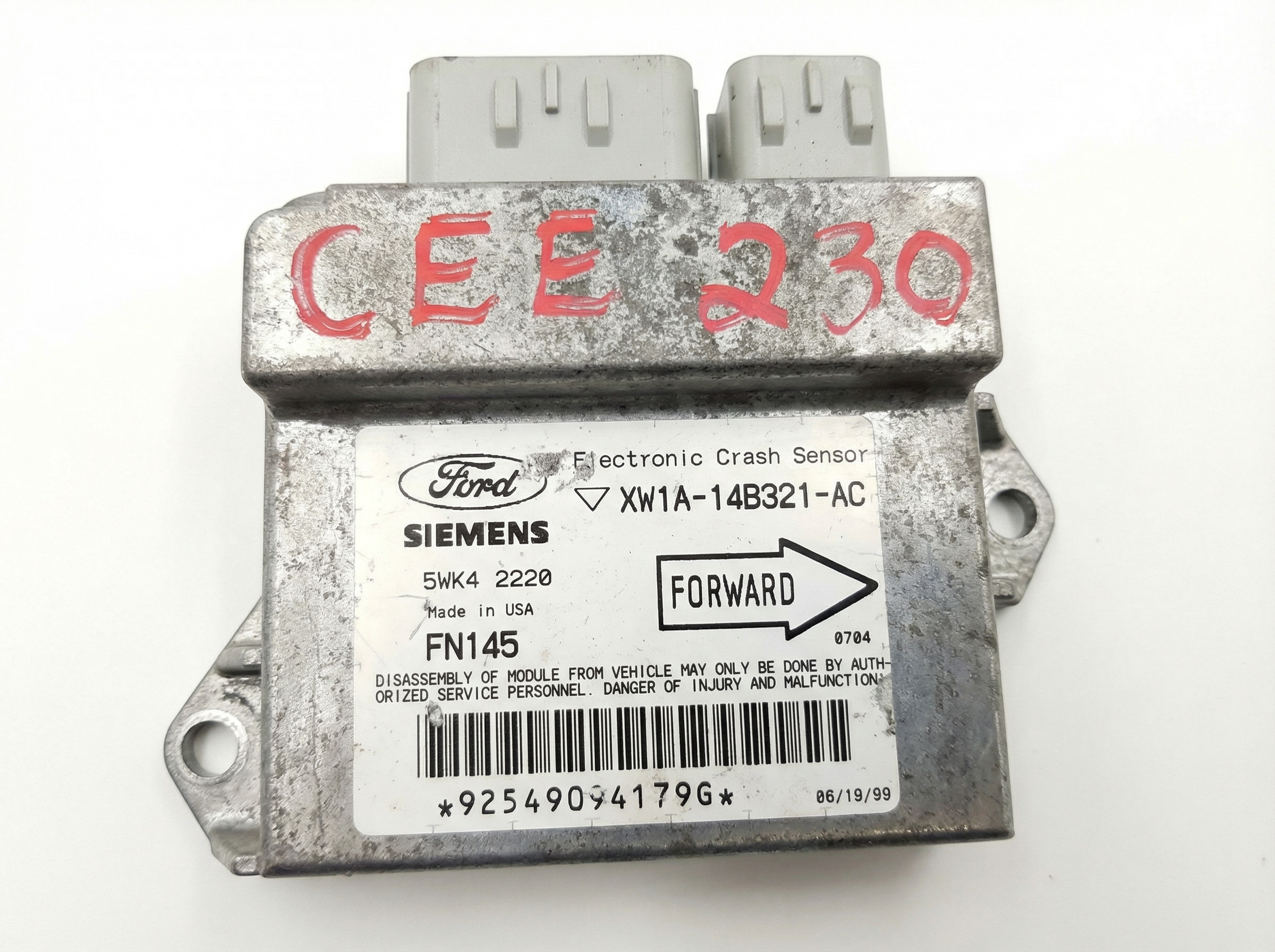
The part number is printed on a white sticker on the case of the module. For the LCM, it will typically start with a prefix like XW1T or YW1T. For the DDM, the prefix may be similar, such as YW1T. You will need to remove the module to see the part number sticker.
Helpful Videos
Technical Specifications
OEM Part Numbers: XW1Z14B321AA (Ford) YW1A-14B321-AA (Ford) XW1A14B321AC (Ford) YW1Z-13C788-BA (Ford LCM Service Part) XW1Z-13C788-AA (Ford LCM Service Part) XW1T-13C788-AA (LCM) YW1T-13C788-AA (LCM) 1W1T-13C791-AB (DDM) YW1T-13C791-AB (DDM)
The primary failure within the Lighting Control Module (LCM) is due to the wear and eventual failure of internal soldered-in relays that control power to the lighting circuits.
We Have This Part in Stock

The information in this article is provided for general reference and educational purposes only. Vehicle specifications, procedures, and part compatibility can vary by production date, trim level, and region. Always consult your vehicle's factory service manual and verify part numbers before purchasing or performing repairs. Safety-critical components such as airbags, seat belts, and braking systems should be installed by a qualified professional.
- Lincoln Town Car:
- 🎬 Helpful Videos
- 🛍️ Shop This Part
- Understanding the Town Car's Distributed Modules
- Part 1: The Lighting Control Module (LCM)
- Symptoms of a Failing LCM
- Diagnosing the LCM
- LCM Location and Replacement
- Part 2: The Driver Door Module (DDM)
- Symptoms of a Failing DDM
- DDM Location and Replacement
- Buying a Used LCM or DDM
- Cost Comparison
- Frequently Asked Questions (FAQ)
- 🎟️ Get 5% Off