

2008-2010 Nissan Titan Body Control Module: Programming, Problems, and Replacement
This guide details the common electrical failures, mandatory programming requirements, and replacement costs for the Body Control Module (BCM) in 2008-2010 Nissan Titan trucks.
- A replacement BCM is NOT plug-and-play; it MUST be programmed to the truck's VIN and keys to avoid a no-start condition.
- Match the part number EXACTLY when buying a used BCM. Also verify compatibility for airbag systems and shifter type (for 2008 models).
- Symptoms are almost always electrical, such as erratic lights, dead battery, and power accessory failure. These issues often seem unrelated.
- Using a mail-in cloning service is a great alternative to dealer programming, making a used BCM a plug-and-play replacement.
Symptoms of a Failing 2008-2010 Titan BCM
When the BCM in a Nissan Titan begins to fail, it can cause a wide variety of confusing and seemingly unrelated electrical problems. Because the BCM controls so many different systems, you may notice issues in multiple areas at once. These symptoms are often intermittent at first but tend to become more frequent over time.
- Erratic Lights: Headlights, interior lights, or turn signals may flicker, stay on constantly, or not work at all.
- Power Window and Lock Malfunctions: Windows may refuse to go up or down, or door locks may activate or deactivate on their own.
- Key Fob and Security Issues: The keyless entry remote may stop working, and the truck may fail to start due to a problem with the Nissan Anti-Theft System (NATS), which the BCM controls. You may see the security light on the dashboard remain lit.
- Parasitic Battery Drain: A classic sign of a bad BCM is a battery that dies overnight. The module may fail to shut down certain systems when the truck is off, causing a slow but constant power draw. 🎬 Watch: How to perform a parasitic draw test on your battery.
- Dashboard Warning Lights: A failing BCM can trigger a 'Christmas tree' effect on your dash, with multiple warning lights like ABS, Airbag, or Traction Control appearing at once, even if those systems are mechanically sound.
- Wiper and Horn Problems: Windshield wipers may operate randomly or not at all, and the horn may sound unexpectedly or fail to work.
Common Diagnostic Trouble Codes (DTCs)
While a failing BCM won't always set a specific code pointing to itself, it often causes communication errors on the vehicle's network. A professional scan tool may reveal codes beginning with 'B' (Body), 'C' (Chassis), or 'U' (Network). Common codes include:
- U1000: CAN Communication Circuit - This is a generic code indicating a loss of communication between modules, which is often caused by a faulty BCM.
- U0140: Lost Communication With Body Control Module - This code specifically points to a problem with the BCM itself or its connection to the network.
Pro Tip: Before condemning the BCM, always check the battery, alternator, and all related fuses. A weak battery or poor ground connection can mimic BCM failure symptoms. Also, inspect for signs of water intrusion around the driver's side A-pillar and under the dash, as moisture is a common cause of BCM failure.
🎬 Try this simple Nissan electrical self-test before replacing any parts.Programming and Installation Requirements
Warning: A replacement Body Control Module MUST be programmed to the vehicle after installation. This is not a plug-and-play part.
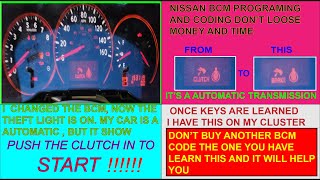
The BCM is a critical part of the Nissan Anti-Theft System (NATS) and is tied to your vehicle’s specific VIN and key data. Installing a used or new BCM without proper programming will result in a no-start condition and widespread malfunction of body electronics. You have a few options for programming:
- Nissan Dealership or Specialist: This is the most reliable method. A technician will use a Nissan CONSULT diagnostic tool to register the new BCM to your truck's VIN, configure it for your vehicle's specific options (like airbag type, shifter type, etc.), and reprogram your keys to the new module.
- BCM Cloning Service: This is an excellent option when using a recycled OEM BCM. You mail your original (faulty) BCM and the replacement (used) BCM to a specialized service. They transfer the data—including VIN, key info, and configuration—from your old module to the new one. The returned module is then plug-and-play, requiring no further programming. This service typically costs between $150 and $250.
- Locksmith or Mobile Mechanic: Some well-equipped locksmiths and mobile mechanics have advanced scan tools (like Autel) that can perform BCM configuration and key programming. This can be a convenient alternative to a dealer visit.
Buying a Used Body Control Module
Buying a used OEM BCM is a cost-effective way to solve your Titan's electrical issues, but careful matching is essential to avoid compatibility problems. Here’s what you need to know:
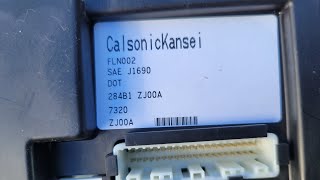
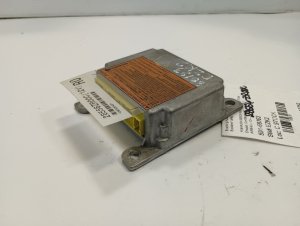
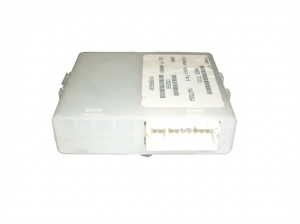
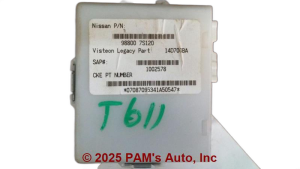
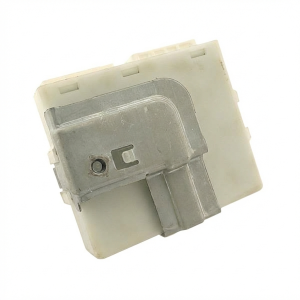
- Match the Part Number Exactly: The most critical step is to match the OEM part number from your original BCM. Remove the original module to find the sticker with the part number. Even a one-digit difference can mean the module is for a different set of vehicle options. The known OEM part numbers are 28556ZR00C, 28556ZR09A, 28556ZR09B, and 28556ZR09C.
- Verify Vehicle Options: The initial data for this part is correct and crucial. This BCM is for Titans with front airbags only. It will not work on vehicles with side and roof airbags. For 2008 models, it is also specific to vehicles with a floor-mounted shifter. Ensure the donor vehicle had the same critical options as your truck.
- Physical Inspection: When you receive the used module, inspect it for any signs of physical damage, especially corrosion on the pins or water marks on the casing. A module that has been exposed to moisture is likely to fail prematurely.
- Why Used OEM is Often Best: For complex electronic modules like the BCM, a used OEM part is often superior to a new aftermarket one (if you can even find one). The OEM module was designed and tested by Nissan for your specific vehicle, ensuring proper communication and function once programmed.
Cost Comparison
Prices can vary based on your location and the chosen repair method. Here are some typical cost ranges:
| Part / Service | Estimated Cost |
|---|---|
| New OEM BCM | $600 - $950+ (Part only) |
| Used OEM BCM | $50 - $150 (Part only) |
| Remanufactured / New Aftermarket | Not commonly available |
| Shop Labor (Replace & Program) | $300 - $650 |
| BCM Cloning Service | $150 - $250 (Service only) |
Frequently Asked Questions (FAQ)
Can I replace the BCM myself?
Yes, a DIY mechanic can physically replace the BCM. It's located under the driver's side dash, to the right of the steering column, and is held in by two 10mm bolts. 🎬 See this walkthrough on how to locate and remove the BCM. However, the vehicle will not start or run correctly until the replacement module is programmed by a dealer, specialist, or through a cloning service.
Do I have to go to the dealer for programming?
No, not necessarily. While the dealer is a guaranteed option, many independent shops and automotive locksmiths with high-end diagnostic tools can program a new BCM and your keys. Alternatively, using a mail-in cloning service allows you to install the cloned module yourself without any need for programming.
Will a BCM from a junkyard work?
Yes, a used BCM from a junkyard or recycler can work, provided two critical conditions are met: 1) The part number on the used module must exactly match your original module. 2) The used module MUST be reprogrammed for your vehicle's VIN and keys. It is not a plug-and-play solution.
What is the difference between the BCM and the ECM?
The BCM (Body Control Module) manages the vehicle's body electronics like lights, windows, locks, and wipers. The ECM (Engine Control Module), also called the PCM, is the 'brain' of the engine, controlling fuel injection, ignition timing, and emissions systems. They are separate computers but communicate with each other.
Helpful Videos
Technical Specifications
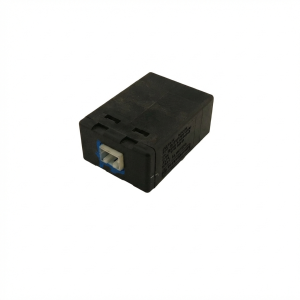
OEM Part Numbers: 28556ZR00C 28556ZR09A 28556ZR09B 28556ZR09C
Located under the driver's side dash, to the right of the steering column.
We Have This Part in Stock

The information in this article is provided for general reference and educational purposes only. Vehicle specifications, procedures, and part compatibility can vary by production date, trim level, and region. Always consult your vehicle's factory service manual and verify part numbers before purchasing or performing repairs. Safety-critical components such as airbags, seat belts, and braking systems should be installed by a qualified professional.
- Nissan TITAN: