

2017 Subaru Forester Body Control Module: Programming, Failures, and Replacement Guide
This guide covers the common failures of the 2017 Forester's Body Integrated Unit, including critical programming requirements and how to diagnose electrical issues.
- A replacement Body Control Module (BIU) MUST be programmed to the vehicle by a dealer or specialist; it is not plug-and-play and the car will not start without this step.
- This specific part (88281SG270) is only for 2017 Foresters without a smart key and with a manual liftgate.
- A failing BIU can cause a wide range of electrical issues, most notably a parasitic battery drain that can leave you stranded.
- When buying used, you must match the part number exactly and inspect the unit for any signs of corrosion or physical damage.
Key Issues for the 2017 Subaru Forester Body Control Module
The Body Control Module (BCM), or Body Integrated Unit (BIU) as it's known in Subaru terminology, is a critical component for most of your car's comfort and convenience features. For the 2017 Forester, the most important thing to know is that this module is not a simple plug-and-play part. Replacement requires vehicle-specific programming. Additionally, there are specific versions of this module for different vehicle options.
Compatibility Warning: The part number 88281SG270 is specifically for 2017 Forester models that do not have a smart key (push-button start) and are equipped with a manual liftgate. Installing the wrong module will result in features not working correctly.
Parasitic Battery Drain: A Common Complaint
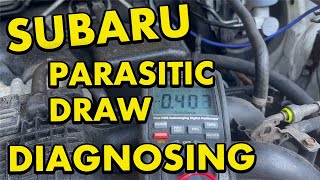
One of the most frequently discussed issues for this era of Subaru is a parasitic battery drain that leaves owners with a dead battery after the car sits for a few days. While this is often linked to the Data Communications Module (DCM) trying to connect to the defunct 3G network, a faulty BIU can also cause similar electrical draws. If you're experiencing a dead battery, the BIU and its related circuits are a prime area for a technician to investigate.
Symptoms of a Failing Body Control Module
A failing BIU can manifest in many ways, often creating a cluster of strange electrical problems. Because it controls so many different systems, you might notice several issues at once.
- Erratic Lights: Headlights, taillights, or interior lights may flicker, stay on, or not work at all.
- Power Window and Lock Malfunctions: Windows may not open or close, and power door locks may behave unpredictably or fail completely.
- Key Fob and Security Issues: The keyless entry system may stop responding, or the vehicle's anti-theft system could act up, potentially leading to a no-start condition.
- Persistent Battery Drain: The BIU may fail to let other modules go into "sleep mode" when the car is off, causing a slow drain on the battery.
- Dashboard Warning Lights: A failing BIU can cause a variety of warning lights to illuminate on the dashboard, sometimes with no clear cause. This can include communication error codes like U0140 (Lost Communication with Body Control Module).
Programming and Installation: This is Not a DIY Job
Replacing the BIU in a 2017 Subaru Forester is a two-step process: physical installation and electronic programming. While the physical swap is straightforward for a mechanic, the programming is mandatory and complex.
Programming is Required: A used or new BIU must be programmed to your vehicle's VIN. Crucially, it is linked to the immobilizer system, meaning your keys must be re-registered to the new module. If this step is skipped, the car will not start.
- Who can program it? A Subaru dealership with the Subaru Select Monitor (SSM) diagnostic tool is the most reliable option. Some highly-equipped independent shops may have the necessary software, but you must confirm this with them beforehand.
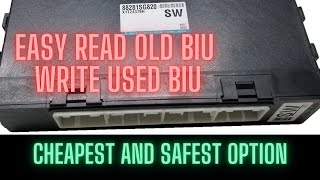
- Cloning Services: An alternative to dealer programming is a mail-in cloning service. With this service, you send your original (faulty) BIU and a compatible used (donor) BIU to a specialist. They extract the data (including key and immobilizer info) from your old module and write it onto the donor module, making it a plug-and-play part when you get it back. This can be a good option if your original module is not too damaged to be read.
Buying a Used 2017 Forester Body Control Module
A used OEM module is an excellent, cost-effective alternative to an expensive new part, provided you follow a few key rules.
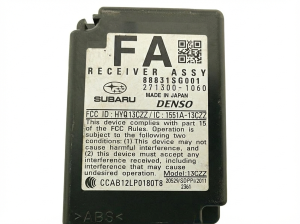
- Match the Part Number Exactly: The most critical step is to match the OEM part number on your original module. For this specific Forester, you are looking for 88281SG270. Do not use a module with a different part number, even if it looks identical.
- Verify Compatibility: Double-check that the donor vehicle had the same options as yours: no smart key and a manual liftgate.
- Inspect for Damage: When you receive the part, carefully inspect the connectors for any signs of corrosion (green or white crust), which indicates water damage. Check that the plastic housing is not cracked and all mounting tabs are intact.
- Budget for Programming: Remember that the cost of the part is not the final cost. You must factor in the price of programming by a dealer or the cost of a cloning service.
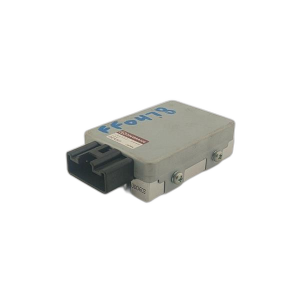
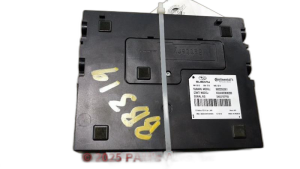
Pro Tip: The BIU is typically located under the driver's side of the dashboard, often near the fuse panel or steering column. It's a black plastic box with multiple large wiring connectors.
Cost of Replacement
Costs can vary by location and shop, but here is a general breakdown of what to expect.
| Part Type | Estimated Cost |
|---|---|
| New OEM | $320 - $475 |
| Used OEM | $50 - $150 |
| Remanufactured | $200 - $300 |
| Shop Labor (Physical Swap) | $100 - $180 (approx. 1 hour) |
| Shop Labor (Programming) | $150 - $300 (dealer programming) |
| Cloning Service | $200 - $250 |
Frequently Asked Questions (FAQ)
Can I drive my Forester with a bad Body Control Module?
It depends on the symptoms. If it's only affecting minor convenience features like interior lights, you can likely drive it. However, if it's causing a parasitic battery drain that could leave you stranded, causing exterior lights to fail, or affecting the anti-theft system, it is not recommended to drive until the vehicle is repaired.
Where is the BIU located on a 2017 Subaru Forester?
The Body Integrated Unit (BIU) is generally located under the dashboard on the driver's side, near the interior fuse panel and steering column. You will need to remove the lower dash trim panel to access it.
Do I absolutely have to program a replacement BIU?
Yes, programming is mandatory. The BIU contains vehicle-specific information and is tied to the immobilizer security system. A new or used module will not allow the car to start until it has been programmed to your vehicle and your keys have been registered to it.
Why would my BIU fail?
Failures can happen for several reasons. Water intrusion from a leaky windshield or cowl area can cause corrosion on the circuit board. Voltage spikes from jump-starting the vehicle incorrectly can damage sensitive electronics. Sometimes, internal components like capacitors or solder joints simply fail over time.
Helpful Videos
Technical Specifications
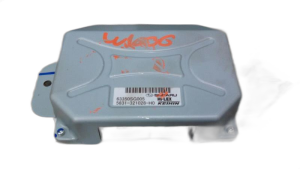
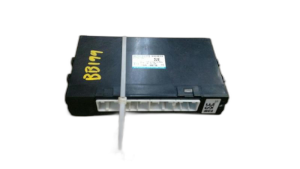
OEM Part Numbers: 88281G270 88281SG270
Also known as: Body Integrated Unit (BIU). Controls body electronics including lights, windows, locks, and keyless entry.
We Have This Part in Stock

The information in this article is provided for general reference and educational purposes only. Vehicle specifications, procedures, and part compatibility can vary by production date, trim level, and region. Always consult your vehicle's factory service manual and verify part numbers before purchasing or performing repairs. Safety-critical components such as airbags, seat belts, and braking systems should be installed by a qualified professional.
- Subaru Forester:
- 🎬 Helpful Videos
- 🛍️ Shop This Part
- Key Issues for the 2017 Subaru Forester Body Control Module
- Parasitic Battery Drain: A Common Complaint
- Symptoms of a Failing Body Control Module
- Programming and Installation: This is Not a DIY Job
- Buying a Used 2017 Forester Body Control Module
- Cost of Replacement
- Frequently Asked Questions (FAQ)
- 🎟️ Get 5% Off