

2020-2025 Explorer & Police Interceptor Rear Suspension: Is It a Broken Coil Spring or the Axle Bolt Recall?
A loud clunk or grinding from the rear of your 2020-2025 Ford Explorer or Police Interceptor Utility might not be what you think; this guide explains the critical difference between a failed coil spring and a major safety recall.
- A loud grinding or clunking from the rear of a 2020-2022 model is very likely the dangerous rear axle bolt recall (NHTSA 23V-675), not a broken spring.
- Symptoms of a failed coil spring are typically sagging ride height, less severe clunking over bumps, and poor handling.
- Always replace rear coil springs in pairs to maintain even ride height and safe handling characteristics.
- When buying used, match the part number or color code from your original spring to ensure compatibility with your vehicle's specific options (RWD/AWD, etc.).
Is It a Bad Spring or Something More Serious?
If you're hearing a sudden, loud clunk, grinding, or binding noise from the rear of your 2020-2022 Ford Explorer or Police Interceptor Utility, your first thought might be a broken coil spring. While possible, it is critical to first rule out a major safety recall concerning the rear axle mounting bolt.
Known Issue: Rear Axle Bolt Fracture Recall
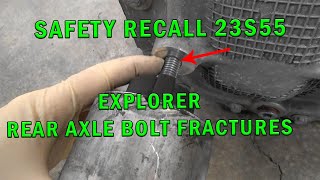
Safety Recall Alert: Ford has issued multiple recalls (including NHTSA ID 23V-675 and Ford recall number 23S55 🎬 Watch: A technician explains the rear axle bolt fracture recall.) for 2020-2022 Explorer and Police Interceptor Utility models because the rear axle horizontal mounting bolt can fracture under acceleration.
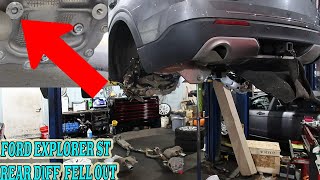
This is not a minor issue. A fractured bolt can cause the rear axle housing to move out of position, leading to a disconnect of the driveshaft. 🎬 See what happens when the rear differential fails on the road. The consequences are severe:
- A sudden loss of power to the wheels.
- The vehicle may roll away even when in Park if the electronic parking brake is not engaged.
- Symptoms include loud grinding, binding, or clunking noises, often during acceleration.
The initial fix for some vehicles was a software update to automatically apply the parking brake. However, the definitive repair, which should be performed by a Ford dealer free of charge, involves replacing the rear subframe bushing and the axle bolt itself. If your vehicle falls within the 2020-2022 model years and you experience these symptoms, you should immediately check with a Ford dealer or use the NHTSA recalls website to see if your vehicle is affected.
Other Recalls for the Rear Suspension
A less common recall (NHTSA 21S11) was issued for a small number of 2020 Explorer and Lincoln Aviator vehicles for rear lower control arm (RLCA) bolts that were not properly heat-treated. These bolts could also break and lead to a loss of steering control. While my research did not find any recalls or widespread Technical Service Bulletins (TSBs) for actual coil spring failures on these models, the related hardware has proven to be a weak point.
Symptoms of a Failed Coil Spring
If you've ruled out the axle bolt recall, you may indeed have a failing coil spring. The symptoms are typically less sudden and violent than the axle bolt failure.
- Vehicle Sagging: One corner of the vehicle, usually the rear, sits noticeably lower than the others. This is the most common sign of a worn or broken spring.
- Clunking or Rattling Noises: You may hear clunking or popping sounds when going over bumps, but they are generally less severe than the grinding associated with the axle bolt recall.
- Poor Handling and Instability: The vehicle may feel bouncy, sway excessively during turns, or feel less stable at highway speeds.
- Uneven Tire Wear: A bad spring can alter the suspension geometry, leading to accelerated and uneven wear on your rear tires.
- Bottoming Out: The suspension may compress fully over bumps that it would normally handle, causing the undercarriage to hit the suspension stops.
Buying a Used Coil Spring: What to Check
Since there are no widespread defects with the OEM springs themselves, a low-mileage used coil spring is an excellent, cost-effective option. Here’s what to look for:
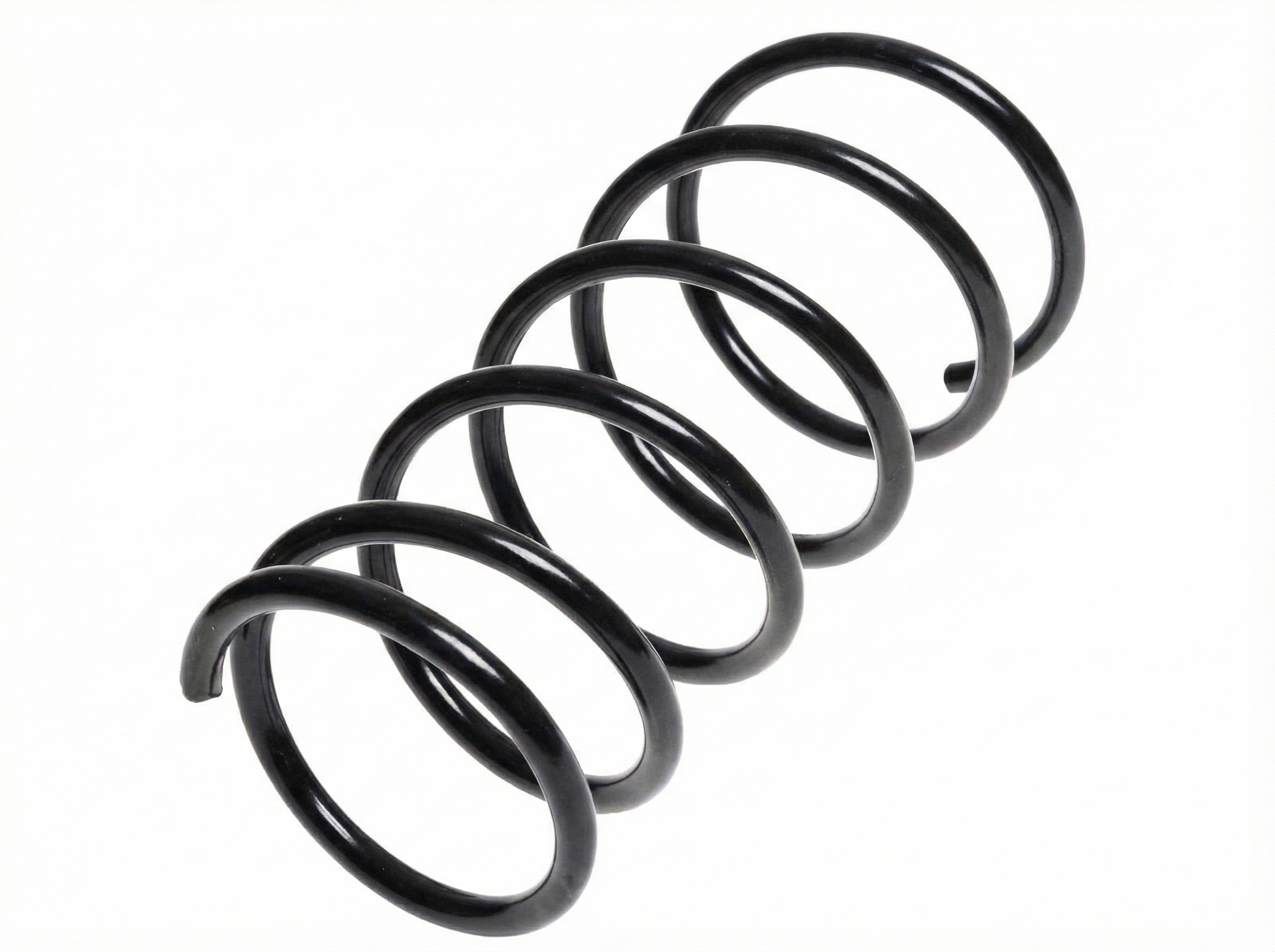
- Visual Inspection: Carefully examine the entire spring. Reject any spring with visible cracks, deep rust pits, or heavy flaking of the protective coating. Pay close attention to the very top and bottom coils where moisture can sit and cause corrosion.
- Check for Sag: If possible, compare the free-standing height of the used spring to a new one or the one you are replacing. A spring that is significantly shorter has lost its tension and will cause the vehicle to sag.
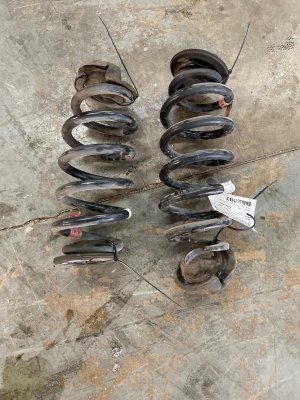
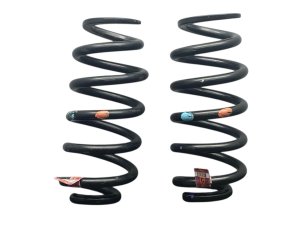
- Verify Compatibility with Color Codes: Auto manufacturers use small paint marks (color codes) on springs to identify different spring rates for various models and options (e.g., RWD vs. AWD, standard vs. towing package). While a universal decoder is not available, the best practice is to find a used spring with the exact same color dots as your original spring.
- Confirm Part Numbers: The safest method is to match the OEM part number. The primary service part number is LB5Z-5560-U, which replaces LB5Z-5560-C. You may also see engineering numbers printed on a tag on the spring itself, such as LB5C5560BE or LB5C5560CD. Always provide the seller with your vehicle's VIN to guarantee fitment.
Pro Tip: Always replace coil springs in pairs (both rear springs at the same time). Replacing only one can lead to uneven ride height, unpredictable handling, and put extra stress on the new part and other suspension components.
Cost Comparison
Prices can vary based on location and supplier, but here is a general estimate for a single rear coil spring:
| Part Type | Estimated Cost (Part Only) |
|---|---|
| New OEM | $150 - $230 |
| New Aftermarket | $70 - $120 (Note: Availability can be limited compared to OEM) |
| Used OEM | $50 - $100 |
Shop labor to replace a pair of rear coil springs typically costs between $300 and $600, depending on shop rates. An alignment is also recommended after the repair.
Installation Walkthrough & Difficulty
Replacing the rear coil springs on a 2020-2025 Explorer is a moderately difficult job that requires specialized tools, including a spring compressor.
Difficulty: 4 out of 5 (Advanced DIY)
Estimated Time: 2-4 hours for a pair.
While a detailed step-by-step guide is beyond this article's scope, the general process involves:
- Safely lifting and supporting the rear of the vehicle on jack stands.
- Removing the rear wheel.
- Supporting the lower control arm with a floor jack.
- Disconnecting the sway bar end link and the lower shock absorber bolt.
- Disconnecting an outer control arm bolt to allow the arm to swing down.
- Carefully lowering the floor jack to decompress the spring. A spring compressor may be needed for safety and to create enough clearance.
- Removing the old spring and its rubber insulators.
- Installing the new spring, ensuring it is seated correctly in the upper and lower perches.
- Reassembling the suspension in reverse order. All bolts should be torqued to factory specifications with the suspension loaded (at normal ride height).
Warning: Compressing and handling coil springs can be dangerous. An improperly secured spring can release with tremendous force. If you are not experienced with this type of repair, it is best left to a professional technician.
Frequently Asked Questions (FAQ)
Do I need to get an alignment after replacing the rear coil springs?
Yes, it is highly recommended. Replacing the springs changes the vehicle's ride height, which directly affects wheel alignment angles like camber and toe. Driving with improper alignment will cause poor handling and rapid tire wear.
Can I install Police Interceptor Utility springs on my civilian Explorer?
Physically, they may fit, as they share the same platform. However, the Police Interceptor springs are typically designed with a higher spring rate to handle heavy equipment and severe use. Installing them on a civilian model will likely result in a harsher ride and may alter the ride height. It is best to use the spring specified for your vehicle's exact configuration.
My Explorer is an All-Wheel Drive (AWD) model. Does it use the same rear springs as a Rear-Wheel Drive (RWD) model?
Not always. Different drivetrain components can change the vehicle's weight distribution and suspension design, often requiring different springs. The rear axle bolt recall affected both RWD and other powertrains, indicating multiple configurations exist. Always verify the part number with your VIN to ensure you get the correct spring for your specific drivetrain.
What are the torque specs for the rear suspension bolts?
Torque specifications are critical for a safe repair. For example, the rear shock bolts are often torqued to around 59 ft-lbs. However, specs can vary. Always consult the factory service manual for your specific model year and for critical bolts like the control arm and subframe hardware.
Helpful Videos
Technical Specifications
OEM Part Numbers: LB5Z-5560-U LB5Z-5560-C LB5C5560BE LB5C5560CD
These are standard rate coil springs for the independent rear suspension. Specific spring rates vary based on vehicle options (drivetrain, towing package) and are often identified by color-coded markings on the coils.
We Have This Part in Stock

The information in this article is provided for general reference and educational purposes only. Vehicle specifications, procedures, and part compatibility can vary by production date, trim level, and region. Always consult your vehicle's factory service manual and verify part numbers before purchasing or performing repairs. Safety-critical components such as airbags, seat belts, and braking systems should be installed by a qualified professional.
- Ford Explorer:
- Ford Police Interceptor Utility:
- 🎬 Helpful Videos
- 🛍️ Shop This Part
- Is It a Bad Spring or Something More Serious?
- Known Issue: Rear Axle Bolt Fracture Recall
- Other Recalls for the Rear Suspension
- Symptoms of a Failed Coil Spring
- Buying a Used Coil Spring: What to Check
- Cost Comparison
- Installation Walkthrough & Difficulty
- Frequently Asked Questions (FAQ)
- 🎟️ Get 5% Off