

2003-2008 Honda Pilot Rear Coil Springs: Solving Sag and Restoring Ride Height
This guide covers the common issue of rear suspension sag in first-generation Pilots, detailing symptoms, replacement costs, and how to inspect used coil springs.
- The most common coil spring issue on a 2003-2008 Pilot is sagging rear springs, which is a normal wear item.
- Always replace rear coil springs in pairs to ensure even ride height and safe, predictable handling.
- Rear spring replacement is a manageable DIY job that does not require a dangerous spring compressor.
- After replacing springs, a four-wheel alignment is necessary to prevent uneven tire wear.
Is Your 2003-2008 Honda Pilot Sagging in the Rear?
One of the most common issues with the first-generation Honda Pilot (2003-2008) is a noticeable sag in the rear suspension. Over many years and miles, especially if the vehicle has been used for towing or carrying heavy loads, the original rear coil springs can weaken and lose their height. This not only looks bad but also negatively affects ride quality, handling, and safety. This guide will walk you through everything you need to know about diagnosing, replacing, and buying used rear coil springs for your Pilot.
Symptoms of Failing Coil Springs
A failing coil spring can present several signs. While a complete break is possible, the more common failure on this Pilot is gradual sagging. Here’s what to look and listen for:
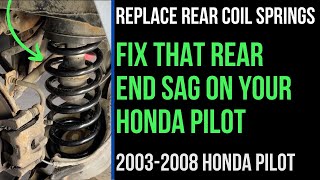
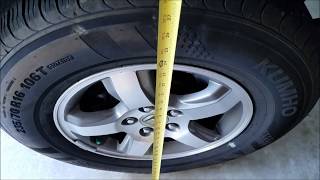
- Rear-End Sag: The most obvious symptom. The rear of the Pilot sits noticeably lower than the front, even when unloaded. 🎬 Watch: See how new springs fix a sagging rear end. You can measure from the center of the wheel to the top of the fender arch on both front and rear to confirm.
- Bottoming Out: When going over bumps or even moderate dips in the road, you may hear or feel the suspension hitting its bump stops. This creates a harsh, jarring impact because the sagging springs don't have enough travel left to absorb the force.
- Clunking or Banging Noises: If a spring has broken, you'll likely hear a loud clunking or rattling sound from the corner with the broken spring, especially over rough pavement.
- Poor Handling: Worn springs can make the vehicle feel unstable or “floaty,” especially at highway speeds or during turns. The vehicle may sway more than usual.
- Uneven Tire Wear: Incorrect ride height throws off the vehicle's suspension geometry, which can lead to accelerated and uneven wear on your rear tires.
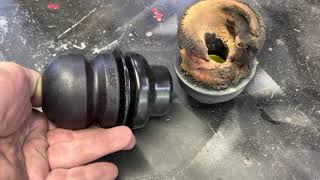
Pro Tip: While you're inspecting your springs, check the condition of the black, rubber-like bump stops located inside the coil. On older Pilots, these often completely disintegrate, contributing to a harsh ride when the suspension bottoms out. It's a good idea to replace these at the same time as the springs.
Buying a Used Coil Spring: What to Check
Because new OEM springs can be expensive, a good-quality used OEM spring is a smart, budget-friendly choice. Used OEM springs are often better than cheap, new aftermarket parts because they are made from high-quality steel to Honda's original specifications. Here’s how to inspect a used pair:
- Always Buy in Pairs: This is the most important rule. Always replace coil springs on the same axle (both rear springs) at the same time. Replacing only one can lead to an uneven ride height, unpredictable handling, and further problems. Ensure the used parts you buy come as a matched pair from the same donor vehicle.
- Check for Cracks: Carefully inspect the entire length of both springs, paying close attention to the very top and bottom coils where they sit in the suspension. Look for any visible cracks or fractures. A cracked spring is junk.
- Inspect for Corrosion: Surface rust is normal for a used suspension part. However, you should reject any springs with deep, pitting rust or heavy flaking that could hide underlying cracks.
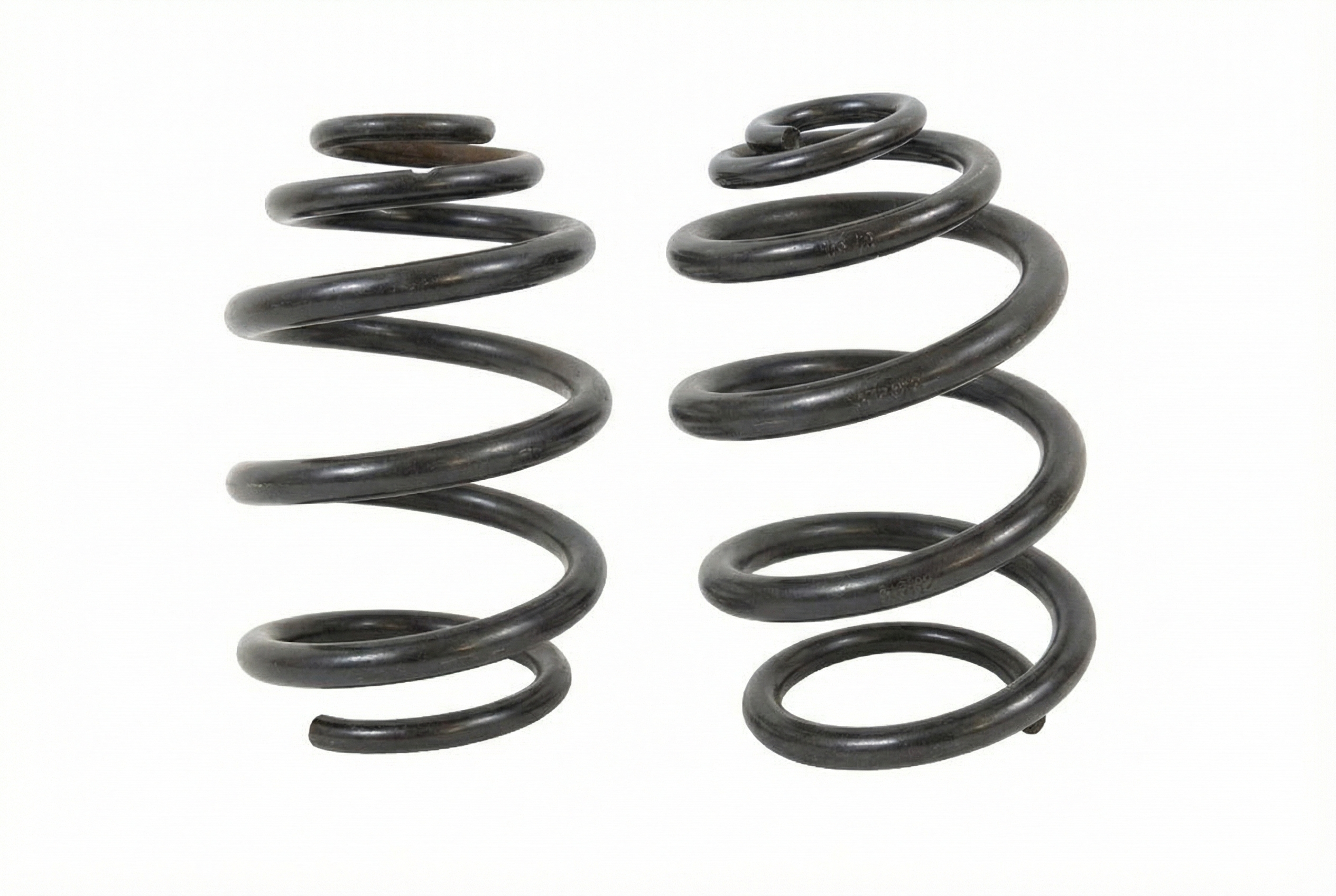
- Compare Free Height: Stand both springs on a flat surface next to each other. They should be the same height. If one is noticeably shorter, the pair has likely experienced uneven wear or one is more fatigued. A small difference is acceptable, but a significant one is a red flag.
- Look for Paint Markings: Factories sometimes use paint dots to identify different spring rates (e.g., for 2WD vs. 4WD models). While not always present on used parts, if you can see them, try to match them to your old springs.
- Check the Insulators: The springs sit on rubber or plastic insulators at the top and bottom. If these are included with the used springs, check them for cracking or damage. It's often best to buy new insulators as they are inexpensive.
Replacement Overview and Difficulty
This guide focuses on the rear springs, as they are the common failure point and are much easier to replace than the front.
Rear Coil Springs
- Difficulty: 2 out of 5
- Special Tools: None. A standard set of metric sockets and wrenches is sufficient.
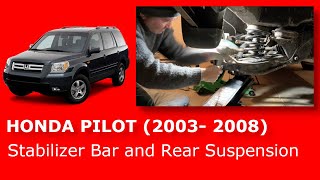
- Procedure: The process involves safely lifting and supporting the rear of the vehicle, removing the wheel, disconnecting the rear sway bar link, 🎬 See this walkthrough for replacing springs and stabilizer links. placing a jack under the lower control arm, removing the lower control arm's outer bolt, and then slowly lowering the jack to decompress and remove the spring. No spring compressor is needed for the rear.
Warning: The front suspension on a 2003-2008 Pilot uses a MacPherson strut design, where the coil spring is part of the strut assembly. Replacing just the front spring requires a special tool called a spring compressor. This tool is under extreme tension when in use and can be extremely dangerous if it slips or is used improperly. For DIY replacement of front components, it is strongly recommended to purchase and install a complete, pre-assembled strut assembly.
Cost Comparison
Prices can vary based on location and supplier, but here is a general estimate for replacing a pair of rear coil springs.
| Part/Service | Estimated Cost (Pair) |
|---|---|
| New OEM | $500 - $760 |
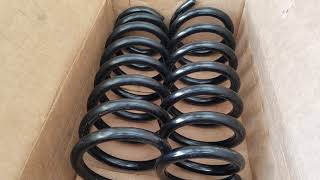
| New Aftermarket (e.g., MOOG) | 🎬 Watch: Unboxing and installation tips for Moog aftermarket springs.$80 - $120 |
| Used OEM | $60 - $100 |
| Shop Labor | $180 - $450 |
Known Issues, TSBs, and Recalls
There are no official recalls or Technical Service Bulletins (TSBs) issued by Honda or the NHTSA specifically for failing or corroding rear coil springs on the 2003-2008 Honda Pilot. The sagging issue is widely considered a wear-and-tear item that occurs over time due to age and use.
OEM Part Numbers
The following OEM part numbers are for the rear coil springs on the 2003-2008 Honda Pilot. These parts are typically interchangeable for this generation.
- 52441-S9V-A01
- 52441-S3V-A04 (Also fits 2003-2006 Acura MDX)
Frequently Asked Questions (FAQ)
Do I really need to replace springs in pairs?
Yes, absolutely. Replacing only one spring will result in uneven ride height from side to side. This unbalances the vehicle, leading to unpredictable handling, braking instability, and accelerated wear on other suspension and tire components. Always replace both rear springs at the same time.
Do I need a wheel alignment after replacing rear springs?
Yes, it is highly recommended. Changing the ride height by installing new springs will alter the suspension geometry, including camber and toe angles. A four-wheel alignment is necessary to bring these settings back into specification to ensure proper handling and prevent premature tire wear.
Can I use airbag helpers to fix the sag instead?
Airbag helper kits, which fit inside the coil spring, can be used to help level the vehicle when towing or carrying heavy loads. However, they are not a proper fix for worn-out, sagging springs. They mask the problem rather than solve it. If your springs are fatigued and causing the vehicle to sag when empty, the correct repair is to replace the springs.
What is the difference between front and rear spring replacement?
Rear spring replacement on this Pilot is relatively simple and does not require a spring compressor. The front springs are part of a MacPherson strut assembly and are under significant tension. Replacing them requires a dangerous spring compressor tool. For this reason, front spring/strut replacement is often best left to professionals or done by replacing the entire pre-assembled strut unit.
Helpful Videos
Technical Specifications
OEM Part Numbers: 52441-S9V-A01 52441-S3V-A04
These are standard-rate rear coil springs. Aftermarket options may offer variable-rate or heavy-duty versions for towing.
We Have This Part in Stock

The information in this article is provided for general reference and educational purposes only. Vehicle specifications, procedures, and part compatibility can vary by production date, trim level, and region. Always consult your vehicle's factory service manual and verify part numbers before purchasing or performing repairs. Safety-critical components such as airbags, seat belts, and braking systems should be installed by a qualified professional.
- Honda Pilot:
- 🎬 Helpful Videos
- 🛍️ Shop This Part
- Is Your 2003-2008 Honda Pilot Sagging in the Rear?
- Symptoms of Failing Coil Springs
- Buying a Used Coil Spring: What to Check
- Replacement Overview and Difficulty
- Rear Coil Springs
- Cost Comparison
- Known Issues, TSBs, and Recalls
- OEM Part Numbers
- Frequently Asked Questions (FAQ)
- 🎟️ Get 5% Off