

2020-2025 Lincoln Aviator Rear Coil Spring: Standard Suspension Facts and Recalls
This guide covers the standard rear coil springs for the 2020-2025 Lincoln Aviator, focusing on failure symptoms, used parts inspection, and critical suspension-related recalls.
- Compatibility is critical: This part (LC5Z5560E) is ONLY for Aviators with the standard, non-electronic coil spring suspension, NOT the optional 'Air Glide' air suspension.
- Check for nearby recalls: While the coil springs themselves are not under recall, be aware of safety recalls for the rear axle bolt (22S27) and rear lower control arm bolts (21S11) which can cause similar noises or handling problems.
- Always replace in pairs: To maintain even ride height and safe handling, rear coil springs must be replaced as a matched pair.
- Inspect used parts for cracks: Before buying a used spring, thoroughly inspect it for any cracks (especially at the top and bottom), deep rust, or bending.
Symptoms of a Failing Coil Spring
Coil springs are simple, durable components, but they can wear out, sag, or break over time. A failure in a rear coil spring will noticeably affect your Aviator's ride and safety. Here are the most common symptoms:
- Vehicle Sagging or Leaning: The most obvious sign is a lower ride height at the rear. If one spring fails, the vehicle may lean to one side when parked on a level surface. You might feel like you're leaning backward even when sitting in the driver's seat.
- Clunking or Popping Noises: A broken or loose spring can make a loud clunking, popping, or rattling sound, especially when going over bumps, potholes, or uneven roads. 🎬 Watch: This video explains common causes for Ford suspension noises.
- Bouncy or Rough Ride: Worn springs lose their ability to properly absorb road impacts, leading to an excessively bouncy and uncomfortable ride. The vehicle may bounce multiple times after hitting a bump.
- Poor Handling and Swaying: With a failed rear spring, the vehicle may feel unstable, especially during turns or at highway speeds. You might notice excessive body roll when cornering.
- Uneven Tire Wear: A collapsed spring changes the suspension geometry, which can lead to incorrect wheel alignment and cause rapid or uneven wear on the rear tires.
- Visible Damage: A visual inspection may reveal the problem. Look for cracks, heavy corrosion, or a clean break in the spring itself. The break often occurs at the very top or bottom of the coil.
Warning: A loud clunk or grinding noise from the rear during acceleration could also be a symptom of a fractured rear axle mounting bolt, a serious issue covered by Ford recall 22S27 for 2020-2022 models. If you experience these severe symptoms, have the vehicle inspected immediately.
Buying a Used 2020-2025 Aviator Coil Spring
For a simple mechanical part like a coil spring, a low-mileage used OEM part can be a smart, cost-effective choice. OEM springs are made from high-quality steel and are guaranteed to fit perfectly. Here’s what to check before you buy:
1. Confirm Compatibility: Standard Suspension ONLY
This is the most critical step. This part, LC5Z5560E, is for the base, standard suspension only. It will NOT fit Aviator models equipped with the optional Air Glide Suspension (also called Adaptive Suspension). An Aviator with Air Glide uses electronically controlled air bags instead of steel coil springs in the rear. Visually inspect the vehicle the part came from if possible; if it has coil springs, you're on the right track. If it has black, rubber-like air bags, the part is incorrect.
2. Physical Inspection
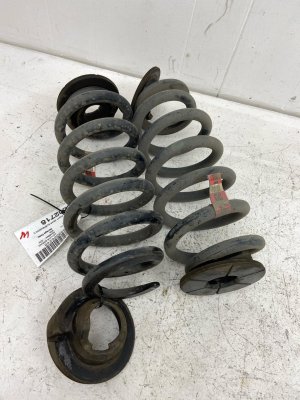
- Check for Cracks: Carefully inspect the entire spring, especially the top and bottom coils where they seat in the suspension. Use a flashlight. Any crack, no matter how small, means the spring is junk.
- Look for Severe Rust or Pitting: Light surface rust is normal for a used part. However, avoid any spring with deep, flaky rust or pitting, as this creates weak spots that can lead to a fracture.
- Inspect the Protective Coating: The original black coating protects the steel. If large sections are chipped away, the spring may have been exposed to more corrosion.
- Check for Deformation: The spring should be straight and the coils evenly spaced. Avoid any spring that looks bent, compressed, or shows signs of being heated with a torch (discoloration).
3. Buy as a Pair
It is highly recommended to replace coil springs in pairs on the same axle (both rear springs). Springs fatigue and sag over time. Replacing only one can result in an uneven ride height, which affects handling and stability. When buying used, try to get a matched pair from the same vehicle to ensure they have experienced similar wear and mileage.
Pro Tip: Used OEM springs often have superior material quality and longevity compared to cheap, new aftermarket alternatives. For a critical component that holds up your vehicle, sticking with the original Ford engineering is often the safer and more reliable long-term solution.
Known Issues, Recalls, and TSBs
While the standard rear coil springs on the 2020-2025 Aviator have proven to be reliable with no specific recalls, there are several important recalls for other components in the rear suspension area that you should be aware of.
- Recall 21S11 (NHTSA 21V156): Affecting a small number of 2020 Aviator and Explorer vehicles, this recall was for rear lower control arm (RLCA) bolts that may not have been properly heat-treated. A broken bolt could cause a loss of steering control. The fix involves replacing both RLCA bolts.
- Recall 22S27 (NHTSA 22V255): This major safety recall for 2020-2022 models involves a rear axle mounting bolt that can fracture. This can cause a loud clunk or grinding noise and potentially lead to a loss of power. The fix is a complex repair involving replacement of the rear subframe and related components.
No specific Technical Service Bulletins (TSBs) have been issued for widespread failure of the rear coil springs on these models. Most suspension-related complaints and TSBs for the Aviator pertain to the optional Air Glide system.
Replacement Overview and Difficulty
Replacing the rear coil springs on a Lincoln Aviator is a moderately difficult job that requires proper tools and safety precautions.
- Difficulty Rating: 3/5
- Estimated Time: 1.0 - 1.5 hours per side.
- DIY Feasible: Yes, for experienced DIY mechanics with the right tools.
The general process involves lifting the rear of the vehicle, removing the wheel, supporting the lower control arm with a jack, disconnecting the shock absorber and sway bar link from the control arm, and then carefully lowering the control arm to relieve tension and remove the spring. A spring compressor is not always required for rear springs if the control arm can be lowered far enough, but this depends on the specific suspension design. Always consult a proper service manual for detailed steps 🎬 See this step-by-step walkthrough for removing and installing rear springs. and torque specifications.
Warning: Suspension components are under significant tension. Improper procedures can lead to serious injury. Never work under a vehicle supported only by a jack; always use jack stands.
Cost Comparison
Replacing coil springs can vary in cost depending on the parts you choose and who performs the labor. Prices are per spring unless noted.
| Part/Service | Estimated Cost |
|---|---|
| New OEM (Ford/Lincoln) | $110 - $150 |
| New Aftermarket | $70 - $120 |
| Used OEM | $50 - $100 |
| Shop Labor (Pair) | $250 - $450 |
Frequently Asked Questions (FAQ)
Do I need to get a wheel alignment after replacing rear coil springs?
Yes. Replacing the rear coil springs will affect the vehicle's ride height and suspension geometry. A four-wheel alignment is necessary to ensure proper handling, prevent premature tire wear, and ensure safety systems function correctly.
Can I just replace one broken coil spring?
It is strongly advised against. Coil springs should always be replaced in pairs on the same axle. A new spring will be taller and stiffer than the old, worn spring on the other side, creating an imbalance that can negatively affect stability, handling, and braking.
How do I know if my Aviator has standard springs or the Air Glide suspension?
The easiest way is to look. The standard suspension has visible black steel coil springs in front of the rear wheels. The Air Glide suspension has flexible, rubber-and-plastic air bags in place of the coils. Your vehicle's window sticker or a VIN lookup at a dealership can also confirm the original equipment.
Is a sagging rear end always a bad coil spring?
Not always, but it's the most common cause on a vehicle with a standard suspension. On the Aviator, it's important to rule out other issues. If the vehicle is heavily loaded, some sagging is normal. However, if it sags when empty, the springs are the primary suspect. On models with Air Glide, a sagging rear is caused by a leak in the air suspension system, not a coil spring failure.
Helpful Videos
Technical Specifications
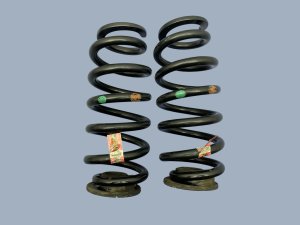
OEM Part Numbers: LC5Z5560E
Fits vehicles with standard, independent rear suspension without air suspension.
We Have This Part in Stock

The information in this article is provided for general reference and educational purposes only. Vehicle specifications, procedures, and part compatibility can vary by production date, trim level, and region. Always consult your vehicle's factory service manual and verify part numbers before purchasing or performing repairs. Safety-critical components such as airbags, seat belts, and braking systems should be installed by a qualified professional.
- Lincoln Aviator:
- 🎬 Helpful Videos
- 🛍️ Shop This Part
- Symptoms of a Failing Coil Spring
- Buying a Used 2020-2025 Aviator Coil Spring
- 1. Confirm Compatibility: Standard Suspension ONLY
- 2. Physical Inspection
- 3. Buy as a Pair
- Known Issues, Recalls, and TSBs
- Replacement Overview and Difficulty
- Cost Comparison
- Frequently Asked Questions (FAQ)
- 🎟️ Get 5% Off