

Mazda Combination Switch 2019-2025: Matching Features is Critical for CX-30, Mazda3, CX-50 & More
Diagnose faulty turn signals, wipers, and headlights, and learn why matching options like auto high beams is the key to a successful replacement on your Mazda.
- Compatibility is critical. You must match the replacement switch to your car's exact features like automatic headlights, auto high beams, and rain-sensing wipers.
- Failure symptoms almost always involve the functions on the stalks: turn signals, headlights (especially high/low beam switching), or windshield wipers.
- There are no major recalls for this specific part, but be aware that these vehicles have had other software-related electrical issues that can be confused with a bad switch.
- DIY replacement is possible, but on the Mazda3, CX-30, and MX-30, it requires removing the steering wheel and airbag, which must be done with extreme caution after disconnecting the battery.
Symptoms of a Failing Combination Switch
When a combination switch begins to fail, the symptoms are usually tied directly to the functions on the stalks. Because it controls multiple systems, you may notice one or more of the following issues:
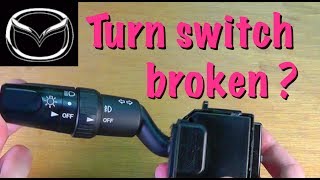
- Turn Signal Problems: This is the most common failure. Turn signals may not activate, work only intermittently, refuse to cancel after a turn 🎬 Watch: How to fix a turn signal switch for free, or only work on one side.
- Headlight Malfunctions: You might have trouble turning the headlights on or off. A frequent and dangerous symptom is the inability to switch between low and high beams, or the high beams may be stuck on.
- Windshield Wiper Issues: The wipers may not turn on, may only work on a single speed, might not park in the correct position, or could fail to shut off. The windshield washer function could also stop working.
- Warning Lights: While a failing switch doesn't typically generate a specific check engine code, a fault within the assembly can sometimes trigger seemingly unrelated warnings like an "Air Bag System Malfunction" or "In-vehicle Network Malfunction" message due to the interconnected nature of the electronics.
Pro Tip: If only a single function is failing (like one turn signal bulb), check the bulb and fuse for that specific circuit first. If multiple, unrelated functions controlled by the stalk are failing at once (e.g., high beams and wipers), the combination switch assembly is the more likely culprit.
Known Issues, TSBs, and Recalls
As of early 2026, there are no widespread recalls or Technical Service Bulletins (TSBs) specifically for combination switch failure on the 2020-2025 Mazda CX-30, 2022-2023 Mazda MX-30, 2019-2025 Mazda3, 2023-2025 Mazda CX-50, or 2024-2025 Mazda CX-90.
However, it is critical to know that these vehicle platforms have been subject to numerous other software and electrical-related recalls. These address issues with the Smart Braking System (SBS) activating unexpectedly, airbag sensor malfunctions after battery drain, and various software glitches in the Powertrain Control Module (PCM) and Engine Control Module (ECM) that can cause a loss of power.
Because of this, a correct diagnosis is essential. Do not assume that electrical problems are caused by the combination switch. If your vehicle is experiencing widespread electrical issues beyond just the stalk functions, it could be related to one of these other known problems, which may be repairable by a dealer software update.
Variant Differences and Compatibility Traps
The single most important factor when replacing this part is matching it to your vehicle's factory-installed features. Mazda uses different switch stalks depending on the trim level and options package. Installing the wrong switch will result in non-working features or new error messages.
Key Features to Match:
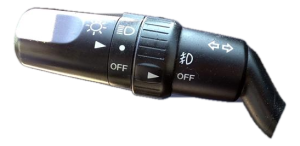
- Automatic Headlights: Does your headlight stalk have an "AUTO" position?
- Automatic High Beams: Does your vehicle have automatic high beam assist? This often requires a specific switch. Part number BDGG-66-122A is frequently associated with this feature.
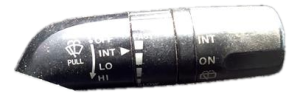
- Rain-Sensing Wipers: Does your vehicle have automatic wipers that activate when it rains? This requires a specific wiper stalk, such as part number BEMD-66-128A.
- Heated Steering Wheel: While the heating element and its activation button are separate from the combination switch, some wiring may differ. The primary combination switch part numbers do not appear to change based on this option, but it is wise to verify compatibility.
Warning: The common belief that some switches only fit the Mazda3 Hatchback is misleading. The real issue is that hatchbacks were often equipped with higher trim packages (like rain-sensing wipers and auto high beams) as standard, while base model sedans were not. Therefore, a switch from a base sedan will not work in a premium hatchback. Compatibility is based on features, not body style.
Buying a Used Combination Switch
A used OEM combination switch is a reliable and cost-effective alternative to expensive new parts, especially since cheap aftermarket versions can have poor-quality internal contacts that fail quickly. Here’s what to check:
- Verify Features: Before buying, confirm the exact features your vehicle has (auto headlights, rain-sensing wipers, etc.). The used part must come from a donor vehicle with the exact same options.
- Match the Part Number: The most reliable method is to match the OEM part number stamped on your original switch. Common part numbers include BDGG-66-122A (Headlight/Turn Signal stalk) and BEMD-66-128A (Wiper stalk). If you can't get the number, provide your VIN to the seller.
- Physical Inspection: Check for cracks in the plastic stalks or housing. Ensure all electrical connector pins are straight and free of corrosion. The lettering on the stalks should be clear and not worn away.
- Test the Feel: The stalks should move smoothly through their functions with a solid, defined click. A mushy or loose feeling can indicate internal wear and a shortened lifespan.
Replacement Procedure and Difficulty
Replacement difficulty varies by model. For all models, the first step is critical for safety.
Warning: You MUST disconnect the negative battery terminal and wait at least 10-15 minutes before beginning work. This procedure involves working around the driver's airbag, and failure to properly disable the system can result in accidental deployment, which can cause serious injury.
Procedure for Mazda3, CX-30, and MX-30 (Difficulty: 4/5)
These models require the removal of the steering wheel.
- Disconnect the negative battery terminal.
- Remove the driver's airbag module. This usually involves releasing clips through access holes on the side or back of the steering wheel.
- Disconnect the airbag and horn connectors.
- Mark the position of the steering wheel relative to the steering column shaft.
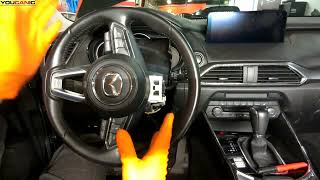
- Remove the central steering wheel nut and remove the steering wheel. A puller may be necessary if it's stuck.
- Remove the upper and lower steering column covers (shrouds).
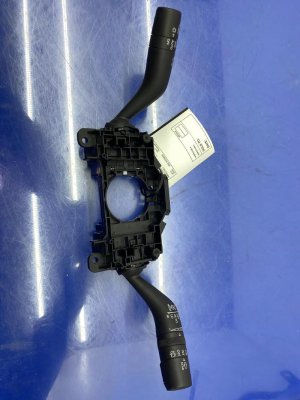
- The combination switch assembly (which is attached to the clock spring) is now visible. Unplug its electrical connectors and remove the mounting screws.
- Install the new switch, ensuring not to rotate the clock spring, and reassemble in reverse order.
Procedure for CX-50 and CX-90 (Difficulty: 2/5)
On these larger platforms, it is often possible to replace the individual left or right stalks without removing the steering wheel.
- Disconnect the negative battery terminal.
- Remove the screws holding the upper and lower steering column covers and separate the two halves.
- Each switch stalk is held in by a plastic clip or tab. Using a small screwdriver or pick, depress the tab while gently pulling the stalk straight out of its housing.
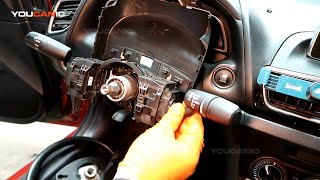
- Slide the new stalk into place 🎬 See this DIY guide for replacing CX-9 combination switches until it clicks and locks.
- Reassemble the column covers.
Steering Angle Sensor (SAS) Calibration
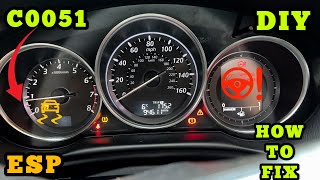
After reconnecting the battery, the vehicle may need to have its steering angle sensor (SAS) reset. This is often indicated by a stability control or traction control warning light. The procedure is simple:
- With the ignition ON (engine off), turn the steering wheel all the way to the full right lock.
- Turn the steering wheel all the way to the full left lock.
- Return the steering wheel to the center position. 🎬 Watch: A quick demonstration of the steering angle sensor reset
- Turn the ignition off and then back on. The warning light should now be off.
Cost of Replacement
| Part Source / Service | Estimated Cost |
|---|---|
| New OEM Part | $100 - $165 per stalk |
| New Aftermarket Part | $85 - $150 |
| Used OEM Part | $60 - $120 |
| Shop Labor Cost | $100 - $200 |
Frequently Asked Questions (FAQ)
Can I install a switch with more features than my car has?
No. Installing a switch with options your car doesn't have (like fog lights or auto high beams) will likely not enable those features. The vehicle's BCM is not programmed for them, and using the wrong switch may cause error codes or other malfunctions.
Is it absolutely necessary to disconnect the battery?
Yes, 100%. On models requiring steering wheel removal, this is mandatory to prevent accidental airbag deployment. Even on models where only the shrouds are removed, it is a best practice to prevent electrical shorts that could damage sensitive modules like the BCM.
Why are my turn signals not working but my hazard lights are?
This is a classic symptom of a failed combination switch. The turn signal and hazard flasher functions often run through different internal contacts or circuits within the switch assembly. If the turn signal contacts wear out but the hazard contacts are still good, this exact scenario will occur.
Do I need a special tool to remove the steering wheel?
Sometimes. While many steering wheels can be removed by wiggling them back and forth after the nut is off, some can be very tight on the splined shaft. A universal steering wheel puller is the correct tool to use in this case to avoid damaging the wheel or the steering column.
Helpful Videos
Technical Specifications
OEM Part Numbers: BDGG-66-122A BDGG66122A BDGG-66-122 BEMD-66-128A BDGG-66-CS0A BDGG-66-CS0B BDGG-66-CS0C
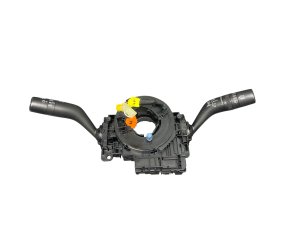
The combination switch is a modular assembly, typically consisting of a left stalk (headlights/turn signals), a right stalk (wipers), and a central clock spring that they mount to.
We Have This Part in Stock

The information in this article is provided for general reference and educational purposes only. Vehicle specifications, procedures, and part compatibility can vary by production date, trim level, and region. Always consult your vehicle's factory service manual and verify part numbers before purchasing or performing repairs. Safety-critical components such as airbags, seat belts, and braking systems should be installed by a qualified professional.
- Mazda CX-30:
- Mazda MX-30:
- Mazda Mazda3:
- Mazda 3:
- Mazda CX-50:
- Mazda CX-90:
- 🎬 Helpful Videos
- 🛍️ Shop This Part
- Symptoms of a Failing Combination Switch
- Known Issues, TSBs, and Recalls
- Variant Differences and Compatibility Traps
- Key Features to Match:
- Buying a Used Combination Switch
- Replacement Procedure and Difficulty
- Procedure for Mazda3, CX-30, and MX-30 (Difficulty: 4/5)
- Procedure for CX-50 and CX-90 (Difficulty: 2/5)
- Steering Angle Sensor (SAS) Calibration
- Cost of Replacement
- Frequently Asked Questions (FAQ)
- 🎟️ Get 5% Off