

2007-2013 Mazda3 & 2006-2017 Mazda5 Combination Switch: Solving Finicky Lights & Wipers
A detailed guide to diagnosing, buying, and replacing the turn signal and wiper switches in your Mazda3 or Mazda5, with a focus on critical compatibility details.
- Compatibility is critical and based on features (Auto Headlights, Fog Lights, Rain-Sensing Wipers), not body style. You must match your new switch to your car's exact options.
- This is a moderately difficult DIY repair because it requires removing the steering wheel and the driver's airbag. Follow all safety precautions.
- Common symptoms include failing turn signals, erratic wipers, and problems switching between high and low beams. Multiple failures on one stalk strongly suggest a bad switch.
- The 'hatchback only' fitment is a myth; it relates to features common on higher-trim hatchbacks. A switch from a sedan with matching features will work.
Symptoms of a Failing Combination Switch
When a combination switch begins to fail, it often causes intermittent problems that can be confusing to diagnose. The clearest sign is when multiple functions on the same stalk start acting up at the same time. Here are the most common symptoms:
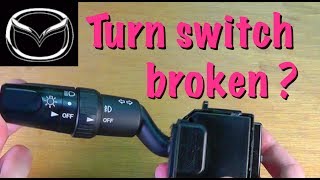
- Turn Signal Problems: This is the most frequent issue. Signals may not activate at all, work only on one side, or fail to cancel after a turn. On first-generation Mazda3s, a common failure is the internal self-canceling mechanism breaking, forcing you to manually turn the signal off after every turn. 🎬 Watch: How to fix a broken turn signal switch for free.
- Headlight Malfunctions: You might find that your headlights flicker, won't turn on, or you can't switch between high and low beams. In some dangerous cases, attempting to activate the high beams can cause all headlights to shut off completely.
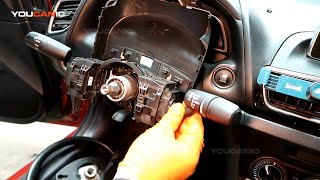
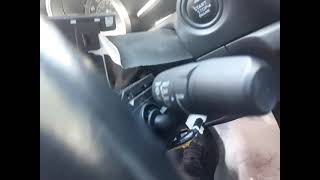
- Windshield Wiper Issues: The wipers may not turn on, get stuck on a single speed, stop in the middle of the windshield, or operate erratically. This points to a failure in the right-hand stalk. 🎬 See this quick walkthrough on removing the wiper switch stalk.
- Multiple Failures at Once: If your turn signals are acting up and your high beams won't stay on, the left-hand stalk is the likely culprit. If your wipers are misbehaving, it's the right-hand stalk. This helps distinguish a switch failure from a simpler problem like a single blown fuse or a bad bulb.
Compatibility is Critical: The single biggest mistake buyers make is purchasing a switch that doesn't match their vehicle's options. Compatibility is determined by features, NOT body style. Before you buy, you must know if your car has Automatic Headlights, Fog Lights, and Rain-Sensing Wipers.
Variant and Compatibility Warnings
Mazda used many different switch variations for these models. Installing the wrong one will result in features not working. You must match your replacement to your original switch's functions.
- Automatic Headlights: If your headlight stalk has an 'AUTO' position, you need a replacement that also has it.
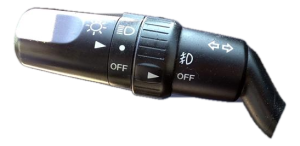
- Fog Lights: If your vehicle is equipped with fog lights, the headlight stalk will have a separate switch/ring to control them. A switch without this control will not operate your fog lights.
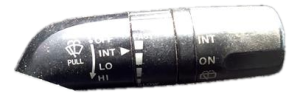
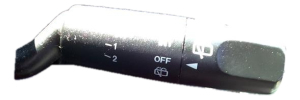
- Rain-Sensing Wipers: If your wiper stalk has an 'AUTO' position, your car has rain-sensing wipers. You must get a replacement wiper stalk with this 'AUTO' setting. A standard intermittent switch will not work.
The Mazda3 Hatchback vs. Sedan Myth
Initial information often suggests some switches only fit the Mazda3 Hatchback. This is misleading. The truth is that hatchback models were often sold with higher trim packages that included features like rain-sensing wipers and automatic headlights as standard. Base model sedans often lacked these features. Therefore, the compatibility issue is based on the car's electronic features, not its body style. A switch from a premium hatchback will work in a premium sedan if the features match.
Buying a Used Combination Switch: What to Check
A used OEM switch is often a smarter and more reliable choice than a cheap new aftermarket part. Here’s how to buy a good one:
- Photograph Your Original Switch: Before you remove it, take clear pictures of both stalks on your steering column. Pay close attention to all the text ('AUTO'), symbols (fog light icon), and positions on the stalks. This is your shopping guide.
- Match Functions Exactly: Your number one priority is to find a used switch that is an exact visual match to your original. If your old switch has 'AUTO' on the headlight stalk and a fog light ring, the replacement MUST have them too. If your wiper stalk has 'AUTO', the replacement must have it. There is no interchangeability between feature sets.
- Physical Inspection: Check the used part for cracks in the plastic housing. Ensure the connectors are clean, with no bent or corroded pins. The lettering and symbols should be clear and not worn away, which might indicate extremely high mileage.
- Test the Stalk Action: The stalks should move with a crisp, positive click into each position. A loose or mushy feel could indicate it's worn out.
- Verify Part Numbers (If Possible): If you can see the part number on the used unit, try to match it to your original. However, matching the functions visually is the most reliable method for a buyer. Some known wiper switch part numbers include:
- CD8366128: For Mazda3 5-door (Hatchback) and Mazda5 with rain-sensing wipers and without fog lamps.
- BAT166128: For Mazda3 5-door (Hatchback) and Mazda5 without auto headlamps or rain-sensing wipers.
Known Issues, TSBs, and Recalls
As of early 2026, there are no specific recalls or widespread Technical Service Bulletins (TSBs) from Mazda or the NHTSA for combination switch failure on the 2007-2013 Mazda3 or 2006-2017 Mazda5. The issues experienced are typically due to normal wear and tear on the switch's internal components.
Replacement Overview & Difficulty
Replacing the combination switch stalks on these models is a moderately difficult job for a DIY mechanic.
- Difficulty Rating: 3 out of 5
- Key Challenge: The steering wheel and driver's airbag must be removed to access the switches.
Warning: Improper handling of the airbag can result in serious injury. Always disconnect the negative battery terminal and wait at least 10-15 minutes for the system to discharge before beginning any work on the steering column. If you are not comfortable with this procedure, entrust the job to a professional mechanic.
General Steps:
- Disconnect the negative battery terminal.
- Remove the driver's side airbag module from the steering wheel.
- Remove the steering wheel center bolt and the steering wheel itself, making sure to mark its alignment.
- Remove the upper and lower steering column shrouds.
- Carefully remove the clock spring assembly. Do not let it rotate.
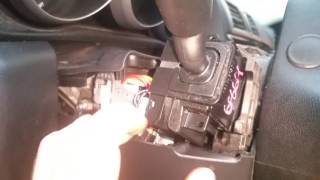
- Unplug the electrical connectors from the switch stalks.
- Release the clips holding the individual stalks and slide them out.
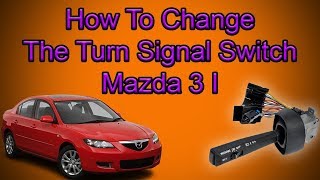
- Installation is the reverse of removal. Ensure all connectors are secure and torque the steering wheel bolt to factory specifications. 🎬 Watch: Step-by-step guide to replacing the turn signal switch.
Cost Comparison
| Part Type | Estimated Cost |
|---|---|
| New OEM | $150 - $250 per stalk |
| New Aftermarket | $50 - $120 per stalk |
| Used OEM | $40 - $80 per stalk |
| Shop Labor | $150 - $300 |
Frequently Asked Questions (FAQ)
Do I have to replace both the left and right stalks at the same time?
No. The light/turn signal stalk and the wiper stalk are separate components that can be replaced individually. If only your wipers are failing, you only need to replace the right-hand stalk.
Do I need to disconnect the battery to replace the combination switch?
Yes, absolutely. This repair requires removing the driver's airbag. You must disconnect the negative battery terminal and wait at least 10-15 minutes before starting work to prevent accidental airbag deployment, which can cause serious injury.
Can I install a switch with fog light controls if my car doesn't have fog lights?
It is not recommended. While the switch might physically fit, the wiring for the fog lights will not be present in your car's harness. The fog light function on the switch will do nothing, and there's a risk of other incompatibilities with the Body Control Module (BCM).
My turn signal started blinking really fast. Is the switch bad?
Probably not. A rapid-flashing turn signal (hyper-flashing) is almost always a sign that one of the turn signal bulbs on that side of the car has burned out. The system is designed to do this to alert you to a bad bulb. Check your front and rear turn signal bulbs before suspecting the switch.
Helpful Videos
Technical Specifications
OEM Part Numbers: BAT166128 BBM566122 CC4366128 CD8366128 BN8R-66-122
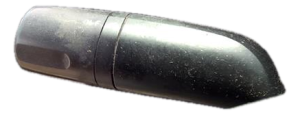
The combination switch assembly consists of two separate stalks: a left-hand stalk for lights/turn signals and a right-hand stalk for wipers/washers. Compatibility is determined by the presence of controls for Automatic Headlights, Fog Lights, and Rain-Sensing Wipers.
We Have This Part in Stock

The information in this article is provided for general reference and educational purposes only. Vehicle specifications, procedures, and part compatibility can vary by production date, trim level, and region. Always consult your vehicle's factory service manual and verify part numbers before purchasing or performing repairs. Safety-critical components such as airbags, seat belts, and braking systems should be installed by a qualified professional.
- Mazda MAZDA3:
- Mazda MAZDA5:
- 🎬 Helpful Videos
- 🛍️ Shop This Part
- Symptoms of a Failing Combination Switch
- Variant and Compatibility Warnings
- The Mazda3 Hatchback vs. Sedan Myth
- Buying a Used Combination Switch: What to Check
- Known Issues, TSBs, and Recalls
- Replacement Overview & Difficulty
- General Steps:
- Cost Comparison
- Frequently Asked Questions (FAQ)
- 🎟️ Get 5% Off