

1997-1999 Dodge Dakota & Durango Differential Carrier: Diagnosing Noises and Failures
This guide covers the common failures, symptoms, and replacement options for the rear differential carrier assembly found in 1998-1999 Dodge Durangos and 1997-1999 Dodge Dakotas.
- The most common failure points are the carrier and pinion bearings, which cause a rumbling or whining noise.
- It is critical to match the gear ratio of the replacement carrier to your vehicle's original ratio.
- A used OEM carrier assembly is often more economical than rebuilding, which requires special tools and expertise.
- Check differential fluid for metal chunks; this is a clear sign of severe internal damage.
Symptoms of a Failing Differential Carrier
A failing differential rarely fails suddenly. It usually provides several warning signs. Paying attention to these symptoms can help you diagnose the problem before it leads to a complete breakdown.
Noises: Whining, Howling, Grinding, and Clunking
Unusual noises from the rear of the vehicle are the most common symptom of a failing differential. The type of noise and when it occurs can help pinpoint the specific problem:
🎬 Watch: How to diagnose common rear end noises- Whining or Howling: A whining or howling noise that changes with vehicle speed, especially during acceleration, often points to worn ring and pinion gears. If the noise only occurs when you let off the gas (deceleration), it's more likely to be a bad pinion bearing or a loose pinion bearing preload.
- Rumbling or Whirring: A rumbling noise that starts around 20 mph and continues at higher speeds is a classic sign of worn carrier bearings. Owners of these Durango and Dakota models have frequently reported this issue, sometimes leading to catastrophic failure if ignored. 🎬 See more common issues for 2nd Gen Dakotas
- Clunking: A clunking sound when you shift from park to drive, or when you get on and off the gas, could indicate excessive backlash in the gears or worn U-joints. A regular clunking that happens every few feet while driving could mean a broken gear tooth.
- Clicking or Banging on Corners: If you hear banging or clicking sounds only when turning, the spider gears inside the carrier may be broken.
Vibrations
A vibration that you can feel through the floor or seat, which increases with vehicle speed, can be caused by a failing differential. This can be due to worn bearings or an imbalance caused by damaged gears. This should be addressed immediately, as severe vibrations can cause further damage to the driveline.
Fluid Leaks
The differential is filled with a heavy gear oil to lubricate and cool the internal components. If you see dark, thick oil leaking from the rear axle, it's a sign of a bad seal (like the pinion seal) or a damaged differential cover. Low fluid levels will quickly lead to overheating and catastrophic failure of the bearings and gears.
Known Issues for 1997-1999 Dakota & Durango
The Chrysler 9.25" rear axle used in these trucks is generally robust, but it has a known weakness. The pinion bearings and carrier bearings are frequently cited as failure points. Multiple owners have reported a humming or whining noise that progressively worsens, which is ultimately diagnosed as a failed bearing. This failure can allow metal debris to circulate in the gear oil, which then damages the ring and pinion gears, turning a relatively simple bearing replacement into a full differential rebuild.
There are no major recalls specifically for the differential carrier on these models. However, a Technical Service Bulletin (TSB) for later models notes that a chatter or vibration from the rear axle during turns can sometimes be caused by degraded axle fluid, recommending a fluid change before replacing hardware. While not for this exact year range, it highlights the importance of fluid maintenance.
Diagnosing the Problem
- Check the Fluid: Safely support the rear of the vehicle on jack stands. Open the fill plug on the differential cover. The fluid level should be right at the bottom of the hole. Stick your finger in (wear a glove) and check the fluid on the drain plug magnet. It's normal to see a fine, paste-like layer of metal fuzz. However, if you find large metal chunks or shavings, it's a clear sign of internal gear or bearing damage. The fluid should not smell burnt.
- Listen for Noises: With the vehicle securely on jack stands, you can have a helper carefully put the vehicle in drive and let the wheels turn slowly. Using a mechanic's stethoscope, you can listen for noise at the pinion (where the driveshaft enters), and on the sides of the carrier to isolate pinion bearing noise from carrier bearing noise.
Warning: Running a vehicle on jack stands is extremely dangerous. The wheels will be spinning at high speed. Keep a safe distance and never perform this check alone.
- Check for Play: With the vehicle in park and the engine off, try to turn the driveshaft by hand. A small amount of rotational play is normal (this is backlash). However, excessive clunking or movement can indicate worn gears. Also, try to push the driveshaft up and down at the pinion yoke; any significant play could mean a worn pinion bearing.
Buying a Used Differential Carrier Assembly
For a vehicle of this age, a used OEM differential carrier is often the most cost-effective solution. Here’s what to look for to ensure you get a good part:
- Verify the Gear Ratio: This is the most critical step. The gear ratio must match your vehicle's original ratio. The ratio is usually stamped on a tag attached to one of the differential cover bolts or on the ring gear itself. Common ratios for these trucks include 3.55 and 3.92. Installing the wrong ratio will cause serious drivability issues and damage to the transfer case on 4WD models.
- Physical Inspection: If possible, inspect the unit before buying. Turn the yoke by hand. It should turn smoothly, with some resistance, but without any grinding or catching. Look at the gear teeth through the axle tube openings if possible; they should be smooth and even, without chips or severe wear patterns. Check the magnetic drain plug for large metal chunks.
- Mileage: While mileage is a factor, the maintenance history is more important. A high-mileage differential that has had regular fluid changes can be in better shape than a lower-mileage unit that was neglected or abused. Failures on these models have been reported at relatively low mileage (around 70,000 miles), so mileage alone isn't a perfect indicator.
- Source and Warranty: Purchase from a reputable auto recycler that offers a warranty. This gives you protection in case the part is defective.
Rebuild vs. Replace
Rebuilding a differential is a complex job that requires specialized tools and knowledge to properly set pinion depth, pinion bearing preload, and ring gear backlash. While rebuild kits are available, the labor can be expensive.
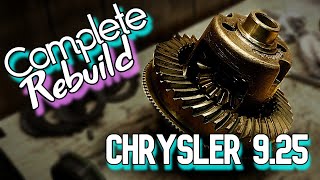
- Replacement: Swapping the entire carrier assembly is a more straightforward job for a DIY mechanic 🎬 Watch: Step-by-step Chrysler 9.25 differential rebuild and install or professional technician. It eliminates the need for complex gear setup.
- Rebuilding: This is best left to a differential specialist. If only a single bearing has failed and the gears are still in good condition, a rebuild might be economical. However, if the gears are damaged, the cost of a new ring and pinion set plus the labor often makes a used assembly a better value.
Cost Breakdown
Prices can vary based on location, condition, and supplier. These are estimates as of early 2026.
| Part/Service | Estimated Cost |
|---|---|
| New Aftermarket Carrier (empty) | $250 - $650 |
| Used OEM Carrier Assembly | $150 - $400 |
| Differential Rebuild Kit (bearings, seals) | $80 - $220 |
| Shop Labor (Replacement) | $400 - $700 |
| Shop Labor (Rebuild) | $700 - $1500+ |
Related Parts to Consider
When replacing the differential carrier, it's a good time to inspect and potentially replace other related components:
- Axle Seals: Prevent gear oil from leaking into the axle tubes.
- Axle Shaft Bearings: If they are noisy or rough, now is the time to replace them.
- U-Joints: Check for any play or stiffness in the universal joints on the driveshaft.
- Differential Cover Gasket and Fluid: Always use a new gasket or RTV sealant and fresh gear oil. Use 80W-90 gear oil, and if you have a limited-slip differential (often called 'anti-spin'), you must add a friction modifier additive.
Frequently Asked Questions (FAQ)
How do I know what gear ratio my truck has?
There should be a metal tag on one of the differential cover bolts with the ratio (e.g., 3.55, 3.92). If the tag is missing, you can find the information on the vehicle's build sheet using the VIN, or you can count the teeth on the ring and pinion gears. The ratio is the number of ring gear teeth divided by the number of pinion gear teeth.
Can I drive with a noisy differential?
It is not recommended. A noisy differential is a sign of metal-on-metal wear. Continuing to drive can cause a catastrophic failure where the differential could lock up, potentially causing you to lose control of the vehicle. At a minimum, you will cause more expensive damage.
What is a limited-slip or 'anti-spin' differential?
A limited-slip differential (LSD), which Dodge often calls 'Anti-Spin', uses clutches or gears to provide power to both rear wheels under slippery conditions. An 'open' differential will send power to the wheel with the least traction, which is not ideal. If you replace your carrier, you need to know if you have an open or limited-slip unit to maintain original performance.
Why did my differential fail right after a fluid change?
In some cases, if the wrong fluid was used (especially forgetting the friction modifier additive in a limited-slip differential), it can cause immediate chattering and damage. However, it's more likely that the differential was already failing, and the old, thick fluid was masking the noise. The new, clean fluid is less able to cushion the worn parts, making the existing problem obvious.
Helpful Videos
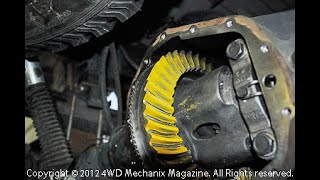
Technical Specifications
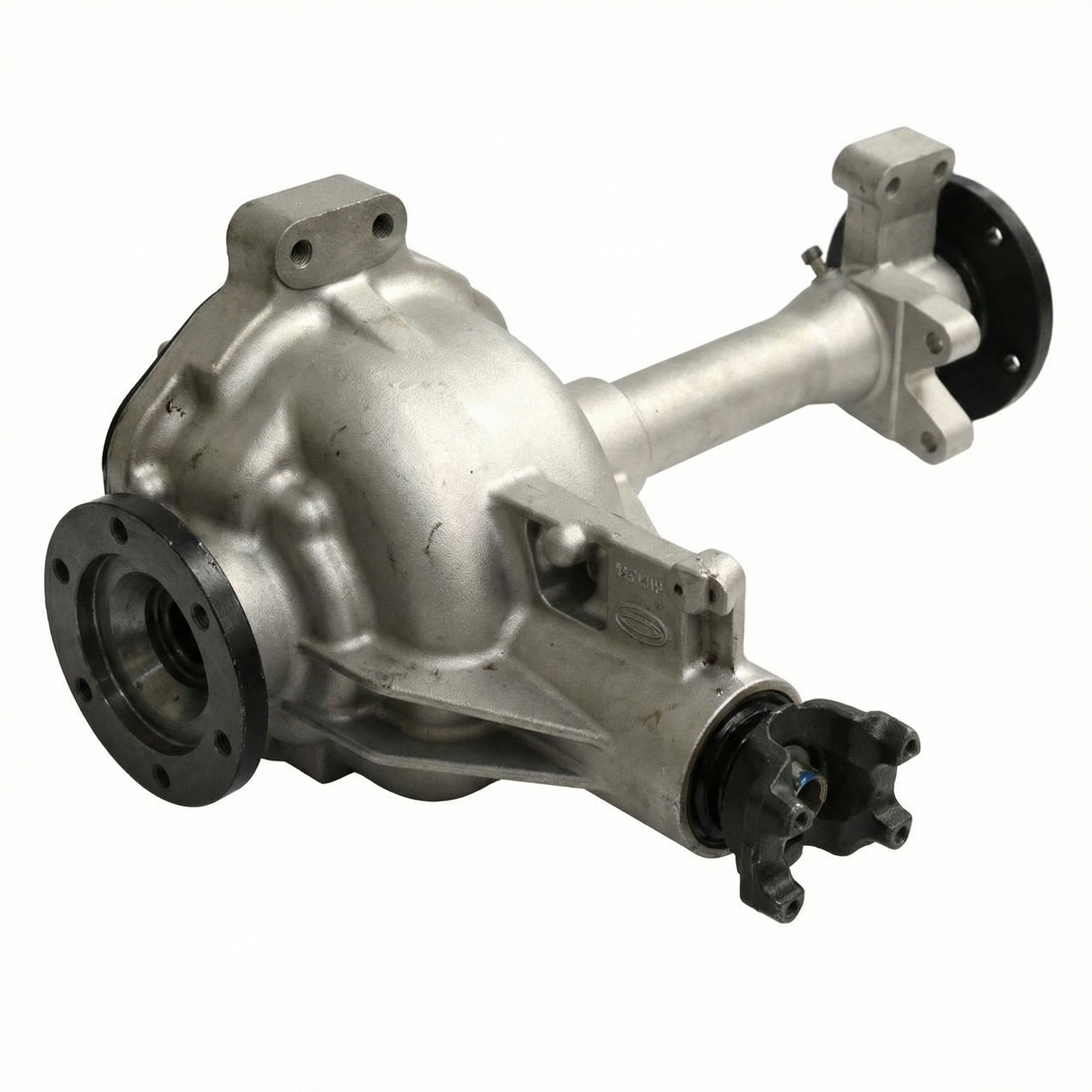
OEM Part Numbers: 52070001
Fits the Chrysler 9.25" rear axle. Common gear ratios include 3.55 and 3.92. Requires 80W-90 gear oil; limited-slip units also require a friction modifier additive.
We Have This Part in Stock

The information in this article is provided for general reference and educational purposes only. Vehicle specifications, procedures, and part compatibility can vary by production date, trim level, and region. Always consult your vehicle's factory service manual and verify part numbers before purchasing or performing repairs. Safety-critical components such as airbags, seat belts, and braking systems should be installed by a qualified professional.
- Dodge Durango:
- Dodge Dakota:
- 🎬 Helpful Videos
- 🛍️ Shop This Part
- Symptoms of a Failing Differential Carrier
- Noises: Whining, Howling, Grinding, and Clunking
- Vibrations
- Fluid Leaks
- Known Issues for 1997-1999 Dakota & Durango
- Diagnosing the Problem
- Buying a Used Differential Carrier Assembly
- Rebuild vs. Replace
- Cost Breakdown
- Related Parts to Consider
- Frequently Asked Questions (FAQ)
- 🎟️ Get 5% Off