

1999-2000 Lexus RX300 Rear Differential: Diagnosing Whines, Leaks, and Replacement Options
This guide covers the common failure symptoms, diagnostic procedures, and replacement costs for the rear differential carrier in 1999-2000 Lexus RX300 AWD models.
- The most common failure symptoms are a whining noise that changes with speed and fluid leaks from the seals.
- This part is specific to 1999-2000 Lexus RX300 AWD models and has a critical 2.928 gear ratio. The wrong ratio will destroy the drivetrain.
- Due to the high cost of new parts, a quality inspected used OEM unit is the most sensible and economical replacement option.
- When replacing, always use new gear oil (75W-90 GL-5), new drain/fill plug gaskets, and consider replacing the axle seals as a preventative measure.
Symptoms of a Failing Rear Differential
A failing rear differential on a 1999-2000 Lexus RX300 typically gives warning signs before a complete failure. The most common symptoms are unusual noises and fluid leaks.
Noises: Whining, Grinding, and Clunking
Pay close attention to new sounds coming from the rear of the vehicle, as they are the most frequent indicators of a problem.
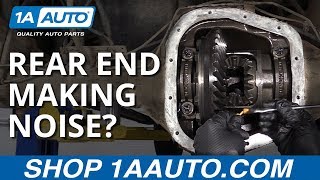
🎬 Watch: How to diagnose and fix common rear end noises- Whining or Howling: This is the most common symptom. A high-pitched whining or howling noise that changes with vehicle speed is a classic sign of worn-out differential gears or bearings. The noise may appear at certain speeds and get louder during acceleration or deceleration. This is often due to a lack of proper lubrication or simply high mileage wear.
- Grinding or Rumbling: A grinding or rumbling sound, especially when accelerating or turning, points to more severe wear or damage inside the differential. This could be caused by worn bearings or damaged gear teeth. If you hear grinding, the differential has likely been failing for some time.
- Clunking: A clunking or clicking noise, particularly when you start moving, shift from drive to reverse, or make sharp turns, can indicate excessive backlash in the gears or a broken spider gear.
Fluid Leaks
The differential is a sealed unit filled with gear oil. If you see dark, thick fluid spots on the ground under the rear of your RX300, it's a sign of a leak. Common leak points include:
- Axle Seals: Where the CV axles enter the differential housing.
- Pinion Seal: Where the driveshaft connects to the front of the differential.
- Differential Cover/Housing: Leaks can sometimes occur from the drain or fill plugs if the gaskets are old or were not torqued correctly.
Losing gear oil is serious. Without proper lubrication, the internal gears will overheat, wear out rapidly, and eventually seize, leading to a complete failure.
Vibrations and Handling Issues
In more advanced stages of failure, you might feel vibrations that increase with speed. This can be caused by worn-out bearings or an imbalanced driveshaft resulting from universal joint failure. You might also notice some difficulty or unpredictability when cornering.
Diagnosing the Problem
Before condemning the differential, it's important to rule out other components that can cause similar symptoms.
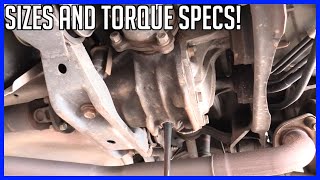
- Check the Differential Fluid: This is the first and most important step. The process requires a 10mm hex (Allen) key. The fill plug is on the rear cover of the differential, and the drain plug is at the bottom. With the vehicle on a level surface, remove the fill plug. The fluid level should be right up to the bottom of the fill hole. If it's low, it indicates a leak. Check the fluid's condition. Dark, burnt-smelling fluid or fluid with visible metal shavings on the magnetic drain plug is a clear sign of severe internal wear.
Pro Tip: Always loosen the fill plug before you remove the drain plug. If you drain the fluid and find you cannot remove a seized fill plug, you will be unable to refill the differential and the vehicle will be undrivable.
🎬 See this step-by-step guide for changing your differential gear oil - Differentiate from Wheel Bearing Noise: A bad wheel bearing can also cause a humming or grinding noise that changes with speed. However, wheel bearing noise will typically change when you swerve from side to side, as this loads and unloads the bearing. Differential noise usually stays consistent regardless of swerving.
- Inspect for Leaks: Thoroughly clean the differential housing with a degreaser and then inspect it after a short drive to pinpoint the exact source of any leaks. A leak from the fill plug is common and can be fixed with a new gasket. Leaks from the axle or pinion seals are more involved to repair.
Known Issues, TSBs, and Recalls
As of early 2026, there are no specific recalls or Technical Service Bulletins (TSBs) from Lexus or the NHTSA for widespread failure of the rear differential carrier assembly on the 1999-2000 RX300. Failures that occur are generally due to age, mileage, and lack of maintenance (such as not changing the gear oil or ignoring leaks). While some owners have reported issues, they are considered isolated incidents rather than a manufacturing defect.
Compatibility Warning: This rear differential carrier assembly has a 2.928 gear ratio. It is only for All-Wheel Drive (AWD) models with a standard, non-locking differential. Using a differential with a different gear ratio will cause severe damage to the vehicle's drivetrain.
Buying a Used Differential Carrier Assembly
For a vehicle of this age, a quality used OEM differential is the most cost-effective and reliable repair option. New OEM units are prohibitively expensive, and rebuilding is often not economical.
What to Inspect on a Used Unit:
- Check for Leaks: Look for signs of old fluid leaks around the pinion seal (where the driveshaft connects) and the axle seals. Heavy staining suggests the seals are bad.
- Turn the Input Flange: The flange where the driveshaft bolts on should turn smoothly by hand without any grinding, notchiness, or excessive play.
- Inspect the Fluid: If possible, ask the seller to open the drain plug. The fluid should not be full of metal particles. A small amount of fine metallic dust on the magnet is normal, but large chunks are a major red flag.
- Verify the Part Number and Ratio: Confirm the part is from a 1999-2000 RX300 AWD and has the correct 2.928 gear ratio.
- Mileage: While lower mileage is always better, the maintenance history is more important. A well-maintained unit with 150,000 miles can be in better condition than a neglected one with 90,000 miles. Given the age of these vehicles, most available used units will have over 100,000 miles. Focus on the physical inspection rather than mileage alone.
Replacement Overview and Related Parts
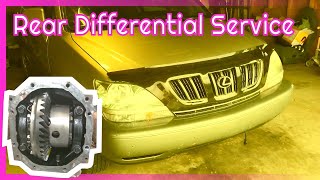
Replacing the rear differential is a labor-intensive job, rated as difficult for a DIY mechanic. It requires safely lifting and supporting the vehicle, and involves removing parts of the rear suspension and both rear CV axles to access the differential. The estimated time for a professional is several hours.
🎬 Watch: Full walkthrough on how to replace the rear differentialParts to Replace at the Same Time:
- Differential Fluid: The unit will need to be filled with new fluid. Use approximately 1 quart of high-quality API GL-5 75W-90 synthetic gear oil.
- Drain and Fill Plug Gaskets: Always use new crush washers (gaskets) to prevent leaks. The Lexus part number is 12157-10010.
- Axle Seals: It is highly recommended to install new axle seals into the replacement differential before installation to prevent future leaks.
Important Torque Specs:
- Drain and Fill Plugs: 36 ft-lbs (49 Nm)
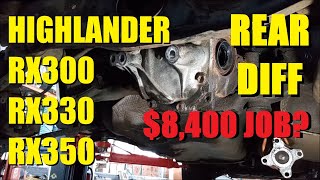
Cost to Replace the Differential Carrier
The cost can vary significantly based on the parts used and local labor rates.
| Part/Service | Estimated Cost | Notes |
|---|---|---|
| New OEM Part | $2,100 - $3,800+ | Extremely expensive and may be difficult to source. |
| Used OEM Part | $150 - $400 | The most common and economical choice. Prices vary by supplier and condition. |
| Shop Labor | $800 - $2,000 | A complex job requiring 5-8 hours of labor. Rates vary by location. |
| Total Professional Replacement (Used Part) | $950 - $2,400 | This is the most likely total cost for a repair at an independent shop. |
| Total Professional Replacement (New Part) | $2,900 - $5,800+ | Typically only performed at a dealership. |
Frequently Asked Questions (FAQ)
What type of gear oil does the 1999-2000 RX300 rear differential use?
It requires about 0.95 quarts (0.9 liters) of API GL-5 hypoid gear oil. A high-quality 75W-90 synthetic gear oil is a common and effective choice.
How can I tell if the noise is my differential or a wheel bearing?
A simple test is to drive at the speed the noise is loudest and gently swerve the vehicle left and right. If the noise changes pitch or intensity when turning, it is very likely a wheel bearing. If the noise remains constant, the differential is a more likely culprit.
Is it safe to drive with a noisy rear differential?
You can often drive with a whining differential for some time, but it is not recommended. The noise indicates a problem that will only get worse. If the differential fails completely while driving, it can lock up the rear wheels, causing a loss of control, or simply leave you stranded. It's best to have it inspected and repaired as soon as possible.
Can I use a differential from a Toyota Highlander?
The first-generation Lexus RX300 shares its platform with the Toyota Highlander. A rear differential from a 2001-2003 Highlander AWD may be compatible, but you MUST verify that it has the same 2.928 gear ratio. Installing a unit with a different ratio will cause immediate and severe drivetrain damage.
Helpful Videos
Technical Specifications
OEM Part Numbers: 4111048010
Gear Ratio: 2.928. Fluid Type: API GL-5 Hypoid Gear Oil (75W-90 recommended). Fluid Capacity: Approx. 0.95 quarts (0.9L). Drain/Fill Plug Tool: 10mm Hex (Allen) Key. Drain/Fill Plug Torque: 36 ft-lbs.
We Have This Part in Stock
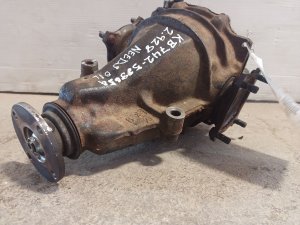

The information in this article is provided for general reference and educational purposes only. Vehicle specifications, procedures, and part compatibility can vary by production date, trim level, and region. Always consult your vehicle's factory service manual and verify part numbers before purchasing or performing repairs. Safety-critical components such as airbags, seat belts, and braking systems should be installed by a qualified professional.
- Lexus RX300:
- 🎬 Helpful Videos
- 🛍️ Shop This Part
- Symptoms of a Failing Rear Differential
- Noises: Whining, Grinding, and Clunking
- Fluid Leaks
- Vibrations and Handling Issues
- Diagnosing the Problem
- Known Issues, TSBs, and Recalls
- Buying a Used Differential Carrier Assembly
- What to Inspect on a Used Unit:
- Replacement Overview and Related Parts
- Parts to Replace at the Same Time:
- Important Torque Specs:
- Cost to Replace the Differential Carrier
- Frequently Asked Questions (FAQ)
- 🎟️ Get 5% Off