

2021-2025 Genesis GV80 Brake Caliper: Decoding Engine & Wheel Size Differences
This guide clarifies the critical fitment differences between 2.5L and 3.5L engines, and various factory wheel sizes, to ensure you get the right caliper for your GV80.
- Correct caliper fitment for the GV80 absolutely depends on the engine (2.5L vs. 3.5L) and the original factory wheel size (19", 20", or 22").
- Rear calipers feature an Electronic Parking Brake (EPB) that requires a scan tool to place it in "Service Mode" for replacement. Do not try to force the piston.
- When buying a used caliper, the most important things to inspect are the piston's rubber boot for tears and the bleeder screw for seizure or damage.
- A failing caliper is a critical safety issue. Symptoms like pulling to one side, a spongy pedal, or fluid leaks mean the vehicle should not be driven.
Fitment & Variant Differences: The Most Important Section
Choosing the correct brake caliper for a 2021-2025 Genesis GV80 is more complex than for many other vehicles. Fitment is determined by two key factors: the engine and the original factory wheel size. Installing the wrong caliper can lead to improper brake function, parts that don't physically fit, and potential safety hazards. There are distinct brake systems for the 2.5L Turbo and 3.5L Twin-Turbo engines.
Warning: Before ordering, you must verify your vehicle's engine size and original factory wheel size. This information can often be found on the vehicle's window sticker or on the sticker inside the driver's door jamb.
- 2.5L Turbo Models: These models are typically equipped with a smaller, single-piston floating caliper setup. However, there can be variations depending on the original wheel size (e.g., 19-inch vs. 20-inch wheels). 🎬 Watch: Front brake service walkthrough for 2.5L Turbo models
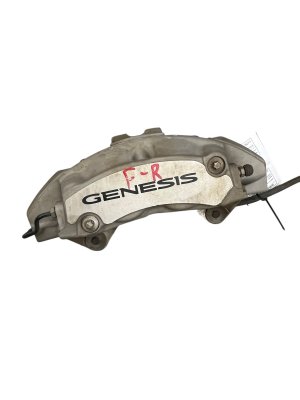
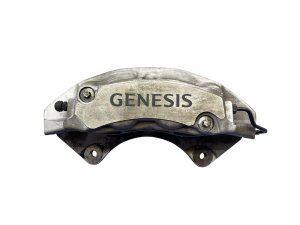
- 3.5L Twin-Turbo Models: These models feature a larger, more powerful braking system to handle the increased power and weight. They are equipped with black 4-piston fixed monobloc front calipers. This is a significant upgrade over the 2.5L's standard brakes.
- Wheel Size Variations: The GV80 was offered with 19-inch, 20-inch, and 22-inch wheels. Larger wheels often accommodate larger brake rotors and calipers. It is critical to match the caliper to the original wheel size your vehicle was built with. For example, a caliper designed for a 19-inch wheel setup will not fit a vehicle originally equipped with 22-inch wheels and their corresponding larger brakes.
Known Issues, TSBs, and Recalls
While there are no widespread recalls specifically for Genesis GV80 brake calipers at this time, some related issues and a general brake service TSB have been noted.
- NHTSA Recall 21V-160: This recall affected some 2015-2016 Genesis and 2017-2020 G80 models for an issue where the anti-lock brake system (ABS) module could short circuit, increasing the risk of an engine compartment fire. While this does not directly involve the GV80 or the calipers themselves, it highlights the complexity of the overall braking system.
- TSB 21-BR-002HG: Genesis issued this Technical Service Bulletin outlining best practices for brake service. It provides specific instructions for servicing both floating-type and fixed-type calipers, cleaning guide pins, and importantly, procedures for rear calipers with Electronic Parking Brakes (EPB).
- Brake Module/Hose Issues: Some owners have experienced issues related to the brake-by-wire system, including brake module failures and fluid leaks from flexible hoses, which can trigger multiple warning lights and a loss of braking power. 🎬 See how a failed brake module is diagnosed and replaced These are not caliper failures but are part of the larger hydraulic system.
Symptoms of a Failing Brake Caliper
A failing brake caliper is a serious safety issue. If you notice any of these symptoms, your brake system should be inspected immediately.
- Vehicle Pulling to One Side: A stuck or seized caliper can cause the vehicle to pull to the left or right when braking or even while driving. This happens because one wheel is braking more than the others.
- Uneven Brake Pad Wear: If a caliper's guide pins are stuck or the piston is seized, it can cause the brake pads on that wheel to wear out much faster than the others.
- Brake Fluid Leaks: You might see a puddle of clear or yellowish fluid near the inside of your wheel. This can be caused by a leaking piston seal or a loose banjo bolt.
- Spongy or Soft Brake Pedal: A leaking caliper or air in the hydraulic lines can cause the brake pedal to feel soft and sink towards the floor.
- Grinding or Squealing Noises: A caliper that fails to retract properly can keep the brake pad in constant contact with the rotor, leading to grinding or squealing sounds.
- Burning Smell: A dragging caliper generates extreme heat, which can produce a strong, acrid burning smell from the affected wheel well.
Pro Tip: After a drive, carefully feel for heat radiating from your wheels (do not touch the wheel or rotor). A wheel that is significantly hotter than the others is a strong indicator of a dragging or seized brake caliper.
Buying a Used 2021-2025 GV80 Brake Caliper
A used OEM caliper can be an excellent value, but careful inspection and verification are essential, especially for the GV80.
- Verify Fitment First: Before you even look at a part, confirm your engine size and original wheel size. Have the OEM part number from your existing caliper if possible. Do not buy a caliper based on looks alone; a 2.5L caliper and a 3.5L caliper are not interchangeable.
- Physical Inspection is Key:
- Piston Boot: The rubber boot around the piston must be intact. Any rips, tears, or cracks mean moisture and dirt have gotten in, likely causing piston corrosion and seizure. Reject any caliper with a damaged boot.
- Bleeder Screw: Check that the bleeder screw is not broken off, stripped, or seized. A damaged bleeder screw makes the caliper unusable as you won't be able to bleed the brakes.
- Guide Pin Bores: For floating calipers, ensure the guide pin bores are clean and smooth. The caliper should slide freely on its pins.
- EPB Motor (Rear Calipers): Inspect the electronic parking brake motor and its electrical connector for any signs of physical damage or corrosion.
- Threads: Ensure the threads for the banjo bolt (brake hose connection) and mounting bolts are clean and undamaged.
- Why Used OEM is a Smart Choice: For a vehicle with such specific variations as the GV80, a used OEM caliper guarantees the correct fitment, material quality, and performance characteristics (like piston size and hydraulic pressure) that the vehicle was designed for. Aftermarket parts can sometimes be incorrectly cataloged, leading to wasted time and money.
Replacement Overview
Replacing a brake caliper is a moderately difficult task. If you are not experienced with working on hydraulic brake systems, it is best left to a professional. The process involves opening the hydraulic system, which requires a thorough brake bleeding procedure afterward.
Difficulty: 3.5 out of 5
Key Steps:
- Safely lift and support the vehicle and remove the wheel.
- Loosen the banjo bolt connecting the brake hose to the caliper, but do not remove it yet. Use a flare nut wrench to avoid stripping the fitting.
- Remove the caliper mounting bolts and slide the caliper off the rotor.
- Quickly transfer the brake hose from the old caliper to the new one to minimize fluid loss. Use new copper sealing washers on the banjo bolt.
- Mount the new caliper and torque all bolts to the manufacturer's specifications.
- Perform a full brake bleed. This is the most critical step. Air in the brake lines will result in a spongy pedal and poor braking. A scan tool may be required to properly cycle the ABS module for a complete bleed.
Rear Caliper Warning: The rear calipers are equipped with an Electronic Parking Brake (EPB). You CANNOT simply compress the piston. The EPB must be put into "Brake Pad Change Mode" or "Service Mode" using a compatible diagnostic scan tool or a specific manual procedure. Attempting to force the piston back will destroy the internal motor and gearing.
🎬 Watch: How to replace rear calipers with electronic parking brakesCost Comparison
| Part | Estimated Cost |
|---|---|
| New OEM (3.5L Front) | $1300 - $1900 |
| New Aftermarket | $150 - $350 |
| Used OEM | $200 - $600 |
| Shop Labor | $150 - $250 per caliper |
Frequently Asked Questions (FAQ)
How do I know for sure which caliper my GV80 needs?
The most reliable way is to identify your engine (2.5L or 3.5L) and the original wheel size listed on the door jamb sticker. Cross-referencing the OEM part number from your old caliper is the best guarantee of a correct match.
Do I need to put my GV80 in a special mode to change the rear calipers?
Yes. The rear calipers have an Electronic Parking Brake (EPB). You must use a diagnostic scan tool to put the system into "Brake Pad Change Mode" before you can retract the piston and remove the caliper. Failure to do this will damage the caliper.
Should I replace brake calipers in pairs?
While not strictly required, it is highly recommended. Replacing both calipers on an axle ensures even braking performance and prevents the vehicle from pulling to one side. If one caliper has failed due to age and corrosion, the other is likely not far behind.
Can I upgrade my 2.5L brakes to the larger 3.5L brakes?
This is a complex and expensive conversion. It would require, at a minimum, the larger 3.5L calipers, caliper brackets, brake rotors, and potentially brake pads and dust shields. It is not a simple bolt-on swap and is generally not considered a cost-effective upgrade.
Helpful Videos
Technical Specifications
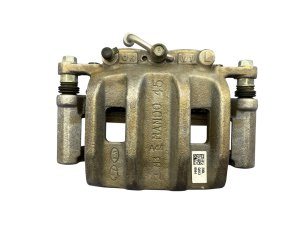
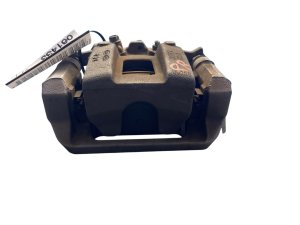
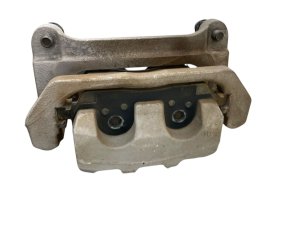
OEM Part Numbers: 58110-T6310-CA9 58110T6300 58110T6310CA9 58130-T6310-CA9 58130T6300 58180T6A20 58180T6A31CA9 58190T6A20 58190T6A30 58190T6A31CA9 58310T6A20 58311T6A20 58110-T6300 58130-T6310 58130-T6310CA9
Front calipers on 3.5L models are 4-piston fixed monobloc type. Rear calipers feature an integrated Electronic Parking Brake (EPB) motor.
We Have This Part in Stock

The information in this article is provided for general reference and educational purposes only. Vehicle specifications, procedures, and part compatibility can vary by production date, trim level, and region. Always consult your vehicle's factory service manual and verify part numbers before purchasing or performing repairs. Safety-critical components such as airbags, seat belts, and braking systems should be installed by a qualified professional.
- Genesis GV80: