

2008-2023 Harley Touring Brake Calipers: Sticking Pistons, ABS Recalls, and Diagnosis
This guide covers the critical link between brake fluid maintenance, a major ABS recall on 2008-2011 models, and the common problem of sticking caliper pistons.
- A major recall for 2008-2011 ABS models was caused by old brake fluid gelling and causing ABS valve failure; this same fluid neglect is the top cause of caliper piston sticking.
- Brake fluid MUST be completely flushed every two years to prevent dangerous brake system failures.
- The most common failure is sticking pistons, which causes brake drag, pulling to one side, and uneven pad wear.
- When buying used, inspect pistons for pitting/rust and rubber seals for cracks to avoid buying a faulty part.
Major Safety Recall: Brake Fluid and ABS Failure (2008-2011 Models)
Safety Warning: Harley-Davidson issued a major safety recall (NHTSA Campaign #18V076000) for all 2008-2011 Touring, CVO Touring, and VRSC models equipped with Anti-lock Brakes (ABS). This issue is directly related to the health of the entire brake system, including the calipers.
The recall was initiated because the specified DOT 4 brake fluid is hygroscopic, meaning it absorbs moisture from the air over time. If the brake fluid is not flushed every two years as recommended by Harley-Davidson, it can become saturated with water. This moisture can cause the fluid to gel and create deposits inside the brake system.
These deposits can cause valves in the ABS Hydraulic Control Unit (HCU) to stick, which can lead to a sudden and complete loss of braking on one or both wheels without warning, significantly increasing the risk of a crash. The official remedy was for dealers to perform a complete brake system flush with new fluid. While the calipers themselves were not the recalled part, this issue highlights that neglected fluid is the root cause of many brake problems, including the sticking pistons detailed below.
Symptoms of a Failing Brake Caliper
A failing brake caliper can present several distinct symptoms. Ignoring them is dangerous, as it can lead to a loss of braking power.
Brake Drag or Sticking Pistons
This is the most common failure mode for these calipers. Corrosion and old, contaminated brake fluid can cause one or more of the four pistons inside the caliper to seize or become sluggish. Symptoms include:
- Motorcycle pulls to one side: When driving or braking, you may feel the bike pulling left or right.
- Excessive heat: After a ride, a sticking caliper will be noticeably hotter than the one on the other side. You may even smell a burning odor from the overheating brake pads.
- Wheel does not spin freely: With the wheel off the ground, it will be difficult to turn by hand due to the constant drag from the brake pads.
- Pulsating sensation: A sticking piston can cause a pulsing feeling when braking that is often mistaken for a warped brake rotor.
- Uneven brake pad wear: When you inspect the pads, the pad on the side of the sticking piston(s) will be significantly more worn.
Spongy or Soft Brake Lever
If the brake lever feels soft, mushy, or travels further than usual before engaging, it's a sign of a problem. This can be caused by air in the brake lines, old fluid that has absorbed water, or a leaking piston seal within the caliper.
Brake Fluid Leaks
Any sign of fluid leaking from the caliper is a critical failure. Inspect the area around the pistons and the rubber dust seals. If you see wetness or grime buildup that looks like it's from fluid, the caliper seals have failed and the caliper must be rebuilt or replaced. Also check for leaks around the bleeder screw and the banjo bolt where the brake line attaches.
Squealing or Grinding Noises
High-pitched squealing or metallic grinding sounds during braking can be caused by completely worn-out brake pads, but can also indicate a caliper that is not releasing properly, causing the pads to drag and glaze over.
Buying a Used Disc Brake Caliper
A used OEM caliper is often a high-quality, cost-effective choice, as the original Brembo-made parts are well-built. However, a thorough inspection is crucial to avoid buying a part with the same problems you're trying to fix.
Pro Tip: These bikes use a left and a right front caliper. They are not interchangeable. Verify you are buying the correct side or, preferably, a matched set.
Physical Inspection Checklist:
- Check the Pistons: Look at the exposed surfaces of all four pistons. They should be smooth and shiny. Avoid any caliper with pistons that show signs of rust, pitting, or flaking chrome.
- Inspect the Dust Seals: The rubber boots around each piston should be pliable, intact, and free of cracks or tears. Damaged seals allow dirt and water in, which is the primary cause of sticking pistons.
- Look for Leaks: Check for any signs of dried brake fluid or wetness around the piston seals and the two halves of the caliper body.
- Examine the Bleeder Screw: Ensure the bleeder screw is not stripped, broken off, or seized. A damaged bleeder screw will make bleeding the brakes impossible.
- Check Mounting Threads: Inspect the threads for the mounting bolts and the banjo bolt. They should be clean and undamaged.
- Verify Part Numbers: Confirm the part numbers match your motorcycle's needs. Common numbers include 43027-08 (Left, Black) and 44023-08 (Right, Black).
Cost of Replacement
Prices can vary based on location and whether you perform the work yourself. The costs below are estimates for a set of two front calipers.
| Part Type | Estimated Cost |
|---|---|
| New OEM (Harley-Davidson) | $550 - $650 |
| New Aftermarket | $300 - $800+ |
| Used OEM | $150 - $300 |
| Remanufactured | $200 - $400 |
| Shop Labor (Replacement & Bleed) | $150 - $300 |
Replacement Overview & Brake Bleeding
- Difficulty: 3 out of 5 (Moderate)
- DIY Feasible: Yes, for mechanically experienced individuals.
- Estimated Time: 1.5 - 2.5 hours
Replacing the calipers involves unbolting the old units, disconnecting the hydraulic line, and then reversing the process. The most critical and challenging part of the job is bleeding the brake system afterward to remove all air.
Warning: For models with ABS, a simple manual bleed may not be enough. Air can get trapped in the ABS module. A Harley-Davidson dealer or a qualified independent shop with a diagnostic tool (like the Digital Technician II) may be required to cycle the ABS pump and valves to purge all air and old fluid from the system. Failure to do this can result in a spongy lever and poor brake performance.
🎬 See this pro tip for bleeding ABS Harley brakesTechnical Specifications & Part Numbers
- Caliper Type: 4-Piston Fixed Caliper
- Brake Fluid Type: DOT 4
- Known OEM Part Numbers:
- 41300181 (Front Caliper Kit, Chrome)
- 43027-08 (Front Caliper, Left Hand, Black)
- 44023-08 (Front Caliper, Right Hand, Black)
Frequently Asked Questions (FAQ)
Do I need to replace both front calipers at the same time?
While not strictly required, it is highly recommended. Calipers on the same vehicle have been subjected to the same conditions and mileage. If one has failed, the other is likely not far behind. Replacing them as a pair ensures even braking performance.
What is the main cause of sticking pistons?
The primary cause is brake dust and road grime building up on the piston, combined with moisture absorbed by old brake fluid causing corrosion. The grime gets past the dust seal and causes the piston to bind in the caliper bore. Regular two-year brake fluid flushes are the best prevention.
Can I just clean my sticking pistons instead of replacing the caliper? 🎬 Watch: How to easily fix a sticky brake caliper
Sometimes, yes. If the pistons are not pitted or rusted, you can sometimes extend them (without popping them out), clean the exposed surfaces thoroughly with brake cleaner and a soft brush, and then push them back in. However, if the internal seals are bad or the pistons are damaged, a full rebuild or replacement is necessary.
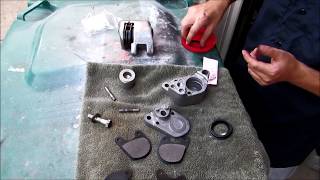
🎬 Watch: Step-by-step Harley front brake caliper rebuild guideHow often should I really change my brake fluid?
Harley-Davidson recommends flushing the DOT 4 brake fluid every two years, regardless of mileage. This is the single most important maintenance task to prevent ABS module failure and sticking calipers.
Helpful Videos
Technical Specifications
OEM Part Numbers: 41300181 43027-08 44023-08
Caliper Type: 4-Piston Fixed; Brake Fluid Requirement: DOT 4

The information in this article is provided for general reference and educational purposes only. Vehicle specifications, procedures, and part compatibility can vary by production date, trim level, and region. Always consult your vehicle's factory service manual and verify part numbers before purchasing or performing repairs. Safety-critical components such as airbags, seat belts, and braking systems should be installed by a qualified professional.
- Harley-Davidson Touring:
- 🎬 Helpful Videos
- Major Safety Recall: Brake Fluid and ABS Failure (2008-2011 Models)
- Symptoms of a Failing Brake Caliper
- Brake Drag or Sticking Pistons
- Spongy or Soft Brake Lever
- Brake Fluid Leaks
- Squealing or Grinding Noises
- Buying a Used Disc Brake Caliper
- Physical Inspection Checklist:
- Cost of Replacement
- Replacement Overview & Brake Bleeding
- Technical Specifications & Part Numbers
- Frequently Asked Questions (FAQ)
- 🎟️ Get 5% Off