

2019-2025 Mercedes A, CLA, GLA & GLB Front Brake Caliper: Sticking Pistons & Standard vs. Sport Brakes
This guide covers the common failure symptoms, replacement costs, and critical compatibility warnings for the standard front left brake caliper on the A-Class, CLA-Class, GLA-Class, and GLB-Class.
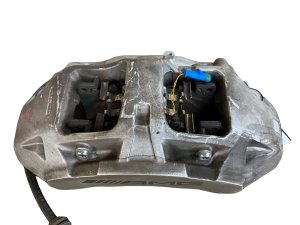
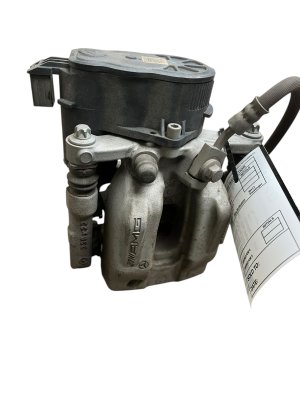
- This front left caliper is ONLY for models with standard brakes; it will NOT fit vehicles with the AMG Sport Package or any AMG models like the CLA35.
- The most common failure is a seized piston or slide pins, leading to symptoms like pulling, a burning smell, and severe, uneven brake pad wear.
- When buying a used caliper, the most critical inspection is checking the rubber piston boot for any tears or leaks, as this indicates internal corrosion.
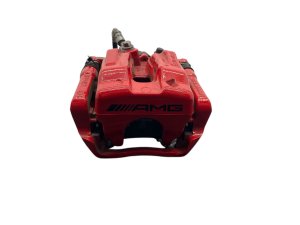
- A recall (NHTSA 23V-732) on these vehicles relates to a missing REAR brake inspection tool, not a defect with the front calipers themselves.
Symptoms of a Failing Front Brake Caliper
A failing brake caliper is a serious safety issue that should be addressed immediately. The most common failure is when the caliper piston or slide pins seize due to corrosion or debris, causing the brake to either not apply properly or, more commonly, fail to release. Here are the key symptoms to watch for:
- Vehicle Pulling to One Side: If the left front caliper is sticking, your car may pull to the left as you drive, feeling sluggish as if the brake is constantly on. If the caliper is seized and not applying pressure, the car may pull sharply to the right when you brake hard.
- Burning Smell: A continuous, sharp, acrid smell from one of the front wheels after driving is a classic sign of a dragging brake. This is the brake pad material overheating from constant friction. If you notice this, you should pull over as soon as it is safe, as extreme heat can damage the wheel hub and even pose a fire risk.
- Grinding or Squealing Noises: While often associated with worn brake pads, persistent grinding can also occur when a seized caliper has completely worn through a pad and is causing metal-to-metal contact with the rotor.
- Uneven Brake Pad Wear: When you inspect your brakes, if the inner pad on the left front wheel is significantly more worn than the outer pad (or vice-versa), it's a strong indication that the caliper slide pins are seized. If both pads on one wheel are much more worn than the pads on the opposite wheel, the caliper piston is likely sticking.
- Visible Brake Fluid Leak: Puddles of oily fluid near the inside of the front left wheel point to a failed piston seal in the caliper. A fluid leak will also cause a soft or spongy brake pedal and a severe loss of braking performance.
- Reduced Fuel Economy: A dragging brake forces the engine to work harder, which can lead to a noticeable drop in gas mileage.
Warning: The vehicle list for this part includes the 2020-2025 Mercedes-Benz CLA250, but it does NOT fit the 2020-2025 Mercedes-Benz CLA35 AMG. The CLA35 AMG is a performance model with upgraded brakes and uses a different caliper. This part is only for models with the standard braking system.
Known Issues, Recalls, and TSBs
While there are no widespread recalls or Technical Service Bulletins (TSBs) specifically for front caliper failure on these models, there is one major safety recall buyers should be aware of for the vehicle platform.
NHTSA Recall 23V-732: Missing Rear Brake Pad Gauge
A recall was issued for many 2019-2021 A-Class, CLA-Class, GLA-Class, and GLB-Class vehicles because they were delivered without the physical inspection gauge used to check rear brake pad wear. The owner's manual also lacked instructions for this procedure. While this does not affect the front caliper's function, it is an important safety-related item for the braking system as a whole. Dealers will provide the missing gauge and a supplement to the owner's manual free of charge. You can check if your vehicle is affected by entering your VIN on the NHTSA website.
Buying a Used Disc Brake Caliper: What to Inspect
A used OEM caliper can be a cost-effective and reliable alternative to an expensive new dealer part, especially since the original units are high quality. However, a thorough inspection is critical before purchase. Here’s what to check:
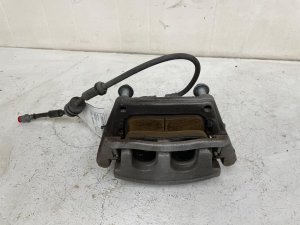
- Piston and Dust Boot: This is the most important check. Look closely at the rubber dust boot that surrounds the caliper piston. It should be pliable, with no cracks, tears, or signs of fluid leakage. If the boot is damaged, moisture and dirt have likely entered and corroded the piston, which is the primary cause of seizing.
- Slide Pins: The caliper body should slide freely back and forth on its guide pins. If you can, try to move it by hand. If it's stiff or completely stuck, the pins are seized and will need to be cleaned and re-lubricated at a minimum, but the caliper may be best avoided.
- Bleeder Screw: Ensure the bleeder screw is not broken off, stripped, or excessively rusted. A seized bleeder screw will make it impossible to properly bleed the brakes after installation, rendering the caliper useless.
- Threads: Inspect the threads for the brake hose banjo bolt and the main caliper mounting bolts. They should be clean and free of damage or cross-threading.
- Overall Condition: Avoid calipers with extreme rust or corrosion. While some surface rust is normal, deep pitting or flaking can compromise the caliper's structural integrity.
Pro Tip: When buying a used caliper, it's wise to also purchase a new set of slide pin boots and a hardware kit. These are inexpensive and ensure the caliper can move freely once installed, preventing uneven pad wear.
Cost of Replacement
The cost to replace a front brake caliper can vary significantly based on the part source and labor rates. Mechanics almost always recommend replacing brake pads and sometimes rotors when a caliper is replaced, so those costs may be added to the final bill.
| Part Source | Estimated Cost (Part Only) |
|---|---|
| New OEM (Dealer) | $350 - $510 |
| Remanufactured OEM | $305 - $340 + Core Charge |
| New Aftermarket / Remanufactured Aftermarket | $90 - $150 + Core Charge |
| Used OEM | $125 - $200 |
| Shop Labor | $150 - $300 |
Replacement Overview & Difficulty
Replacing a front brake caliper is a moderately difficult job that a skilled DIY mechanic can perform. The main challenge is properly bleeding the brake system afterward to remove all air.
- Difficulty: 3/5
- Estimated Time: 1.5 - 2.0 hours
- Tools Required: Jack and jack stands, lug wrench, socket set (including an E18 external Torx socket for the bracket bolts), 17mm spanner, torque wrench, brake fluid, clear hose and catch bottle for bleeding.
General Steps:
- Safely lift and support the vehicle and remove the front left wheel.
- Loosen the brake hose banjo bolt at the caliper, but do not remove it yet. Have a drip pan ready.
- Remove the two caliper guide pin bolts and lift the caliper off the bracket and brake pads. Support the caliper so it doesn't hang by the brake hose.
- Remove the two large caliper bracket bolts (E18 Torx) and remove the bracket.
- Quickly unscrew the banjo bolt and transfer the brake hose to the new caliper, using new copper sealing washers. This minimizes fluid loss.
- Install the new caliper bracket and torque the bolts to specification.
- Install the new brake pads into the bracket.
- Mount the new caliper over the pads and torque the guide pin bolts to specification.
- Bleed the brake system at the new caliper's bleeder screw until no air bubbles are seen in the fluid. This step is critical and may require a helper or a pressure bleeder.
- Top off the brake fluid reservoir, reinstall the wheel, and test the brakes carefully at low speed.
Pro Tip: General torque specs for many cars are 20-40 ft-lbs for caliper guide pins and 80-100 ft-lbs for the larger bracket bolts. However, it is highly recommended to verify the exact torque specifications for your specific vehicle from a factory service manual.
Frequently Asked Questions (FAQ)
Can I replace just one brake caliper?
Yes, you can replace just the single failed caliper. However, it is highly recommended to replace the brake pads on both front wheels at the same time to ensure even braking. Most technicians also recommend replacing calipers in pairs on the same axle to maintain balanced brake performance.
Does this caliper fit models with the AMG Line or Sport Package?
No, it does not. This caliper is for the standard, base brake system only. Vehicles with the optional AMG Line Sport Package or other performance brake upgrades use larger, often multi-piston calipers that are not interchangeable with this part. Always verify your vehicle's brake system before purchasing.
What is the difference between a used, remanufactured, and new caliper?
A new caliper is 100% new from the factory. A remanufactured caliper is an original OEM caliper core that has been disassembled, cleaned, inspected, and rebuilt with new seals, boots, and often a new piston. A used caliper is a component taken directly from a donor vehicle with no servicing other than a basic inspection.
Do I need a special scan tool to replace this front caliper?
No. For the front calipers on these models, you do not need a scan tool. The electronic parking brake (EPB) system that often requires a scan tool to retract is on the rear axle. You can retract the front caliper piston using a simple C-clamp or piston compression tool.
Technical Specifications
OEM Part Numbers: 2474214100 2474214500 247421450080
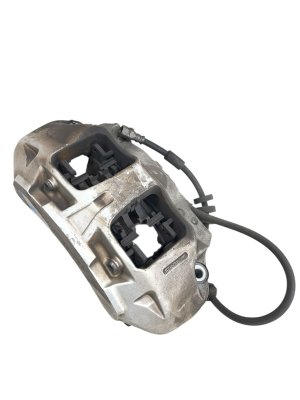
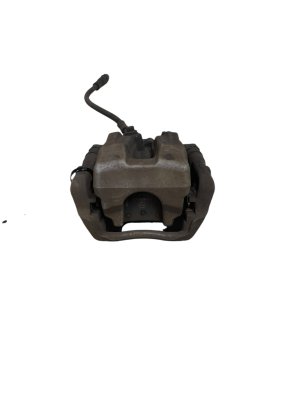
Position: Front Left. Type: Single-piston floating caliper. Fits standard brake systems only.
We Have This Part in Stock

The information in this article is provided for general reference and educational purposes only. Vehicle specifications, procedures, and part compatibility can vary by production date, trim level, and region. Always consult your vehicle's factory service manual and verify part numbers before purchasing or performing repairs. Safety-critical components such as airbags, seat belts, and braking systems should be installed by a qualified professional.
- MERCEDES-BENZ CLA-CLASS:
- MERCEDES-BENZ GLA-CLASS:
- MERCEDES-BENZ A-CLASS:
- Mercedes-Benz A220:
- Mercedes-Benz CLA250:
- Mercedes-Benz CLA35 AMG:
- Mercedes-Benz GLA250:
- Mercedes-Benz GLB250: