

2016-2026 Honda Civic Door Panel Guide: Rattles, Fitment, and Replacement
This guide covers the critical differences between Civic generations and body styles to help you find the right door panel and fix common issues like rattles.
- The single most important factor is vehicle generation: 2016-2021 (10th Gen) and 2022-2026 (11th Gen) panels are NOT interchangeable.
- Fitment is also specific to body style (Sedan, Coupe, Hatchback) and trim level (cloth, leather, premium audio). Verify everything before buying.
- Rattles are a very common issue, especially on 10th Gen models, and can often be fixed with foam or felt tape without replacing the entire panel.
- When buying used, the most critical inspection point is the back of the panel to ensure all plastic mounting tabs are intact and not cracked.
Generational Differences: A Critical Warning

Warning: The 2016-2026 year range for the Honda Civic spans two distinct generations, and their parts are NOT interchangeable. You must correctly identify your vehicle's generation before purchasing a door panel.
- 10th Generation: 2016, 2017, 2018, 2019, 2020, 2021
- 11th Generation: 2022, 2023, 2024, 2025, 2026
Door panels from a 10th generation Civic will not fit an 11th generation Civic, and vice versa. Always confirm your vehicle's model year before ordering.
Symptoms of a Failing or Damaged Door Panel

While a door panel doesn't 'fail' like a mechanical part, damage or wear can cause significant issues:
- Rattling or Buzzing Noises: This is the most common complaint, especially on 10th generation models. The noises are often caused by loose clips, wiring harnesses vibrating against the panel, or vibrations from the speakers, particularly with bass-heavy music.
- Loose Fitment: The panel may feel loose, separate from the door frame, or have visible gaps. This is usually due to broken or missing mounting clips, which can break during removal or become brittle over time.
- Malfunctioning Switches: If the panel is not seated correctly, it can put stress on the window switch, mirror control, or door lock switch, causing intermittent function or complete failure.
- Cosmetic Damage: Scuffs, scratches, cracks (especially around the handle or armrest), and peeling or stained fabric/leather inserts are common reasons for replacement.
Known Issues, Recalls, and Technical Service Bulletins (TSBs)

As of early 2026, there are no specific recalls or TSBs from the National Highway Traffic Safety Administration (NHTSA) for the interior door trim panels themselves on 2016-2026 Honda Civics. However, related issues and common complaints exist:
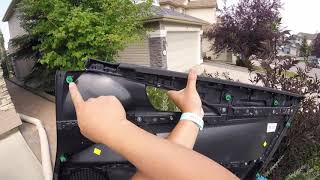
- Door Panel Rattles: This is a widely discussed issue among 10th generation (2016-2021) owners. The source is often the clips, the A-pillar trim vibrating against the door, or speaker resonance. 🎬 Watch this guide to fixing common 10th Gen pillar rattles Owners have had success adding foam tape or sound-deadening material to contact points to resolve the noise.
- Loose Weatherstripping: Honda issued TSB 25-008 for 2022-2025 Civics regarding loose door weatherstripping at the top of the door frame, which could be mistaken for a panel fitment issue. 🎬 See how to remove 11th Gen front and rear panels
Buying a Used 2016-2026 Civic Door Panel: What to Check

Buying a used OEM door panel is often a smart choice, but careful inspection is critical to get a part that fits right and looks good. Here’s what to focus on.
The #1 Mistake: Body Style and Trim Mismatches
Warning: Within each generation, the door panels are specific to the body style. They are NOT interchangeable. You must match the panel to your exact vehicle.
- Sedan (4-Door): Has four doors. Front and rear panels are different.
- Coupe (2-Door): Produced for the 10th generation (2016-2020). The two doors are longer than Sedan or Hatchback front doors, and the panels are shaped differently.
- Hatchback (5-Door): While it has four passenger doors, the rear door panels may differ from the Sedan.
Beyond body style, trim levels introduce more variations:
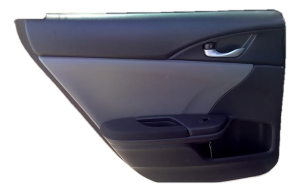
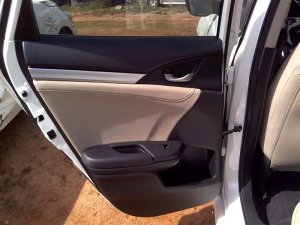
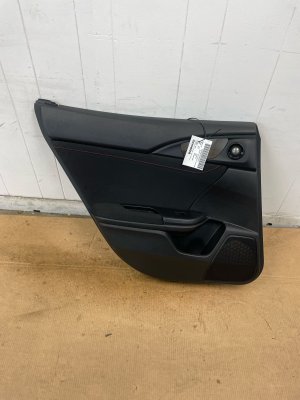
- Material Inserts: Lower trims (like LX) typically have cloth inserts, while higher trims (like EX-L, Touring, and Si) may have leather, synthetic leather, or Alcantara inserts (like on the Type R).
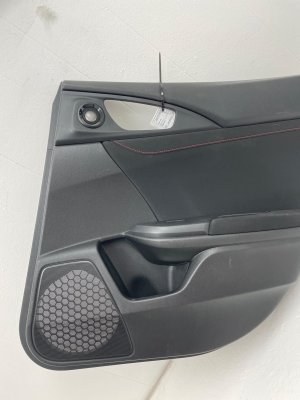
- Speaker Grilles: Models with premium audio systems (like Bose in the 11th gen) may have different speaker grilles or additional tweeters mounted in the panel.
- Color Codes: Interior colors vary. Ensure the color (e.g., black, ivory) matches your car's interior.
Physical Inspection Checklist
- Mounting Clips and Tabs: Flip the panel over and inspect every single mounting point. Look for broken, bent, or missing clips. While individual clips can be replaced, broken plastic tabs molded into the panel itself mean the panel will never fit tightly.
- Cracks and Stress Marks: Check for hairline cracks around the door pull handle, armrest, and speaker openings. These are high-stress areas.
- Armrest Condition: Check for collapsing foam, deep impressions, or tears in the upholstery on the armrest.
- Backing Board Integrity: Look for any signs of water damage, such as staining or warping on the fiberboard backing. This could indicate the donor vehicle had a window seal leak.
- Switch and Handle Cutouts: Ensure the plastic around the cutouts for the window switch and door handle is not broken or cracked.
Why a Used OEM Panel is Often a Better Choice
For a part like an interior door panel, a good-condition used OEM (Original Equipment Manufacturer) part is almost always superior to a new aftermarket one. OEM panels are made from higher-quality materials, ensuring a perfect color match, proper texture, and exact fitment. Aftermarket panels often use cheaper, more brittle plastic, can have slight color variations, and may not align perfectly, leading to the very gaps and rattles you're trying to fix.
Cost Comparison: New vs. Used Civic Door Panels
| Part Type | Estimated Price Range |
|---|---|
| New OEM | $230 - $660+ |
| New Aftermarket | $100 - $250 (Quality and fit vary significantly) |
| Used OEM | $85 - $200 |
| Shop Labor | $75 - $150 |
Prices are estimates as of early 2026 and can vary based on location, condition, and specific part number.
Replacement Overview
- Difficulty: 2 out of 5 (DIY Feasible)
- Estimated Time: 0.5 - 1 hour
- Tools Required: Phillips screwdriver, plastic trim removal tool kit, small flathead screwdriver.
Step-by-Step Guide (Simplified)
- Remove the Switch Panel: Use a plastic pry tool to carefully lift the window switch panel. It's held in by clips. Disconnect the electrical connectors.
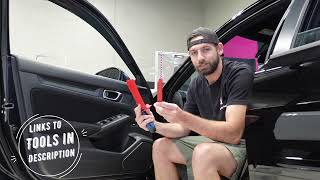
- Remove Screws: There is typically one Phillips screw located under the switch panel you just removed. On some 10th gen models, there may be additional screws behind the interior door handle. 🎬 Watch: 10th Gen Civic door panel removal walkthrough
- Pry the Panel Off: Start at the bottom corner and use a trim removal tool to pop the clips loose around the perimeter of the door.
- Lift and Disconnect: Once all clips are free, lift the panel up and off the window ledge. Before pulling it away, disconnect the door handle cable and any remaining electrical connectors for speakers or lights.
- Transfer Components: If your replacement panel is bare, you will need to transfer the window switch, door handle assembly, and any other components from your old panel to the new one.
- Installation: Reconnect the cable and wiring, hang the new panel on the top of the door frame, and then firmly press the clips back into their holes around the perimeter. Reinstall the screw(s) and snap the switch panel back into place.
Pro Tip: When removing the panel, some clips may stay in the door instead of on the panel. Use a clip remover tool to pull them out and place them back on the panel before reinstallation to ensure a secure fit.
Frequently Asked Questions (FAQ)
Do I have to disconnect the battery to replace a door panel?
It is always a best practice to disconnect the negative battery terminal before working on any electrical components in your vehicle, including the door panel which contains the window and lock switches. This prevents accidental short circuits.
How can I fix a door panel rattle without replacing the whole panel?
First, remove the panel and identify the source of the rattle. Often, applying felt tape or foam to plastic-on-plastic contact points, securing loose wiring harnesses, or wrapping the mounting clips with a small amount of butyl tape (like 3M Window Weld) can dampen vibrations and solve the problem.
Can I replace just the fabric/leather insert or the armrest?
On Honda Civic door panels, the inserts and armrest are typically plastic-welded or permanently bonded to the main panel. While some aftermarket companies sell stick-on covers, replacing just a section of the OEM panel is not a standard repair. The entire panel assembly is usually replaced.
Will a door panel from a 2021 Civic fit my 2022 Civic?
No. A 2021 Civic is a 10th generation model, and a 2022 Civic is an 11th generation model. The door panels are completely different in shape, size, and mounting points and are not interchangeable.
Helpful Videos
Technical Specifications
OEM Part Numbers: 83701-T20-A11ZA 83701-T6N-A01ZA 83702-TGH-A31ZA 83750-T20-A01ZA 83751-T20-A11ZA 83751-T20-A11ZC 83751-TBA-A01ZA 83751-TBA-A51ZC 83752-TGG-A01ZB 83752-TGG-C11ZA
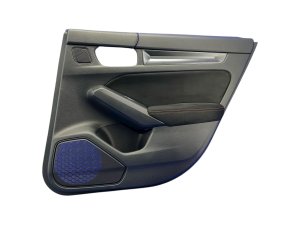
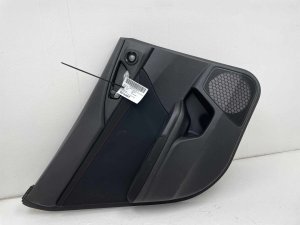
Fitment is determined by vehicle generation (10th/11th), body style (Sedan/Coupe/Hatchback), door position (Front/Rear, Left/Right), and trim level (fabric/leather, audio system).
We Have This Part in Stock

The information in this article is provided for general reference and educational purposes only. Vehicle specifications, procedures, and part compatibility can vary by production date, trim level, and region. Always consult your vehicle's factory service manual and verify part numbers before purchasing or performing repairs. Safety-critical components such as airbags, seat belts, and braking systems should be installed by a qualified professional.
- HONDA CIVIC:
- 🎬 Helpful Videos
- 🛍️ Shop This Part
- Generational Differences: A Critical Warning
- Symptoms of a Failing or Damaged Door Panel
- Known Issues, Recalls, and Technical Service Bulletins (TSBs)
- Buying a Used 2016-2026 Civic Door Panel: What to Check
- The #1 Mistake: Body Style and Trim Mismatches
- Physical Inspection Checklist
- Why a Used OEM Panel is Often a Better Choice
- Cost Comparison: New vs. Used Civic Door Panels
- Replacement Overview
- Step-by-Step Guide (Simplified)
- Frequently Asked Questions (FAQ)
- 🎟️ Get 5% Off