

2011-2018 Audi A6, A7, A8 & S8 Door Latch Failure: Diagnosis and Replacement Guide
Diagnose why your Audi's doors won't lock, unlock, or latch, and learn how to choose the right replacement door lock actuator.
- The most critical compatibility check is between standard and Power Soft-Close (Close Assist) actuators; they are not interchangeable.
- Common failure symptoms include doors not locking, a 'door ajar' warning light staying on (draining the battery), or failure of the soft-close feature.
- A faulty actuator is a security risk, and if it prevents the door from latching securely, it is a critical safety hazard.
- Used OEM actuators are a reliable and cost-effective alternative to expensive new OEM parts and often better than cheap aftermarket units.
Symptoms of a Failing Door Lock Actuator
A bad door lock actuator on a 2011-2018 Audi A6, A7, A8, or S8 can cause a range of frustrating and security-compromising issues. The failure often lies with either the internal electric motor or the small microswitches that detect the door's position. Here are the most common signs of failure:
1. Door Fails to Lock or Unlock Electronically
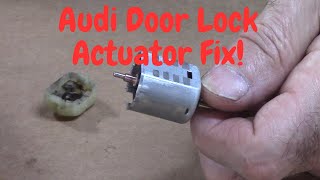
This is the most obvious symptom. One or more doors may not respond to the key fob or the central locking button inside the car. You might hear a faint buzzing or clicking sound from the affected door, or no sound at all. In some cases, the locks may work intermittently, locking or unlocking randomly. 🎬 Watch: Troubleshooting an Audi door lock that won't respond. This usually points to a failing motor inside the actuator assembly.
2. 'Door Ajar' Warning Light Stays On
If the dashboard shows a warning that a door is open when it is securely shut, a microswitch inside the latch has likely failed. This is a common failure point. The car's computer incorrectly thinks the door is open, which can also prevent the interior dome lights from turning off and may lead to a drained battery.
3. Power Soft-Close (Close Assist) Stops Working
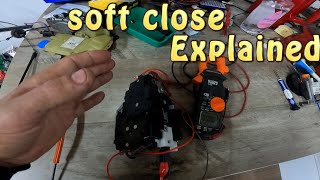
For vehicles equipped with the power soft-closing feature, a common symptom is the failure of the door to pull itself shut. You might close the door to the first click, but the motor that cinches it tight does not engage. 🎬 See how to test an Audi soft-close door latch. This can be caused by a faulty microswitch that doesn't signal the door's position correctly, or a snapped internal cable.
4. Strange Noises From the Door
A grinding, buzzing, or loud clicking sound from inside the door during locking or unlocking is a sign that the actuator's internal motor or gears are struggling and about to fail completely.
5. Door Won't Latch or is Hard to Close
In some instances, the mechanical part of the latch can wear out or seize. This may force you to slam the door to get it to close, or it might not latch at all and just bounce back open. This creates a serious safety risk, as the door could potentially open while driving.
Known Issues, Recalls, and Technical Service Bulletins (TSBs)
While there are no major safety recalls for these specific door lock actuators, Audi has released several TSBs to help technicians diagnose and repair common issues.
TSB 2063236: Door Cannot Be Opened / Lock Inoperative
This bulletin addresses complaints where doors can't be opened from the inside or outside, or when fault messages appear on the dash. It notes that DTCs (Diagnostic Trouble Codes) like B122D29 (Lock unit for central locking Implausible signal), B122B13 (Central locking motors Open circuit), and B14FF29 (Child safety lock motor Implausible signal) may be stored. Before replacing the entire lock actuator, Audi advises technicians to inspect the mechanical Bowden cables for damage or improper routing and to ensure the exterior door handle returns to its resting position correctly.
TSB 2058159: Power Closing Door Latch Intermittently Inoperative
This TSB is specific to models with the soft-close feature. If the door doesn't pull itself closed, the cause may not be the actuator itself. The latch requires a certain amount of counter-pressure from the door seal to signal the control module. The TSB recommends adjusting the door striker inward by at least 0.5mm to ensure a firm contact. If the problem persists, the outer door seal may need to be replaced and repositioned to provide the necessary pressure.
Pro Tip: Before assuming the actuator is bad, especially on soft-close models, check the door's alignment and the striker position. A simple adjustment might solve the problem without needing to replace any parts.
A Note on Hood Latch Part Numbers
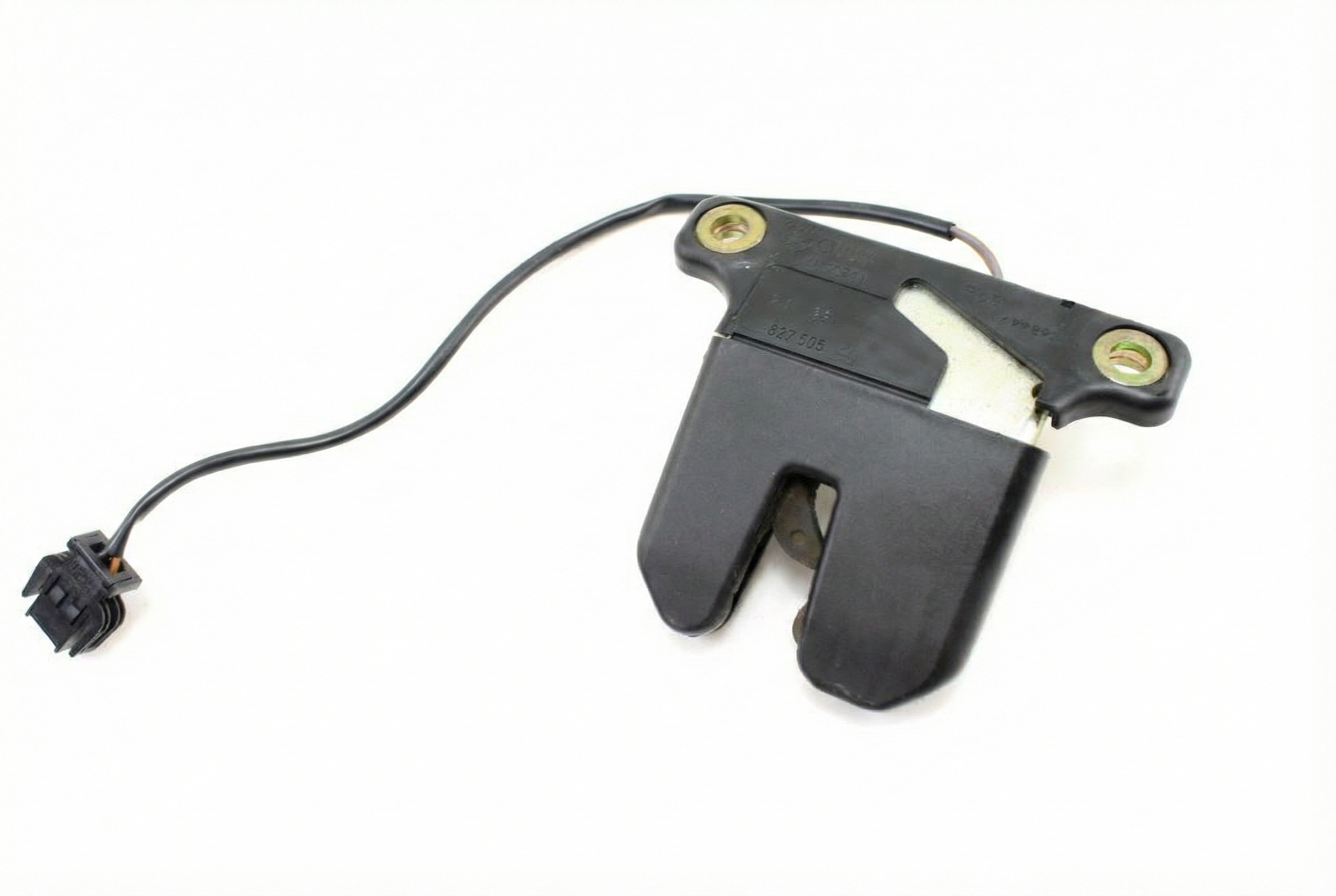
Some databases incorrectly associate hood latch part numbers (4H0823509, 4H0823509A, 4H0823509B, 4H0823509C) with door lock issues. These parts are for the hood, not the doors. However, the hood latch does contain a sensor that communicates with the vehicle's alarm and central locking system. A failure of this hood latch sensor can cause alarm problems or a 'hood open' warning, which can sometimes be confused with door latch symptoms.
Buying a Used Door Lock Actuator: What to Check
Given the high cost of new OEM actuators, a quality used OEM part is an excellent value. Aftermarket units are cheaper but have a reputation for inconsistent quality and premature failure. Here’s what to look for when buying used.
1. Verify the Exact Part Number
This is the most critical step. Actuators are specific to each door: front left (driver), front right (passenger), rear left, and rear right. They are not interchangeable. Provide the seller with your vehicle's VIN to ensure a perfect match.
2. Standard vs. Power Soft-Close (Close Assist)
Warning: The single biggest compatibility mistake is mixing up standard and soft-close actuators. An actuator for a car with the power soft-close feature is physically different and has different electrical connections than a standard one. They cannot be swapped. Verify if your car has this option (it was standard on most A8/S8 models and optional on A6/A7) and buy the correct type.
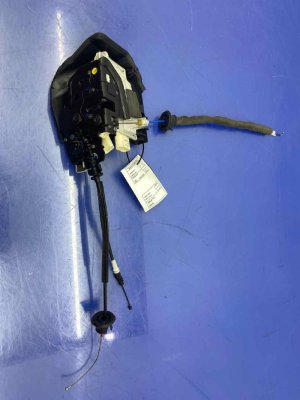
The part number 4H0839015D, for example, is specifically for the rear left door on a vehicle WITH the soft-close feature. Always double-check the application.
3. Physical Inspection
When you receive the used part, inspect it carefully:
- Electrical Connector: Check the pins inside the connector. They should be straight, clean, and free of any corrosion or signs of water damage.
- Mechanical Latch: Manually operate the latch mechanism with a screwdriver. It should move freely without binding or sticking.
- Casing: Look for any cracks or damage to the plastic housing. A compromised housing can allow dirt and moisture inside, leading to premature failure.
- Bowden Cable Connections: Ensure the plastic clips and attachment points for the door handle cables are intact and not broken.
Cost of Replacement
Replacing a door lock actuator involves significant labor, as the interior door panel must be removed. Prices can vary based on your location and whether you choose OEM or aftermarket parts.
| Part Type | Estimated Cost |
|---|---|
| New OEM | $300 - $460 |
| New Aftermarket | $50 - $200 |
| Used OEM | $40 - $90 |
| Shop Labor | $170 - $250 |
| Total (New OEM Installed) | $470 - $710 |
| Total (Used OEM Installed) | $210 - $340 |
Replacement Overview
- Difficulty: 3 out of 5. This is a manageable DIY project for someone comfortable with basic tools.
- Estimated Time: 2-3 hours.
- Tools Required: Torx screwdriver set, trim removal tools, and possibly a Triple Square (12-point) socket for the latch bolts. A special clip removal tool (VAG T10383/1) is highly recommended to avoid breaking the door panel clips.
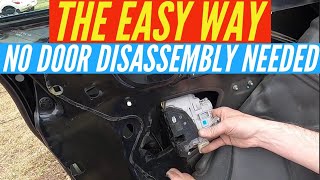
The basic process involves removing screws from the door panel (often hidden behind trim pieces), carefully prying the panel off its clips, disconnecting the window switch, and unhooking the interior door handle cable. From there, you'll peel back the foam weather shield to access the inside of the door, disconnect the actuator's electrical plug and cables, unbolt the actuator from the side of the door, and carefully maneuver it out. Installation is the reverse of removal.
🎬 Watch this step-by-step guide to fixing the actuator assembly.Frequently Asked Questions (FAQ)
Can I just fix my broken door lock actuator?
It is sometimes possible but not recommended for most people. The most common failures are tiny internal microswitches or small electric motors. Sourcing the exact microswitch and carefully disassembling the sealed actuator unit to solder in a new one is a delicate process. Given the low cost of a used OEM unit and the amount of labor required to access the part, replacement is almost always the more reliable and time-efficient solution.
Why does only one door fail to lock?
Each door has its own independent actuator. It is very common for just one to fail at a time, as they all have similar lifespans. If one fails, it's not unusual for another to fail in the following months or years.
My rear door won't open from the inside. Is it the actuator?
Before assuming the actuator is broken, check the child safety lock. On these Audi models, the child lock is an electronic switch located on the driver's door armrest, near the window controls. It's easy to accidentally press it, which prevents the corresponding rear door from being opened from the inside. Always check this switch first.
Is it safe to drive with a bad door lock actuator?
It depends on the symptom. If the door simply won't lock, the car is drivable but poses a security risk. However, if the door will not latch securely and could potentially open while driving, the vehicle is NOT safe to drive and should be repaired immediately.
Helpful Videos
Technical Specifications
OEM Part Numbers: 4H0839015D 4H1837015E 4H1837016E 4H0839015C 4H0839016C 8J1837015F 8J1837016F 4G1837015B 4G1837016B 4G8839015A 4G8839016A
Part is specific to door position (Front/Rear, Left/Right) and locking system type (Standard or Power Soft-Close). Requires 12V power. Communicates with the vehicle's central control module.
We Have This Part in Stock

The information in this article is provided for general reference and educational purposes only. Vehicle specifications, procedures, and part compatibility can vary by production date, trim level, and region. Always consult your vehicle's factory service manual and verify part numbers before purchasing or performing repairs. Safety-critical components such as airbags, seat belts, and braking systems should be installed by a qualified professional.
- Audi S8:
- Audi A6:
- Audi A7:
- Audi A8:
- Audi A8 Quattro:
- 🎬 Helpful Videos
- 🛍️ Shop This Part
- Symptoms of a Failing Door Lock Actuator
- 1. Door Fails to Lock or Unlock Electronically
- 2. 'Door Ajar' Warning Light Stays On
- 3. Power Soft-Close (Close Assist) Stops Working
- 4. Strange Noises From the Door
- 5. Door Won't Latch or is Hard to Close
- Known Issues, Recalls, and Technical Service Bulletins (TSBs)
- TSB 2063236: Door Cannot Be Opened / Lock Inoperative
- TSB 2058159: Power Closing Door Latch Intermittently Inoperative
- A Note on Hood Latch Part Numbers
- Buying a Used Door Lock Actuator: What to Check
- 1. Verify the Exact Part Number
- 2. Standard vs. Power Soft-Close (Close Assist)
- 3. Physical Inspection
- Cost of Replacement
- Replacement Overview
- Frequently Asked Questions (FAQ)
- 🎟️ Get 5% Off