

1998-2011 Crown Victoria, Town Car, Grand Marquis & Marauder Hood Latch: Diagnosis and Replacement
A complete guide to fixing a hood that won't open, won't close, or pops up unexpectedly on Ford's Panther Platform vehicles.
- The most common cause of failure is rust and grime seizing the mechanism; regular lubrication can prevent this.
- A hood that does not latch securely is a critical safety issue and the vehicle should not be driven.
- Replacement is a simple DIY job, but careful alignment of the new latch is essential for proper operation.
- A good quality used OEM part is often a better choice than a cheap new aftermarket part for this component.
Symptoms of a Failing Hood Latch
A faulty hood latch can be more than an annoyance; it can be a serious safety hazard. Here are the most common signs that your hood latch needs attention:
- Hood Won't Open: You pull the release handle inside the car, but nothing happens, or you hear a click but the hood remains shut. This often points to a seized latch mechanism or a stretched/broken release cable.
- Hood Won't Close or Latch Securely: The hood won't click into place when you close it, or it pops back up. This could be due to a misaligned or broken latch. 🎬 Watch: Quick tips for fixing a hood that won't close.
- Hood Pops Up While Driving: This is the most dangerous symptom. The primary latch fails, and the hood is caught only by the secondary safety catch. This indicates a critical failure.
- Stiff or Loose Release Handle: The handle inside the cabin is very difficult to pull, or it feels like it's not connected to anything. This usually points to a problem with the release cable or the latch mechanism itself being rusted or full of grime.
- Hood is Stuck Partially Open: You've popped the hood from inside, but you cannot release the secondary safety catch under the front of the hood. This is typically caused by rust or debris jamming the secondary lever.
Known Issues and Recalls
The primary cause of hood latch failure on the Ford Crown Victoria, Lincoln Town Car, Mercury Grand Marquis, and Mercury Marauder is exposure to the elements. Over time, road grime, salt, and moisture can cause the moving parts of the latch mechanism to corrode and seize. Regular lubrication is often neglected, leading to premature failure.
While there were no widespread recalls for the 1998-2011 model years, it's important to note that the nearly identical 1996-1997 Ford Crown Victoria was recalled because the hood latch striker could wear or detach from the hood, potentially allowing the hood to open while driving. This highlights a known weak point in the design and underscores the importance of inspecting both the latch and the striker on your vehicle.
Step-by-Step Diagnosis
Before buying a new part, a few simple diagnostic steps can help you confirm the problem.
- The Two-Person Test: Have a helper pull and hold the interior release handle while you stand at the front of the car. Listen for a 'pop' or 'click' from the latch. At the same time, try to gently lift the hood. If it pops up, your problem may be weak hood lift supports, not the latch itself. If it doesn't, the latch or cable is the likely culprit.
- Lubricate Everything: If you can get the hood open, generously spray the entire latch mechanism with a penetrating oil (like PB Blaster or WD-40), paying close attention to all pivot points and the spring. Work the secondary release lever back and forth by hand. This simple step can often restore function to a sticky latch.
- Inspect the Cable: Check the release cable where it connects to the latch. Look for frayed strands or signs of stretching. Also, check the interior release handle to ensure it is not broken and that the cable is securely attached.
Pro Tip: If your hood is stuck completely shut, you may be able to manually release it. This can sometimes be done by reaching through the grille with a long screwdriver or pry bar to manipulate the release lever on the latch itself. This can be difficult and may vary slightly depending on the specific grille design of your Crown Victoria, Town Car, Grand Marquis, or Marauder.
Buying a Used Hood Latch Assembly
A used OEM hood latch is an excellent, cost-effective alternative to a new part, as they are generally durable components. However, there are a few key things to inspect before purchasing a recycled part.
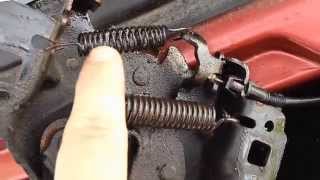
- Check for Rust and Corrosion: Avoid any latch that shows heavy rust, especially on the springs and pivot points. Surface discoloration is okay, but flaking, deep rust is a red flag.
- Test the Mechanism by Hand: Using a screwdriver, press the primary latch hook down until it clicks and locks. It should move smoothly and lock securely. Then, operate the cable release lever by hand; the primary latch should snap back open with authority.
- Inspect the Secondary Catch: Manually move the secondary safety catch lever. It should pivot freely and be returned to its home position by its own spring without sticking. A sticky secondary catch is a major safety concern.
- Examine the Cable Connection Point: Ensure the plastic or metal clip where the release cable attaches is not cracked, broken, or excessively worn.
- Why Used OEM is a Good Choice: Original Equipment (OEM) parts are built to a higher quality standard than many low-cost aftermarket alternatives. A used OEM latch from a lower-mileage vehicle is often a more reliable and better-fitting part than a brand new, cheaply made aftermarket copy.
Replacement Overview
Replacing the hood latch is a straightforward job suitable for a DIY mechanic with basic tools.
- Difficulty: 2 out of 5
- Estimated Time: 0.5 - 1 hour
- Tools Needed: Socket set, screwdrivers.
Basic Steps:
- Open the hood and support it securely.
- Disconnect the hood release cable from the latch assembly. This usually involves rotating a plastic clip and slipping the cable end out.
- Mark the position of the old latch on the radiator support with a marker or scribe. This will help you align the new latch correctly.
- Unbolt and remove the old latch assembly (typically 2 or 3 bolts).
- Install the new latch, loosely tightening the bolts.
- Align the new latch with the marks you made and tighten the bolts.
- Reconnect the hood release cable.
- Crucial Final Step - Test and Adjust: Gently lower the hood to see how the striker aligns with the latch. You may need to slightly adjust the latch's position up/down or side-to-side to get a perfect fit. Close the hood fully and ensure it is flush with the fenders. Pull the release to confirm it opens correctly. Repeat adjustments as needed.
Warning: Proper alignment is critical. A misaligned latch can make the hood difficult to close or, worse, prevent it from latching securely, creating a risk of it opening while driving.
Cost Comparison
| Part Type | Estimated Cost |
|---|---|
| New OEM | $35 - $55 |
| New Aftermarket | $15 - $40 |
| Used OEM | $20 - $45 |
| Shop Labor | $60 - $90 |
Frequently Asked Questions (FAQ)
Can I drive my car if the hood won't latch closed?
No. It is extremely unsafe to drive with a hood that is not securely latched. The force of the wind can cause the hood to fly up, shattering your windshield and completely obstructing your vision, which can lead to a serious accident.
Is it better to buy a new aftermarket latch or a used OEM one?
For a part like this, a good-condition used OEM latch is often the better choice. The quality of the metal, springs, and overall construction of the original Ford part is typically superior to that of the cheapest aftermarket options, ensuring better longevity and fitment.
If my latch is just sticky, can I fix it without replacing it?
Yes, often you can. If the latch is not physically broken, a thorough cleaning with a wire brush and brake cleaner, followed by a generous application of a spray-on lubricant like white lithium grease, can restore smooth operation.
Do I need to replace the hood release cable at the same time?
Not necessarily. If the cable is not frayed, stretched, or broken, it can be reused. However, if the cable is the source of the problem, it must be replaced. Replacing the cable is a more involved job than replacing the latch itself.
Helpful Videos
Technical Specifications
OEM Part Numbers: 5W7Z-16700-A 6W7Z-16700-A 3W1Z-16700-AB F8VZ-16700-AA 8W1Z-16K689-A
Mechanically operated via steel cable. Includes primary latch and secondary safety catch.
We Have This Part in Stock

The information in this article is provided for general reference and educational purposes only. Vehicle specifications, procedures, and part compatibility can vary by production date, trim level, and region. Always consult your vehicle's factory service manual and verify part numbers before purchasing or performing repairs. Safety-critical components such as airbags, seat belts, and braking systems should be installed by a qualified professional.
- Ford Crown Victoria:
- Lincoln Town Car:
- Mercury Grand Marquis:
- Mercury Marauder: