

2001-2010 Toyota Highlander Hood Latch: Solving False Alarms and Stuck Hoods
This guide covers the common failure symptoms, replacement costs, and critical compatibility differences for the first and second-generation Toyota Highlander hood latch assembly.
- The most critical compatibility check is for the anti-theft system; latches for alarm-equipped models have an electrical sensor and are not interchangeable with base models.
- A faulty hood latch sensor is a very common cause of random, false alarms on 2001-2010 Highlanders.
- Failure symptoms include the hood not opening, not closing, or a stiff/loose interior release handle.
- Replacement is a simple DIY job, typically requiring only the removal of the front grille and three bolts.
Symptoms of a Failing 2001-2010 Toyota Highlander Hood Latch


A failing hood latch can range from a minor annoyance to a serious safety hazard. Because it is exposed to the elements at the front of the vehicle, the mechanism is prone to corrosion and wear over time. Here are the most common signs that your hood latch needs attention.
- Hood Will Not Close or Latch: You press the hood down, but it bounces back up and won't click into place. This can be caused by a seized internal mechanism or a stretched release cable that isn't allowing the latch to reset.
- Hood is Stuck Shut: You pull the release lever inside the car, but nothing happens, or you hear a click but the hood remains locked. This often points to a broken release cable or a rusted latch mechanism that won't disengage.
- Random False Alarms: On models with the factory anti-theft system, the alarm may go off randomly, especially at night. This is a very common issue caused by a dirty, corroded, or faulty sensor switch inside the hood latch assembly. The system incorrectly thinks the hood is being forced open, triggering the alarm.
- Stiff or Loose Release Lever: If the interior release lever feels harder to pull than usual, the cable or latch mechanism is likely binding due to rust or debris. If the lever feels completely loose with no resistance, the cable has likely snapped or become disconnected from the latch.
Warning: Never drive with a hood that is not securely latched. Airflow at speed can force the hood to fly up, completely obstructing your view and potentially shattering the windshield, which can cause a serious accident.
Known Issues and Vehicle-Specific Information

Generation and Anti-Theft System Compatibility (The Most Important Check)
The 2001-2010 Highlander spans two distinct generations, and the hood latches are not interchangeable between them.
- First Generation (2001-2007): These models use a specific latch design. The key difference within this generation is whether the vehicle has a factory anti-theft system. Models with the alarm have a latch with an integrated electrical sensor and a wire connector. Models without the alarm use a purely mechanical latch.
- Second Generation (2008-2010): This generation uses a different latch assembly. Like the first generation, there are different part numbers for vehicles with and without the factory alarm system.
Failure to choose the correct latch for your vehicle's options will result in either a missing feature (no alarm integration) or a part that simply won't connect correctly.
Recalls and Technical Service Bulletins (TSBs)
As of early 2026, there are no active NHTSA recalls or widespread Technical Service Bulletins specifically for the hood latch assembly on 2001-2010 Toyota Highlander models. Most issues are related to normal wear, corrosion, or lack of lubrication.
Buying a Used Hood Latch
A used OEM hood latch is an excellent, cost-effective alternative to a new part, as they are durable components not subject to complex electronic wear. However, careful inspection is key to getting a good part.
What to Check Before You Buy:
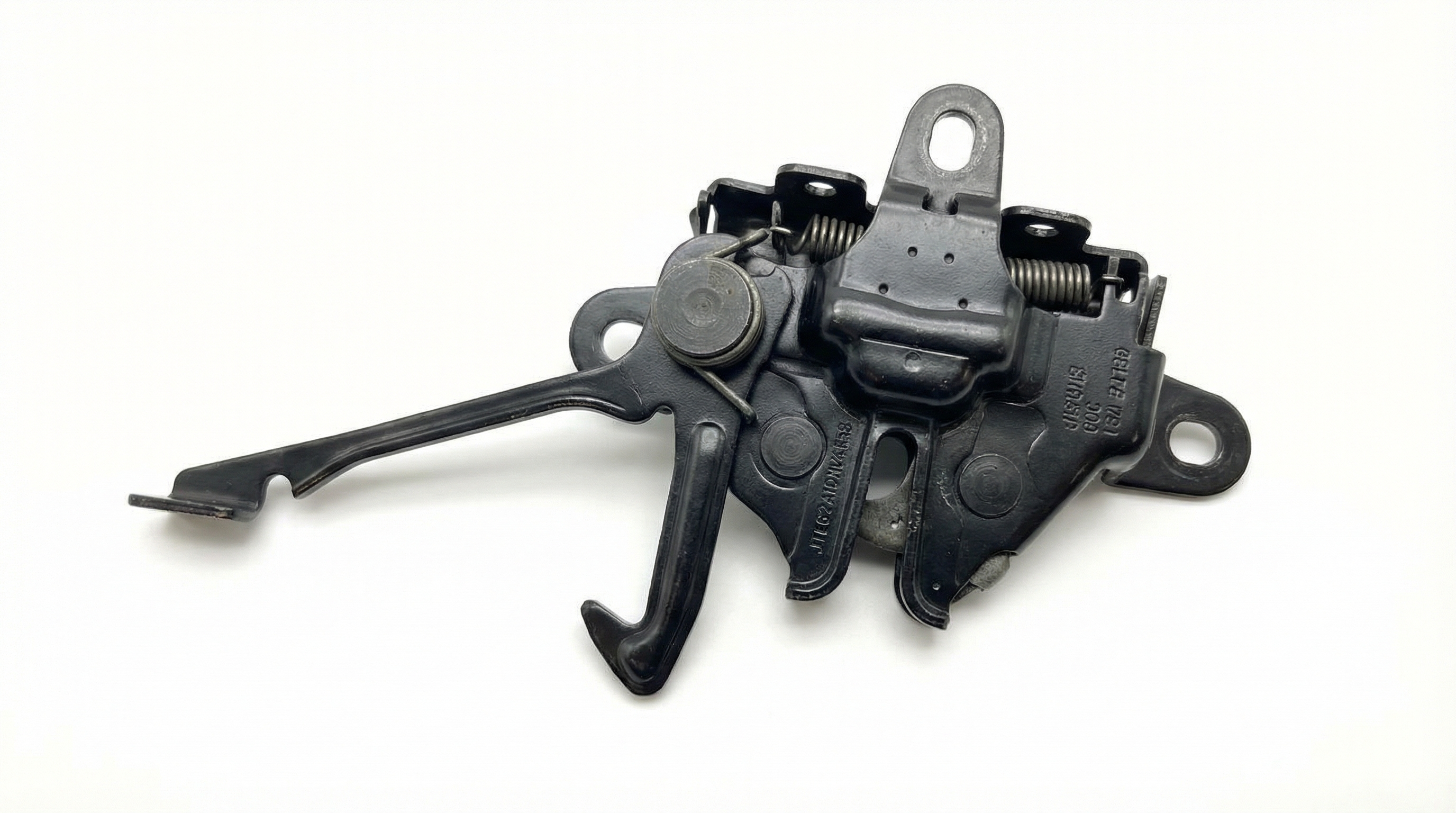
- Verify Compatibility: This is the most critical step. First, ensure the latch is from the correct generation (2001-2007 or 2008-2010). Second, and most importantly, check if you need the version with or without the anti-theft sensor. Look at your existing latch; if it has a wire and electrical plug coming off it, you need the 'with anti-theft' version. Match it to the used part.
- Inspect for Corrosion: Check the entire assembly, especially around the springs and pivot points, for heavy rust. Surface rust is acceptable, but deep, flaky corrosion can cause the mechanism to bind or fail.
- Test the Mechanism: Using a screwdriver, press down on the primary catch (the part the hood striker locks into) to simulate closing the hood. It should snap shut firmly. Then, operate the release lever (where the cable attaches) to ensure it smoothly releases the catch.
- Check the Springs: Ensure both the main latch spring and the secondary catch spring are present and have good tension. A weak or broken spring will prevent the latch from working correctly.
- Look for Accident Damage: Avoid any latches that are bent, cracked, or show signs of being stressed in a collision. A misaligned latch will never allow the hood to close properly.
Pro Tip: Before installing the replacement latch, clean it thoroughly with a degreaser and apply a spray-on white lithium grease to all moving parts. This will ensure smooth operation and protect it from future corrosion.
Replacement Overview
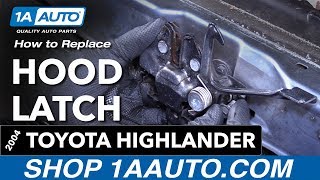
Replacing the hood latch on a 2001-2010 Highlander is a straightforward job that is very feasible for a DIY mechanic. 🎬 Watch this step-by-step guide on replacing the hood latch. The process generally takes less than an hour with basic tools.
- Difficulty: 2 out of 5
- Estimated Time: 0.5 - 1.0 hours
- Tools Required: Socket set (typically 10mm), screwdrivers, trim removal tools, pliers.
Basic Steps:
- Remove the Front Grille: The grille is held on by a series of plastic push-clips and tabs along the top and sides. Carefully remove these to gain access to the latch.
- Unbolt the Latch: The latch assembly is typically secured to the radiator support by three 10mm bolts. Before fully removing them, it's a good idea to scribe or mark the latch's position to make aligning the new one easier.
- Disconnect the Release Cable: The hood release cable has a small barrel on the end that slots into the latch's release arm. This can be unhooked with a pair of pliers or a screwdriver.
- Disconnect Electrical Connector (if applicable): If your vehicle has the anti-theft system, unplug the sensor's electrical connector.
- Installation: Installation is the reverse of removal. Attach the cable and electrical connector to the new latch before bolting it into place. Loosely tighten the bolts, close the hood gently to check alignment, and then tighten the bolts fully once you are satisfied.
Cost Comparison
Replacing a Highlander hood latch can vary in cost depending on the type of part you choose. Shop labor costs are generally low due to the simplicity of the job.
| Part Type | Estimated Cost |
|---|---|
| New OEM | $80 - $120 |
| New Aftermarket | $30 - $75 |
| Used OEM | $40 - $70 |
| Shop Labor | $95 - $190 |
Frequently Asked Questions (FAQ)
My alarm keeps going off for no reason. Could it be the hood latch?
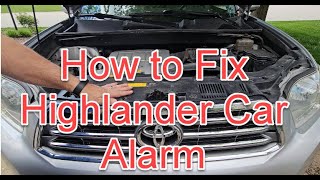
Yes, this is a very common symptom on Highlanders with the factory alarm. The sensor in the hood latch gets dirty or fails, making the alarm system think the hood is being opened. Cleaning the sensor and its connector is the first step, but replacing the latch assembly is often the permanent fix.
🎬 See how to fix a 2010 Highlander alarm that keeps triggering.Can I just bypass the hood latch sensor to stop my alarm from going off?
While it is technically possible to cut the wires and join them to permanently close the circuit, it is not recommended. This deactivates a layer of your vehicle's security system. Given the relatively low cost and ease of replacement, fixing it properly is the better solution.
My hood is stuck closed. How can I get it open?
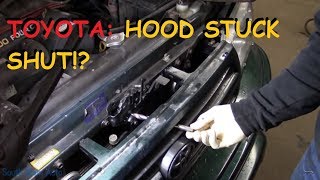
First, have a helper pull and hold the interior release lever while you press firmly up and down on the front of the hood to try and free the latch. If that fails, you may be able to reach the mechanism through the grille with a long screwdriver to manually trip the release. This can be difficult and may require removing the grille first.
🎬 Watch this video for tips on opening a stuck hood.Is it safe to just lubricate my sticky latch instead of replacing it?
If the latch is just beginning to get sticky, a thorough cleaning with a degreaser followed by lubrication with white lithium grease can restore function and is good preventative maintenance. However, if the latch is heavily corroded, has broken springs, or is physically damaged, replacement is the only safe option.
Helpful Videos

Technical Specifications
OEM Part Numbers: 53510-48041 53510-48040 53510-48050 53510-48051 53510-48184 5351048182 5351048183 53510-48170 53510-0E040
Varies by part number. Key difference is the presence of an integrated electrical sensor for models equipped with a factory anti-theft system.
We Have This Part in Stock

The information in this article is provided for general reference and educational purposes only. Vehicle specifications, procedures, and part compatibility can vary by production date, trim level, and region. Always consult your vehicle's factory service manual and verify part numbers before purchasing or performing repairs. Safety-critical components such as airbags, seat belts, and braking systems should be installed by a qualified professional.
- Toyota Highlander:
- 🎬 Helpful Videos
- 🛍️ Shop This Part
- Symptoms of a Failing 2001-2010 Toyota Highlander Hood Latch
- Known Issues and Vehicle-Specific Information
- Generation and Anti-Theft System Compatibility (The Most Important Check)
- Recalls and Technical Service Bulletins (TSBs)
- Buying a Used Hood Latch
- What to Check Before You Buy:
- Replacement Overview
- Basic Steps:
- Cost Comparison
- Frequently Asked Questions (FAQ)
- 🎟️ Get 5% Off