

2015-2020 Ford Fusion Door Mirror: A Guide to Features, Faults, and Replacement
This guide covers the complex feature variations, common failures, and replacement costs for the 2015-2020 Ford Fusion door mirror.
- Feature matching is critical. You must buy a replacement mirror with the exact same options as your original: heated glass, BLIS, puddle lamps, memory, and power-folding.
- Electrical problems are common and can be caused by the mirror motor, the door switch, a fuse, or broken wires in the door jamb.
- A Technical Service Bulletin (TSB 20-2372) exists for unintended mirror movement in wet conditions, caused by water entering the electrical connector.
- Replacement is a DIY-friendly job, with the main challenge being the careful removal of the interior door panel.
Variant Differences: The Key to Compatibility

The single most important factor when replacing a door mirror on a 2015-2020 Ford Fusion is matching the features of the original part exactly. Due to the wide array of options available, numerous mirror variations exist, and they are not interchangeable. Installing a mirror with incorrect features can lead to non-functioning systems or even fault codes on the dashboard.
Warning: Before purchasing a replacement mirror, you must verify which features your specific vehicle has. Installing a mirror without the correct options (e.g., a non-heated mirror on a car with heated glass) will result in a loss of function. Installing a mirror with extra, unsupported features will not add those features to your vehicle and may cause electrical issues.
Check your original mirror for the following options:
- Heated Glass: Look for a small heat symbol on the mirror glass. This feature is often tied to the rear window defroster button.
- Turn Signal Indicator: A visible amber light on the mirror housing or edge that flashes with the turn signals.
- Puddle Lamp: A small light on the underside of the mirror housing that illuminates the ground when the door is opened.
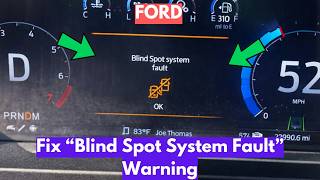
- Blind Spot Information System (BLIS): A small icon of a car in a corner of the mirror glass that lights up when a vehicle is in your blind spot. A "Blind Spot System Fault" message may appear on the dash if the system fails.
- Memory Function: This feature is tied to memory seat controls. The mirror automatically adjusts to a preset position based on the driver's key fob or seat memory button selection.
- Power Folding: A switch that allows the entire mirror housing to fold in electronically.
- Auto-Dimming (Electrochromic): The driver's side mirror darkens automatically to reduce glare from headlights behind you.
Common Symptoms of a Failing Door Mirror

Failures can be mechanical or electrical and can affect a single function or the entire mirror assembly.
- Mirror Glass Will Not Adjust: If the mirror doesn't move in one or all directions, the problem could be the adjustment motor inside the housing, the control switch on the door, or a wiring issue. Often, you can hear the motor trying to work even if the glass doesn't move.
- Jerky or Slow Mirror Movement: A failing motor may cause the mirror to stutter or move very slowly when adjusted.
- Heated Mirror Ineffective: The glass fails to clear frost or fog, indicating a problem with the heating element on the back of the glass or its wiring.
- BLIS or Cross-Traffic Alert Fault: A "Blind Spot System Fault" or "Cross Traffic System Fault" message on the instrument cluster can be caused by a failed sensor within the mirror assembly or a wiring problem. The indicator light in the mirror may not illuminate on startup or when a car is in the blind spot. 🎬 See how to diagnose and repair BLIS sensor faults.
- Power-Folding Failure: The mirror may not fold or unfold, or you might hear a grinding/clicking noise as the motor continues to run after the mirror is fully folded or extended.
- Loose or Vibrating Mirror: The entire housing may be loose on the door, or the glass itself may vibrate excessively at speed, often due to physical impact or internal broken clips.
- Unintended Mirror Movement: In some cases, particularly in wet weather, water can get into the mirror's electrical connector, causing the mirror to move on its own.
Known Issues, TSBs, and Recalls

While there are no direct recalls for the mirror assembly itself on the 2015-2020 Fusion, there are related issues and a Technical Service Bulletin (TSB) to be aware of.
- TSB 20-2372: This bulletin addresses unintended exterior mirror movement during wet weather on some 2013-2014 Fusions (and 2013-2020 Lincoln MKZ). The cause is identified as water intrusion into the main 16-pin electrical connector for the mirror. The official fix involves replacing the single connector with two more weather-resistant 8-pin connectors. While the TSB doesn't explicitly list 2015-2020 Fusions, the underlying design is similar, making water intrusion a possible cause for erratic behavior.
- Door Latch Recalls: Several recalls (like NHTSA recall 20S15) were issued for faulty door latches on 2016 Fusions, which could cause a door to open while driving. While not a mirror issue, work performed for this recall involves removing the door panel, which could potentially disturb mirror wiring if not done carefully.
- Rearview Camera Recalls: Multiple recalls were issued for the rearview camera system, which can sometimes be related to wiring or software that also impacts other vehicle systems.
Pro Tip: Many electrical mirror problems are not caused by the mirror itself, but by a bad control switch, a blown fuse, or broken wires inside the flexible rubber boot between the door and the car's body. Always check these before replacing the entire mirror assembly.
Buying a Used 2015-2020 Fusion Door Mirror: What to Check

A used OEM mirror is often an excellent, cost-effective alternative to an expensive new part, ensuring perfect fit and function. However, careful inspection is crucial.
- Verify All Features: This is the most critical step. Get the part number from your original mirror if possible, or visually confirm every feature: heated glass symbol, BLIS icon, puddle lamp, turn signal, and power-fold button on your switch. Ask the seller to confirm the features of the used part.
- Inspect the Housing and Cap: Check for deep scratches, cracks, or signs of stress, especially around the mounting points. The outer cover, or "skull cap," is often painted to match the car. It can sometimes be swapped from your old mirror if it's in good condition and the replacement is the wrong color.
- Examine the Glass: Look for cracks, chips, and delamination or browning of the heating element.
- Check the Electrical Connector: Inspect the connector pins to ensure they are straight and free of corrosion. A corroded connector is a major red flag.
- Test the Mechanisms: If possible, gently move the mirror glass by hand to feel for stripped gears in the adjustment motor. Manually pivot the housing (if not power-folding) to ensure the joint is not overly loose.
Cost Comparison
| Part Type | Estimated Price Range | Notes |
|---|---|---|
| New OEM | $770 - $1,200+ | Price varies dramatically based on features. Ensures perfect fit and function. |
| New Aftermarket | $40 - $500 | Quality can vary. May have issues with complex features like BLIS or Memory. |
| Used OEM | $75 - $350 | Excellent value. Sourced from salvage vehicles. Price depends on condition and features. |
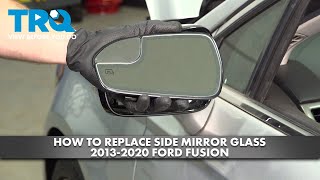
| Replacement Glass Only | $15 - $70 | A good option if only the glass is cracked and all other functions work. | 🎬 Watch: Step-by-step guide to replacing just the mirror glass.
Replacement Overview
Replacing the entire mirror assembly is a straightforward job for a DIYer with basic tools. The most challenging part is typically removing the interior door panel without breaking any clips.
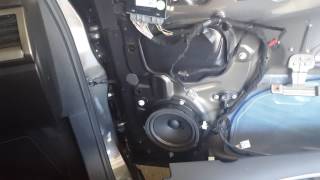
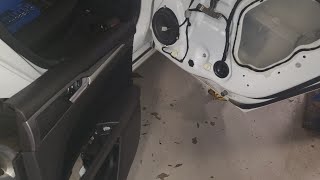
- Remove the interior door panel. 🎬 Watch this video for a clear door panel removal walkthrough. This usually involves removing a few screws (often hidden behind small covers in the door pull and handle area) and then carefully prying the panel off with a trim removal tool.
- Disconnect wiring. Unplug the main door harness and any other connectors for switches.
- Access the mirror nuts. Peel back the foam or plastic weather barrier to expose the three 11mm nuts that hold the mirror to the door frame.
- Disconnect the mirror connector. Reach inside the door frame to unplug the mirror's electrical connector.
- Remove the old mirror. While supporting the mirror from the outside, remove the three nuts and carefully guide the mirror and its wiring out of the door.
- Install the new mirror. Installation is the reverse of removal. Feed the new wiring through, tighten the nuts, reconnect the electrical plug, and test all mirror functions before reinstalling the door panel.
Frequently Asked Questions (FAQ)
Do I need to paint the replacement mirror?
It depends on the part. Many mirrors come with a paint-to-match (PTM) skull cap, which is a raw, unpainted plastic cover. You can have this painted to match your vehicle's color code, or if your original cap is undamaged, you can often transfer it to the replacement mirror assembly.
My new mirror's memory function isn't working correctly. What's wrong?
If manual adjustment works but the memory or reverse-dip functions are incorrect (e.g., the mirror points to the sky), it's often a sign of an internal incompatibility or a calibration issue. This can happen with aftermarket parts that aren't perfectly matched to the car's software. It could also indicate a problem with the door control module, not the mirror itself.
Can I upgrade my mirrors to add features like BLIS or power-folding?
This is generally not feasible. It would require not only the new mirrors but also different wiring harnesses, the correct door control modules, potentially a new main body control module, and dealer programming to enable the features. The cost and complexity are very high.
Is it hard to replace just the mirror glass?
Replacing only the glass is possible and much cheaper if the rest of the assembly is functional. It typically involves carefully prying the old glass off its backing plate. You must be gentle to avoid breaking the motor assembly clips behind it. The new glass usually snaps into place.
Helpful Videos
Technical Specifications
OEM Part Numbers: DS7Z-17683-LAPTM ds7z17683a FS7Z-17683-B fs7z17683a JS73-17682-DD5JCT JS73-17683-BC5DST KS7Z-17682-DAPTM KS7Z-17682-DBPTM KS7Z-17682-ZA KS7Z-17683-DAPTM KS7Z-17683-ZA DS7Z-17683-NVPTM
Held in place by three 11mm nuts. Connects via a single multi-pin electrical connector inside the door.
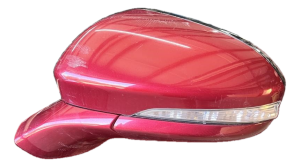
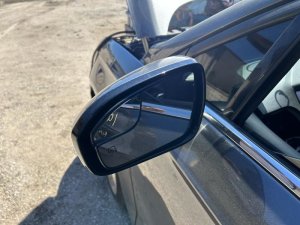
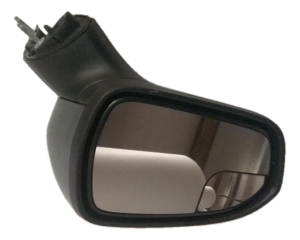
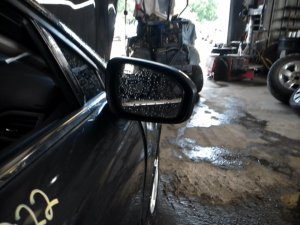
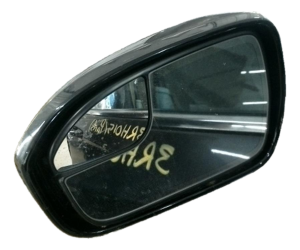
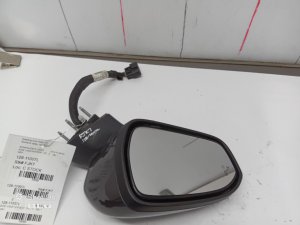
We Have This Part in Stock

The information in this article is provided for general reference and educational purposes only. Vehicle specifications, procedures, and part compatibility can vary by production date, trim level, and region. Always consult your vehicle's factory service manual and verify part numbers before purchasing or performing repairs. Safety-critical components such as airbags, seat belts, and braking systems should be installed by a qualified professional.
- Ford Fusion: