

2017-2026 Tesla Model 3 Rear Axle Shaft: Diagnosing Clicks, Hums, and Vibrations
This guide clarifies common failure symptoms, compatibility differences, and replacement costs for the rear drive axle shafts on all 2017-2026 Tesla Model 3 variants.
- A clicking or popping sound on acceleration/deceleration is the most common failure symptom, often caused by worn splines at the wheel hub.
- It is CRITICAL to verify compatibility by matching the OEM part number from your original axle, as RWD and AWD models may use different parts.
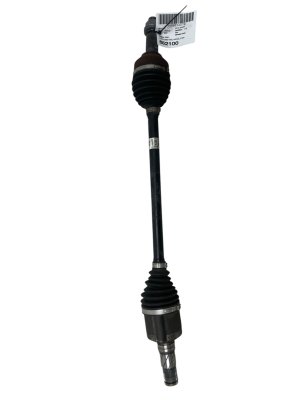
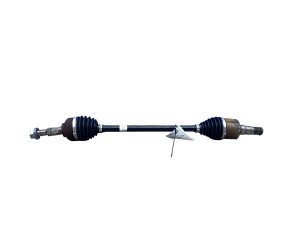
- When buying a used axle, the most important inspection is to ensure the rubber CV boots are not torn, cracked, or leaking grease.
- The rear axle nut is single-use and must be replaced. It requires a high torque of 245 Nm (181 lb-ft) for safe and quiet operation.
Compatibility: RWD vs. AWD and Part Number Verification
Warning: The most critical step before purchasing a replacement axle shaft is verifying compatibility. While many rear axle shafts for the Model 3 can be installed on either the left or right side, there may be different parts for Rear-Wheel Drive (RWD) and All-Wheel Drive (AWD/Dual Motor) models. The only way to guarantee you are buying the correct part is to match the OEM part number from your vehicle's original axle shaft to the number on the replacement part. Do not rely on visual comparison alone.
The axle shafts for the front of AWD models are completely different from the rear axles. This guide focuses exclusively on the REAR axle shafts.
Symptoms of a Failing Drive Axle Shaft
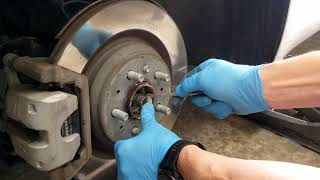
A failing axle shaft in a Tesla Model 3 will almost always alert you with a distinct noise or vibration. 🎬 Watch: How to diagnose rear wheel bearing and axle noises Because the car is so quiet, these sounds are often more noticeable than in a gasoline-powered vehicle. Ignoring these symptoms can lead to a complete failure of the axle, resulting in a loss of power to that wheel.
1. Clicking or Popping Noise on Acceleration or Deceleration
This is the most widely reported symptom. You may hear a single or repeated 'click' or 'pop' sound from the rear of the car when you first press the accelerator or when you let off and regenerative braking engages. This sound is most noticeable at low speeds with the windows down. It is often caused by microscopic movement and a lack of lubrication in the splines where the axle shaft inserts into the wheel hub. While sometimes this can be temporarily fixed, it often indicates wear that will eventually require axle replacement.
2. Vibration or Shudder During Acceleration
A vibration that you can feel through the floor or seat, which appears or gets worse as you accelerate, is a strong indicator of a failing inner CV joint. This may be more pronounced under hard acceleration. Unlike a tire imbalance that may vibrate at all times at a certain speed, a bad inner CV joint vibration is typically tied to acceleration torque. A bent axle shaft can also cause this symptom.
3. Knocking or Clunking Sounds
A 'clunk' or 'knock' when you shift from Drive to Reverse or vice-versa can be a sign of excessive play in a worn inner or outer CV joint. You might also hear this when you first accelerate from a stop.
4. Grease on the Inside of the Wheel
The CV joints are packed with grease and sealed by flexible rubber boots. If a boot tears or cracks, this grease will be flung outward by the spinning axle. Finding dark, heavy grease splattered on the inside of your wheel, on the suspension components, or in the wheel well is a sure sign that a CV boot has failed. Once the boot is torn, dirt and moisture get into the joint, causing rapid wear and eventual failure.
Known Issues: The 'Tesla Axle Click' TSB
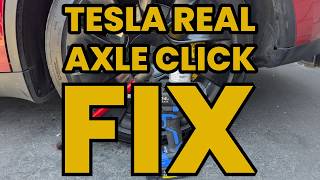
The clicking noise on acceleration/deceleration is so common that Tesla has an official service procedure to address it. This issue is not a safety recall. The procedure involves removing the axle nut, pushing the axle stub out of the hub, cleaning both mating surfaces, and applying a specific lubricant (Molykote M-77) 🎬 Watch: Step-by-step Tesla axle click noise fix to the flat hub mating face of the axle. The axle is then reinstalled and the axle nut is torqued to specification. Some owners report this fix is a long-term solution, while others find the noise returns, eventually requiring axle replacement.
Buying a Used Drive Axle Shaft: What to Look For
A used OEM axle shaft can be an excellent value, as the original Tesla parts are high quality. However, a careful inspection is essential.
- Inspect the CV Boots: This is the most important check. Squeeze and flex both the inner and outer rubber boots. Look for any cracks, splits, or pinholes. A torn boot means the joint is contaminated and should be considered junk, regardless of mileage.
- Check for Joint Play: Hold the shaft and try to move the joints. There should be very little in-and-out play (plunge) on the inner joint and almost no clicking or looseness when you try to twist the outer joint. Excessive play means the joint is worn.
- Verify the Part Number: As mentioned, this is critical. Ensure the part number on the used axle matches the one you are replacing. Recyclers often tag parts with the original vehicle's VIN, which can help confirm compatibility.
- Check the Splines and Threads: Look at the splines on both ends. They should be clean and sharp, not twisted or worn down. The threads for the large axle nut should be clean and undamaged.
Cost to Replace a Tesla Model 3 Rear Axle Shaft
Costs can vary based on your location and the source of the part. Labor typically takes 2-4 hours per side.
| Part Source | Estimated Part Cost (per side) |
|---|---|
| New OEM (Tesla) | $400 - $600 |
| New Aftermarket | $130 - $200 |
| Used OEM (Recycled) | $100 - $175 |
| Shop Labor | $300 - $750 |
Replacement Overview & Torque Specs
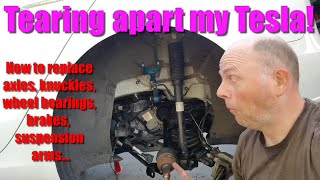
Replacing the axle shaft is a job that can be done by an experienced DIY mechanic. The general process involves lifting the vehicle, removing the wheel, brake caliper, and rotor. Several suspension arms must be disconnected from the knuckle to allow it to swing out of the way so the axle can be removed.
Pro Tip: A hub puller tool may be required to separate the axle splines from the wheel hub, as they can become seized over time. The inner end of the axle can usually be popped out of the drive unit with a pry bar.
🎬 See this rear suspension and knuckle service walkthroughThe most critical part of the installation is the torque applied to the main axle nut.
- Rear Axle Nut Torque: 245 Nm (181 lb-ft)
- Wheel Lug Nut Torque: 175 Nm (129 ft-ft)
Warning: The large axle nut is a single-use, torque-to-yield component. It MUST be replaced with a new one every time it is removed. Reusing the old nut can result in it backing off, causing noise, hub damage, and a potential safety hazard.
Frequently Asked Questions (FAQ)
Is a clicking axle dangerous to drive on?
You can typically drive with a clicking axle for a short time, but it is a sign of wear that will only get worse. The primary risk is that the CV joint could eventually fail completely, which would leave the car unable to move under its own power as all torque to that wheel would be lost. It is best to get it inspected and repaired soon.
Can I just replace the torn CV boot instead of the whole axle?
While it is technically possible to replace just the boot, it is a very messy and labor-intensive job. If the boot has been torn for any length of time, the joint is already contaminated with dirt and moisture, and will likely fail soon even with new grease and a new boot. For this reason, it is almost always more cost-effective and reliable to replace the entire axle shaft assembly.
What is the difference between the RWD and AWD rear axles?
The physical differences may be subtle, such as slight variations in length or spline count, to accommodate the different rear drive unit and subframe configurations. Using the wrong axle can lead to improper fitment, binding during suspension travel, or it may not engage properly with the drive unit or hub. Always confirm you have the correct part number for your specific vehicle.
My new axle is clicking. Is it defective?
Not necessarily. If the clicking sound is present immediately after installing a new axle, the most likely cause is that the mating surface between the axle and the hub was not properly cleaned and lubricated, or the axle nut was not torqued to the correct specification of 245 Nm (181 lb-ft). Re-check the torque and ensure the correct lubrication procedure was followed before assuming the new part is faulty.
Helpful Videos
Technical Specifications
OEM Part Numbers: 1044161-00-C 1044161-00-D 1044164-00-A 1044168-00-A 104416800A
Rear Axle Nut Torque: 245 Nm (181 lb-ft). Wheel Lug Nut Torque: 175 Nm (129 ft-ft).
We Have This Part in Stock
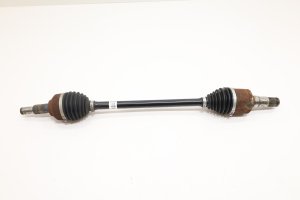
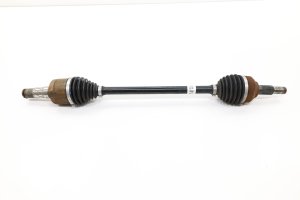
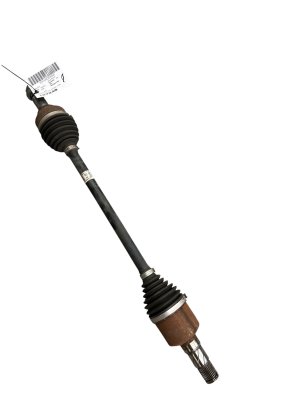
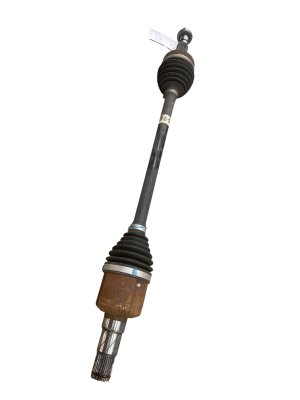

The information in this article is provided for general reference and educational purposes only. Vehicle specifications, procedures, and part compatibility can vary by production date, trim level, and region. Always consult your vehicle's factory service manual and verify part numbers before purchasing or performing repairs. Safety-critical components such as airbags, seat belts, and braking systems should be installed by a qualified professional.
- Tesla 3:
- 🎬 Helpful Videos
- 🛍️ Shop This Part
- Compatibility: RWD vs. AWD and Part Number Verification
- Symptoms of a Failing Drive Axle Shaft
- 1. Clicking or Popping Noise on Acceleration or Deceleration
- 2. Vibration or Shudder During Acceleration
- 3. Knocking or Clunking Sounds
- 4. Grease on the Inside of the Wheel
- Known Issues: The 'Tesla Axle Click' TSB
- Buying a Used Drive Axle Shaft: What to Look For
- Cost to Replace a Tesla Model 3 Rear Axle Shaft
- Replacement Overview & Torque Specs
- Frequently Asked Questions (FAQ)
- 🎟️ Get 5% Off