

2010-2022 Prius, Corolla & CT200h Drive Axle: Clicking Noises, Vibration & Replacement
A complete guide to diagnosing and replacing the front and rear drive axle shafts on the Toyota Prius, Prius Prime, Prius Plug-in, Lexus CT200h, and Toyota Corolla Hybrid.
- The most common sign of failure is a clicking noise when turning, caused by a worn outer CV joint.
- A low-mileage used OEM axle is often a better choice than a new, cheap aftermarket part due to superior materials and fitment.
- The front axle nut must be torqued to 159 ft-lbs and staked. It is a one-time-use part and must be replaced.
- There are three distinct groups of axles: early generation front (2010-2015), late generation front (2016+), and rear axles for AWD-e models only.
Vehicle Fitment and Part Number Guide
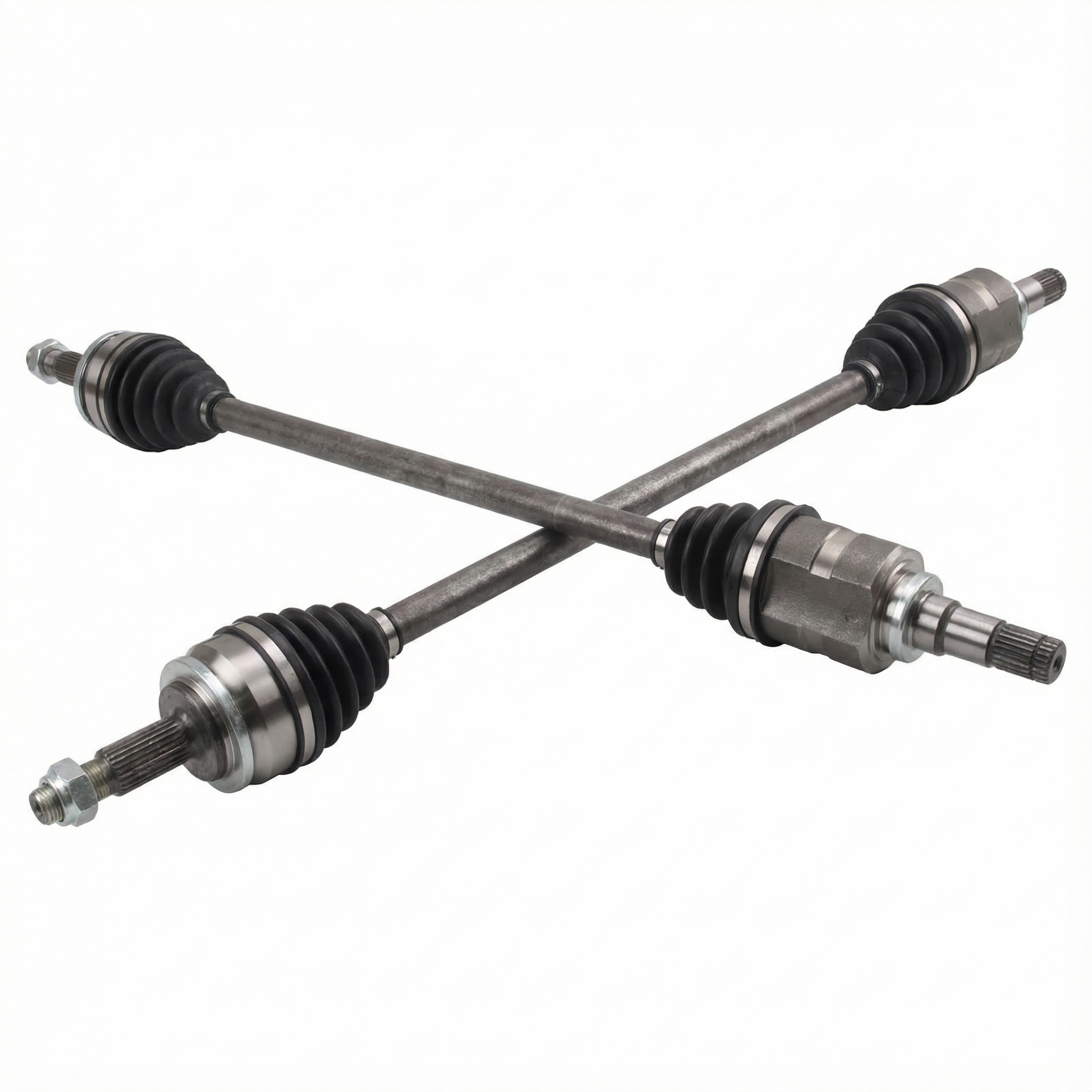
The drive axle shafts for these Toyota and Lexus models are specific to the vehicle's generation, drivetrain, and position on the vehicle. The original part numbers are often superseded by newer versions. This guide covers three main groups of axle shafts.
Compatibility Warning: Always verify the correct part number for your specific vehicle using the VIN. Fitment can be complex, especially for mid-generation changes.
Group 1: 2010-2015 Toyota Prius, 2012-2015 Prius Plug-in & 2011-2017 Lexus CT200h
These models share the same front axle shafts.
| Position | Common Part Numbers | Superseded by |
|---|---|---|
| Front Left (Driver Side) | 43420-47030 | 43420-47031 |
| Front Right (Passenger Side) | 43410-47030 | 43410-47031 |
Pro Tip: For 2012-2015 Toyota Prius models, fitment can be VIN-specific. Part number 43420-47031 fits standard Prius models where the 7th and 8th digits of the VIN are 'DU', and Prius Plug-in models where they are 'DP'.
Group 2: 2016-2022 Toyota Prius, 2017-2022 Prius Prime & 2020-2022 Toyota Corolla Hybrid
These later models use a different set of front axle shafts.
| Position | Common Part Numbers | Superseded by |
|---|---|---|
| Front Left (Driver Side) | 43420-47040 | 43420-47050 |
| Front Right (Passenger Side) | 43410-47040, 43410-47050 | N/A |
Group 3: 2019-2022 Toyota Prius AWD-e (Rear Axles)
The All-Wheel Drive (AWD-e) models feature unique rear axle shafts that are interchangeable from left to right.
| Position | Part Number |
|---|---|
| Rear Left & Rear Right | 42340-47010 |
Symptoms of a Failing Drive Axle Shaft
Axle shaft failure typically begins with subtle signs that worsen over time. The most common cause is a torn or cracked rubber CV boot, which allows the protective grease to leak out and moisture and dirt to get in, destroying the joint.
- Clicking or Popping Noise When Turning: This is the most classic symptom of a worn outer CV joint. The noise is most noticeable during sharp, low-speed turns, like in a parking lot.
- Vibration While Driving: A noticeable vibration that is felt through the floor or steering wheel, especially during acceleration, often points to a failing inner CV joint or an imbalanced axle.
- Clunking or Knocking Sound: A clunk when you shift from Drive to Reverse or when you accelerate or decelerate can indicate excessive play in a worn inner CV joint.
- Grease on the Inner Edge of the Wheel: If you see dark, heavy grease splattered on the inside of your wheel, on the suspension components, or in the wheel well, it's a clear sign that a CV boot has torn.
Known Issues, TSBs, and Recalls
There are no widespread recalls or Technical Service Bulletins (TSBs) from Toyota or Lexus for premature drive axle failure on these models. Failures are generally considered a result of normal wear and tear, with the lifespan of the part heavily dependent on the condition of the protective CV boots. Some owners on forums have reported needing replacements as early as 35,000-60,000 miles, while others last well over 150,000 miles.
Buying a Used Drive Axle Shaft: What to Look For
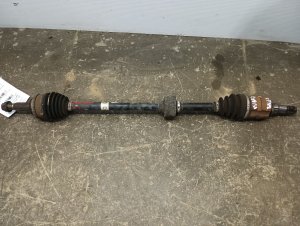
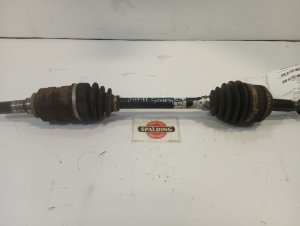
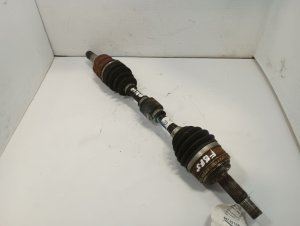
A low-mileage, used OEM axle is often a superior choice to a new, inexpensive aftermarket part. Aftermarket axles can suffer from poor quality boots that tear prematurely or incorrect dimensions that can cause vibrations. When inspecting a used OEM axle, here’s what to check:
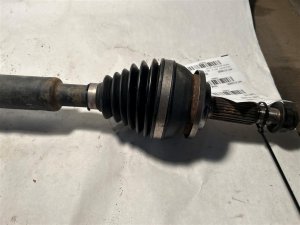
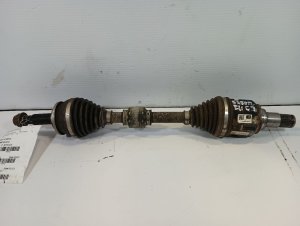
- Inspect the CV Boots: This is the most critical step. Squeeze and flex both the inner and outer rubber boots. They should be pliable and free of any cracks, splits, or pinholes. A compromised boot means the joint is contaminated and should be avoided.
- Check for Joint Play: Hold the shaft and try to move the CV joint housing. There should be very little in-and-out or rotational play. Excessive looseness indicates a worn joint.
- Verify Splines and Threads: Look at the splines on both ends of the axle. They should be clean and sharp, not twisted or damaged. Ensure the threads on the outer end for the axle nut are not stripped or cross-threaded.
- Look for an OEM Dampener: Many original Toyota axles have a thick, rubber dampener ring on the shaft to reduce vibration. Many aftermarket axles omit this feature.
Rebuild vs. Replace
Rebuilding an axle involves replacing the boots and repacking the joints with fresh grease. This is only a good option if the joint itself is not yet worn (i.e., not making any clicking or popping noises). While the boot kits are inexpensive, the process is very messy and time-consuming. For most DIY mechanics and professional shops, replacing the entire axle shaft assembly with a quality used or new part is more efficient and reliable.
Cost Comparison
Prices can vary by location and supplier, but this provides a general estimate for replacing a single front axle shaft.
| Item | Estimated Cost |
|---|---|
| New OEM | $350 - $550 |
| New Aftermarket | $80 - $200 |
| Used OEM | $50 - $125 |
| Shop Labor | $180 - $300 |
Installation Tips and Torque Specs
Replacing a front drive axle is a moderately difficult job that can be done by an experienced DIY mechanic. The rear axles on AWD-e models are generally simpler.
Warning: Never reuse the large axle nut. It is a one-time-use, torque-to-yield part. A new nut should be included with a new axle or purchased separately.
- Key Torque Spec: The front axle nut torque specification for all listed models is 159 ft-lbs (216 Nm). The rear axle nut on AWD-e models is also 159 ft-lbs.
- Staking the Nut: After torquing, the lip of the axle nut must be "staked" or indented into the groove on the axle shaft using a punch or chisel. This acts as a lock to prevent the nut from backing off.
- Related Parts: It is highly recommended to replace the transaxle oil seal where the axle enters the transmission to prevent leaks.
Check Transaxle Fluid: When you pull the axle out of the transaxle, a small amount of fluid will leak out. Be prepared with a drain pan. After installation, check the fluid level and top it off with Toyota Genuine ATF WS (World Standard) fluid.
Frequently Asked Questions (FAQ)
Can I drive with a bad CV axle?
It is not recommended. While a car may be drivable for a short time with a clicking axle, the joint will continue to degrade. If the joint fails completely, it can break apart, leaving you stranded and potentially causing damage to other components like brake lines or suspension parts.
Do I need a wheel alignment after replacing an axle shaft?
Generally, no. Simply replacing the axle shaft does not change the vehicle's alignment angles. However, if you also replaced other suspension components like control arms or tie rods during the job, an alignment is necessary.
My CV boot is torn but there's no noise. Can I just replace the boot?
Yes, if the joint has not been contaminated for long and is not making any noise, you can replace just the boot and repack the joint with fresh grease. This is a messy job but can save the original high-quality OEM axle. However, if there is any doubt about the condition of the joint, it's safer to replace the entire axle assembly.
Why is my new aftermarket axle vibrating?
Vibrations from new aftermarket axles are a common complaint. This can be due to inferior balancing, slight dimensional differences compared to the OEM part, or the omission of the factory vibration dampener. This is a primary reason why a good-condition used OEM axle is often a better choice.
Technical Specifications
OEM Part Numbers: 43420-47030 43420-47031 43410-47030 43410-47031 43420-47040 43420-47050 43410-47040 42340-47010
Front Axle Nut Torque: 159 ft-lbs (216 Nm)
We Have This Part in Stock

The information in this article is provided for general reference and educational purposes only. Vehicle specifications, procedures, and part compatibility can vary by production date, trim level, and region. Always consult your vehicle's factory service manual and verify part numbers before purchasing or performing repairs. Safety-critical components such as airbags, seat belts, and braking systems should be installed by a qualified professional.
- Toyota Prius:
- Lexus CT200h:
- Toyota Corolla:
- Toyota Prius Plug-in:
- Toyota Prius Prime:
- 🛍️ Shop This Part
- Vehicle Fitment and Part Number Guide
- Group 1: 2010-2015 Toyota Prius, 2012-2015 Prius Plug-in & 2011-2017 Lexus CT200h
- Group 2: 2016-2022 Toyota Prius, 2017-2022 Prius Prime & 2020-2022 Toyota Corolla Hybrid
- Group 3: 2019-2022 Toyota Prius AWD-e (Rear Axles)
- Symptoms of a Failing Drive Axle Shaft
- Known Issues, TSBs, and Recalls
- Buying a Used Drive Axle Shaft: What to Look For
- Rebuild vs. Replace
- Cost Comparison
- Installation Tips and Torque Specs
- Frequently Asked Questions (FAQ)
- 🎟️ Get 5% Off