

Diagnosing Vibrations on the 2022-2025 Genesis GV70: Drive Shaft vs. Differential Issues
This guide details common Genesis GV70 drive shaft failure symptoms, explains how to inspect a used part, and helps distinguish drive shaft vibrations from a known rear differential noise issue.
- A humming or whining noise is likely the rear differential (per TSB 23-DS-004G), not the drive shaft; diagnose this first to avoid unnecessary repairs.
- The most common failure symptom is a vibration from under the car at specific speeds (e.g., 35-55 mph) or a clunk when shifting into gear.
- When buying a used drive shaft, physically inspect the U-joints for any play and the main tube for dents or damage, as these are the most common failure points.
- Driving with a failing drive shaft is dangerous; a complete failure can cause a loss of power and significant damage to the undercarriage.
Symptoms of a Failing Drive Shaft

A failing drive shaft on the Genesis GV70 will provide several warnings. While no widespread failures are known for this specific part, owner forums do contain reports of vibrations that could be linked to the drive shaft. Recognizing these general symptoms is key to a correct diagnosis.
1. Vibration From Underneath the Vehicle
This is the most common symptom. You may feel an intense shaking or a rhythmic vibration that seems to come from the floor or seats. It often appears at specific speed ranges, such as between 35-55 mph, and may disappear at higher speeds. This is typically caused by a worn universal joint (U-joint) or a drive shaft that has become unbalanced, perhaps from losing a factory-installed balance weight.
2. Shuddering During Acceleration
If the vehicle shudders or hesitates when you accelerate from a stop or at low speeds, it can point to a loose U-joint or a worn center support bearing (if equipped). This happens because the worn component allows for excessive movement before the shaft can smoothly transfer power.
3. Unusual Noises
Several noises can indicate a drive shaft problem:
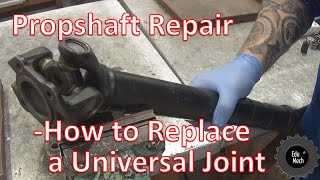
- Clunking or Thudding: A loud clunk when you shift from Park into Drive or Reverse is a classic sign of a worn U-joint that has excessive play. 🎬 Learn how to replace a universal joint with this walkthrough
- Squeaking or Chirping: A constant, speed-dependent squeak can be caused by a dry, failing U-joint that is running out of lubrication.
- Scraping or Grinding: A metallic scraping sound could mean a severely damaged shaft is making contact with the underbody, which is a critical safety issue.
4. Difficulty Making Turns
In severe cases, a binding or failing U-joint can resist articulation, making it difficult to turn the vehicle. This is a serious symptom that affects vehicle control and requires immediate attention.
Important: A humming or whining noise that changes pitch with vehicle speed (not engine RPM) is more likely a symptom of a bad wheel bearing or a rear differential issue. A Technical Service Bulletin (TSB 23-DS-004G) exists for the 2022+ GV70 for a rear differential noise, which can be easily mistaken for a drive shaft problem.
Known Issues, TSBs, and Recalls for the 2022-2025 Genesis GV70

As of early 2026, there are no specific recalls or Technical Service Bulletins (TSBs) issued for a failing front drive shaft on the gasoline-powered 2022-2025 Genesis GV70.
- Rear Differential Noise (TSB 23-DS-004G): This is the most relevant issue for anyone diagnosing a drive shaft. Many GV70, GV80, and G80 models can develop a humming or whining noise from the rear differential at certain speeds. The fix involves either re-torquing the pinion nut or, in some cases, replacing the entire differential assembly. It is crucial to rule this out before replacing the drive shaft.
- Transmission Harness Recall (NHTSA 24V191000): Certain 2024 GV70 models were recalled for a transmission harness connector that could allow water intrusion, potentially causing the vehicle to shift to Neutral while parked. While not a drive shaft failure, the official repair procedure requires the removal of the propeller shaft to access the transmission, which is relevant information for technicians.
- Owner Vibration Complaints: Owners on forums like Reddit have reported persistent vibrations at city and highway speeds, even on brand-new vehicles. While dealers often start by road-force balancing the tires, an out-of-balance drive shaft is a known cause of such symptoms.
Buying a Used Drive Shaft: What to Inspect

Since the GV70 is a newer model, a low-mileage used OEM drive shaft can be a high-quality, cost-effective alternative to a new part. Cheap aftermarket options are not yet widely available and often suffer from balancing issues. Before purchasing a used OEM shaft, perform this inspection:
- Check the U-Joints: Hold the yoke on one side of the U-joint and the shaft on the other. Try to twist them in opposite directions. There should be absolutely no play, clunking, or looseness. The joint should move smoothly through its range of motion without binding or feeling gritty.
- Inspect the Tube for Damage: Look down the entire length of the shaft. Check for dents, deep gouges, or any signs of bending. A dented tube will throw the shaft out of balance and cause vibrations. Check for heavy rust or corrosion that could weaken the metal.
- Examine the Welds: Check the welds where the tube is attached to the yokes at each end. They should be clean, uniform, and free of cracks.
- Look for Missing Balance Weights: The factory welds small metal squares or rectangles onto the shaft to balance it. Look for spots where a weight might have been and fallen off (you might see a clean spot or a leftover weld mark). A missing weight will cause vibration.
- Verify Part Number: Ensure the part number matches what is required for your vehicle. The primary OEM part number for the front propeller shaft is 49100-AR000.
Pro Tip: When handling a used drive shaft, never pick it up by the middle of the tube. Always support it by the yokes or at both ends to avoid accidentally bending it.
Cost Breakdown
Prices can vary based on location and supplier. The following is an estimate for the front propeller shaft on a 2022-2025 Genesis GV70.
| Part Type | Estimated Cost |
|---|---|
| New OEM | $240 - $350 |
| New Aftermarket | Not commonly available as of early 2026 |
| Used OEM | $100 - $200 |
| Remanufactured | Not commonly available |
| Shop Labor | $150 - $400 |
Replacement Information

- Installation Difficulty: 3/5 (Moderate)
- Estimated Time: 1.5 - 2.5 hours
- DIY Feasible: Yes, for experienced mechanics. The job requires safely lifting the vehicle on jack stands or a lift and may involve removing exhaust components and heat shields to gain access. Proper torque wrenches are essential.
Frequently Asked Questions (FAQ)
Can I drive with a bad drive shaft?
It is not recommended. While you might be able to drive with minor vibrations, the problem will only get worse. A sudden failure can cause a complete loss of power, and the broken shaft can flail around, causing catastrophic damage to the transmission, exhaust, and underbody. This is a serious safety risk.
Is a vibration always a bad drive shaft?
No. On the Genesis GV70, vibrations are most commonly caused by an out-of-balance tire. Always have the tires road-force balanced first. Other causes can include a bent wheel, a bad wheel bearing, or worn suspension components. If the vibration is accompanied by a clunking noise, the drive shaft is a more likely suspect.
What's the difference between a drive shaft and a CV axle?
A drive shaft (or propeller shaft) transmits power between the transmission and a differential. A CV axle (or half-shaft) transmits power from the differential to a wheel. The GV70 has both: a front propeller shaft running from the transmission to the front differential, and four CV axles, one going to each wheel.
Do I need to balance a new or used drive shaft?
A new OEM or a good-condition used OEM drive shaft should already be balanced from the factory. You should not need to balance it before installation. If you install a shaft and experience a new vibration, the shaft itself may be faulty or was damaged during shipping. Cheap aftermarket shafts are often poorly balanced out of the box.
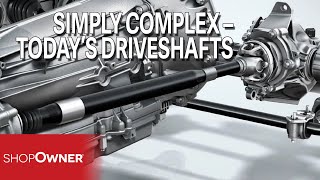
Helpful Videos
Technical Specifications
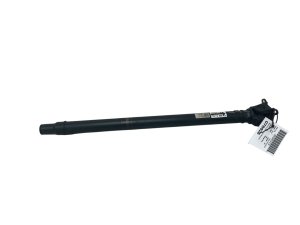
OEM Part Numbers: 49100-AR000 49100AR000
Torque Specs (from related repairs): Propeller Shaft to Differential Bolts: 50 ft-lb. Propeller Shaft to Transmission Bolts: 79.6 ft-lb. Center Bearing Bolts: 47 ft-lb.
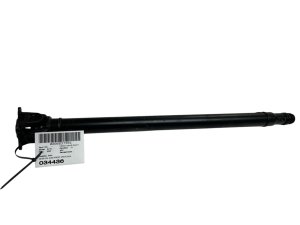
We Have This Part in Stock

The information in this article is provided for general reference and educational purposes only. Vehicle specifications, procedures, and part compatibility can vary by production date, trim level, and region. Always consult your vehicle's factory service manual and verify part numbers before purchasing or performing repairs. Safety-critical components such as airbags, seat belts, and braking systems should be installed by a qualified professional.
- Genesis GV70:
- 🎬 Helpful Videos
- 🛍️ Shop This Part
- Symptoms of a Failing Drive Shaft
- 1. Vibration From Underneath the Vehicle
- 2. Shuddering During Acceleration
- 3. Unusual Noises
- 4. Difficulty Making Turns
- Known Issues, TSBs, and Recalls for the 2022-2025 Genesis GV70
- Buying a Used Drive Shaft: What to Inspect
- Cost Breakdown
- Replacement Information
- Frequently Asked Questions (FAQ)
- 🎟️ Get 5% Off