

1998 Ford Escort ECM: Solving No-Start Issues and PATS Anti-Theft Programming
This guide covers the critical details of diagnosing, replacing, and programming the Engine Control Module (ECM) in your 1998 Ford Escort, with a special focus on the PATS anti-theft system.
- The biggest challenge is Ford's PATS anti-theft system; if your car has it, a replacement ECM MUST be reprogrammed by a dealer or locksmith.
- Always match the OEM part number from your original ECM sticker exactly to the replacement unit.
- Before replacing the ECM, rule out cheaper, common failures like the Constant Control Relay Module (CCRM) and bad battery ground wires.
- The ECM is located inside the car in the center console, making the physical swap relatively easy for a DIY mechanic.
Symptoms of a Failing 1998 Ford Escort ECM
A faulty ECM can cause a variety of confusing symptoms that can often be mistaken for other problems. If you notice several of these issues happening at once, the ECM might be the culprit.
- Engine Will Not Start: The most serious symptom is a complete no-start condition. The engine may crank over but will not fire up because the ECM isn't sending the correct signals for spark and fuel.
- Intermittent Stalling or Misfiring: The engine may suddenly shut off while driving or run rough, stutter, and misfire. This can be due to incorrect fuel mixture or timing commands from the failing module.
- Check Engine Light: A constant or intermittent Check Engine Light is a common sign. Specific codes pointing to internal module failure (like P0605) are a strong indicator. However, the faulty ECM can also trigger false codes for other sensors that are actually working properly.
- Poor Engine Performance and Fuel Economy: You might notice a sudden loss of power, hesitation during acceleration, or a significant drop in gas mileage as the ECM fails to manage the engine efficiently.
- Erratic Automatic Transmission Shifting: The ECM communicates with the transmission. A bad module can cause hard shifts, delayed shifting, or prevent the transmission from shifting into the correct gear.
- No Injector Pulse: A diagnostic check may reveal that the fuel injectors are not receiving the signal to fire, which points directly to an ECM issue.
The #1 Issue: Programming and Ford's PATS Anti-Theft System
The single most important factor when replacing the ECM in a 1998 Ford Escort is the Passive Anti-Theft System (PATS). This system prevents the car from starting without a correctly programmed key. The ECM is a key component of this system.
Does My Car Have PATS?
Not all 1998 Escorts were equipped with PATS. You can often tell by looking at your ignition key. If the plastic head of the key is thick and bulky, it likely contains a transponder chip for the PATS system. If the key is a simple, thin piece of metal with a minimal plastic cover, your car may not have PATS. Another sign is a blinking "THEFT" light on the dashboard when the key is out of the ignition.
Replacement and Programming Requirements
Warning: If your vehicle has PATS, you cannot simply swap in a used ECM. The engine will crank but will not start because the replacement module will not recognize your existing keys.
- If your vehicle HAS PATS: The replacement ECM must be programmed to your vehicle's keys. This procedure is called a "parameter reset" or "key relearn." It requires specialized diagnostic tools and can be performed by a Ford dealership or many independent automotive locksmiths.
- If your vehicle DOES NOT have PATS: The replacement ECM is a simple "plug-and-play" installation. You can swap the part and the car should start and run without any additional programming.
Many online retailers sell remanufactured ECMs pre-programmed to your car's Vehicle Identification Number (VIN). This service ensures the module has the correct software for your car's options, but for PATS-equipped vehicles, the final key relearn procedure must still be done in the vehicle after installation.
Buying a Used 1998 Escort Engine Control Module
A used OEM module can be a reliable and cost-effective solution, especially for a vehicle of this age. Here’s what to look for:
- Match the Part Number EXACTLY: This is the most critical step. Ford produced many different ECMs for the Escort with slight variations. The ID engineering number printed on the sticker of your original ECM must match the number on the replacement unit. Examples include F8CF-12A650-DE, F8CF-12A650-NC, and F8PF-12A650-BXA.
- Physical Inspection: When you receive the used module, inspect the case for any signs that it has been opened, such as pry marks or broken seals. Check the connectors for corrosion, bent pins, or any signs of water damage.
- Ask About the Donor Vehicle: If possible, find out if the donor car was running before the part was removed. While not always possible, it provides some assurance. For PATS-equipped cars, getting the ignition key from the donor vehicle is not typically helpful, as the standard procedure is to reprogram the replacement ECM to your existing keys.
Before You Replace the ECM: Check These First!
Symptoms of a bad ECM can be identical to other, more common (and cheaper) failures on the 1998 Escort. Always investigate these possibilities before condemning the ECM.
- Constant Control Relay Module (CCRM): The CCRM is known to fail on these cars and can cause rough idling, stalling, and no-start conditions that mimic a bad ECM.
- Battery and Ground Connections: A poor ground connection at the negative battery terminal is a frequent issue that can cause a host of bizarre electrical problems, including a no-start. Ensure the terminals and all ground wires are clean and tight.
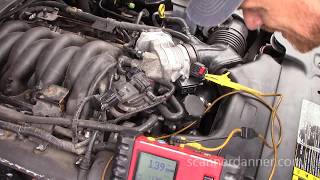
- Sensors and Wiring: A failed crankshaft position sensor will prevent the car from starting. A thorough diagnostic scan should be your first step to rule out individual sensor failures. 🎬 Watch: How to troubleshoot no-start, no-spark, and no-fuel issues
Replacement Location and Procedure
The ECM is relatively easy to access on the 1998 Escort.
- Location: The ECM is located inside the vehicle, in the center console area, directly in front of the gear shifter and below the heater controls.
- Disconnect the Battery: Before working on any electronic components, always disconnect the negative battery terminal.
- Access the Module: You will need to remove the center console trim pieces to gain access to the ECM.
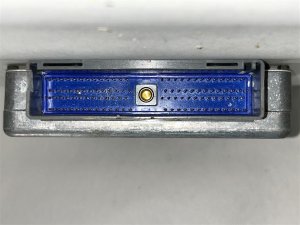
- Disconnect and Remove: The ECM has a large 104-pin electrical connector held in place by a bolt (typically 10mm). Loosen this bolt to unplug the harness. Then, unbolt the module from its mounting bracket and remove it.
- Installation: Installation is the reverse of removal. Securely mount the new module, plug in the connector and tighten the bolt, and reassemble the console. Reconnect the battery.
Cost to Replace a 1998 Ford Escort ECM
Prices can vary based on your location and the supplier. Programming costs are additional if your vehicle has PATS.
| Part Type | Estimated Cost |
|---|---|
| New OEM | Not generally available |
| Remanufactured | $150 - $280 |
| Used OEM | $25 - $75 |
| Shop Labor | $100 - $160 |
| PATS Key Programming (if needed) | $80 - $200 |
Frequently Asked Questions (FAQ)
Do I absolutely need a locksmith or dealer to program a new ECM?
If your 1998 Escort is equipped with the PATS anti-theft system, then yes, you will need a locksmith or dealer with the proper Ford diagnostic tools to program the replacement ECM to accept your keys. If your car does not have PATS, no programming is needed.
What's the difference between an ECM, PCM, and ECU?
For this vehicle, the terms ECM (Engine Control Module) and PCM (Powertrain Control Module) are used interchangeably. ECU (Engine Control Unit) is a more generic term. They all refer to the same part: the main engine computer.
Can a bad ECM damage other parts?
While it's uncommon for a failing ECM to cause direct physical damage to other parts, it can send improper signals that cause the engine and transmission to operate poorly, potentially accelerating wear over time. The more immediate risk is being stranded by a no-start or stalling condition.
Will a used ECM from a car with a different engine or transmission work?
No. The ECM is programmed specifically for the vehicle's engine (SOHC or DOHC), transmission (automatic or manual), and emissions equipment (Federal or California). You must get a replacement from a vehicle with an identical powertrain configuration, which is why matching the part number is essential.
Helpful Videos
Technical Specifications
OEM Part Numbers: F8CF-12A650-DE F8CF-12A650-DF F8CF-12A650-DH F8CF12A650DE F8CF12A650DF F8CF12A650DG F8CFDE F8CFDF F8CFDG F8CZ12A650DG F8CF-12A650-NC F8PF-12A650-BXA F8CF-12A650-CE F8CF-12A650-DJ F8CF-12A650-FF F8CF-12A650-LC F8CF-12A650-MC F8CF-12A650-PC F8CF-12A650-RD
104-pin electrical connector
We Have This Part in Stock

The information in this article is provided for general reference and educational purposes only. Vehicle specifications, procedures, and part compatibility can vary by production date, trim level, and region. Always consult your vehicle's factory service manual and verify part numbers before purchasing or performing repairs. Safety-critical components such as airbags, seat belts, and braking systems should be installed by a qualified professional.
- Ford Escort:
- 🎬 Helpful Videos
- 🛍️ Shop This Part
- Symptoms of a Failing 1998 Ford Escort ECM
- The #1 Issue: Programming and Ford's PATS Anti-Theft System
- Does My Car Have PATS?
- Replacement and Programming Requirements
- Buying a Used 1998 Escort Engine Control Module
- Before You Replace the ECM: Check These First!
- Replacement Location and Procedure
- Cost to Replace a 1998 Ford Escort ECM
- Frequently Asked Questions (FAQ)
- 🎟️ Get 5% Off