

1996 Ford Explorer ECM: Matching ID F67F-DB and Solving PATS Issues
This guide covers the critical details for diagnosing, replacing, and ensuring compatibility for the 1996 Ford Explorer 4.0L Engine Control Module.
- You MUST match the ID number F67F-DB from your original ECM's sticker to ensure compatibility.
- This ECM only fits 1996 Explorers with the 4.0L V6, automatic transmission, and Federal emissions.
- If your ignition key has a thick plastic head (PATS), the vehicle will NOT start after replacement until a dealer or locksmith reprograms your keys to the new module.
- The most common failure is from leaking internal capacitors that corrode the circuit board, causing intermittent and unpredictable symptoms.
Symptoms of a Failing 1996 Explorer ECM
When the ECM begins to fail, it can cause a wide range of confusing and intermittent problems. Because the ECM controls so many different systems, symptoms can often be mistaken for other component failures. Look for these common indicators:
🎬 Watch: A quick guide to common bad ECM symptoms- Check Engine Light: An illuminated Check Engine Light is a common symptom. You may find generic sensor codes, or specific internal module fault codes like P0600-P0605. Sometimes, the light stays on even after replacing other parts.
- Engine Performance Issues: This can include random stalling, engine misfires, a rough idle, hesitation, or a sudden loss of power. The engine might run unevenly or feel like it's choking.
- No-Start or Intermittent Start: The engine may crank but refuse to start. This problem can be intermittent, working one day and failing the next, which often points to an electronic issue.
- Transmission Shifting Problems: The ECM communicates with the transmission. A faulty module can cause harsh or delayed shifting.
- Poor Fuel Economy: If the ECM is not managing the air-fuel mixture correctly, you may notice a sudden and significant drop in gas mileage.
Known Issues, TSBs, and Recalls
Common Failure Mode: Leaking Capacitors
The most common cause of failure for these mid-90s Ford ECMs is leaking electrolytic capacitors on the circuit board. Over time, these components degrade and leak an acidic fluid that corrodes the circuit board and damages sensitive electronic traces. This damage leads to the intermittent and unpredictable symptoms listed above. Sometimes this can be repaired by a specialist, but often the board is too damaged.
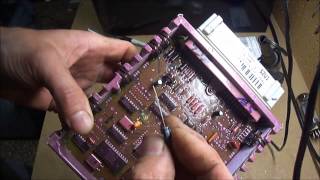
🎬 See how to inspect and repair Ford ECM circuit boardsRecalls and Technical Service Bulletins (TSBs)
While there are no specific recalls for the ECM itself, several recalls for the 1996 Explorer are important to be aware of. One significant recall (NHTSA Campaign ID 09V399000) involved a faulty speed control deactivation switch that could leak and cause a fire, even with the vehicle turned off. TSBs for this era often address PATS anti-theft system diagnostics, which can be related to ECM replacement.
Compatibility Warning: This ECM, identified by the number F67F-12A650-DB, is specifically for 1996 Ford Explorer models with a 4.0L V6 engine, an automatic transmission, and Federal emissions systems. It is not compatible with models sold in California, Massachusetts, or New York, or those with the 5.0L V8 engine, which use different modules.
Programming, Flashing, and Anti-Theft (PATS)
This is the most complex part of replacing the ECM in a 1996 Explorer. This model year was a transition period for Ford's Passive Anti-Theft System (PATS). PATS uses a transponder chip embedded in the ignition key that communicates with the ECM to allow the engine to start.
- Does your vehicle have PATS? If your ignition key has a thick plastic head, it likely contains a transponder chip, and your vehicle is equipped with PATS. If it's a simple, thin all-metal key, you may not have the system.
- If you have PATS: A replacement ECM, whether new, used, or remanufactured, will NOT start the vehicle until your existing keys are reprogrammed to it. This process is called a "key relearn." It requires special diagnostic tools and cannot be done by simply turning the key. You will need to have the vehicle towed to a Ford dealership or a well-equipped automotive locksmith who can perform the key reprogramming.
- If you do NOT have PATS: The replacement ECM should be "plug and play," meaning it will function immediately after installation without any special programming.
Many remanufacturers will pre-program the module to your vehicle's VIN, but this only loads the correct software. It does not bypass the need for a key relearn on PATS-equipped vehicles.
Buying a Used 1996 Explorer ECM: A Buyer's Guide
A used OEM module is often a reliable and cost-effective choice. Follow these steps to ensure you get a good part.
The #1 Rule: Match the ID Number
The most critical step is to match the ID number from the sticker on your original ECM. For this specific part, you must find a replacement with F67F-DB printed on the label. The full part number is F67F-12A650-DB. While other numbers may look similar (e.g., ending in DC, KA, etc.), they are calibrated for different engines, emissions, or options and will not work correctly in your vehicle. Do not buy a part based on year, make, and model alone.
Physical Inspection Checklist
When you have the used part in hand, inspect it carefully:
- Check the Connectors: The pins should be straight, clean, and free of any green or white corrosion.
- Inspect the Case: Look for any signs that the case has been pried open, which could indicate a failed repair attempt.
- Smell the Module: A strong, burnt electronic smell is a major red flag.
- Look for Water Damage: Any signs of rust or water lines on the case or connectors mean the part is likely bad.
Replacement Procedure Overview
Physically replacing the ECM is straightforward. The module is located under the hood, on the passenger side of the firewall, below the wiper assembly. It has a large electrical connector attached to it.
- Disconnect the Battery: Always disconnect the negative battery terminal before working on any electronic components.
- Access the ECM: The module is on the engine-bay side of the firewall.
- Disconnect the Harness: Loosen the bolt in the center of the large electrical connector to detach it from the ECM.
- Remove the ECM: Unbolt the module from the firewall and remove it.
- Installation: Installation is the reverse of removal. Ensure the connector is seated properly and the center bolt is tightened securely. Reconnect the battery.
- Key Relearn (If Necessary): If your vehicle has PATS, it will not start at this point. It must be towed to a dealer or locksmith for key programming.
Pro Tip: Before condemning your ECM, have a mechanic perform a thorough diagnostic. Issues with the crankshaft position sensor, fuel pump, or wiring can mimic ECM failure. A proper diagnosis starts with checking for spark, fuel pressure, and injector pulse during the no-start condition.
🎬 Watch: 11 symptoms of a bad ECM to help your diagnosisCost to Replace a 1996 Explorer ECM
Prices can vary based on availability and condition. Here is a general cost breakdown:
| Part Type | Estimated Cost |
|---|---|
| New OEM | No longer available |
| Remanufactured | $200 - $400 |
| Used OEM | $50 - $150 |
| Shop Labor (Physical Swap) | $100 - $150 |
| Shop Labor (Key Reprogramming) | $100 - $200 |
Frequently Asked Questions (FAQ)
Do I absolutely need to program a replacement ECM for a 1996 Explorer?
It depends. If your truck has the PATS anti-theft system (usually indicated by a chip in the key), then yes, a key relearn procedure is mandatory for the engine to start. If your truck does not have PATS, a replacement module with the exact same ID number should be plug-and-play.
Where is the ECM located on a 1996 Ford Explorer?
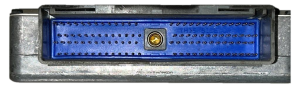
The ECM is located in the engine bay, mounted to the passenger-side firewall, just below the windshield wiper motor area. It is identifiable by a large electrical connector with a single bolt in the center.
What causes the 1996 Explorer ECM to fail?
The most common cause of failure is age-related decay of the internal electrolytic capacitors. They leak fluid that corrodes the circuit board, causing a wide variety of intermittent electrical problems. Other causes can include voltage spikes, water intrusion, or internal shorts.
Can I use an ECM from a Ford Ranger or a 5.0L Explorer?
No. Even if the module looks identical and fits, it is programmed with different software for that specific engine, transmission, and emissions package. Using the wrong module will result in poor performance, a check engine light, or a no-start condition. You must match the ID number F67F-DB.
Helpful Videos
Technical Specifications
OEM Part Numbers: F67F-12A650-DB F67F12A650DB F67Z-12A650-DB
Calibration ID: F67F-DB. Fits 1996 Ford Explorer with 4.0L OHV V6, Automatic Transmission (4R55E), and Federal Emissions.
We Have This Part in Stock

The information in this article is provided for general reference and educational purposes only. Vehicle specifications, procedures, and part compatibility can vary by production date, trim level, and region. Always consult your vehicle's factory service manual and verify part numbers before purchasing or performing repairs. Safety-critical components such as airbags, seat belts, and braking systems should be installed by a qualified professional.
- Ford Explorer:
- 🎬 Helpful Videos
- 🛍️ Shop This Part
- Symptoms of a Failing 1996 Explorer ECM
- Known Issues, TSBs, and Recalls
- Common Failure Mode: Leaking Capacitors
- Recalls and Technical Service Bulletins (TSBs)
- Programming, Flashing, and Anti-Theft (PATS)
- Buying a Used 1996 Explorer ECM: A Buyer's Guide
- The #1 Rule: Match the ID Number
- Physical Inspection Checklist
- Replacement Procedure Overview
- Cost to Replace a 1996 Explorer ECM
- Frequently Asked Questions (FAQ)
- 🎟️ Get 5% Off