

1997 Ford Explorer ECM: Solving No-Start Issues and Why It Doesn't Need Dealer Programming
This guide covers the common failures, symptoms, and replacement secrets for the 1997 Ford Explorer Engine Control Module, including the crucial fact that it avoids complex anti-theft programming.
- The 1997 Ford Explorer ECM does NOT require anti-theft programming (PATS), making replacement a simple plug-and-play job if the part number matches.
- The most common failure is from leaking internal capacitors, which corrode the circuit board and cause a wide range of electrical and performance problems.
- You must match the Ford part number on your original ECM exactly. The number is found on a sticker on the module's connector.
- Symptoms of failure include a no-start condition, engine stalling, poor performance, and erratic transmission shifting.
Symptoms of a Failing 1997 Ford Explorer ECM
A bad ECM can cause a frustrating array of symptoms that can often be mistaken for other problems. Because the ECM from this era is known for failing due to leaking internal capacitors, the symptoms can start as intermittent electrical gremlins and worsen over time.
- Crank, No Start: The engine turns over but will not fire up. This can happen if the ECM isn't sending signals to the fuel injectors or ignition system.
- Engine Stalling or Misfiring: The engine may stall unexpectedly, run rough, or misfire. This can be due to the ECM failing to properly control fuel and spark.
- Poor Engine Performance: You might notice a sudden drop in power, hesitation during acceleration, or a significant decrease in fuel economy.
- Erratic Transmission Shifting: The ECM also plays a role in controlling the automatic transmission. A failing module can cause harsh, delayed, or incorrect gear shifts.
- Fuel Pump Issues: A classic sign of a bad Ford ECM from this period is the fuel pump staying on continuously, even with the key off, which can drain the battery.
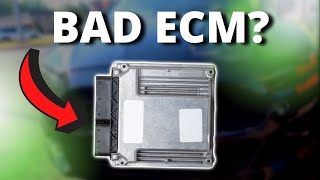
- Check Engine Light: An illuminated Check Engine Light is a common symptom. However, a failing ECM can sometimes store no codes at all, making diagnosis tricky. 🎬 Watch: A breakdown of common bad ECM symptoms.
Common OBD-II Trouble Codes
While a variety of codes can point to a bad ECM, codes in the P0600-P060F range are specifically related to internal module processing errors. If you see any of these, the ECM itself is a likely suspect.
- P0600: Serial Communication Link Malfunction
- P0603: Internal Control Module Keep Alive Memory (KAM) Error
- P0605: Internal Control Module Read Only Memory (ROM) Error
Pro Tip: Before condemning the ECM, always check the battery, charging system, and all related fuses. A low voltage supply can cause symptoms that mimic a bad ECM.
Known Issues, TSBs, and Recalls
While there are no major recalls or Technical Service Bulletins (TSBs) issued by Ford or the NHTSA specifically for the Engine Control Module on the 1997 Explorer, the most well-documented issue is internal component failure.
The primary cause of failure for these EEC-IV/EEC-V computers is leaking electrolytic capacitors. Over time, the seals on these small, can-shaped components degrade, and they leak an acidic fluid onto the circuit board. This acid corrodes the delicate copper traces and can short out other components, leading to the erratic symptoms described above. This is not a formal recall issue but is a widely known failure pattern for Ford vehicles of this vintage.
Buying a Used 1997 Ford Explorer ECM
Buying a used OEM ECM is a smart, cost-effective option, especially since new units are often unavailable. The most critical factor for a 1997 Explorer is that it does NOT require anti-theft programming, making a swap much simpler than on later models.
The #1 Rule: Match the Part Number EXACTLY
Your Explorer's original ECM has a sticker on its connector with the Ford part number. It will typically look like F77F-12A650-AJC. You must find a replacement with the exact same part number and calibration code. While other part numbers might look similar, they are calibrated for different engines (4.0L vs. 5.0L), transmissions, and emissions equipment. Using the wrong one will result in poor performance or a no-start condition.
Physical Inspection is Key
When buying a used module, especially from a private seller or salvage yard, ask if you can inspect it.
- Check for Corrosion: Look at the case and the large electrical connector pins. Any signs of heavy rust or green/white corrosion are red flags indicating water intrusion.
- Look for Signs of Tampering: Check if the case has been pried open. While this could mean a failed repair attempt, it could also mean someone has already replaced the capacitors.
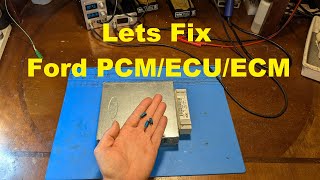
- Inspect the Circuit Board (If Possible): If the case is open, look at the area around the capacitors (usually 3 of them grouped together). Look for any dark, sticky residue on the board or any green/black corrosion on the component legs. This is the tell-tale sign of capacitor leakage. A clean board is a great sign. 🎬 See how to repair leaking capacitors on a Ford PCM.
Warning: Do not buy a module that shows obvious signs of water damage or a burned smell. These are almost always unrepairable.
Programming and Anti-Theft: The Good News
Does this module need to be programmed? No, not for anti-theft.
The 1997 Ford Explorer was built before Ford implemented its Passive Anti-Theft System (PATS) on this model line in 1998. This means there is no chip in your key that needs to be matched to the ECM. As long as you install a used ECM with the correct part number, the vehicle will start and run without any need for a dealer or locksmith visit. This makes it a true plug-and-play replacement.
Some remanufacturers will ask for your vehicle's VIN to program the module with the latest software updates, but this is not related to the anti-theft system and is not strictly necessary for the vehicle to operate.
Cost of Replacing a 1997 Ford Explorer ECM
Replacing the ECM is very affordable, especially if you do it yourself. The primary cost is the part itself.
| Part Type | Estimated Cost |
|---|---|
| New OEM | $450 - $600+ (Largely unavailable) |
| New Aftermarket | Not commonly available |
| Used OEM (Salvage) | $50 - $150 |
| Remanufactured OEM | $150 - $300 |
| Shop Labor Cost | $75 - $150 |
Step-by-Step Replacement Guide
Replacing the ECM on a 1997 Explorer is a simple job that takes less than 30 minutes. The ECM is located on the passenger side of the engine bay, mounted to the firewall.
- Disconnect the Battery: Always disconnect the negative battery terminal before working on any vehicle electronics.
- Locate the ECM: Find the silver metal box on the passenger-side firewall. It will have a large, 104-pin wiring harness connected to it.
- Disconnect the Harness: Use a 10mm socket or wrench to loosen the bolt in the center of the wiring harness connector. As you loosen the bolt, it will act as a lever and push the connector away from the ECM. Do not try to pry it off.
- Unbolt the ECM: Remove the nuts (often 11mm) or bolts holding the ECM to the firewall bracket.
- Remove the ECM: Slide the module out of its bracket. 🎬 Watch: Step-by-step guide to removing your Explorer's computer.
- Install the New ECM: Installation is the reverse of removal. Slide the new module into place, secure it, and carefully reconnect the wiring harness. Tighten the 10mm bolt until the connector is fully seated. Reconnect the battery.
Frequently Asked Questions (FAQ)
Do I need a locksmith to program my keys after replacing the ECM?
No. The 1997 Ford Explorer does not use a PATS key system, so no key programming or anti-theft relearn is necessary. It is a plug-and-play part as long as the part number matches.
Can I drive my Explorer with a bad ECM?
It is not recommended. If the ECM is failing, it can cause the engine to stall in traffic, creating a serious safety hazard. If the vehicle won't start, it is completely immobilized.
What causes the ECM to fail?
The most common cause of failure for these specific Ford ECMs is leaking internal capacitors. Over time, they leak acid that corrodes the circuit board. Other causes can include voltage spikes (from improper jump-starting) or water intrusion.
Is it better to repair my old ECM or buy a used one?
If you are skilled with soldering, you can open the ECM and replace the three electrolytic capacitors yourself for a very low cost. For most people, buying a quality used or remanufactured unit is a faster and more reliable solution. Remanufactured units often have the capacitors replaced with higher-quality modern components.
Helpful Videos


Technical Specifications
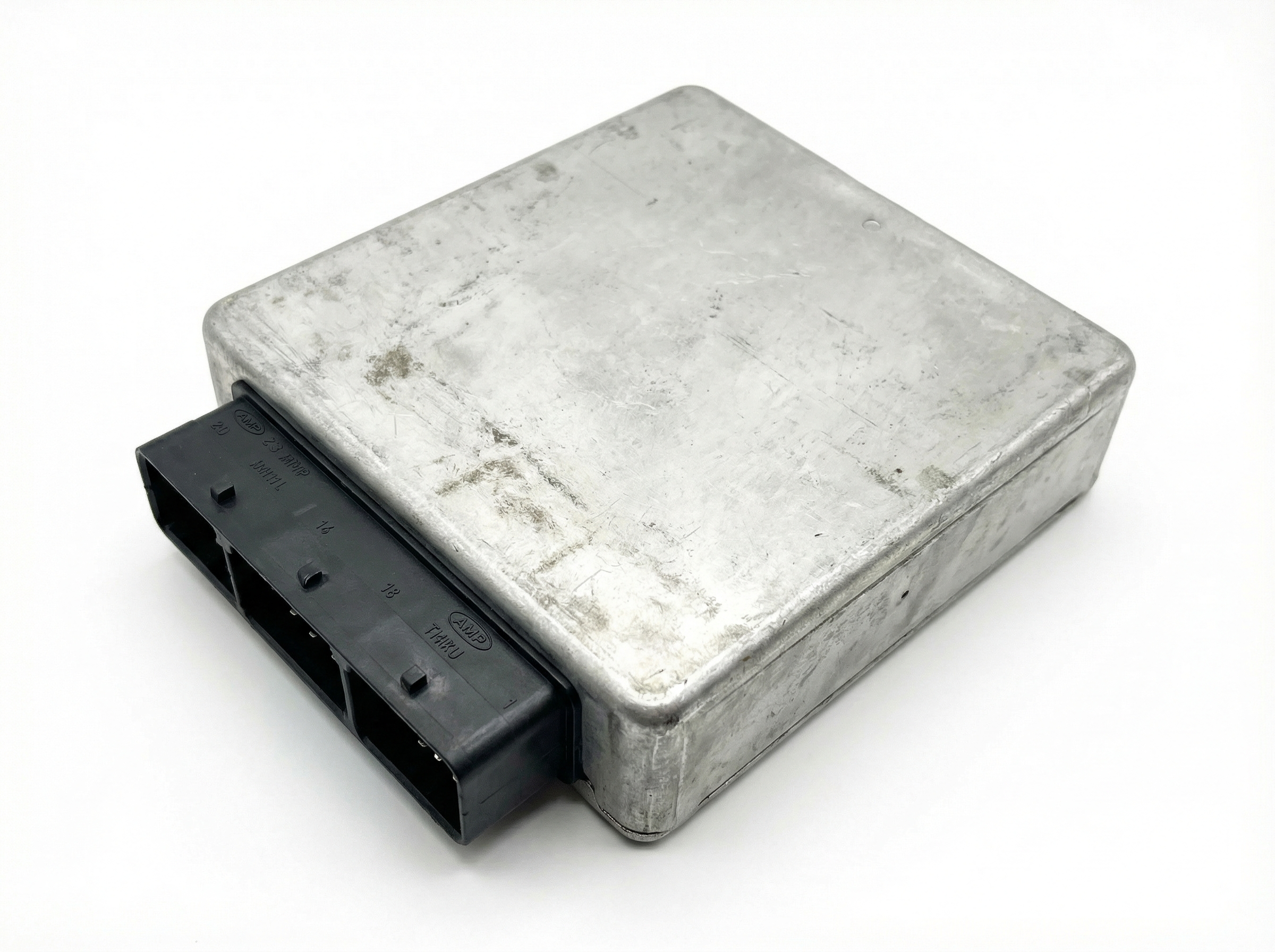
OEM Part Numbers: F77F-AJC F77F12A650AJC F77FAJC F77Z12A650AJC F67F-12A650-TD F67F-12A650-TE F77F-12A650-BLA F77F-12A650-BLB F77F-12A650-BLC F77F-12A650-BLD
The ECM is a Ford EEC-IV or early EEC-V type computer with a 104-pin main connector.
We Have This Part in Stock

The information in this article is provided for general reference and educational purposes only. Vehicle specifications, procedures, and part compatibility can vary by production date, trim level, and region. Always consult your vehicle's factory service manual and verify part numbers before purchasing or performing repairs. Safety-critical components such as airbags, seat belts, and braking systems should be installed by a qualified professional.
- Ford Explorer:
- 🎬 Helpful Videos
- 🛍️ Shop This Part
- Symptoms of a Failing 1997 Ford Explorer ECM
- Common OBD-II Trouble Codes
- Known Issues, TSBs, and Recalls
- Buying a Used 1997 Ford Explorer ECM
- The #1 Rule: Match the Part Number EXACTLY
- Physical Inspection is Key
- Programming and Anti-Theft: The Good News
- Cost of Replacing a 1997 Ford Explorer ECM
- Step-by-Step Replacement Guide
- Frequently Asked Questions (FAQ)
- 🎟️ Get 5% Off