

2003 Explorer & Mountaineer ECM: Solving Stalls and No-Starts with the Right Programming
This guide covers the critical programming steps, failure symptoms, and replacement costs for the engine computer in your 2003 Ford Explorer or Mercury Mountaineer.
- A replacement ECM for a 2003 Explorer or Mountaineer MUST be programmed to the vehicle's anti-theft system (PATS) or the engine will not start.
- You must have at least two unique (not cloned) transponder keys to perform the PATS programming procedure.
- This is not a DIY-friendly job for most people, as it requires a professional scan tool and a 10-minute security access procedure.
- Always match your ECM part number and engine size (4.0L or 4.6L) exactly to ensure compatibility.
Symptoms of a Failing ECM
When the ECM in a 2003 Ford Explorer or Mercury Mountaineer begins to fail, it can cause a wide range of confusing and often severe issues. Because the ECM is the central processing unit for the engine, its failure can mimic many other problems, but here are the most common signs that point to the module itself.
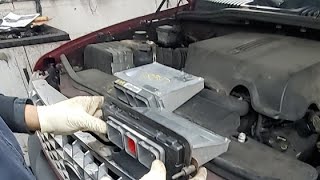
- Engine Will Not Start: This is a critical symptom. The engine may crank over but will not fire up. 🎬 Watch: Diagnosing a no-start condition caused by a faulty PCM. This happens because the ECM is not sending the correct signals for spark and fuel injection, or because the anti-theft system is not recognizing the key.
- Check Engine Light: A constant Check Engine Light is a common sign. You may find specific ECM-related codes like P0600-P0605, or a host of seemingly unrelated sensor codes that persist even after replacing the sensors.
- Engine Stalling or Misfiring: The engine may stall intermittently, either while driving or at idle. You might also experience rough idling, stuttering, or engine misfires as the ECM fails to properly manage the engine's operation.
- Poor Performance and Fuel Economy: A noticeable and sudden drop in gas mileage, along with sluggish acceleration or a general loss of power, can indicate the ECM is not calculating the air-fuel mixture correctly.
- Erratic Automatic Transmission Shifting: The ECM shares data with the transmission control module. A faulty ECM can send incorrect data, leading to hard, delayed, or erratic gear shifts.
Known Issues, Recalls, and TSBs for 2003 Models
As of early 2026, there are no active safety recalls issued by the National Highway Traffic Safety Administration (NHTSA) for the Engine Control Module on the 2003 Ford Explorer or Mercury Mountaineer. Existing recalls for these vehicles pertain to other issues like liftgate glass hinges.
However, several Technical Service Bulletins (TSBs) have been issued for conditions that could be misdiagnosed as an ECM failure. For example, TSBs exist for check engine lights with lean/rich codes (P0171, P0174) and misfire codes (P0300-P0308). This highlights the importance of proper diagnosis before condemning the ECM, as the root cause could be a less expensive component like a vacuum leak or a faulty sensor that the TSB addresses.
Compatibility Warning: This ECM fits 4-door models of the 2003 Ford Explorer ONLY. It does not fit the 2-door Explorer Sport or the 4-door Explorer Sport Trac, which use a different module. Always match your part number exactly.
Replacement and Location
The ECM in the 2003 Explorer and Mountaineer is located on the passenger side of the vehicle, mounted to the firewall. The main electrical connectors are in the engine bay, while the body of the module itself is inside the passenger cabin, typically behind the glove box or kick panel.
Replacement involves:
- Disconnecting the battery.
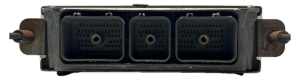
- Unbolting the three large electrical connectors from the ECM in the engine bay.
- Accessing the module from inside the passenger cabin by removing the glove box and/or trim panels.
- Unbolting the module from its mounting bracket and sliding it out.
- Installation is the reverse of removal. 🎬 See this step-by-step guide for replacing and programming the ECU.
While the physical swap is straightforward for a moderately skilled DIYer, the vehicle will NOT start until the programming steps below are completed.
CRITICAL: Programming and Anti-Theft (PATS)
This is the most important part of replacing the ECM in these vehicles. You cannot simply swap the module and drive away. The ECM is integrated with Ford's Passive Anti-Theft System (PATS), and it must be programmed to your specific vehicle and keys.
- Programming is Required: A replacement ECM (whether new, used, or remanufactured) must be electronically introduced to your vehicle. If this step is skipped, the PATS system will prevent the engine from starting as a theft deterrent.
- Two Unique Keys Needed: The PATS programming procedure requires a minimum of two separate, unique keys. Cloned keys, where one key is an exact electronic copy of another, will be seen by the system as a single key and the procedure will fail.
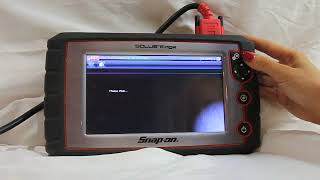
- Who Can Program It?: This procedure requires a professional-grade diagnostic scan tool with PATS functionality, such as Ford's IDS, or high-end tools from brands like Autel or Snap-on. This means you will need to have the vehicle towed to a Ford dealership, a well-equipped independent repair shop, or have a mobile automotive locksmith come to you.
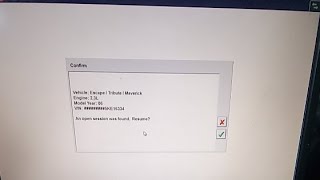
- The Process: The technician will use the scan tool to initiate a "Parameter Reset" or similar function. This involves a mandatory 10-minute security access wait before the tool can erase the old key data from the new ECM and program your two keys to it.
Buying a Used 2003 Explorer or Mountaineer ECM
Given the cost of a new module, a quality used or remanufactured OEM ECM is an excellent choice. However, there are critical factors to consider to ensure you get the right part and understand the full scope of the job.
- Match the Part Number and Engine: It is absolutely essential to match the OEM part number from your original module. Also, confirm the module is for your specific engine (4.0L V6 or 4.6L V8), as they are not interchangeable.
- Used vs. Remanufactured: A 'used' ECM is pulled directly from a donor vehicle and sold as-is, often with no warranty. A 'remanufactured' ECM has been disassembled, cleaned, tested, and had common failure components replaced to meet or exceed original specifications, and usually comes with a warranty.
- Pre-Programmed Units: Many online sellers offer remanufactured ECMs that are "pre-programmed" with your vehicle's VIN. This can simplify the process, but for these PATS-equipped vehicles, a final key relearn procedure with two keys and a scan tool is almost always still required after installation.
- Physical Inspection: When your used part arrives, inspect it for any signs of physical damage, corrosion on the pins, or evidence that the case has been pried open.
Cost Comparison
| Part Type | Estimated Cost |
|---|---|
| New OEM | $800 - $1,200+ (if available) |
| Remanufactured | $250 - $450 |
| Used OEM (Junkyard/eBay) | $75 - $150 |
| Shop Labor (Physical Swap) | $100 - $200 |
| Shop Labor (Programming) | $150 - $300 |
Frequently Asked Questions (FAQ)
Will my Explorer or Mountaineer start right after I install a used ECM?
No. Due to the PATS anti-theft system, the engine will crank but will not start until the replacement ECM is programmed to your vehicle's keys using a special scan tool.
Can I program the new ECM myself?
It is highly unlikely unless you own a professional-grade diagnostic scan tool with Ford PATS programming capabilities. This is not a function found on basic OBD-II code readers. A trip to a dealer or a properly equipped shop is almost always necessary.
What's the difference between an ECM, PCM, and ECU?
For most practical purposes, these terms are used interchangeably to refer to the main engine computer. ECM stands for Engine Control Module, ECU for Engine Control Unit, and PCM for Powertrain Control Module (which implies it controls both the engine and transmission). On your 2003 Explorer/Mountaineer, it's technically a PCM, but is commonly called an ECM.
Why do I need two keys for programming?
Ford's PATS system requires two unique, valid keys to be programmed in order to create a secure pairing with the vehicle. 🎬 Watch: A detailed breakdown of the Ford PATS key relearn procedure. This prevents someone with a single copied key from being able to easily program additional keys and steal the vehicle.
Helpful Videos

Technical Specifications
OEM Part Numbers: 3L2A-12A650-GC 3L2A12A650GC 3U7A-12A650-DAA 3U7A-12A650-DAB 3U7Z-12A650-DAB 3L2A-12A650-AAB 3L2A-12A650-AAC 3L2A-12A650-AXA 3L2A-12A650-AXB 3L2A-12A650-AXC 3L2A-12A650-MA 3L2A-12A650-MB 3L2A-12A650-MC 3U7A-12A650-BKA 3U7A-12A650-BKB 3U7A-12A650-BRA 3U7A-12A650-BRB 3L2A-12A650-XA
Location: Passenger side firewall. Communication Protocol: Standard (J1850 PWM). Anti-Theft: Ford Passive Anti-Theft System (PATS) integration.
We Have This Part in Stock

The information in this article is provided for general reference and educational purposes only. Vehicle specifications, procedures, and part compatibility can vary by production date, trim level, and region. Always consult your vehicle's factory service manual and verify part numbers before purchasing or performing repairs. Safety-critical components such as airbags, seat belts, and braking systems should be installed by a qualified professional.
- Ford Explorer:
- Mercury Mountaineer: