

1999 Ford F-150 4.2L V6 ECM: A Buyer's Guide to Part Numbers and PATS Programming
This guide covers diagnosing, replacing, and programming the engine computer for your 1999 F-150, focusing on the critical part number match and anti-theft system requirements for the 4.2L V6.
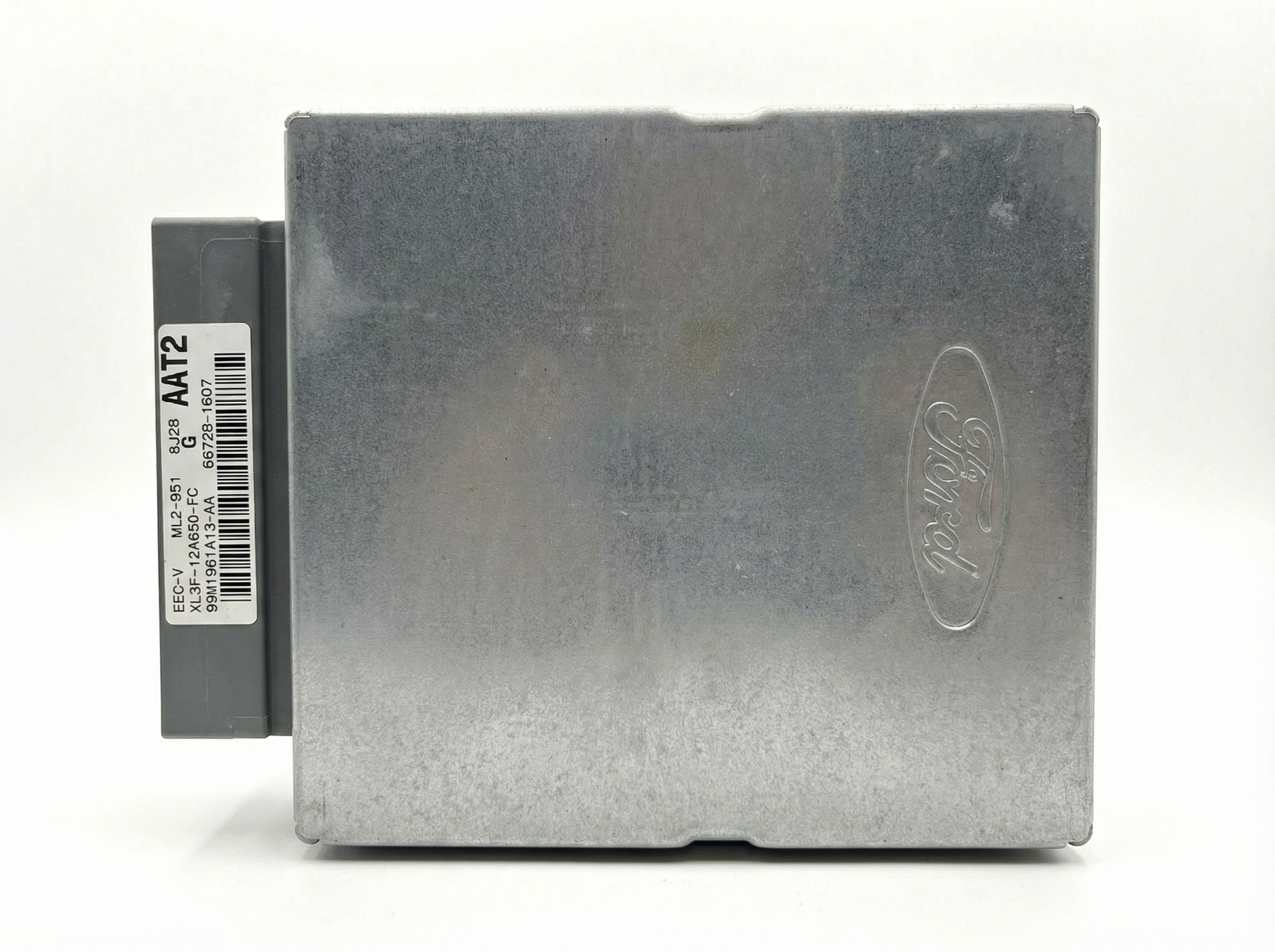
- The ID number on the module (e.g., XL3F-FC, XL3F-FD, XL3F-FE) MUST match your original part exactly.
- A replacement PCM requires mandatory programming to the truck's PATS anti-theft system; the engine will not start without it.
- This specific module is for a 1999 F-150 with a 4.2L V6, automatic transmission, rear-wheel drive (4x2), and Federal emissions.
- Failure is often caused by water leaking from the windshield cowl onto the PCM, so check for corrosion.
Symptoms of a Failing 1999 F-150 PCM
A failing PCM can cause a variety of confusing symptoms that often mimic other component failures. Because the PCM controls so many systems, its failure can manifest in numerous ways.
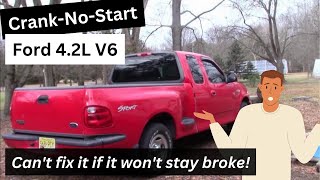
- No-Start Condition: The engine may crank but will not start. This can be due to the PCM not sending signals to the fuel injectors 🎬 Watch: Troubleshooting an intermittent no-start on a 4.2L V6 or ignition coils. It can also be caused by the anti-theft system not recognizing the key after a PCM failure.
- Engine Stalling, Stuttering, or Misfiring: The engine may stall unexpectedly, run rough, or misfire on one or more cylinders. This can happen if the PCM's internal driver for a specific fuel injector or coil fails. A related OBD-II code like P0304 (Cylinder 4 Misfire) might be present.
- Check Engine Light: An illuminated Check Engine Light is a common symptom. Codes related to internal module failure (such as P0600-P0606) are a strong indicator of a bad PCM. You may also see a flood of seemingly unrelated sensor codes as the PCM loses its ability to communicate correctly.
- Erratic Transmission Shifting: For automatic transmissions, you might experience harsh shifting, delayed engagement, or being stuck in one gear. The PCM controls transmission solenoids, and a fault can directly impact shifting performance.
- Poor Fuel Economy: A sudden and significant drop in gas mileage can be a sign that the PCM is no longer managing the air-fuel mixture efficiently.
- Failure to Communicate with Scan Tools: If a diagnostic scan tool cannot connect to the PCM, it's a strong sign that the module itself has failed.
Known Issues, Recalls, and Technical Service Bulletins (TSBs)
Common Cause of Failure: Water Intrusion
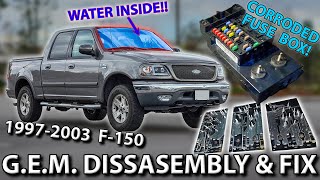
A very common reason for PCM failure on this generation of F-150 is water damage. The factory cowl and windshield seals can degrade over time, allowing rainwater to leak directly onto the PCM and its connectors, which are located on the passenger-side firewall. This can cause corrosion on the pins and internal short circuits, leading to catastrophic failure. When inspecting a potential failure, always check for signs of moisture or bluish-green corrosion around the PCM connectors.
🎬 See how water leaks damage the fuse box and modulesRecalls & TSBs
While there are no major recalls specifically for the PCM on the 1999 F-150, its electronics are complex. Ford issued Technical Service Bulletin (TSB) 00-14-2, which addresses an inoperative speedometer or 4x4 light after a PCM has been replaced. This highlights the intricate connection between the PCM and other modules in the truck and reinforces the need for proper procedures during replacement.
The #1 Rule: Match Your Part Number
This is the most critical step. The part number on your replacement PCM MUST match the number on your original unit. This guide specifically covers modules with identification numbers XL3F-FC, XL3F-FD, or XL3F-FE. These correspond to a 1999 F-150 with a 4.2L V6 engine, an automatic transmission, rear-wheel drive (4x2), and Federal emissions. Using a module with a different part number (e.g., from a 5.4L V8 or a 4x4 model) will not work, as its internal hardware and software are calibrated for a different powertrain and feature set.
Programming, Flashing, and Anti-Theft (PATS)
You cannot simply swap a used PCM into your truck and expect it to work. The 1999 F-150 is equipped with Ford's Passive Anti-Theft System (PATS), which prevents the engine from starting unless it recognizes a specially coded ignition key. The PCM is a central part of this system.
- Programming is Mandatory: When you install a replacement PCM, it must be electronically introduced to your truck's anti-theft system and keys. The vehicle will not start until this is done.
- Parameter Reset: The correct procedure is called a "Parameter Reset." This tells the other modules in the vehicle to accept the new PCM. This procedure requires a professional-grade bidirectional scan tool, such as those used by Ford dealerships or well-equipped automotive locksmiths.
- Two Keys Required: To complete the programming, you must have at least two working PATS keys. 🎬 Watch: Understanding the Ford PATS key relearn procedure If you only have one, you will need to have a second key cut and programmed at the same time.
- DIY Is Not Feasible: Due to the need for specialized scan tools and software subscriptions, programming a replacement PCM is not a do-it-yourself job for the average home mechanic. You must factor in the cost of professional programming when planning your repair.
Buying a Used Powertrain Control Module
A used OEM module is often a reliable and cost-effective solution. Since new OEM units are generally no longer available and the quality of new aftermarket modules can be inconsistent, a tested, recycled part is a great choice.
- Verify the Part Number: Before purchasing, double-check that the ID number (e.g., XL3F-FC, XL3F-FD, XL3F-FE) and the larger engineering number (XL3F-12A650-FC, etc.) match your original module exactly.
- Inspect for Damage: Physically inspect the used module. Look for any signs of corrosion on the connector pins, dents or damage to the case, and check if the factory seals are intact. If it looks like it has been opened or has significant corrosion, do not buy it.
- Check the Warranty and Return Policy: Purchase from a reputable seller that offers a warranty and a clear return policy. This protects you in case the module is defective.
- Why Used OEM?: A used original Ford part was built to the manufacturer's exact specifications for durability and software compatibility. It is often more reliable than a new, non-OEM part that may have software bugs or hardware inconsistencies.
Replacement Cost Breakdown
The total cost involves the part itself and the mandatory programming. Physical installation is straightforward, but programming requires special equipment.
| Item | Estimated Cost | Notes |
|---|---|---|
| New OEM | N/A | Generally discontinued and no longer available from Ford dealers. |
| New Aftermarket | $150 - $300+ | Uncommon; most available units are remanufactured OEM parts. |
| Remanufactured OEM | $110 - $250 | A common option from specialty retailers. May come pre-programmed to your VIN. |
| Used OEM | $75 - $150 | Widely available from online marketplaces and salvage yards. |
| Shop Labor (Installation) | $75 - $150 | Estimated 0.5-1.0 hour. This is a simple unbolt and plug-in process. |
| Shop Labor (Programming) | $100 - $200 | This is a separate, required service from a dealer or locksmith. |
Frequently Asked Questions (FAQ)
Do I absolutely have to program a replacement PCM?
Yes. Due to the PATS anti-theft system, the truck will not start until the replacement PCM is programmed to your vehicle and keys using a specialized scan tool.
Can a locksmith program the PCM or do I have to go to a Ford dealer?
Many professional automotive locksmiths have the necessary equipment to perform the PATS parameter reset and key programming. This is often a more affordable option than a dealership. However, you should always call ahead to confirm they have the capability for a 1999 Ford F-150 PCM replacement.
Where is the PCM located on a 1999 F-150?
The PCM is located in the engine compartment, on the passenger-side firewall. It is a silver metal box with several large electrical connectors.
Can I use a PCM from a truck with a 5.4L V8 or a manual transmission?
No. The PCM is specific to the engine, transmission, drivetrain (4x2 vs 4x4), and emissions type. You must use a PCM with a part number that matches your truck's original configuration.
Helpful Videos
Technical Specifications
OEM Part Numbers: XL3F-FC XL3F-FD XL3F-FE XL3F12A650FC XL3F12A650FD XL3F12A650FE XL3FFC XL3FFD XL3FFE XL3Z12A650FE
Vehicle application: 1999 Ford F-150, 4.2L V6 Engine, Automatic Transmission, 4x2 (Rear-Wheel Drive), Federal Emissions.
We Have This Part in Stock

The information in this article is provided for general reference and educational purposes only. Vehicle specifications, procedures, and part compatibility can vary by production date, trim level, and region. Always consult your vehicle's factory service manual and verify part numbers before purchasing or performing repairs. Safety-critical components such as airbags, seat belts, and braking systems should be installed by a qualified professional.
- Ford F-150:
- 🎬 Helpful Videos
- 🛍️ Shop This Part
- Symptoms of a Failing 1999 F-150 PCM
- Known Issues, Recalls, and Technical Service Bulletins (TSBs)
- Common Cause of Failure: Water Intrusion
- Recalls & TSBs
- Programming, Flashing, and Anti-Theft (PATS)
- Buying a Used Powertrain Control Module
- Replacement Cost Breakdown
- Frequently Asked Questions (FAQ)
- 🎟️ Get 5% Off