

Ford 6.0L Power Stroke PCM/ECM (2003-2010): Decoding Failures, Programming, and the FICM Connection
This guide clarifies the roles of the Powertrain Control Module (PCM) and the failure-prone Fuel Injection Control Module (FICM), explains mandatory VIN programming, and details symptoms for your Super Duty, E-Series, or Excursion.
- The PCM is the main brain, but the separate Fuel Injection Control Module (FICM) is a much more common failure point on the 6.0L Power Stroke.
- A replacement PCM is NOT plug-and-play; it MUST be programmed to your vehicle's VIN and have the PATS anti-theft keys relearned before the engine will start.
- Hard starting when cold is the #1 symptom of a failing FICM, not the PCM. Check FICM voltage before replacing the main computer.
- Compatibility is critical. Verify your vehicle's production date (especially for 2003-2004 models) and match the PCM part number exactly when sourcing a replacement.
PCM vs. FICM: What's the Difference and Why It Matters
Many owners of 6.0L Power Stroke engines found in the 2003-2007 Ford F-250, F-350, F-450, and F-550 Super Duty, 2003-2005 Ford Excursion, and 2004-2010 Ford E-Series vans often confuse the Powertrain Control Module (PCM) with the Fuel Injection Control Module (FICM). While they work together, they are separate parts with distinct failure symptoms. The FICM is a notoriously common failure point on the 6.0L engine, while the PCM is generally more robust.
| Feature | Powertrain Control Module (PCM/ECM) | Fuel Injection Control Module (FICM) |
|---|---|---|
| Location | Typically on the driver's side fender well in the engine bay (F-Series/Excursion) or on the passenger side firewall/kick panel area (E-Series). | Mounted on top of the driver's side valve cover, under a black cover. |
| Primary Function | The main 'brain' of the vehicle. Manages the engine, transmission, and communicates with other modules. | Takes commands from the PCM, boosts voltage from 12V to 48V, and fires the fuel injectors. |
| Common Failure Symptoms | Complete no-start, stalling, multiple unrelated error codes, loss of communication with scan tools, erratic transmission shifting. | Hard starting when cold, extended cranking, rough idle that clears when warm, white or blue smoke at startup, misfires, loss of power. |
Symptoms of a Failing Powertrain Control Module (PCM)
While less common than FICM failure, a bad PCM can cause significant and often confusing problems. Because it controls so many systems, symptoms can be widespread.
- Complete No-Start or Stalling: The engine may crank but won't start, or it may stall intermittently while driving. This happens if the PCM cannot properly command the fuel or ignition systems.
- Multiple Unrelated Diagnostic Codes: You might see a flood of error codes from different systems. This often points to a central processing issue rather than multiple separate part failures. Look for 'U' codes (communication errors) or P0600-P0606 codes, which indicate internal module faults.
- Check Engine Light: A constant check engine light with codes pointing to an internal processor error is a strong indicator of PCM failure.
- Erratic Transmission Behavior: On automatic models, a failing PCM can cause harsh shifting, failure to shift, or getting stuck in one gear, as it directly controls transmission functions.
Symptoms of a Failing Fuel Injection Control Module (FICM)
FICM failure is extremely common on the 6.0L Power Stroke. The symptoms are often related to the module's internal power supply failing, which is frequently caused by weak vehicle batteries or alternator issues. A FICM needs to see a steady 12+ volts to function; low input voltage damages its delicate internal components over time.
- Hard Starting When Cold: This is the number one symptom. The engine cranks for a long time before finally starting. It may run very rough for a few seconds or minutes and then smooth out as the FICM warms up.
- Rough Idle and Misfires: The engine may run poorly, especially when cold. You may get injector circuit codes (P0261-P0284) or a general FICM performance code P0611.
- Loss of Power and Excessive Smoke: If the FICM isn't providing the full 48 volts, the injectors won't fire correctly, leading to poor combustion, reduced power, and smoke from the exhaust.
- No Injector 'Buzz': When you turn the key to the 'On' position, you should hear a distinct buzzing sound from the engine for a few seconds as the FICM cycles the injectors. The absence of this buzz can point to a dead FICM.
Pro Tip: You can perform a basic FICM health check with a multimeter or scan tool. With the key on and engine off, the FICM's voltage output should be 47-49 volts. During cranking, it should not drop below 45-46 volts. A reading below 45V indicates a failing FICM power supply.
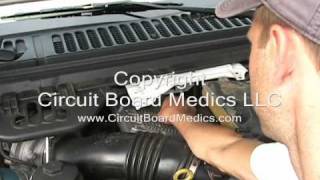
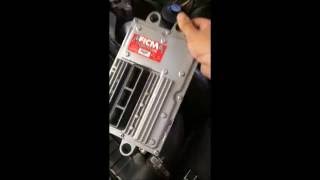
🎬 Watch: How to test and remove your FICMKnown Issues, Recalls, and Production Changes
A significant change occurred for early models of the F-Series Super Duty and Ford Excursion, affecting vehicles built before late September 2003.
- Production Split (Before/After 09/29/2003): Early 2003 and 2004 models used different engine calibrations and some different hardware (like glow plugs and turbos) depending on the build date. It is critical to verify your vehicle's production date when sourcing a PCM to ensure the correct software is used.
- Ford Recall 06E17: Ford issued this recall for trucks built before September 29, 2003, to reprogram the PCM. The update addressed issues like hard starting, rough running, lack of power, and false check engine lights related to the Exhaust Backpressure (EBP) sensor. Most of these vehicles should have had this update performed years ago, but a replacement PCM will need the latest calibration flashed.
Programming, Flashing, and Anti-Theft (PATS)
Warning: A replacement PCM for a 6.0L Power Stroke is NOT plug-and-play. The vehicle will not start or run until the module is correctly programmed to your vehicle's Vehicle Identification Number (VIN).
This is the most critical step of the replacement process. The PCM must be programmed for two main reasons: to load the correct software (calibration) for your vehicle's specific configuration (engine, transmission, emissions) and to synchronize with the Passive Anti-Theft System (PATS).
- VIN Programming: Every PCM must be flashed with the VIN of the vehicle it is being installed in. This ensures the correct software is loaded.
- PATS Key Relearn: The PCM is a key component of the immobilizer system. After a new PCM is installed and programmed, all existing keys must be erased from its memory and relearned. You must have a minimum of two working keys to complete this procedure. If you only have one key, you will need to have a second one cut and programmed. 🎬 Watch: How to perform the PATS key relearn procedure
- Who Can Program It?
- Ford Dealership: The most straightforward option. They use the Ford Integrated Diagnostic System (IDS) to perform the programming.
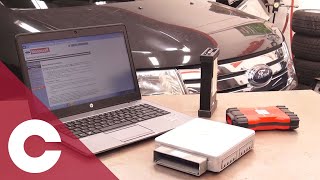
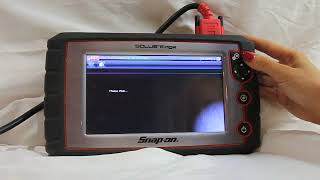
- Independent Repair Shop: Many shops have a J2534 Pass-Thru device and a subscription to the Ford service website, allowing them to perform the same programming as a dealer. 🎬 See this guide on how to reprogram a Ford PCM
- Pre-Programmed Modules: Some online sellers will pre-program a remanufactured or used PCM with your VIN before shipping it. This can make the physical installation easier, but the PATS key relearn procedure will still need to be performed once the module is installed.
Buying a Used 6.0L Power Stroke PCM
A used OEM PCM can be a cost-effective alternative to a new or remanufactured unit, but careful purchasing is key. Since programming is required regardless, the main goal is to acquire a good, working hardware unit.
- Match the Part Number: Always match the OEM part number from your original module to the used one. While programming can load different software, starting with the correct hardware is essential.
- Inspect for Damage: Check the connectors for any bent or corroded pins. Look at the aluminum case for any signs of physical damage or being pried open.
- Source from a Reputable Seller: Buy from a recycler that offers a warranty and has good reviews. This gives you recourse if you receive a dead-on-arrival unit.
- Understand It's Not Plug-and-Play: Remember that a used PCM from a junkyard is just a piece of hardware. It holds the VIN and programming from the donor vehicle. It absolutely must be wiped and reprogrammed for your truck or van before it will function.
Replacement Cost Comparison
The cost of replacing a 6.0L PCM can vary significantly based on the part source and labor rates.
| Item | Estimated Cost |
|---|---|
| New OEM (Dealer) | $1,200 - $1,800+ |
| Remanufactured Aftermarket | $400 - $700 |
| Used OEM | $150 - $400 |
| Shop Labor (Installation & Programming) | $200 - $400 |
Frequently Asked Questions (FAQ)
Where is the PCM located on my 6.0L truck or van?
On 2003-2007 F-Series Super Duty trucks and 2003-2005 Excursions, the PCM is typically located in the engine bay on the driver's side, attached to the fender well near the air filter box. On 2004-2010 E-Series vans, the location is often inside the van, behind the passenger side kick panel or near the glove box.
Where is the FICM located?
The Fuel Injection Control Module (FICM) is located in the same place on all 6.0L Power Stroke engines: on top of the engine, mounted to the driver's side valve cover. It is protected by a black plastic cover.
Can I install a used PCM myself?
Yes, the physical installation is straightforward, typically involving a few bolts and three large electrical connectors. However, the vehicle will be immobilized and will not start until you have it professionally programmed.
My truck is hard to start when it's cold. Is it the PCM?
It is much more likely to be the Fuel Injection Control Module (FICM). Hard starting when cold is the classic symptom of a failing FICM power supply. Test the FICM voltage before suspecting the PCM for this specific symptom.
What's the difference between an ECM and a PCM?
The terms are often used interchangeably. Technically, an ECM (Engine Control Module) controls only the engine. A PCM (Powertrain Control Module) controls both the engine and the automatic transmission. Since these Ford vehicles use a single module for both, PCM is the more accurate term.
Helpful Videos
Technical Specifications
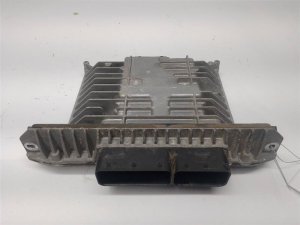
OEM Part Numbers: 1837127C4 1838078C94 1845117C2 1845117C3 1845117C4 1845117C5 1845117C6 1887099C2 3C3412B599AA 3C3Z12B599AA 3C3Z12B599AARM 4307224R1 4C3412B599AA 4C3412B599AB 4C3412B599AC
Communicates with the FICM to control injector timing and duration. Controls automatic transmission shifting. Manages turbocharger vane position and EGR valve function. Integrates with the Passive Anti-Theft System (PATS).
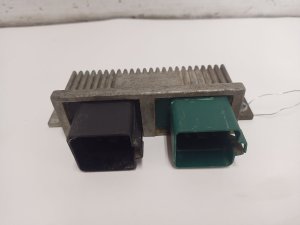
We Have This Part in Stock

The information in this article is provided for general reference and educational purposes only. Vehicle specifications, procedures, and part compatibility can vary by production date, trim level, and region. Always consult your vehicle's factory service manual and verify part numbers before purchasing or performing repairs. Safety-critical components such as airbags, seat belts, and braking systems should be installed by a qualified professional.
- Ford F-250 Super Duty:
- Ford F-350 Super Duty:
- Ford F-450 Super Duty:
- Ford F-550 Super Duty:
- Ford E-350 Econoline:
- Ford E-350 Super Duty:
- Ford E-350 Club Wagon:
- Ford Excursion:
- 🎬 Helpful Videos
- 🛍️ Shop This Part
- PCM vs. FICM: What's the Difference and Why It Matters
- Symptoms of a Failing Powertrain Control Module (PCM)
- Symptoms of a Failing Fuel Injection Control Module (FICM)
- Known Issues, Recalls, and Production Changes
- Programming, Flashing, and Anti-Theft (PATS)
- Buying a Used 6.0L Power Stroke PCM
- Replacement Cost Comparison
- Frequently Asked Questions (FAQ)
- 🎟️ Get 5% Off