

2004 Ford Taurus & Mercury Sable ECM: Stalling, No-Start, and Programming Guide
This guide covers the common failures, diagnosis, and mandatory programming requirements for the Engine Control Module (ECM) in the 2004 Ford Taurus and Mercury Sable with the 3.0L OHV engine.
- This ECM is ONLY for 2004 Taurus/Sable models with the 3.0L OHV (Vulcan) engine, not the DOHC (Duratec) engine.
- Programming is MANDATORY. The vehicle will not start after installation until the ECM is programmed to the car's VIN and PATS anti-theft system.
- Water intrusion from clogged cowl drains is the most common cause of failure. Always inspect for corrosion on the connector.
- Symptoms like stalling and no-start can also be caused by cheaper parts like sensors or the fuel pump, so proper diagnosis is essential before replacing the ECM.
Critical Compatibility Warning: OHV Engines Only
Warning: This Engine Control Module (ECM) is ONLY for the 2004 Ford Taurus and 2004 Mercury Sable equipped with the 3.0L OHV (Overhead Valve) 'Vulcan' V6 gasoline engine. It is NOT compatible with vehicles that have the 3.0L DOHC (Dual Overhead Cam) 'Duratec' V6 engine, which was common in the Mercury Sable LS and higher-trim Taurus models. The ECMs for these two engines are different and are not interchangeable. Always verify your vehicle's engine type before purchasing a replacement module. The 8th character of your VIN can identify the engine: a 'U' or '2' typically indicates the OHV engine, while an 'S' indicates the DOHC engine.
Symptoms of a Failing ECM
A failing ECM can cause a wide variety of symptoms, many of which can mimic other, more common failures like a bad sensor or fuel pump. Proper diagnosis is key before condemning the computer. Here are the most common signs of a bad ECM in the 2004 Taurus and Sable:
- Check Engine Light: An illuminated Check Engine Light is one of the most common symptoms. A failing ECM might set codes for multiple, unrelated sensors at once. Common codes associated with ECM problems include P0171/P0174 (System Too Lean), P0300-P0306 (Cylinder Misfires), and various sensor circuit codes (P0100-series).
- Engine Stalling or Misfiring: The engine may stall unexpectedly, either while driving or at idle. This can be intermittent and may not follow a clear pattern.
- No-Start or Hard-Start Condition: A completely failed ECM will prevent the engine from starting. The engine may crank over but will not get the necessary fuel and spark signals from the computer to run.
- Poor Engine Performance: You may notice a significant loss of power, poor acceleration, hesitation, or a sudden drop in fuel economy as the ECM loses its ability to correctly manage the engine.
- Erratic Shifting: The ECM communicates with the transmission control module (TCM). A faulty ECM can send incorrect data, leading to harsh or delayed gear shifts.
Pro Tip: Before replacing the ECM, mechanics often recommend checking for wiring harness damage, especially near the firewall, as chafing can cause similar issues and is mentioned in Ford TSB 041410. Also, rule out failures of the crankshaft position sensor and fuel pump, which can present with a similar crank-no-start symptom.
Known Issues, TSBs, and Recalls
While there are no official recalls for the ECM on the 2004 Ford Taurus or Mercury Sable, there are known failure points and technical service bulletins (TSBs) to be aware of.
Common Failure Point: Water Intrusion
The most common cause of ECM failure on this platform is water damage. The ECM is located on the passenger side of the firewall, underneath the plastic cowl panel at the base of the windshield. Over time, the cowl drains can become clogged with leaves and debris. This allows rainwater to overflow and drip directly onto the ECM and its large electrical connector. This can cause corrosion on the connector pins or water intrusion into the module itself, shorting out the circuit board. When inspecting a potential issue, always check for signs of water staining or corrosion around the ECM and its connector.
Relevant Technical Service Bulletins (TSBs)
- TSB #052218: Addresses issues like spark knock, hesitation, and misfire on the 3.0L OHV engine. While this TSB may point to other causes, these symptoms can be mistaken for ECM failure.
- TSB #04174 / #17960: Provide diagnostic tips for lean condition codes (P0171, P0174). These codes are often caused by vacuum leaks but can also be triggered by a faulty ECM.
- TSB #04217: This is a general document outlining the official Ford procedure for programming a new Powertrain Control Module, confirming it is a required step. 🎬 Watch: A quick overview of the Ford programmable module installation process.
Buying a Used Engine Control Module
A used OEM module is often a reliable and cost-effective solution. Because these modules contain complex, vehicle-specific software, a used original part is often superior to a new, unproven aftermarket unit. Here’s what to look for:
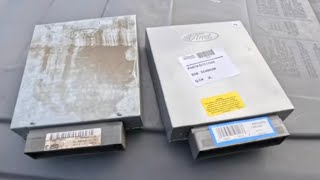
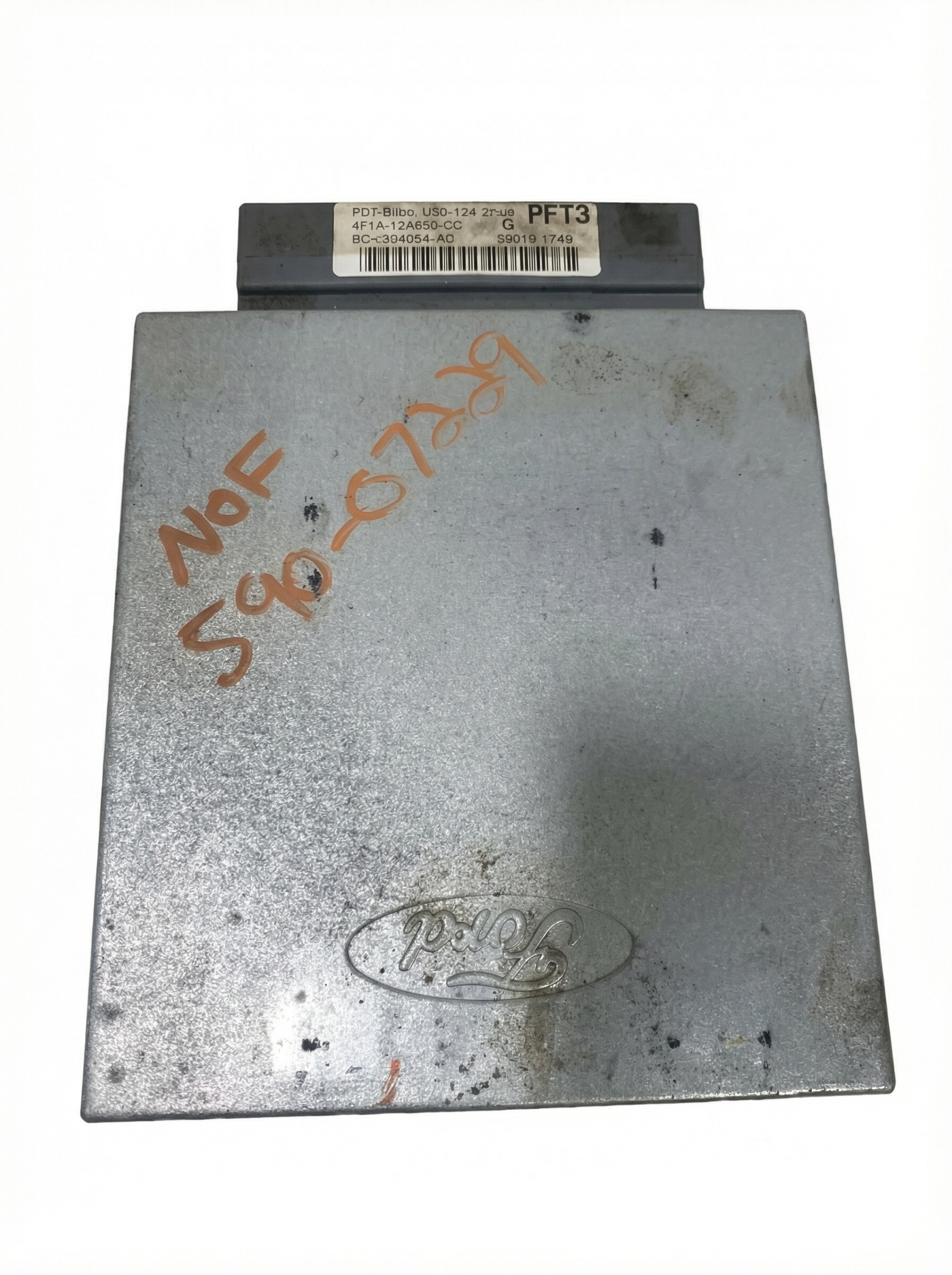
- Match the Part Number: The most critical step is to match the OEM part number exactly. Find the number on your original ECM's sticker. Common part numbers for this application include 4F1A-PD, 4F1A-PE, 4F1A-PF, and 4U7A-CTA, along with their longer variants.
- Verify Engine Type (OHV vs. DOHC): Reconfirm that the donor vehicle had the same 3.0L OHV engine as your car. An ECM from a DOHC engine will not work.
- Inspect for Corrosion: Closely examine the electrical connector pins on the used module. They should be clean, straight, and free of any green or white corrosion. Any sign of corrosion suggests potential water damage, and the part should be avoided.
- Check the Case: Look for any signs that the module's case has been pried open or physically damaged.
Programming and Anti-Theft (PATS) Requirements
Warning: You cannot simply install a replacement ECM and start the car. The module must be programmed to your vehicle's Vehicle Identification Number (VIN) and configured for its specific options.
These vehicles are equipped with Ford's Passive Anti-Theft System (PATS). The ECM is a key component of this system. When you install a different ECM, the PATS system will not recognize your existing keys, and the vehicle will not start.
🎬 See how the Ford anti-theft system prevents your car from starting.- Who can program it? A Ford dealership or a qualified independent shop with a high-level scan tool (like Ford's IDS) can program the replacement ECM and relearn your keys to it. Some mobile automotive locksmiths also have this capability.
- Can I do it myself? The physical installation is straightforward for a DIY mechanic, but the programming requires specialized tools. You will need to have the vehicle towed to a shop after installation or have a mobile service come to you.
- Pre-Programmed Modules: Some online sellers offer to pre-program a used or remanufactured ECM to your VIN before shipping it. You provide them with your VIN at the time of purchase. While this often allows the car to run, a key relearn procedure may still be required.
Cost Breakdown
The cost to replace the ECM can vary significantly based on the source of the part and labor rates.
| Item | Estimated Cost | Notes |
|---|---|---|
| New OEM | N/A | Generally discontinued and no longer available from Ford. |
| Remanufactured | $200 - $450 | A common option from retailers like RockAuto, AutoZone, or specialty programmers. |
| Used OEM | $50 - $150 | Widely available from online sellers like eBay or local salvage yards. |
| Shop Labor (Installation) | $100 - $175 | Typically around 1.0-1.5 hours of labor to physically swap the module. |
| Shop Labor (Programming) | $100 - $250 | This is a separate charge for programming the new module and relearning the keys. |
Frequently Asked Questions
Where is the ECM located on the 2004 Taurus and Sable?
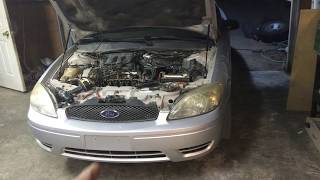
The ECM is located in the engine bay, on the passenger side, mounted to the firewall. It is situated underneath the black plastic cowl cover that sits at the base of the windshield. You will need to remove this cowl panel to access the module and its connector.
🎬 Watch: Step-by-step guide to replacing the ECM on your Taurus or Sable.Do I have to get the new ECM programmed at a dealer?
While a Ford dealer can always perform the programming, they are not the only option. Many well-equipped independent auto repair shops and some automotive locksmiths have the necessary tools to program the ECM and PATS keys. You can also purchase a module that is pre-programmed to your VIN from an online vendor, though a final key relearn might still be needed.
Will the car start after I install the new ECM?
No, not without programming. Due to the PATS anti-theft system, the engine will crank but will not start until the replacement ECM is programmed to the vehicle and the keys are relearned to the new module.
My car has a DOHC engine. Can I use this ECM?
No, absolutely not. This guide and the part numbers listed are specifically for the 3.0L OHV 'Vulcan' engine. The DOHC 'Duratec' engine uses a completely different ECM. Installing the wrong one will not work.
Helpful Videos

Technical Specifications
OEM Part Numbers: 4F1A-PD 4F1A-PE 4F1A-PF 4F1A12A650PD 4F1A12A650PE 4F1A12A650PF 4F1APD 4F1APE 4F1APF 4U7A-CTA 4U7A12A650CTA 4U7ACTA 4U7Z12A650CTA
Module controls a 3.0L OHV V6 gasoline engine. Integrates with Ford's Passive Anti-Theft System (PATS). Located on the passenger-side firewall.
We Have This Part in Stock

The information in this article is provided for general reference and educational purposes only. Vehicle specifications, procedures, and part compatibility can vary by production date, trim level, and region. Always consult your vehicle's factory service manual and verify part numbers before purchasing or performing repairs. Safety-critical components such as airbags, seat belts, and braking systems should be installed by a qualified professional.
- Ford Taurus:
- Mercury Sable:
- 🎬 Helpful Videos
- 🛍️ Shop This Part
- Critical Compatibility Warning: OHV Engines Only
- Symptoms of a Failing ECM
- Known Issues, TSBs, and Recalls
- Common Failure Point: Water Intrusion
- Relevant Technical Service Bulletins (TSBs)
- Buying a Used Engine Control Module
- Programming and Anti-Theft (PATS) Requirements
- Cost Breakdown
- Frequently Asked Questions
- 🎟️ Get 5% Off