

2006-2010 Hyundai Azera ECM: Failure Symptoms and Programming Guide
Diagnose a failing Engine Control Module in your 3.8L Azera and understand the critical programming steps required for a successful replacement.
- A replacement ECM for the 2006-2010 Azera is NOT plug-and-play; it requires programming to the vehicle's VIN and immobilizer system to function.
- Always match the OEM part number from your original module to the replacement unit to ensure compatibility.
- Common symptoms of failure include a persistent check engine light, engine stalling or misfiring, a no-start condition, and poor performance.
- Programming can be performed by a Hyundai dealer, a qualified independent shop with a J-2534 device, or an automotive locksmith.
Symptoms of a Failing ECM in a 2006-2010 Hyundai Azera
A failing ECM can cause a wide range of issues, from subtle performance problems to a complete no-start condition. Because the ECM controls so many different systems, symptoms can sometimes be mistaken for other component failures. Here are the most common signs of a faulty ECM in the 3.8L Azera.
1. Check Engine Light
The most obvious sign of a problem is an illuminated Check Engine Light (CEL) on your dashboard. If the ECM detects an internal fault or a problem with a system it controls, it will store a Diagnostic Trouble Code (DTC) and trigger the light. Codes specifically pointing to an internal module failure are a strong indicator, but sensor or circuit codes can also result from a faulty ECM that is no longer processing signals correctly.
2. Engine Performance Problems
Since the ECM is responsible for managing the engine's air-fuel mixture and ignition timing, a failure can lead to noticeable performance issues. These can include:
- Engine Misfires or Stuttering: The engine may run rough, shake, or hesitate during acceleration.
- Stalling: The engine may stall unexpectedly, either while idling or driving.
- Reduced Power and Acceleration: The vehicle may feel sluggish and have difficulty accelerating.
- Poor Fuel Economy: An incorrect air-fuel mixture caused by a faulty ECM can lead to a sudden drop in gas mileage.
3. Car Will Not Start
A critical ECM failure can prevent the engine from starting at all. The module may not be able to activate the fuel pump, fire the ignition coils, or communicate with the immobilizer system, resulting in a crank-no-start condition.
4. Transmission Shifting Issues
The ECM works closely with the Transmission Control Module (TCM). A faulty ECM can send incorrect data to the TCM, leading to harsh shifting, delayed engagement, or other erratic transmission behavior.
Common Diagnostic Trouble Codes (DTCs)
While many codes can be associated with an ECM failure, some codes point more directly to the module itself or the systems it directly controls. These can include:
- P0600-P0605 series: These codes often indicate internal processor or memory errors within the control module.
- P1609, P1695, P1696: Hyundai-specific codes related to immobilizer or ECM EPROM malfunctions.
- Sensor circuit codes (e.g., for MAF, O2, Camshaft/Crankshaft sensors) that persist even after the sensor and wiring have been verified as good.
- Communication error codes (U-series) indicating a loss of communication with other modules on the vehicle's network.
Programming and Immobilizer Requirements
Critical: A replacement ECM for a 2006-2010 Hyundai Azera MUST be programmed to the vehicle. This is not a plug-and-play part. The ECM is linked to the vehicle's immobilizer system, which prevents theft by ensuring the engine only starts with a recognized key.
The immobilizer system in this generation of Azera uses a transponder chip inside the key. The ECM stores the unique codes for the vehicle's keys. When a replacement ECM is installed, it does not have the correct key information and will prevent the engine from starting.
Programming involves several steps:
- VIN Programming: The vehicle's unique 17-digit Vehicle Identification Number (VIN) must be written to the replacement ECM. Some sellers of used or remanufactured modules offer this as a service before shipping.
- Key Teaching / Immobilizer Sync: A specialized diagnostic scan tool is required to teach the replacement ECM to recognize the existing keys. This procedure requires a unique PIN code specific to the vehicle.
Who Can Program a Hyundai Azera ECM?
- Hyundai Dealerships: Dealers have the factory equipment (GDS - Global Diagnostic System) to perform this programming.
- Independent Repair Shops: Many independent shops have advanced aftermarket scan tools 🎬 Watch: How to perform the Hyundai aftermarket ECM programming procedure (like Autel or Snap-on) or J-2534 pass-thru devices that can perform ECM programming and key teaching for Hyundai vehicles.
- Automotive Locksmiths: Locksmiths who specialize in automotive work often have the tools and software to program keys and immobilizer systems.
Pro Tip: Before purchasing a used ECM, contact local independent shops or automotive locksmiths to confirm they have the capability to program it for your Azera and inquire about their pricing. This can often be more cost-effective than a dealership visit.
Known Issues, Recalls, and TSBs
While there are no specific recalls for the Engine Control Module itself on the 2006-2010 Azera, there are a few related recalls for other electronic modules that are important to be aware of:
- NHTSA Recall 18V026000 (Hyundai Recall 172): This recall addresses a potential electrical short inside the Anti-lock Brake System (ABS) module, which could lead to an engine compartment fire, even when the car is off. While not an ECM issue, it highlights the potential for electrical problems in the engine bay.
- NHTSA Recall 13V354000 (Hyundai Recall 113): Pertains to corrosion of the rear crossmember in certain states, which could affect vehicle handling.
- NHTSA Recall 09V280000: Concerns a malfunctioning stop lamp switch that could cause the brake lights to not illuminate.
No widespread, documented Technical Service Bulletins (TSBs) point to a common pattern of ECM failure for this specific vehicle. Failures are typically isolated incidents due to age, heat, vibration, or potential water intrusion.
Buying a Used Engine Control Module (ECM)
Purchasing a used OEM ECM is a cost-effective way to get your Azera back on the road. However, it's crucial to buy the right part and understand the necessary steps for installation. A used original equipment part is often more reliable than a new, cheap aftermarket alternative.
1. Match the Part Number Exactly
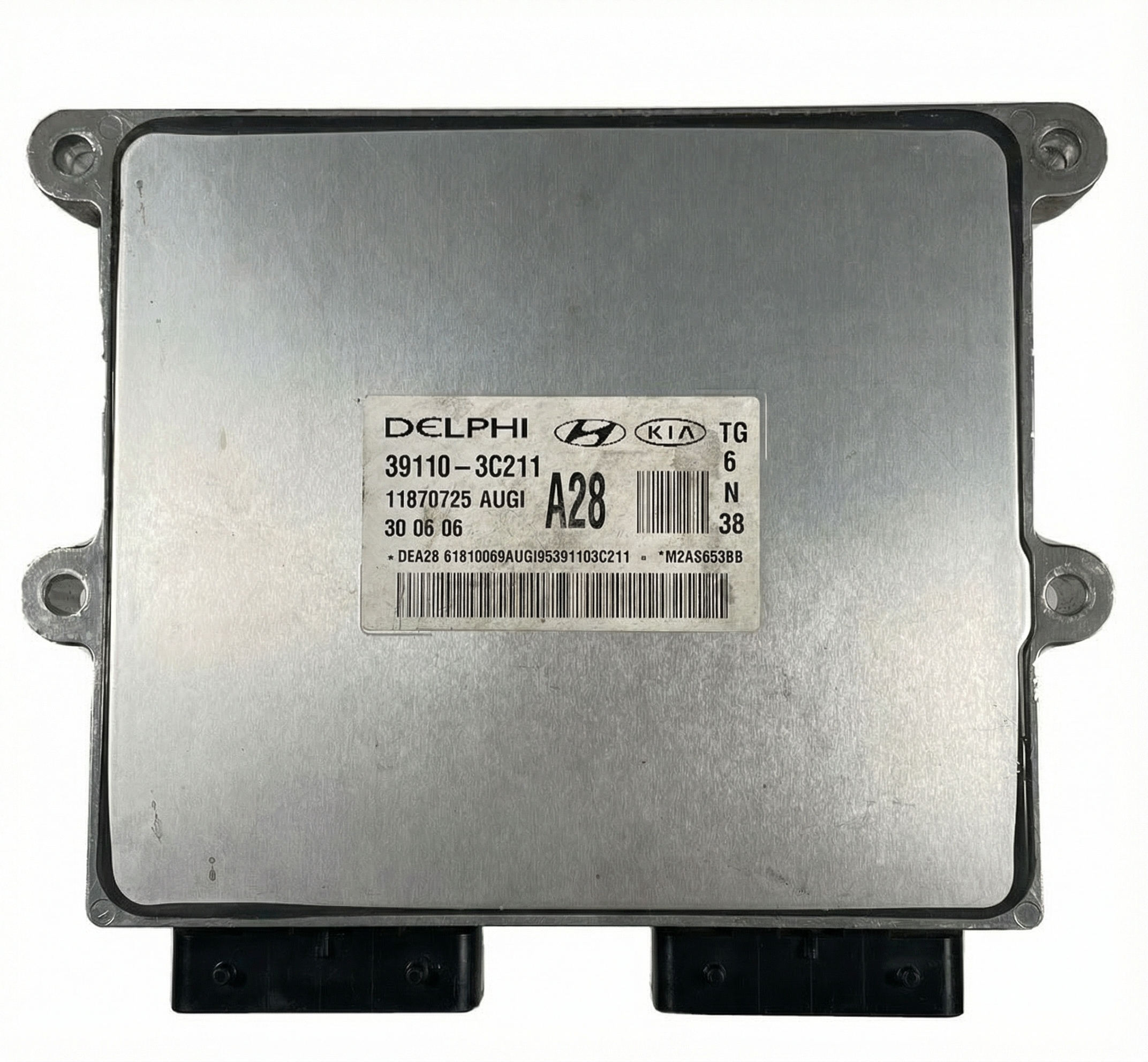
This is the most important step. The part number is printed on a label on the ECM's case. For the 2006-2010 Azera with the 3.8L engine, you should look for one of the following part numbers:
- 39110-3C210
- 39110-3C211
- 39110-3C212
- 39110-3C213
- 39110-3C214
- 39110-3C215
- 39110-3C216
While these part numbers may have superseded each other over time, it is always safest to match your original part number exactly or confirm interchangeability with the seller.
2. Physical Inspection
When you receive the used ECM, inspect it carefully before installation:
- Check the Connectors: Look at the pins in the electrical connectors. They should be straight, clean, and free of any green or white corrosion.
- Inspect the Case: The case should be free of cracks or signs that it has been pried open.
- Look for Water Damage: Check for any signs of water stains or rust on the case or around the connectors. Water intrusion is a common cause of electronic module failure.
3. Ask About VIN Programming Services
Some sellers of used ECMs offer to program the unit with your vehicle's VIN before shipping it to you. This can simplify the process for your mechanic, although the key relearn procedure will still be necessary on-site.
Cost Breakdown
The cost to replace the ECM in a 2006-2010 Azera can vary significantly depending on the part source and labor rates.
| Item | Estimated Cost | Notes |
|---|---|---|
| New OEM (Dealer) | $2,100 - $2,200+ | Part cost only. This is the most expensive option. |
| Remanufactured | $250 - $500 | A rebuilt original unit. Often requires sending your old unit back as a "core". |
| Used OEM | $50 - $150 | The most common and cost-effective solution. |
| Shop Labor (Replacement) | $60 - $90 | Physical replacement is typically quick (under 1 hour). |
| Shop Labor (Programming) | $100 - $250 | Cost for VIN programming and key relearn procedure. Varies by shop. |
| Total Estimated Cost (Used Part) | $210 - $490 | Includes used part, installation, and programming. |
Frequently Asked Questions (FAQ)
Do I absolutely have to program a replacement ECM?
Yes. Due to the integrated anti-theft immobilizer system, a replacement ECM will not start the car until it is programmed to your vehicle's VIN and has learned your specific keys. This is not an optional step.
Will my original keys work with a used ECM?
Yes, but only after the key teaching procedure is performed. The physical key and the transponder chip inside it are still good. The replacement ECM simply needs to be taught to recognize their unique codes using a specialized scan tool.
Where is the ECM located on the 2006-2010 Hyundai Azera?
The ECM is typically located in the engine compartment. It is a metal box with large electrical connectors attached. You can usually find it mounted near the battery or on one of the inner fender walls.
What's the difference between an ECM, ECU, and PCM?
The terms are often used interchangeably. ECU (Engine Control Unit) is a generic term. ECM (Engine Control Module) specifically refers to the engine's computer. PCM (Powertrain Control Module) is a term for a module that controls both the engine and the transmission. For the Azera, these terms all refer to the same main computer.
Helpful Videos
Technical Specifications
OEM Part Numbers: 391103C210 391103C211 391103C212 391103C213 391103C214 391103C215 391103C216
This module is for vehicles equipped with the 3.8L Lambda V6 engine only.
We Have This Part in Stock

The information in this article is provided for general reference and educational purposes only. Vehicle specifications, procedures, and part compatibility can vary by production date, trim level, and region. Always consult your vehicle's factory service manual and verify part numbers before purchasing or performing repairs. Safety-critical components such as airbags, seat belts, and braking systems should be installed by a qualified professional.
- Hyundai Azera:
- 🎬 Helpful Videos
- 🛍️ Shop This Part
- Symptoms of a Failing ECM in a 2006-2010 Hyundai Azera
- 1. Check Engine Light
- 2. Engine Performance Problems
- 3. Car Will Not Start
- 4. Transmission Shifting Issues
- Common Diagnostic Trouble Codes (DTCs)
- Programming and Immobilizer Requirements
- Who Can Program a Hyundai Azera ECM?
- Known Issues, Recalls, and TSBs
- Buying a Used Engine Control Module (ECM)
- 1. Match the Part Number Exactly
- 2. Physical Inspection
- 3. Ask About VIN Programming Services
- Cost Breakdown
- Frequently Asked Questions (FAQ)
- 🎟️ Get 5% Off