

2004-2006 Hyundai Elantra ECM: A Guide to Programming, Compatibility, and Failure
This in-depth guide covers the critical details you must know before buying and replacing the Engine Control Module in your 2004-2006 Hyundai Elantra, including the essential programming and immobilizer requirements.
- A replacement ECM for a 2004-2006 Elantra is NOT plug-and-play and MUST be programmed to the vehicle's immobilizer system to start the car.
- You must match the part number, transmission type (Auto/Manual), and emissions type (Federal vs. California) EXACTLY.
- Programming requires a Hyundai dealer or a qualified independent shop/locksmith with advanced diagnostic tools; it is not a DIY-friendly procedure.
- Common symptoms of failure include a no-start condition, poor engine performance, and a Check Engine Light with code P0605.
Symptoms of a Failing ECM

A faulty Engine Control Module can cause a wide range of issues, from subtle performance problems to a complete no-start condition. Here are the most common signs that your Elantra's ECM may be failing:
- Check Engine Light: This is the most common symptom. A failing ECM can trigger a variety of codes. A code specifically pointing to an internal module failure is P0605 (Internal Control Module Read Only Memory Error).
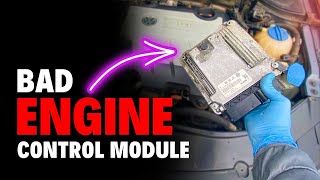
- Engine Performance Problems: You may experience engine stuttering, misfires, a rough or unstable idle, hesitation, or a sudden loss of power. 🎬 Watch: Common symptoms of a failing engine computer. These issues occur when the ECM sends incorrect signals for fuel and spark.
- Car Won't Start: A dead ECM can prevent the engine from starting. The engine may crank over but not fire, or it may not crank at all if the ECM is involved in the anti-theft circuit.
- Poor Fuel Economy: If the ECM is not managing the air-fuel mixture correctly, you may notice a sudden and significant drop in your gas mileage.
- Erratic Shifting (Automatic Transmission): The ECM communicates with the transmission control module. A faulty ECM can send incorrect data, leading to hard, delayed, or erratic gear shifts.
- Intermittent Stalling: The engine may shut off unexpectedly while driving or when coming to a stop.
Known Issues, Recalls, and TSBs
While there were a few recalls for the 2004-2005 Hyundai Elantra, none directly targeted the main Engine Control Module (ECM) for defects.
- NHTSA Recall 05V395000: This recall was for the Occupant Classification System (OCS) ECU, a separate computer that controls the passenger airbag. It required reprogramming to correct how it detected a child restraint seat, but it did not involve the main engine computer.
- NHTSA Recall 04V-208: This recall addressed a mispositioned fuel vapor hose clamp that could potentially puncture the fuel tank in a crash. It was a mechanical fix and unrelated to the ECM.
No widespread Technical Service Bulletins (TSBs) related to ECM failure for the 2004-2006 model years were found during research.
Important: Before condemning the ECM, it is crucial to diagnose the vehicle thoroughly. Many other issues, such as a bad sensor, faulty wiring, poor power/ground connections, or a weak battery, can mimic the symptoms of a failed ECM and should be ruled out first.
The #1 Challenge: ECM Programming and the Immobilizer

Replacing the ECM in a 2004-2006 Hyundai Elantra is NOT a plug-and-play job. The ECM is a critical part of the vehicle's anti-theft immobilizer system.
If you simply swap the old ECM with a replacement unit, the car will not start. The engine may crank, but the immobilizer will prevent it from firing up. This is a security feature to prevent theft.
To make a replacement ECM work, it must be programmed or synchronized to your vehicle's immobilizer system and keys. This process typically involves:
- Initialization/Neutralization: A special scan tool is used to put the replacement ECM into a "learn" or "neutral" mode.
- Key Teaching: The same tool is then used to teach the newly installed ECM to recognize your existing car keys. This process requires a 6-digit PIN code that is specific to your vehicle and must be obtained from a Hyundai dealership. 🎬 See how to neutralize and program the immobilizer system.
Who Can Program a Replacement ECM?
- Hyundai Dealerships: They have the proprietary Global Diagnostic System (GDS) tool and can easily access the required PIN code to perform the programming.
- Qualified Independent Shops: Many modern repair shops have high-level aftermarket scan tools (like an Autel Maxisys) that can perform immobilizer functions on Hyundai vehicles.
- Automotive Locksmiths: Some locksmiths specializing in automotive work have the tools and expertise to program keys and modules.
You should always confirm with the shop or locksmith that they have the specific capability to program a Hyundai ECM for this year range before having the work done.
Buying a Used 2004-2006 Elantra ECM

Buying a used OEM ECM is a cost-effective solution, but you must get the correct part to avoid compatibility issues. Here’s what to check:
1. Match Your Part Number EXACTLY
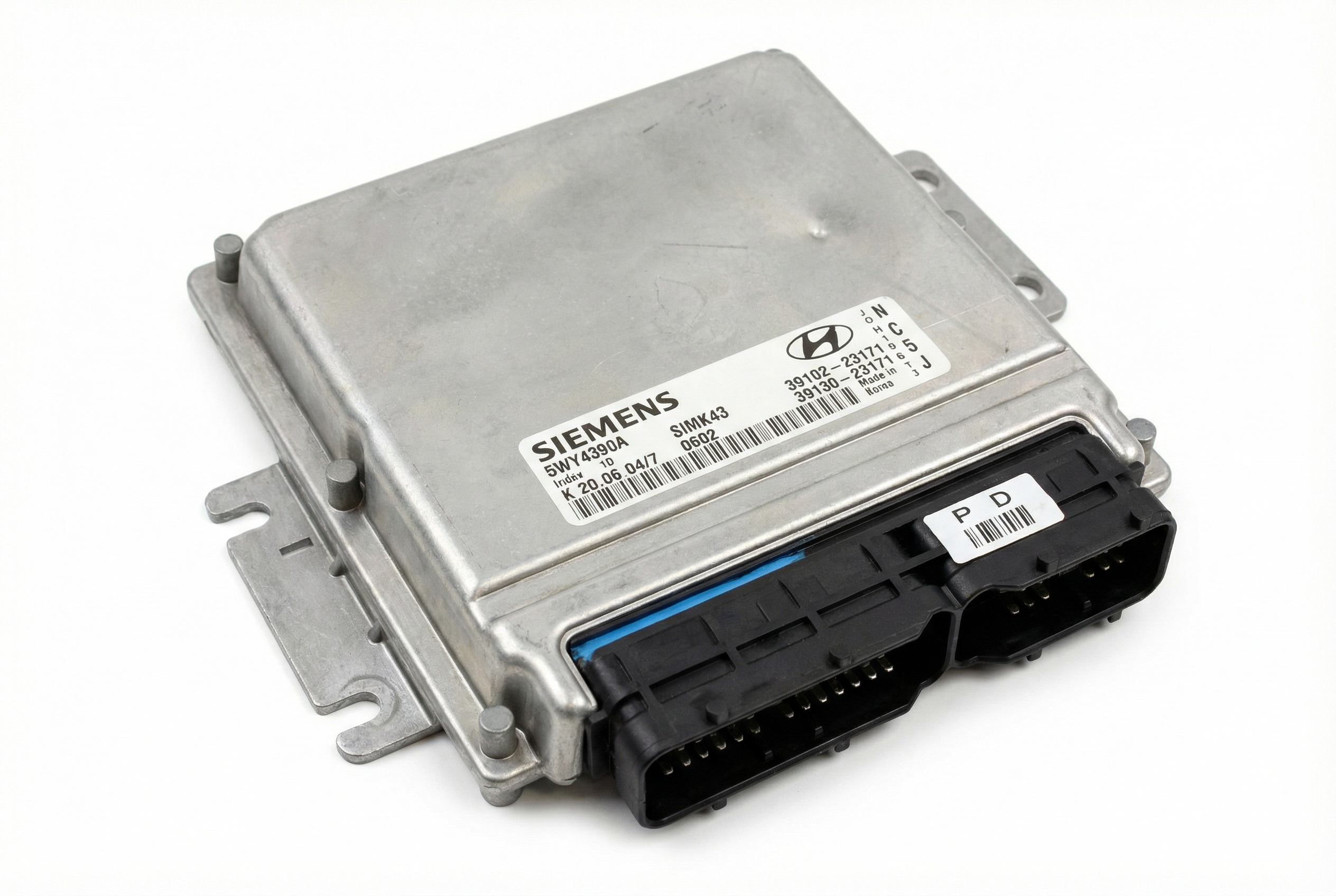
This is the most critical step. Do not rely on visual similarity. The part number is printed on a label on the ECM's case. The replacement unit MUST have the same OEM part number as the one you are removing. Common part numbers for this application include 39102-23171, 39102-23172, 3913023170, 3913023171, and 3913023172.
2. Verify Emissions Compatibility
Warning: The ECMs for Federal/Canada emissions vehicles and California emissions (PZEV/SULEV) vehicles are different and NOT interchangeable. Installing the wrong type will cause check engine lights and performance issues. Most used ECMs on the market are for Federal emissions. If your vehicle has California emissions, you must source an ECM with a matching California-spec part number (e.g., 39130-23193).
3. Match the Transmission Type
The ECM for an automatic transmission (AT) is different from one for a manual transmission (MT). Ensure the donor vehicle's transmission matches yours. This information is often included in the part description from the seller.
4. Physical Inspection
When you receive the used ECM, inspect it for any signs of damage. Look for corrosion on the pins, cracks in the casing, or any indication that it has been exposed to water or extreme heat.
Replacement Cost Breakdown
The cost can vary significantly based on the source of the part and labor rates.
| Item | Estimated Cost |
|---|---|
| New OEM Part | $900 - $1,200+ |
| Used OEM Part | $50 - $100 |
| Remanufactured Part | $150 - $300 |
| Shop Labor (Physical Swap) | $100 - $160 |
| Shop Labor (Programming) | $85 - $200+ |
Frequently Asked Questions (FAQ)
Where is the ECM located on the 2004-2006 Hyundai Elantra?
The ECM is located inside the cabin, on the driver's side, up under the dashboard to the left of the steering column.
🎬 Watch: Step-by-step guide to replacing the ECM unit.Can I replace the ECM myself?
You can physically install the ECM yourself as it is generally accessible. However, the vehicle will not start until the replacement ECM is professionally programmed to the car's immobilizer system.
Will disconnecting the battery fix a bad ECM?
No. Disconnecting the battery may clear temporary fault codes from the module's memory, but it will not repair internal hardware damage or software corruption. If the ECM has failed, the problems will return as soon as the car is driven.
What's the difference between an ECM, ECU, and PCM?
The terms are often used interchangeably. ECM (Engine Control Module) and ECU (Engine Control Unit) mean the same thing. PCM (Powertrain Control Module) is a term for a module that controls both the engine and the automatic transmission. For this Elantra, the terms generally all refer to the same main computer.
Helpful Videos


Technical Specifications
OEM Part Numbers: 39102-23171 39102-23172 3913023170 3913023171 3913023172 39102-23192 39130-23191 39130-23193
Located under the driver's side dashboard. Requires programming and synchronization with the vehicle's immobilizer system upon replacement.
We Have This Part in Stock

The information in this article is provided for general reference and educational purposes only. Vehicle specifications, procedures, and part compatibility can vary by production date, trim level, and region. Always consult your vehicle's factory service manual and verify part numbers before purchasing or performing repairs. Safety-critical components such as airbags, seat belts, and braking systems should be installed by a qualified professional.
- Hyundai Elantra:
- 🎬 Helpful Videos
- 🛍️ Shop This Part
- Symptoms of a Failing ECM
- Known Issues, Recalls, and TSBs
- The #1 Challenge: ECM Programming and the Immobilizer
- Who Can Program a Replacement ECM?
- Buying a Used 2004-2006 Elantra ECM
- 1. Match Your Part Number EXACTLY
- 2. Verify Emissions Compatibility
- 3. Match the Transmission Type
- 4. Physical Inspection
- Replacement Cost Breakdown
- Frequently Asked Questions (FAQ)
- 🎟️ Get 5% Off