

2017-2018 Hyundai Elantra ECM: Programming, Known Issues, and Replacement Costs
This guide covers the essential programming requirements, common failure symptoms, and costs associated with replacing the Engine Control Module in your 2017-2018 Hyundai Elantra 2.0L.
- A replacement ECM for a 2017-2018 Elantra MUST be programmed by a dealer or qualified locksmith to work.
- The ECM is linked to the vehicle's anti-theft immobilizer system; a simple swap will result in a no-start condition.
- Always match the OEM part number exactly (e.g., 39171-2EFD0 or 39171-2EFD2) when buying a used unit.
- Symptoms of failure include a check engine light (especially code P0605), poor performance, a no-start condition, and transmission shifting issues.
Symptoms of a Failing ECM

A failing Engine Control Module can cause a wide range of problems, from minor annoyances to a no-start condition. Here are the most common signs that your Elantra's ECM may be in trouble:
- Check Engine Light: This is the most obvious sign. An ECM failure can cause the check engine light to illuminate for various reasons. Specific trouble codes related to the ECM itself include P0605 (Internal Control Module ROM Error), which indicates a problem with the module's internal memory.
- Engine Performance Issues: You might experience engine stuttering, misfires, a rough idle, or a sudden loss of power. This can happen if the ECM is sending incorrect signals for fuel delivery or spark timing.
- Car Won't Start: A completely failed ECM can prevent the engine from starting at all. The engine may crank but fail to ignite because the ECM isn't managing the fuel and spark systems correctly.
- Poor Fuel Economy: If you notice a sudden and significant drop in your gas mileage, a faulty ECM could be the cause. It may be commanding the fuel injectors to deliver too much fuel.
- Automatic Transmission Problems: The ECM communicates with the transmission control module to ensure smooth shifting. A bad ECM can lead to rough, erratic, or delayed gear changes in automatic transmission vehicles.
Known Issues, TSBs, and Recalls

While there are no widespread recalls specifically for ECM failure on the 2017-2018 Elantra, Hyundai has issued several Technical Service Bulletins (TSBs) that involve software updates to the ECM to correct other issues.
- TSB 20-FL-001H: Addresses a check engine light with misfire-related DTCs (P0300, P0301, P0302, etc.) on some 2017 Elantras with the 2.0L engine. The fix involves an ECM software update.
- TSB 18-HA-002-1: This bulletin for certain 2017-2018 Elantras with the 2.0L engine provides an ECM update to improve heater performance.
- TSB 17-01-049 (Service Campaign T1D): An ECM software update was released to improve shift shock on reacceleration for certain 2017 Elantras with the 2.0L engine.
- TSB 21-01-064H (Service Campaign 968): This campaign involves an ECM software update to improve the diagnostic logic for the OBD-II fuel system readiness monitor on 2017-2019 Elantras.
These bulletins show that the ECM's software is critical and that updates are sometimes necessary to resolve performance issues. When replacing an ECM, it's important to ensure it has the latest software version installed.
Important: A recall (NHTSA Campaign 161) was issued for a small number of 2017 Elantra sedans related to the Electronic Power Steering (EPS) motor, which could have a poor connection to its electronic control unit, but this is separate from the main engine ECM.
Programming and Immobilizer Information

A Replacement ECM MUST Be Programmed
You cannot simply swap a used ECM into your 2017-2018 Elantra and expect it to work. The replacement module must be programmed to your vehicle's specific Vehicle Identification Number (VIN) and key information. This is because the ECM is a critical part of the vehicle's anti-theft immobilizer system.
Without proper programming:
- The engine will not start.
- The immobilizer warning light may flash on the dashboard.
- Other electronic systems may not function correctly.
Who Can Program the ECM?
Programming a new or used ECM for a Hyundai Elantra is not a DIY job. It requires specialized diagnostic tools and software.
- Hyundai Dealerships: A dealer is the most reliable option. They have the proprietary GDS (Global Diagnostic System) tool required to perform the programming and update the module to the latest software.
- Qualified Automotive Locksmiths: Many professional auto locksmiths have advanced tools that can program keys and modules for various makes, including Hyundai. This can sometimes be a more convenient or affordable option than a dealership.
- Specialized Independent Repair Shops: Some independent shops invest in the same high-level diagnostic tools as dealers and can perform ECM programming. You must confirm they have the specific capabilities for a 2017-2018 Hyundai before having the work done.
Buying a Used Engine Control Module (ECM)

Purchasing a used OEM ECM is a great way to save a significant amount of money compared to a new unit from a dealer. However, you must be careful to get the correct part and understand the necessary steps after installation.
1. Match the Part Number Exactly
The most critical step is to match the OEM part number on your original ECM with the part number on the used unit. The known part numbers for the 2017-2018 Elantra 2.0L with an automatic transmission are 39171-2EFD0 and 39171-2EFD2. Using an ECM with a different part number will likely result in compatibility issues, even if it looks identical.
2. Inspect for Physical Damage
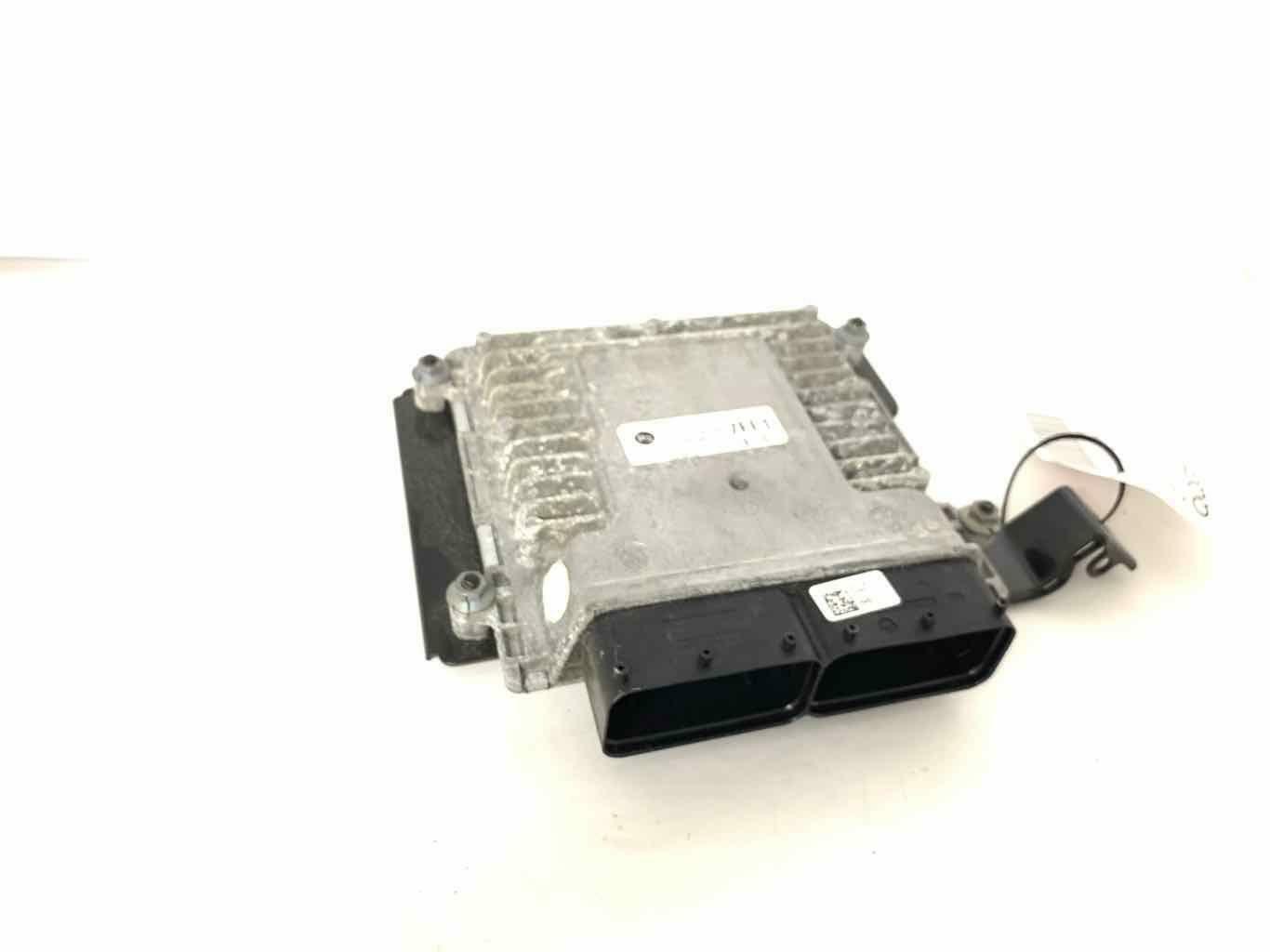
When you receive the used ECM, carefully inspect the housing and connectors. Look for:
- Corrosion: Any signs of water damage or corrosion on the pins or case are a major red flag. Moisture can destroy the internal circuits.
- Bent or Damaged Pins: Check that all the connector pins are straight and clean. A bent pin can prevent a proper connection and cause all sorts of electrical gremlins.
- Signs of being opened: If the case looks like it has been pried open, it's best to avoid it.
3. Plan for Programming Costs
Remember that the cost of the part is not the final cost. You must factor in the expense of having the used ECM professionally programmed to your vehicle. Call local dealerships or qualified locksmiths beforehand to get a quote for this service.
Cost Breakdown
The cost to replace the ECM in a 2017-2018 Elantra can vary significantly based on the part source and labor rates.
| Part/Service | Estimated Cost | Notes |
|---|---|---|
| New OEM ECM | $460 - $690 | Price from Hyundai dealerships or online OEM parts retailers. |
| Used OEM ECM | $85 - $150 | Common price range on used part marketplaces. |
| Remanufactured ECM | $200 - $400 | Offered by specialty electronics rebuilders. Often comes pre-programmed to your VIN. |
| Shop Labor (Installation & Programming) | $100 - $250 | Labor for physical replacement is low (around 0.5-1.0 hours), but programming adds time and cost. |
Frequently Asked Questions (FAQ)
Do I absolutely have to program a replacement ECM?
Yes. For the 2017-2018 Hyundai Elantra, programming is mandatory. The ECM is linked to the car's anti-theft immobilizer system. Without programming the replacement module to your car's VIN and keys, the car will not start.
Where is the ECM located on a 2017-2018 Elantra?
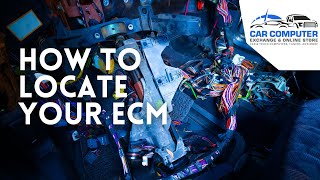
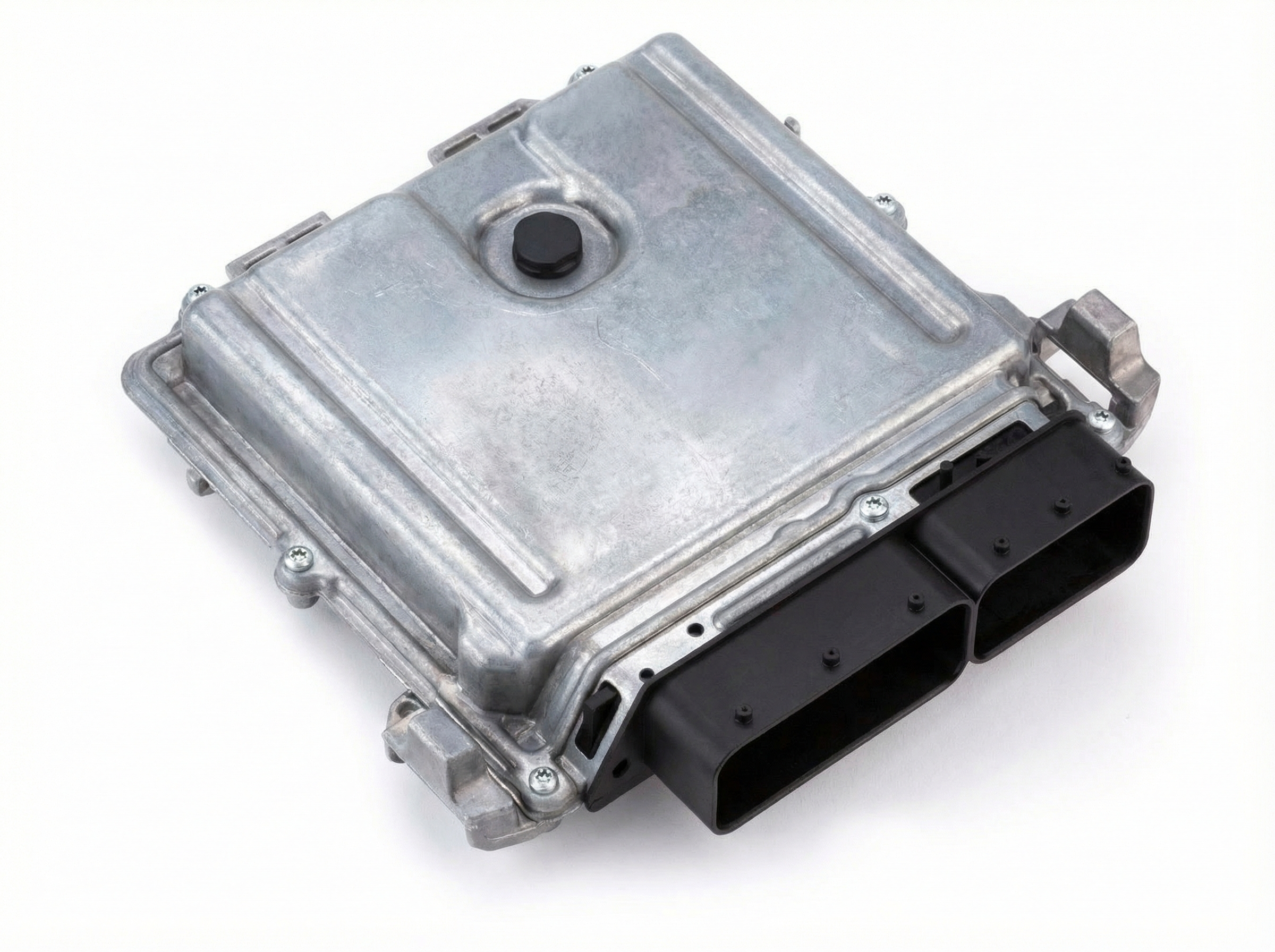
The ECM is typically found in the engine bay. In most front-wheel-drive cars like the Elantra, it is often located near the battery or against the firewall, attached to the vehicle's body. It is a metal box with large electrical connectors.
🎬 See this guide on common locations to find your ECMCan a bad ECM cause my transmission to shift hard?
Yes, it is possible. The ECM plays a key role in controlling the automatic transmission by sending data about engine speed, throttle position, and load. If the ECM provides incorrect data, it can lead to poor shift quality, including hard or delayed shifts.
What's the difference between an ECM, ECU, and PCM?
The terms are often used interchangeably. ECU (Engine Control Unit) is a generic term. ECM (Engine Control Module) specifically refers to the engine's computer. PCM (Powertrain Control Module) is the most accurate term for modern vehicles, as this single module typically controls both the engine and the transmission.
Helpful Videos
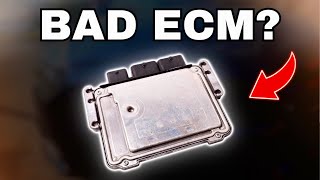
Technical Specifications
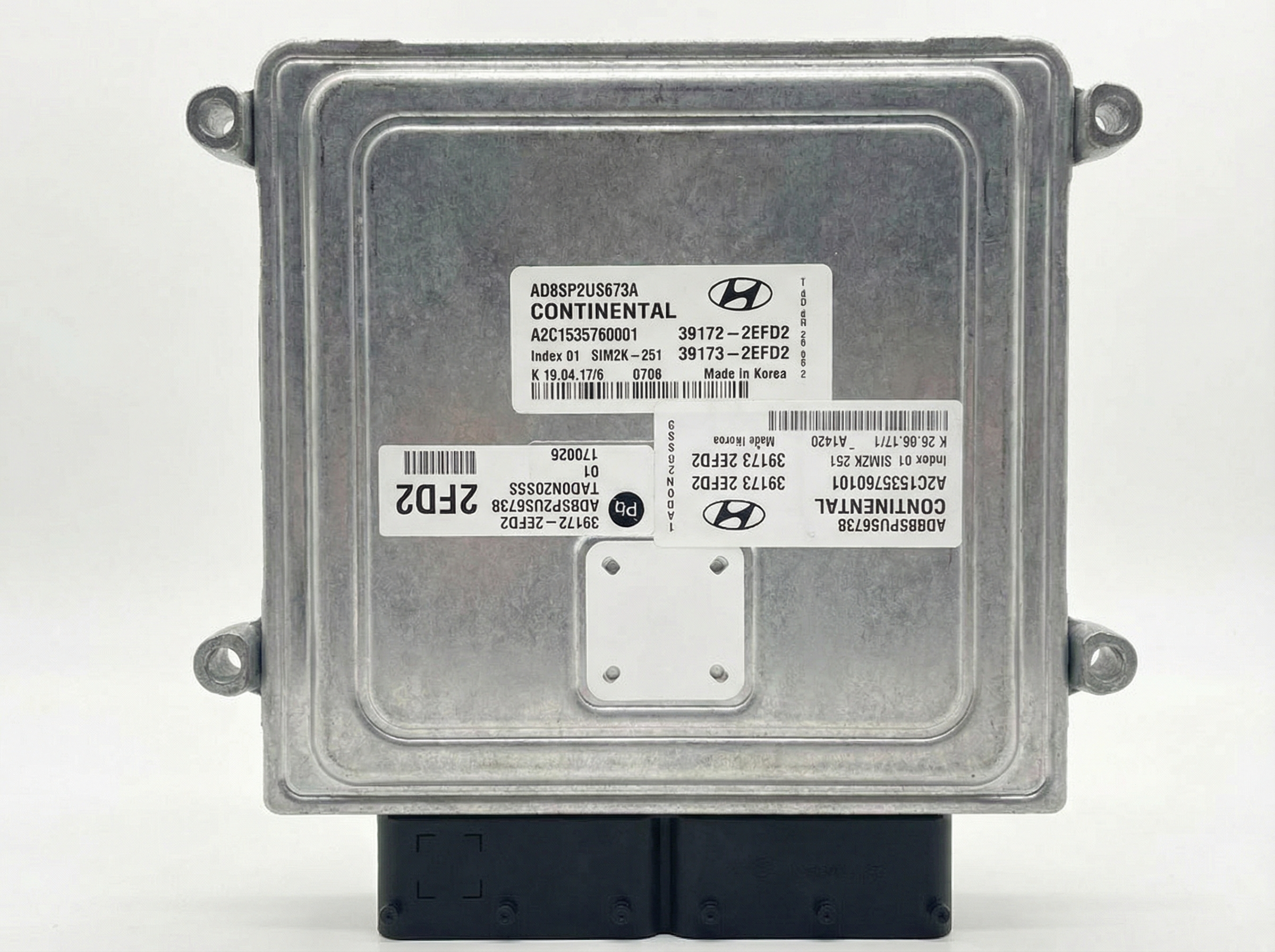
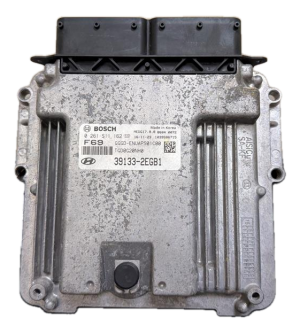
OEM Part Numbers: 39171-2EFD0 39171-2EFD2
Fits 2017-2018 Hyundai Elantra with 2.0L MPI engine and automatic transmission for the US market.
We Have This Part in Stock

The information in this article is provided for general reference and educational purposes only. Vehicle specifications, procedures, and part compatibility can vary by production date, trim level, and region. Always consult your vehicle's factory service manual and verify part numbers before purchasing or performing repairs. Safety-critical components such as airbags, seat belts, and braking systems should be installed by a qualified professional.
- Hyundai Elantra:
- 🎬 Helpful Videos
- 🛍️ Shop This Part
- Symptoms of a Failing ECM
- Known Issues, TSBs, and Recalls
- Programming and Immobilizer Information
- A Replacement ECM MUST Be Programmed
- Who Can Program the ECM?
- Buying a Used Engine Control Module (ECM)
- 1. Match the Part Number Exactly
- 2. Inspect for Physical Damage
- 3. Plan for Programming Costs
- Cost Breakdown
- Frequently Asked Questions (FAQ)
- 🎟️ Get 5% Off