

2007-2010 Compass, Patriot & Caliber ECM Failure: Stalling, No-Start, and Programming Guide
This guide covers the common failure symptoms, recalls, and critical programming requirements for the Engine Control Module (ECM) in the 2007-2010 Jeep Compass, Jeep Patriot, and Dodge Caliber.
- A replacement ECM must be programmed to your vehicle's VIN to function; an unprogrammed module will not allow the engine to start.
- Stalling and no-start issues can also be caused by a faulty TIPM (fuse box), which is a more common failure on these vehicles. Differentiate symptoms before replacing the ECM.
- Buying a used ECM that is pre-programmed to your VIN by the seller is the most cost-effective and straightforward repair method.
- A small number of 2009 models were recalled for an ECM manufacturing defect, and a TSB exists for a wiring harness that can rub through on its bracket, causing a no-start.
Is It Your ECM or the TIPM?
Before diagnosing a bad Engine Control Module (ECM) on your 2007-2010 Jeep Compass, Jeep Patriot, or Dodge Caliber, it's crucial to rule out another common point of failure: the Totally Integrated Power Module (TIPM). The TIPM is essentially a smart fuse box that controls nearly all of your vehicle's electrical functions. Both a bad ECM and a bad TIPM can cause similar issues, like a no-start condition or engine stalling, but they often have distinct symptoms.
| Symptom | More Likely ECM/PCM | More Likely TIPM |
|---|---|---|
| Engine Stalling or No-Start | Yes, especially if accompanied by specific engine performance codes (P06xx). | Yes, often due to a failed internal fuel pump relay. The engine cranks but won't start. |
| Check Engine Light | Almost always. Codes will point to internal module failure or sensor circuits it controls. | Sometimes, but often causes issues without a specific Check Engine Light. May set communication codes (U-codes). |
| Random Electrical Issues | Uncommon. Failures are typically confined to engine management. | Very common. Wipers turning on by themselves, horn blaring, door locks cycling, or fuel pump running continuously are classic TIPM failure signs. |
| Communication with Scan Tool | May result in no communication with the engine module specifically (U0100). | Can cause no communication with multiple different modules throughout the vehicle. |
Symptoms of a Failing ECM
When the ECM itself begins to fail, you'll notice problems directly related to how the engine runs. These symptoms can start intermittently but will typically worsen over time.
- Engine Stalls Unexpectedly: The engine may shut off while driving or when coming to a stop.
- No-Start or Hard Starting: The engine may crank but fail to start, or take an extended time to fire up.
- Check Engine Light is On: A failing ECM will almost always trigger a Check Engine Light.
- Poor Engine Performance: You may experience reduced power, hesitation during acceleration, and poor fuel economy.
- Misfires or Rough Idle: The engine may run erratically or shake at idle.
- No Communication with Scan Tool: A diagnostic scanner may be unable to communicate with the ECM, making it impossible to read codes.
Common Diagnostic Trouble Codes (DTCs)
Specific OBD-II codes are strong indicators of an internal ECM failure. If you see any of the following, the ECM is the most likely culprit.
| Code | Definition | Common Cause |
|---|---|---|
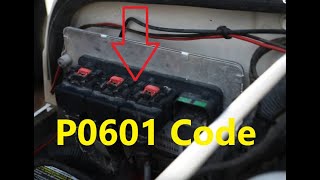
| P0601 | Internal Control Module Memory Check Sum Error | An internal memory error within the ECM has been detected. This is a fatal error for the module. | 🎬 Watch: Understanding the P0601 code and how to fix it.
| P0605 | Internal Control Module Read Only Memory (ROM) Error | The ECM's internal read-only memory is corrupted or has failed. |
| P0606 | ECM/PCM Processor Fault | The central processor inside the ECM has malfunctioned. |
| U0100 | Lost Communication With ECM/PCM | Other modules on the vehicle can no longer receive a signal from the ECM. |
Known Issues, Recalls, and Technical Service Bulletins (TSBs)
While not widespread, there are a few officially documented issues related to the ECM on these vehicles.
- NHTSA Recall 09V-153000: A small number of 2009 Dodge Caliber, Jeep Compass, and Jeep Patriot vehicles were recalled because a new adhesive used during the manufacturing of the Powertrain Control Module (PCM) could cause the printed circuit board to break, leading to engine stalling.
- TSB RSU 25-046: A Technical Service Bulletin was issued for a condition where the PCM wiring harness could rub against the PCM mounting bracket. This chafing could damage the wires, leading to a short circuit and a no-start condition. The fix involves inspecting the harness and repositioning it with a new clamp.
Programming and Immobilizer Requirements
Warning: A replacement ECM WILL NOT start your vehicle unless it is programmed to your specific Vehicle Identification Number (VIN). This is the single most important factor when replacing this part.
The ECM is linked to the vehicle's anti-theft system, also known as the Sentry Key Immobilizer System (SKIS). The VIN, security key codes, and other vehicle-specific configuration data are stored inside the module. If you install a used ECM from another vehicle without reprogramming it, the immobilizer system will not recognize it, and the engine will be prevented from starting.
Who Can Program a Replacement ECM?
- Dealerships: A Chrysler, Dodge, or Jeep dealership can program a new or used ECM to your vehicle using their proprietary wiTECH diagnostic tool. This is often the most expensive option.
- Pre-Programmed Modules Online: Many online retailers sell used or remanufactured ECMs that are pre-programmed to your vehicle's VIN before they are shipped. You provide your VIN at the time of purchase, and the module arrives ready for a "plug-and-play" installation. This is often the most convenient and cost-effective solution.
- Independent Repair Shops: Some independent shops that specialize in Chrysler/Dodge/Jeep vehicles may have the necessary tools (like a J2534 pass-thru device and a subscription to Tech Authority) to program the module. It is critical to confirm they have this capability before ordering the part.
Buying a Used Engine Control Module (ECM)
Purchasing a used OEM ECM is an excellent way to save money, but you must follow these steps to ensure a successful repair.
- Verify the Part Number: While many part numbers are interchangeable, it's always best to match the number on your original ECM to the replacement part. This ensures the hardware is correct for your vehicle's features.
- Confirm Vehicle Specifications: The donor vehicle must have the same engine (2.0L), transmission (CVT), and drivetrain (FWD) as your vehicle. An ECM from a 2.4L or AWD model will not work correctly.
- Choose a Pre-Programmed Unit: The best practice is to buy a used ECM from a seller who offers VIN programming. This eliminates the need for a dealership visit, towing fees, and the risk of installing a module that won't work. A non-programmed ECM from a salvage yard will not start your car.
- Inspect the Connectors: When the part arrives, check that the connector pins are straight, clean, and free of any corrosion. Damaged pins can cause a host of issues.
Cost to Replace the ECM
The cost can vary significantly based on the part source and labor for programming.
| Item | Estimated Cost | Notes |
|---|---|---|
| New OEM Part | $1,000 - $1,200 | Purchased from a dealership. Does not include labor/programming. |
| Remanufactured (Pre-Programmed) | $250 - $400 | A common and reliable option from online specialists. |
| Used OEM (Pre-Programmed) | $150 - $300 | A cost-effective solution when purchased from a reputable recycler that offers programming. |
| Used OEM (Not Programmed) | $40 - $150 | Cheapest initial cost, but requires additional, expensive programming at a dealer or shop. Not recommended. |
| Shop Labor (Physical Swap) | $60 - $100 | The physical replacement is quick, taking less than an hour. |
| Shop Labor (Programming) | $150 - $300 | Typically 1-2 hours of labor at a dealership or specialized shop. |
Replacement Location and Procedure
On the Dodge Caliber, Jeep Compass, and Jeep Patriot, the ECM is located in the engine compartment, typically mounted to the side of the engine bay near the air filter housing or firewall.
Pro Tip: Always disconnect the negative battery terminal before beginning any work on the ECM to prevent electrical damage.
- Disconnect the Battery: Use a 10mm wrench to loosen and remove the negative battery cable.
- Access the ECM: Locate the module in the engine bay. It is a silver metal box with three large electrical connectors.
- Remove the Connectors: Each connector has a lever or tab that needs to be released. Gently pull the lever up or press the tab, which will push the connector off the module. Do not force them.
- Unbolt the ECM: Remove the three 10mm bolts or nuts holding the ECM to its bracket.
- Install the New ECM: Bolt the new module in place, reconnect the three electrical connectors, and reinstall the connector cover.
- Reconnect the Battery: Reattach the negative battery terminal. If you purchased a pre-programmed module, the vehicle should now start and run correctly.
Frequently Asked Questions
Do I absolutely have to program a replacement ECM?
Yes. Due to the integrated anti-theft system, the vehicle will not start with an unprogrammed ECM. You must either have it programmed by a dealer/shop after installation or purchase a unit that has been pre-programmed to your car's VIN.
My car cranks but won't start. Is it the ECM?
It could be, but a very common cause for a crank-no-start condition on these vehicles is a failed fuel pump relay inside the TIPM (fuse box). If you are not getting any ECM-specific codes (like P0601 or P0606), investigate the TIPM first, as it is a more frequent failure point for this specific symptom.
What's the difference between an ECM, PCM, and ECU?
The terms are often used interchangeably. ECU (Engine Control Unit) is a generic term. ECM (Engine Control Module) is more specific to engine functions. Chrysler, Dodge, and Jeep use the term PCM (Powertrain Control Module) because their module controls both the engine and the automatic transmission. For these vehicles, ECM and PCM refer to the same part.
Can I just buy an ECM from a junkyard and install it?
You can, but it will not work until it is professionally programmed. The vehicle will have to be towed to a dealership or a properly equipped shop to have the module programmed to your car's VIN and security keys. This often costs more than buying a pre-programmed used unit online.
Helpful Videos
Technical Specifications
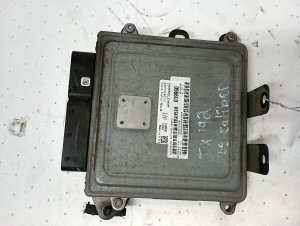
OEM Part Numbers: 04692101AD 04692101AE 05150471AA 05150523AA 68027153AA 68027153AB 68027153AC 68027153AD 68027153AE 68027153AF 68043260AA 68043257AC 68031672AD
This module is specific to models equipped with a 2.0L I4 engine, a Continuously Variable Transmission (CVT), and Front-Wheel Drive (FWD).
We Have This Part in Stock

The information in this article is provided for general reference and educational purposes only. Vehicle specifications, procedures, and part compatibility can vary by production date, trim level, and region. Always consult your vehicle's factory service manual and verify part numbers before purchasing or performing repairs. Safety-critical components such as airbags, seat belts, and braking systems should be installed by a qualified professional.
- Jeep Compass:
- Jeep Patriot:
- Dodge Caliber:
- 🎬 Helpful Videos
- 🛍️ Shop This Part
- Is It Your ECM or the TIPM?
- Symptoms of a Failing ECM
- Common Diagnostic Trouble Codes (DTCs)
- Known Issues, Recalls, and Technical Service Bulletins (TSBs)
- Programming and Immobilizer Requirements
- Who Can Program a Replacement ECM?
- Buying a Used Engine Control Module (ECM)
- Cost to Replace the ECM
- Replacement Location and Procedure
- Frequently Asked Questions
- 🎟️ Get 5% Off